Mourning on flags
How a flag is put into mourning: at half-mast or with a black crepe. Who decides, how low it is lowered, the exceptions and some fun facts.

When a very important person dies, or when a tragedy happens, the flags on public buildings “go into mourning”. It is a way of saying, without words, that a country, a region or a city is grieving. We often see it in the news, but almost nobody knows there are rules. In this article we explain how it is done and why.
Who decides there is mourning?
Official mourning is decreed by the relevant administration or state. Normally it works like a pyramid: if the state decrees mourning, the flags of communities, regions, provinces or councils observe it too; but if only one community decrees it, the state’s flag is not affected.
Who decides depends on the country. For example, in Germany the federal president orders it for the whole country; in Canada, the Department of Canadian Heritage for federal buildings; and in Poland, the president.
The two ways of showing mourning
There are two: lowering the flag (to “half-mast”) or adding a black crepe at the top of the pole. They are not used together: you choose the method that best suits each situation.
Half-mast
A flag at half-mast is one placed below the top of the pole. It is a gesture of respect, mourning or, in some cases, distress. The custom began in the 17th century. Some sources say that space is left at the top for an “invisible flag of death”, representing the fallen.
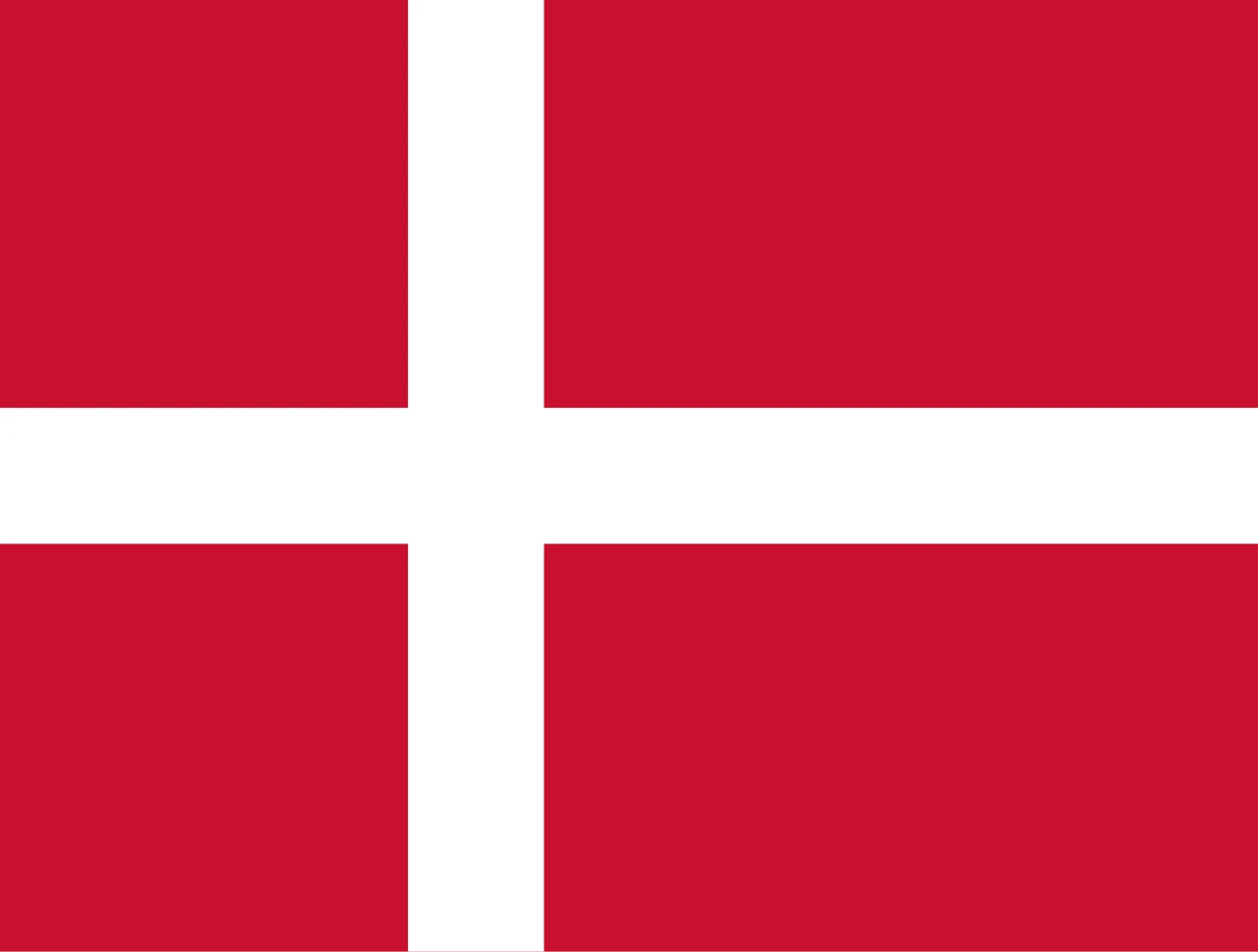
How low is it lowered? Although it is called “half-mast”, it is not usually lowered to the middle of the pole. The recommendation is to lower it by roughly the width of the flag itself: as if there were another identical flag above it. This is the custom of the British tradition, which Australia follows. Other countries do it differently: Denmark and Finland lower it about a third of the pole, and in New Zealand it should sit at least one flag-height from the top.
How is it done? First the flag is raised to the very top, then lowered to its position. At the end of the day it is raised to the top again before being taken down completely. In military terms, the flag is also tied so it does not wave.
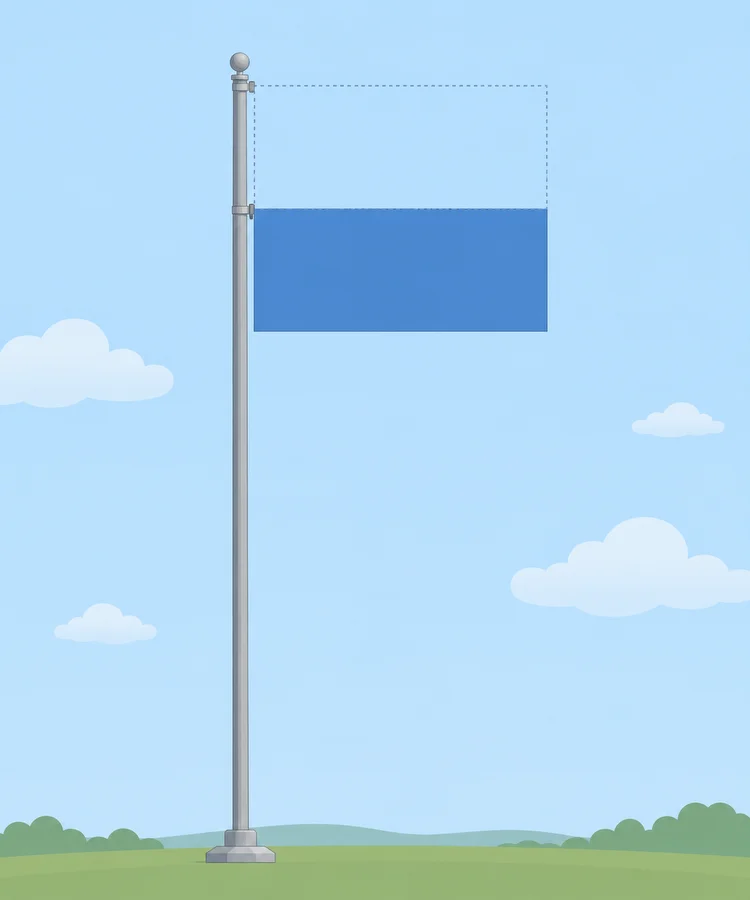
At half-mast: the flag is lowered by one flag-width. The dotted box represents the “invisible flag of death”.

Flag of the United Kingdom at half-mast.

Flag of Spain at half-mast.
Black crepe
The other method is to place a crepe, a black ribbon, on the finial (the tip of the pole), never sewn or placed on the flag itself, although it is sometimes seen that way. Black is used because it is the colour associated with mourning in the West. This method is used mainly for indoor flags, which have a shorter pole and could touch the ground if lowered, or on town halls with inclined poles where the flag could not fly properly.
Each country has its variants: in Germany, if a flag cannot be lowered, it carries black crepe streamers; in the Netherlands the royal family’s flags are never lowered and a black pennon may be added; in Russia a black ribbon is placed on top; and in Japan, a black cloth over the tip.

Correct use of the black crepe: at the tip of the pole.

Incorrect use of the black crepe: on the flag.
The exceptions
- Saudi Arabia: its flag is never flown at half-mast, because it bears the Shahada, the Islamic profession of faith. According to the same source, the same happens in Afghanistan, Somaliland and Iraq, for similar religious reasons.
- Royal houses: in the Netherlands, the royal family’s standards are never lowered. In Canada, the Royal Standard never flies at half-mast.
Fun facts
- Denmark has had the custom since 1743, when King Christian VI ordered it for naval ceremonies.
- The Philippines sets the time by law: ten days for the death of a president or former president, and seven for a vice president, the Senate president or the House speaker.
- Cambodia lowered its flags from 15 to 22 October 2012, after the death of the King-Father Norodom Sihanouk.
- The Vatican and Italy lowered theirs on 21 April 2025, after the death of Pope Francis.
- At sea, merchant ships from Australia and other Commonwealth countries lower their ensigns to half-mast when passing an Australian navy ship or one from an allied navy, as a salute.