The parts of a flag
Hoist, fly, canton, field… The parts of a flag explained in plain words, with their Spanish equivalents and fun facts.

Have you ever tried to describe a flag over the phone? “It’s blue, with a cross and something in the corner…”. To avoid getting lost in explanations like that, vexillology (the study of flags) has its own vocabulary. You do not need to learn all of it: with a handful of words you can describe any flag precisely.

The parts of a flag, one by one
The numbers match those in the picture. The label in the picture follows the Spanish terms; next to each one we give the English name.
- 1. Length (Spanish: vuelo): the length of the flag, from one end to the other (sometimes called the fly).
- 2. Fly edge (batiente): the edge where the wind makes the flag wave, the one furthest from the pole.
- 3. Hoist (vaina): the edge next to the pole, by which the flag is attached; its length also gives the height. The spare cloth along this edge, used to tie the flag to its rope, is called the heading.
- 4. Charge (carga): the drawings or symbols on the flag: coats of arms, stars, animals, shapes…
- 5. Field (paño): the cloth of the flag and its background colour, the one behind the charges.
- 6. Free corner (pendiente): the loose corner of the fly edge, farthest from the pole.
- 7. Flagpole or staff (asta or mástil): the pole that holds the flag.
- 8. Halyard (driza): the rope used to raise and lower the flag.
- 9. Finial (moharra): the cap at the top of the pole. It can be a ball, a spearhead or another shape; it protects the pole and decorates it.
A tip to avoid confusion: the hoist and the fly are the two vertical edges of the flag. The hoist stays attached to the pole, and the fly is the one that moves in the wind.
Other useful words
These words are not in the picture, but they are used a lot when talking about flags:
- Canton: any of the four quarters of the flag, although the name usually means the upper quarter next to the pole. On the flag of Australia, the canton carries the Union Jack.
- Obverse and reverse: the obverse is the “front” side, the one normally shown, with the pole on the left of the viewer. The reverse is the other side. There are exceptions: some Islamic flags with Arabic inscriptions are shown with the pole on the viewer’s right.
- Pennant: a narrow, long flag that is wider at the hoist than at the free end.
- Ensign and jack: the ensign is the flag that identifies a ship or a military unit. The jack is the one flown from a short staff at the bow of the ship.
- Gonfalon: a flag hung from a horizontal crossbar instead of flying from a pole.
- Fimbriation: a narrow edging, usually white or gold, that separates two colours so they do not blend. The flag of South Africa has it.
- Nordic cross: the cross shifted towards the pole, typical of the Scandinavian countries, as on the flag of Sweden.
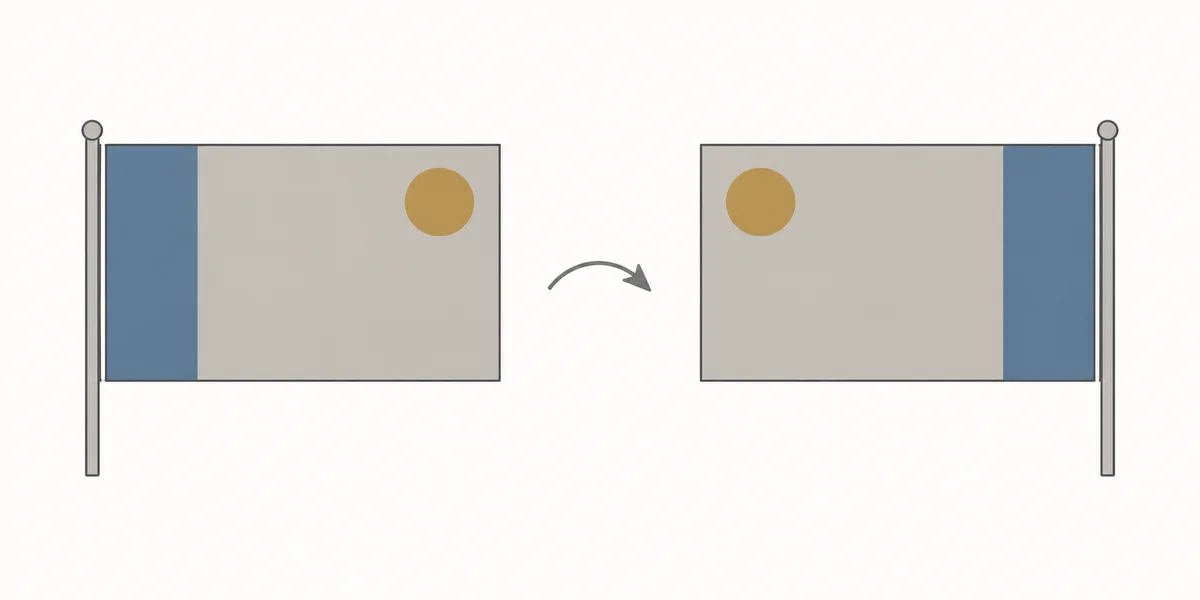
Obverse and reverse: the same flag seen from both sides, as in a mirror.
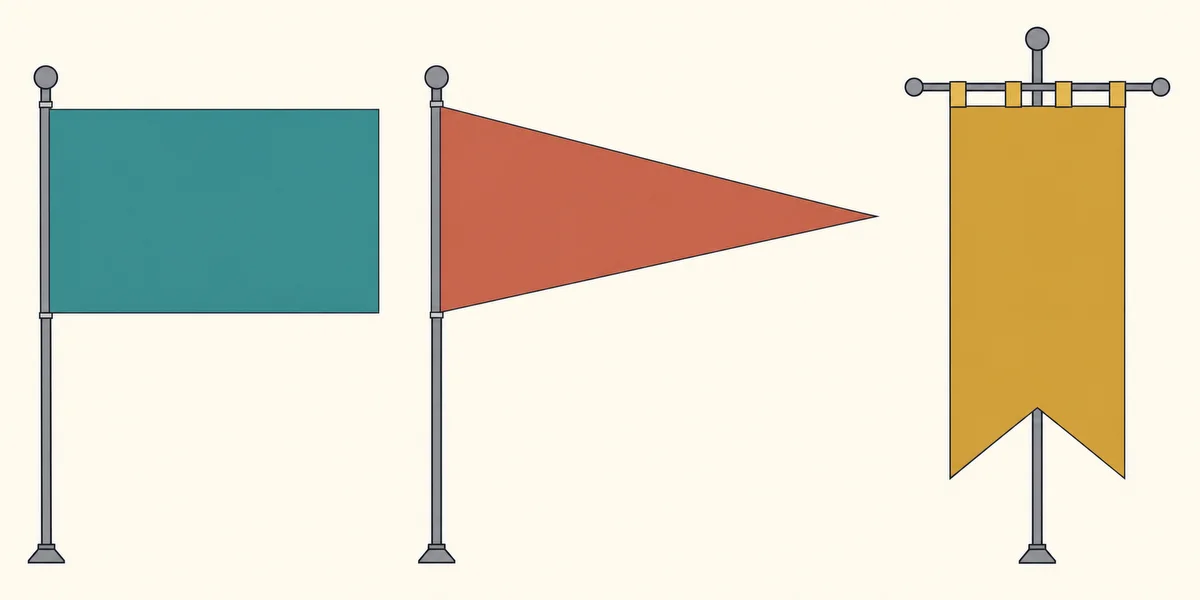
A rectangular flag, a pennant (wider next to the pole) and a gonfalon (hung from a crossbar).

Australia: the Union Jack fills the canton.
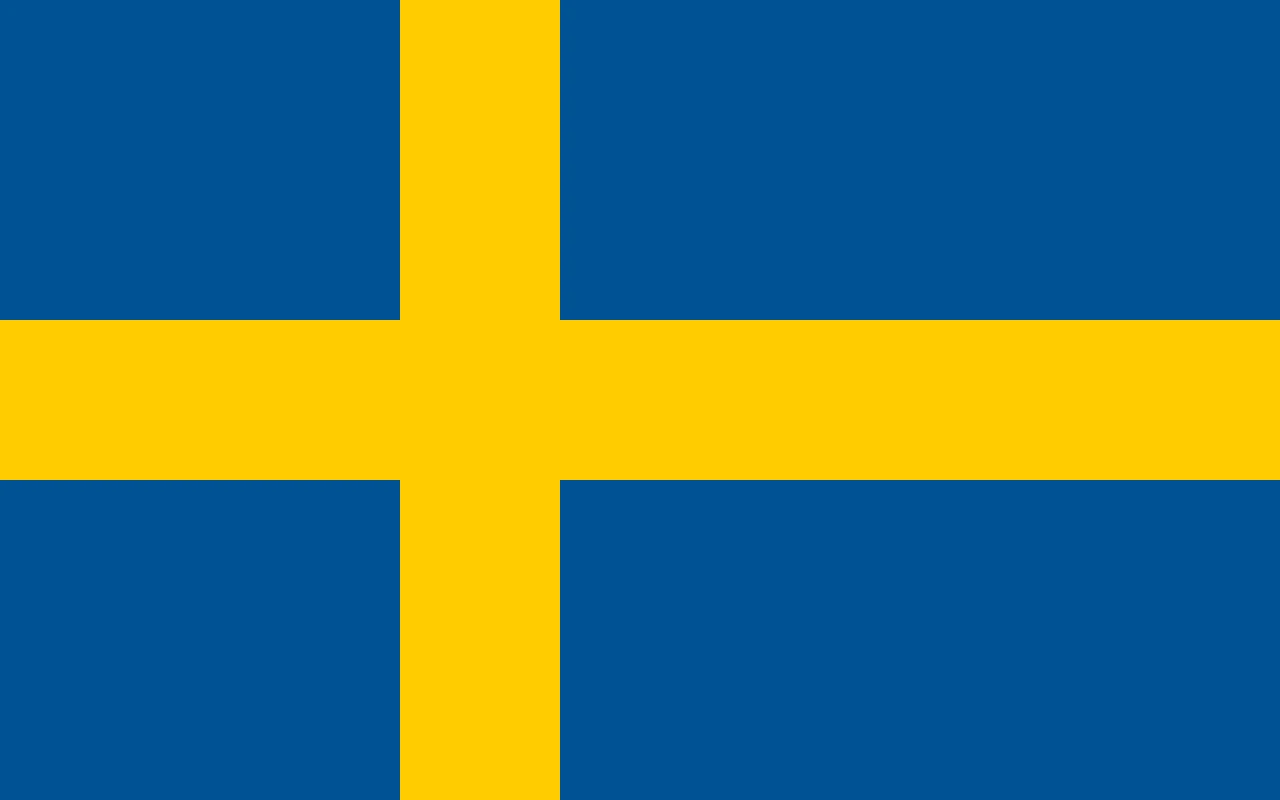
Sweden: a Nordic cross, shifted towards the pole.
Length, width and proportion
Two numbers are used to measure a flag: the length (the measurement along the flag, at right angles to the pole) and the width (the measurement from top to bottom, parallel to the pole). The proportion is the relationship between the two: a 2:3 flag is 3 units long for every 2 units wide. Not all countries use the same one, which is why some flags look “longer” than others.
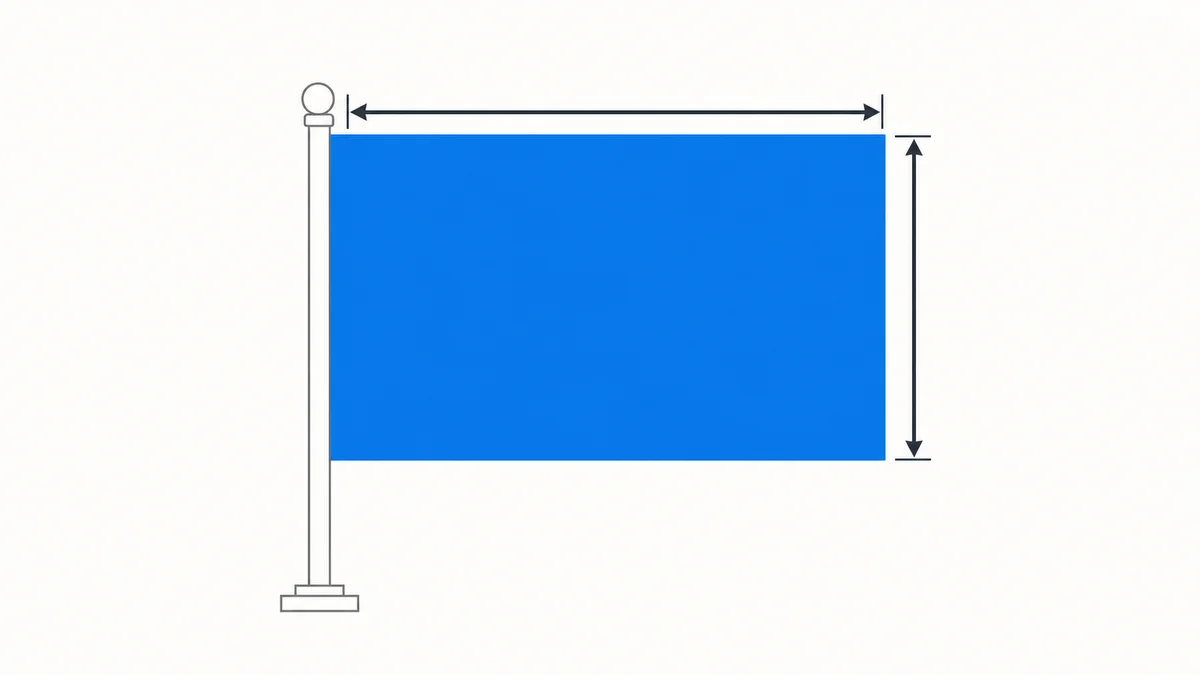
The two measurements of a flag: the length (horizontal) and the width (vertical).
Fun facts
- Where the Spanish word bandera comes from. It comes from Gothic, through the word bandwō, which meant “sign”.
- Vexillology. The term comes from the Latin vexillum (“flag”) and the Greek logos (“knowledge”). It was coined in English by the American Whitney Smith in 1957.
- The oldest known flag is a bronze standard, a derafsh, found at Shahdad (Iran) and dated to around 2400 BC.