United Kingdom or Great Britain? What is the difference?
United Kingdom, Great Britain or England? A simple guide so you do not mix them up, with the flags of the four countries, the Crown Dependencies and the Union Jack.

How many times have you heard “England” used for the whole United Kingdom, or “Great Britain” used for a country? It is a very common mistake, even in the news. Here is a simple guide so you do not get confused, with the flags of each place.
The short answer
- England is a country, one of the four that make up the United Kingdom.
- Great Britain is an island: the largest of the British Isles, and politically the name is used for England, Scotland and Wales together. It does not include Northern Ireland.
- United Kingdom is the state: England, Scotland, Wales and Northern Ireland. Its official name is the United Kingdom of Great Britain and Northern Ireland.
- British Isles is a geographical name: the archipelago made up of the island of Great Britain, the island of Ireland and more than a thousand small islands.
A trick to remember it: the United Kingdom is Great Britain plus Northern Ireland.
The four countries
The United Kingdom has one capital, London, which is also the capital of England. Scotland, Wales and Northern Ireland have their own: Edinburgh, Cardiff and Belfast. Although the United Kingdom is a single sovereign state, its four parts are commonly called “countries”: the Prime Minister’s website has even spoken of “countries within a country”. Its total area is 244,376 km² and, according to the 2021 census, it has 66,912,637 inhabitants.
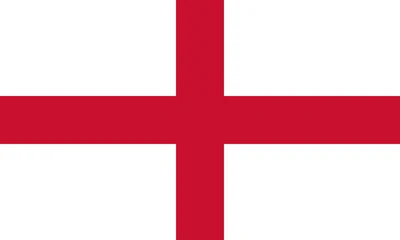
England: the St George’s Cross.
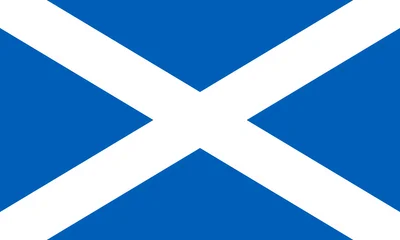
Scotland: the St Andrew’s Cross.
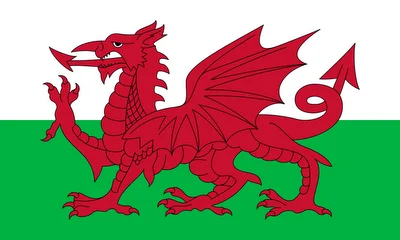
Wales: the red dragon.
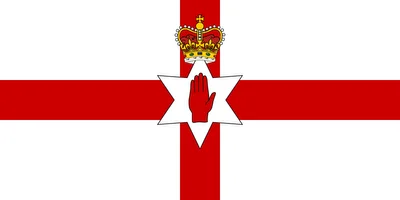
Northern Ireland: the Ulster Banner, which is not official.
Northern Ireland has no official flag of its own: the only official flag is the Union Jack. The Ulster Banner (a red hand inside a white star, on a red cross) was used officially by the Northern Ireland government from 1953 to 1972. Today it is used, among others, by the football team and at the Commonwealth Games. In December 2021, a commission recommended creating a new “civic flag”.
How it all came together
1535 and 1542
The Laws in Wales Acts unite Wales with England.
24 March 1603
The Union of the Crowns: one king, James, reigns in both Scotland and England.
1 May 1707
The Acts of Union merge the English and Scottish parliaments into one and the Kingdom of Great Britain is born.
1 January 1801
The United Kingdom of Great Britain and Ireland is born, when Ireland joins.
1922
Most of Ireland leaves the United Kingdom (Irish Free State Constitution, 6 December). Six counties in the north remain in the United Kingdom: what is now known as Northern Ireland.
1927
A law sets the current name: United Kingdom of Great Britain and Northern Ireland.
1949
Ireland becomes a republic, the Republic of Ireland.

The political United Kingdom and the geographical Great Britain
So we must distinguish the political United Kingdom from the geographical names. The British Isles include the two main islands: the island of Ireland (home to the Republic of Ireland and Northern Ireland), also called the Emerald Isle, and the island of Great Britain, where England, Scotland and Wales are.
The island of Great Britain covers 209,331 km², is the largest in Europe and the ninth largest in the world. The name “Great Britain” was first used officially in 1474, in a marriage document that called it “this Nobill Isle, callit Gret Britanee”.

The Crown Dependencies
Besides the countries of the United Kingdom, there are three Crown Dependencies: islands that govern themselves and are not part of the United Kingdom, but which the United Kingdom represents internationally and defends. They must not be confused with the overseas territories (for example, Gibraltar or the Falkland Islands). They are:
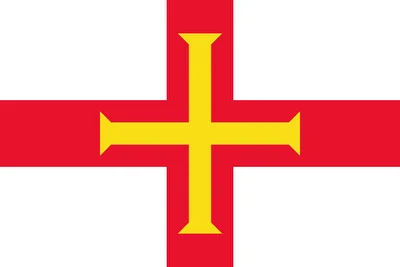
Guernsey. Parliament: the States of Deliberation. About 67,000 inhabitants.
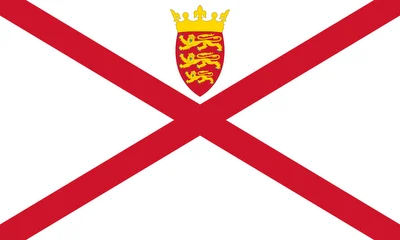
Jersey. Parliament: the States Assembly. About 104,500 inhabitants.
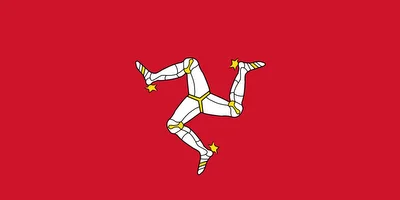
Isle of Man. Parliament: Tynwald. About 84,500 inhabitants.
A bailiwick is a territory under the jurisdiction of a bailiff. Guernsey, with Alderney and Sark, and Jersey are bailiwicks; the Isle of Man, on the other hand, is a Crown Dependency with its own Parliament, Tynwald, and is not a bailiwick. On the Isle of Man, the monarch holds the title “Lord of Mann”.
The Union Jack
The flag of the United Kingdom, the Union Jack, combines the crosses of the patron saints of three of its countries: the red cross of St George (England), the white saltire of St Andrew (Scotland) and the red saltire of St Patrick (Ireland). Wales is not represented because it was already united with England when the flag was created. The first version, with the crosses of St George and St Andrew, dates from 1606; St Patrick’s was added in 1801, with the union with Ireland.

How the Union Jack is formed.
The English used St Patrick’s saltire to refer to Ireland, but the Irish did not recognise it; they had their own: a green flag with a harp and the inscription Erin Go Bragh (“Ireland for ever”).

The Irish Erin Go Bragh flag.
A fun fact
At the Olympic Games, the British team is called “Team GB” (for Great Britain). But Northern Irish athletes can choose to compete for Team GB or for Ireland, and most choose Ireland. So Team GB does not automatically include Northern Ireland.