
The first flag in history: where was it born?
The origin of flags is uncertain. The oldest one discovered is a bronze object from Shahdad (Iran), from around 2400 BC; cloth flags may have been born in India or China.

Where was the first flag born? Nobody knows for certain: the origin of flags is uncertain and it is not known when the first one was raised. These are the oldest clues we know of.

The oldest clues
- Around 3500 BC: ships with vexilloids, flag-like objects, appear on predynastic Egyptian pottery.
- Around 2400 BC: the derafsh of Shahdad, in Iran, is a bronze flag-like object. It is the oldest flag ever discovered.
- Antiquity: flag-like signs were used in battle, perhaps born in ancient Egypt or Assyria. One example is the Sassanid derafsh Kaviani, or the standards of the Roman legions.
3500 BC
On pottery from predynastic Egypt, boats appear with vexilloids, objects similar to flags.
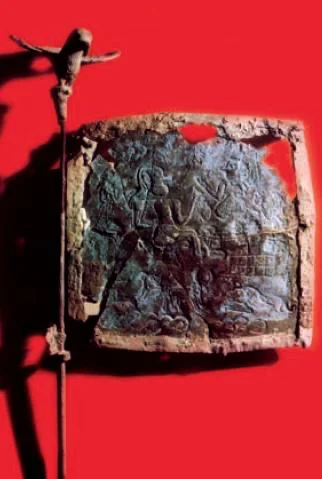
Autor desconocido · Dominio público 2400 BC
The derafsh of Shahdad, in Iran, is a bronze object similar to a flag. It is the oldest flag that has been discovered.
4th century
Constantine uses the Christian labarum for the first time, a version of the Roman vexillum.
And China?
The first cloth flag, as we know it, was almost certainly invented in the Indian subcontinent or in China under the Zhou dynasty. China was a pioneer in making silk and weaving cloth, and silk may have spread from there to the Near East, or been adopted by peoples who had independently developed the rectangular cloth flag. In other words: China is one of the candidates to have invented the cloth flag, not proof that it was the first.
From the Roman tradition, the vexillum (a cloth military flag) is the root of the modern European flag. The Christian labarum, first used by Constantine in the 4th century, was a version of the vexillum.


