The Cedar of Lebanon
The green cedar on the Lebanese flag: how it reached the Constitution in 1943, what the 1990 reform specified, and which meanings are attributed to it without official basis.
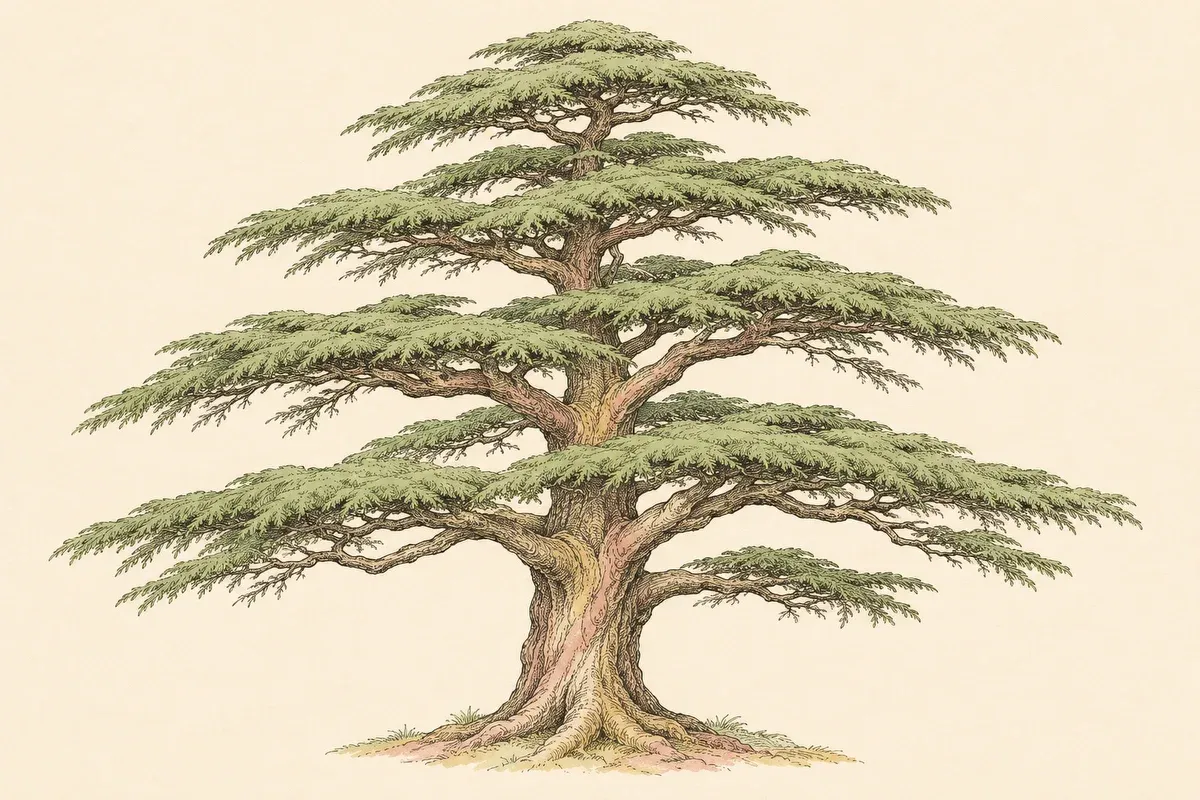
Three horizontal stripes, red, white and red, with a green cedar at the centre: this is the flag of Lebanon. The tree that identifies it is the cedar of Lebanon, which has been on the flag since 1926, although in its current arrangement only since the Constitution of 1943. Here we explain how it got there, what the law says and which meanings are attributed to it without official support.
From the blue flag to the red one
- 1926: the first official flag was blue, white and red, in vertical stripes, with a cedar on the white part. Wikipedia dates its adoption to 23 May 1926, citing a League of Nations publication.
- Colour of the cedar: the Constitution did not specify its colour. In contemporary depictions it usually appeared green, with a brown trunk.
- 7 December 1943: Article 5 of the Constitution is amended. It describes three horizontal stripes, a white one between two red ones, with a green cedar at the centre of the white stripe. According to the French version quoted by FOTW, the white stripe is twice the height of each red one.
- 21 September 1990: an amendment establishes that the entire cedar must be green, according to Wikipedia.
What the law says
The Constitution fixes the arrangement of the stripes and the position of the cedar. It assigns no meaning to them, and it does not fix the exact shades of the colours. The translations of the article in circulation are not official.
Attributed meanings
There is no official meaning. These are the readings in circulation, and none comes from a law:
- Red: blood shed in the struggle for independence, or by the martyrs. FOTW attributes this reading to individuals and to a book from 1995.
- White: peace and purity.
- Green and cedar: immortality, steadfastness and hope, according to Wikipedia. For Christians green represents hope, and in Islamic tradition, salvation.
- Historical reading: the red and white allude to the conflict between the Qaysi and Yamani factions that divided Lebanese society, according to Whitney Smith (1982), cited by FOTW and by Wikipedia. The cedar would be the symbol of unity.
- 1920 proclamation: Greater Lebanon described the cedar as a symbol of resilience and unity, according to Wikipedia.
Flag-seller websites that explain each colour as an official value have no support in the law.