
Beginner’s guide
What is vexillology?
The study of flags: where the word comes from, what their parts are called and how we went from a pole with feathers to national flags.
- From the Latin “vexillum”
- Word coined in 1957
- Over 5,000 years of history
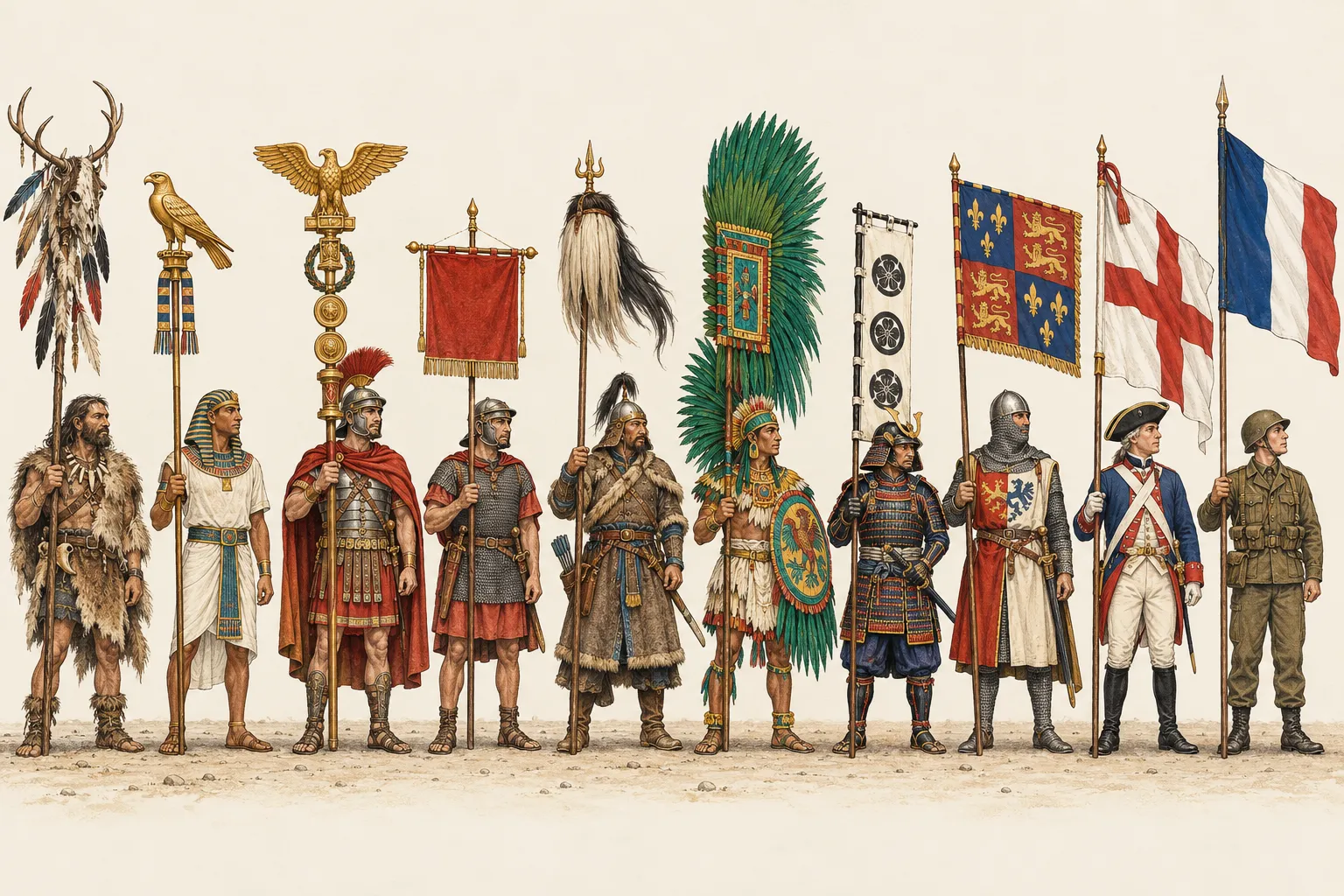
Vexillology is the study of flags: their history, colours, shapes, symbolism and the rules that govern them. It is not only about the flags of countries: it also covers those of regions, cities, ships, armies, associations and companies.
The short answer
- What it is: the study of flags.
- Where the word comes from: it was coined by the American Whitney Smith in 1957, from the Latin vexillum (“standard”) and the Greek -logia (“study”).
- Its sister: vexillography, the art of designing flags.
- Who organises it: FIAV, the international federation of vexillological associations, founded in 1969.
- The oldest of all: before cloth flags there were vexilloids, poles topped with a figure.
Where the word comes from
Whitney Smith (1940-2016) coined the word vexillology in 1957, when he was only 17. He later founded the Flag Research Center in Massachusetts and devoted his whole life to the study of flags. He also designed one: the flag of Guyana (“the Golden Arrowhead”), adopted in 1966.
The word joins the Latin vexillum, the name of a Roman army flag (you will see what it looked like further down), and the Greek -logia, “study”.
Vexillology and heraldry
Heraldry studies coats of arms, which appeared in Europe in the 12th century. Vexillology is a different discipline, but it owes heraldry a great deal: words used to describe flags, such as chief, fess, canton or saltire, come from heraldry, as does the habit of calling colours tinctures (gules is red; azure, blue). Many flags also carry a coat of arms or grew out of one.
Who studies flags today
Many countries have vexillological associations, made up mostly of researchers and enthusiasts. They study flags, publish journals and sometimes advise anyone who wants to create a new flag. But they do not approve official flags: that is decided by governments, parliaments or city councils.
Many of these associations belong to FIAV (the International Federation of Vexillological Associations), founded in 1969. FIAV sponsors the International Congress of Vexillology (ICV), which is normally held every two years in a different city.
The parts of a flag
To talk about a flag you need only a few words. They are the same for every flag in the world:
- Finial
- The ornament on top of the pole: a ball, a spearhead or a figure.
- Pole
- The staff or mast the flag hangs from.
- Hoist
- The edge of the flag attached to the pole, often a fabric sleeve the pole passes through.
- Field
- The cloth of the flag, with its colours and figures.
- Canton
- The rectangle in the upper corner next to the pole, like the one with the stars on the flag of the United States.
- Fly
- The free end of the flag, farthest from the pole: the part that flutters in the wind.
- Ratio
- The relation between the height and the width of the flag, always in that order: 2:3 means 2 high by 3 wide.
The ratio is always written height:width. Spain’s is 2:3; Switzerland’s, 1:1 (it is square); the United Kingdom’s, 1:2. Nepal’s is not even a rectangle: it is two overlapping triangles.
Flag, ensign, standard… aren’t they the same?
In everyday speech almost everything is called a flag. Vexillology is a little more precise with the names, although usage varies by country and period:
- Flag: the general word for a piece of cloth with colours or figures hoisted on a pole.
- Ensign: the flag that shows a ship’s nationality. That is why a ship is said to sail “under the flag” of a country.
- Standard: historically, the emblem of a king, a noble or a military unit (above all cavalry). It is usually smaller and often square.
- Pennant: a long, narrow flag that tapers towards the tip. It is used mostly on ships.
- Vexilloid: an emblem that does the job of a flag without being one, usually because it is rigid: a pole topped with a figure, horsehair or feathers.
Before cloth: vexilloids
Every human group needs a sign to recognise itself, to gather or to follow its leader in the middle of confusion. The first group emblems have not survived, but the oldest ones we do know already have the shape we would expect: a pole with a figure at the top, visible above people’s heads.
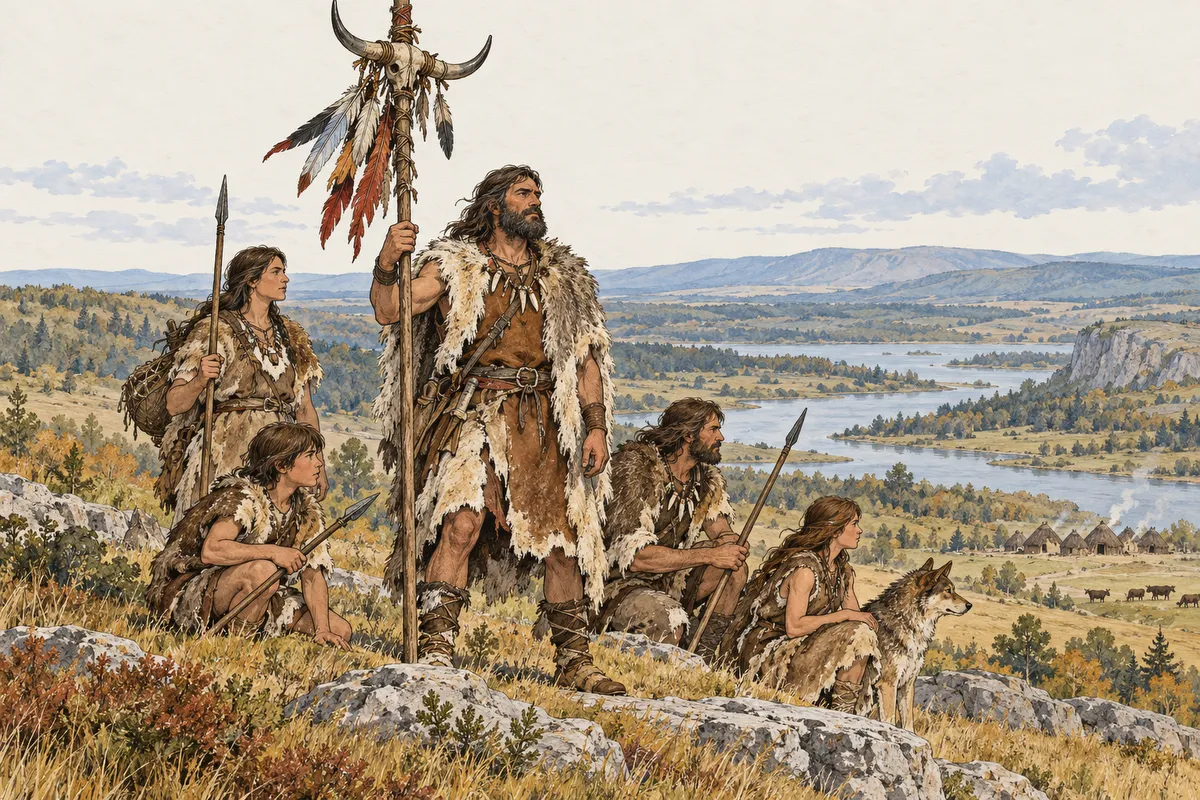
A vexilloid: a pole topped with feathers and horns that identifies the group. Illustrative reconstruction (generated image).
One of the oldest surviving metal standards is the Shahdad standard, from the province of Kerman (Iran). It is made of bronze and dates from the third millennium BC: a pole topped with the figure of a bird and, hanging from it, a square plaque decorated with figures. It is displayed at the National Museum of Iran.
In Egypt, the Narmer Palette (around 3100 BC, Egyptian Museum in Cairo) shows the king preceded by four standard-bearers. Each one carries a pole with a figure at the top: two falcons, a jackal and a fourth, rounded emblem. The palette is not a vexilloid itself, but one of the oldest depictions of how they were used.
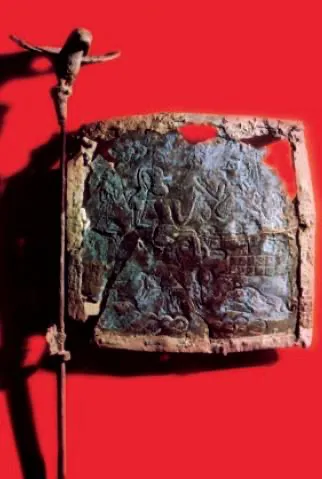
The bronze standard of Shahdad (Iran, third millennium BC).
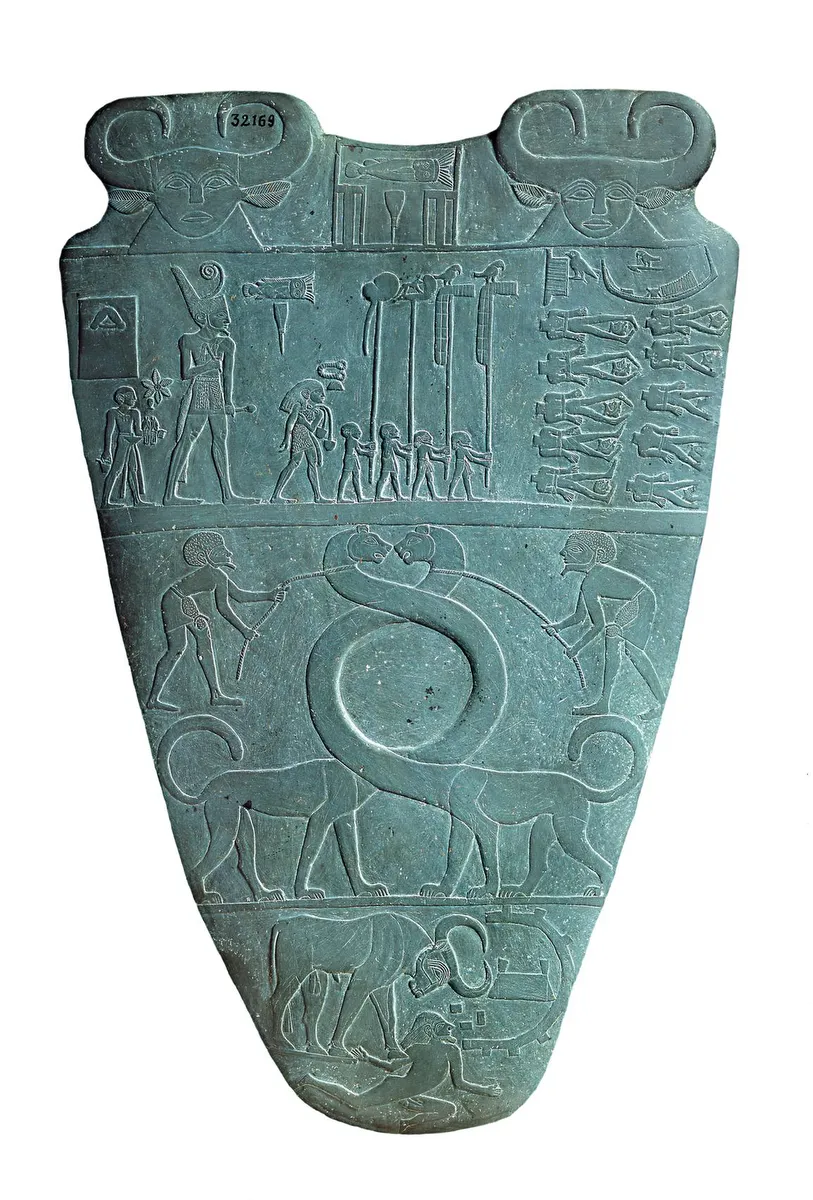
Narmer Palette (around 3100 BC). At the top, ahead of the king, four standard-bearers.
Rome: the eagle, the signum and the vexillum
The Roman army had three kinds of standard, and it is worth not mixing them up:
- Aquila (eagle): the emblem of each legion from the late 2nd century BC. It was a metal eagle on a pole. Losing it was a huge disgrace: at the Battle of the Teutoburg Forest (AD 9), the Germans carried off the eagles of three legions, and Rome took more than thirty years to recover them all.
- Signum: the standard of smaller units. It was a pole decorated with metal discs and, often, an open hand at the tip.
- Vexillum: a square cloth, usually red, hanging from a crossbar fixed to the pole. It was used by the cavalry and by detachments. It is the Roman standard closest to a cloth flag, and its name gives us the word vexillology.
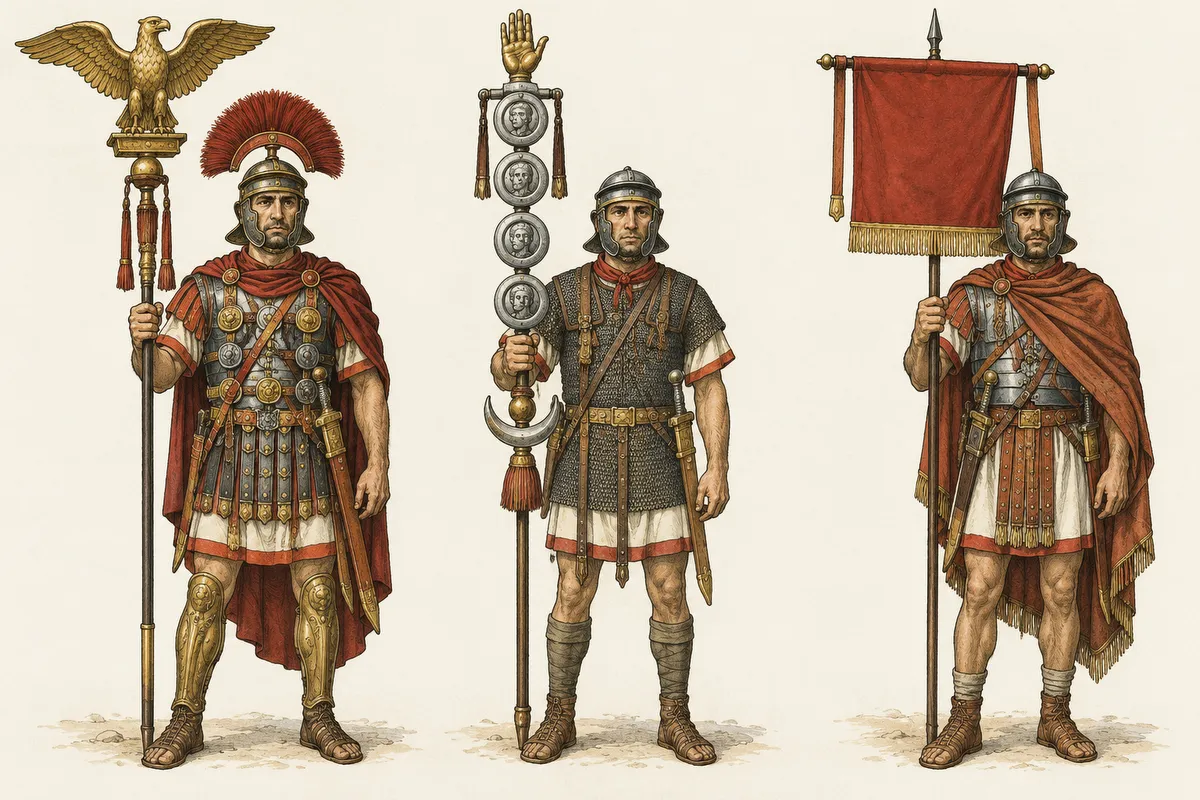
From left to right, the eagle, the signum and the vexillum. Illustrative reconstruction (generated image).
Asia: silk, horsehair and clans
In China, where silk was invented, cloth flags were used very early in armies and at court. The Book of Rites, one of the Chinese classics, describes an army on the march with the red bird in front, the black tortoise behind, the blue dragon on the left and the white tiger on the right: four animals that were also four flags. The image that circulates online as “the first Chinese flag, from 1500 BC” is a modern reconstruction, not a flag that was found.
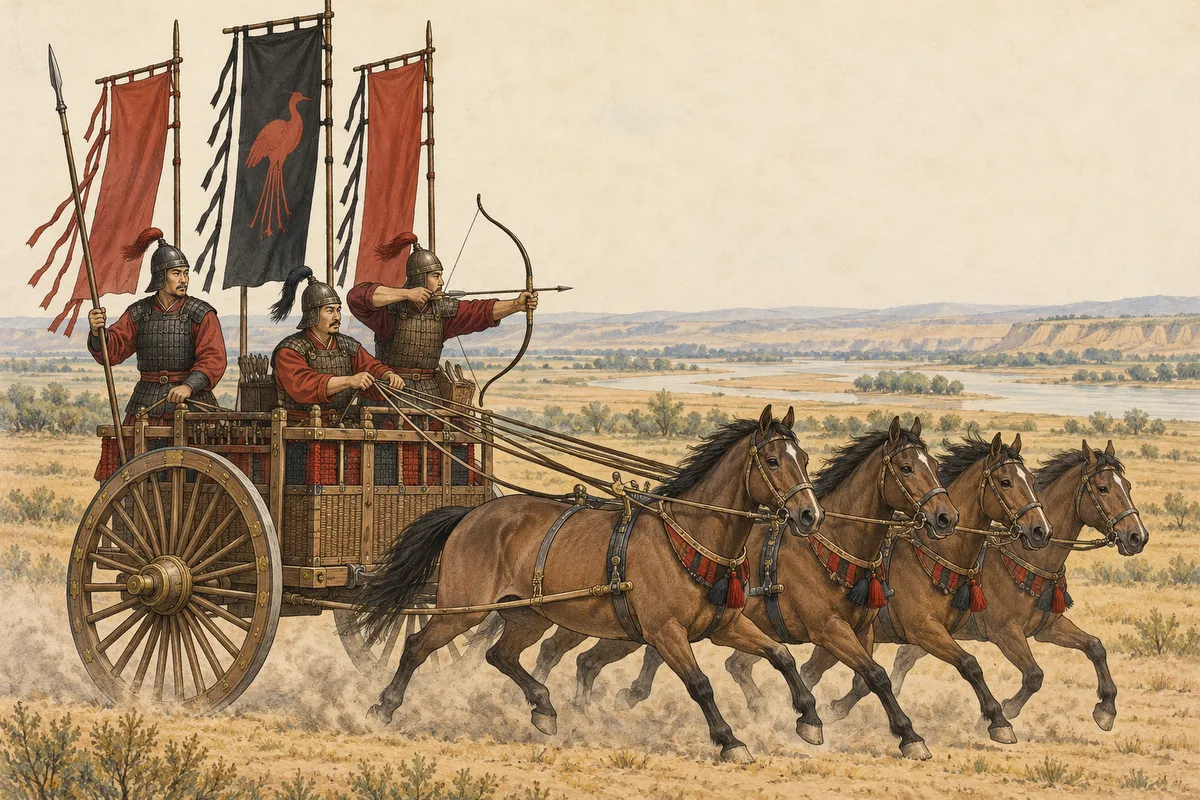
Chinese war chariot with silk banners. Illustrative reconstruction (generated image).
The peoples of the steppe used a different kind of standard. The Mongols carried the sülde: a spear with a ring of horsehair below the tip. According to tradition, Genghis Khan had a white sülde for times of peace and a black one for war. In the Ottoman Empire, the tuğ was a pole with horsetails and a metal ball at the top; the number of tails showed the rank of whoever carried it.
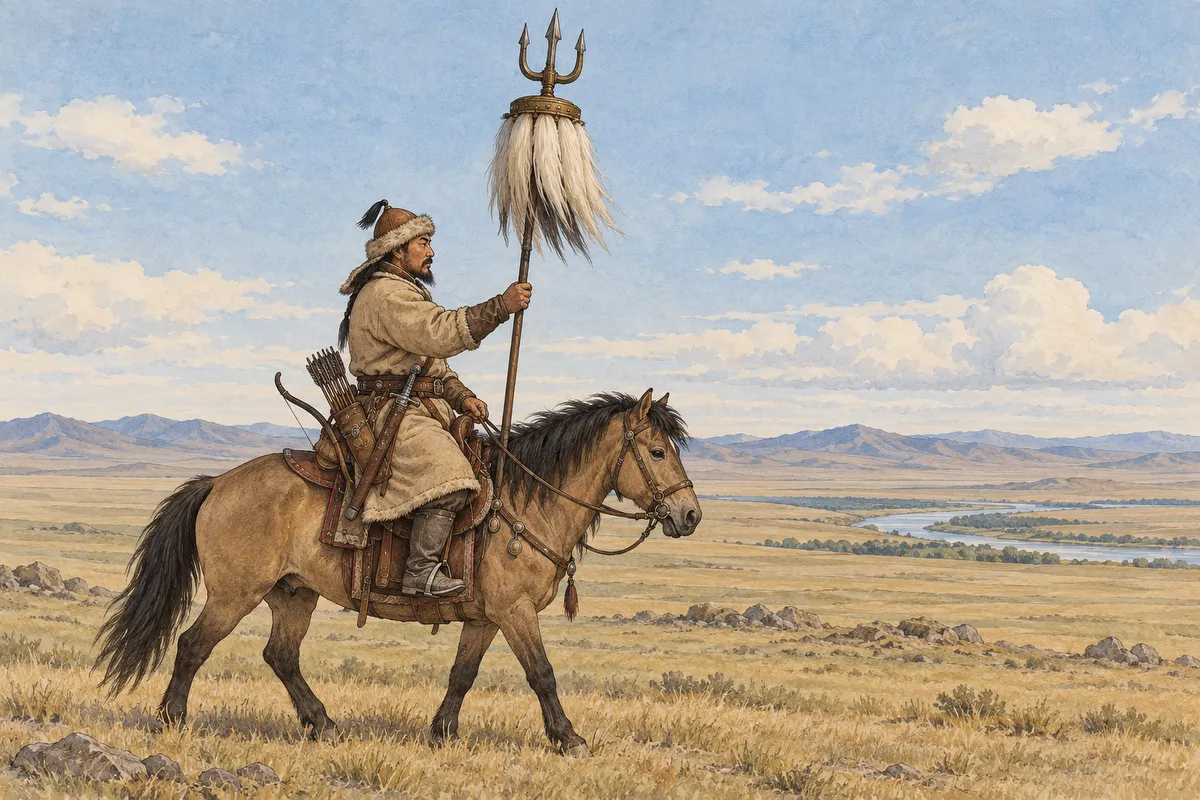
Mongol horseman with a sülde. Illustrative reconstruction (generated image).
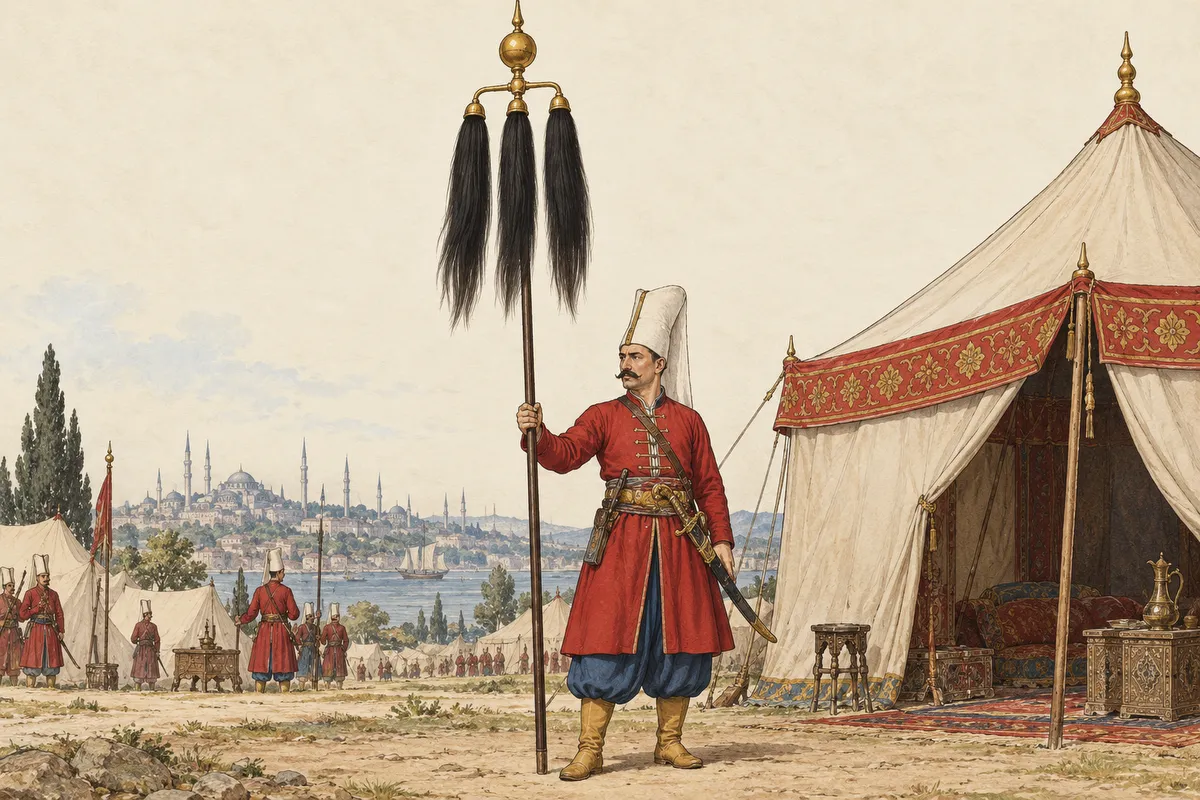
An Ottoman tuğ. Illustrative reconstruction (generated image).
In Japan, each samurai clan had its own emblems. Soldiers wore the sashimono on their backs, a small flag fixed to the armour with a pole, which showed which unit each of them belonged to in the middle of battle.
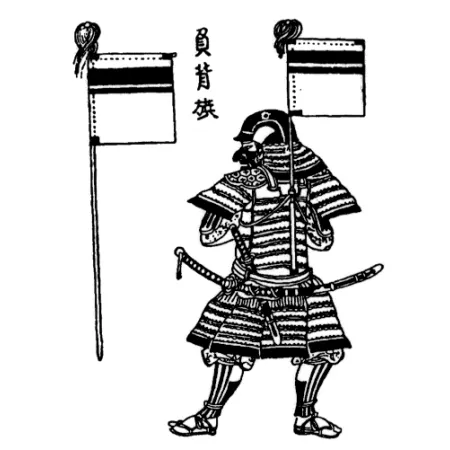
Samurai with a sashimono, from a Japanese book on armour published in 1735.
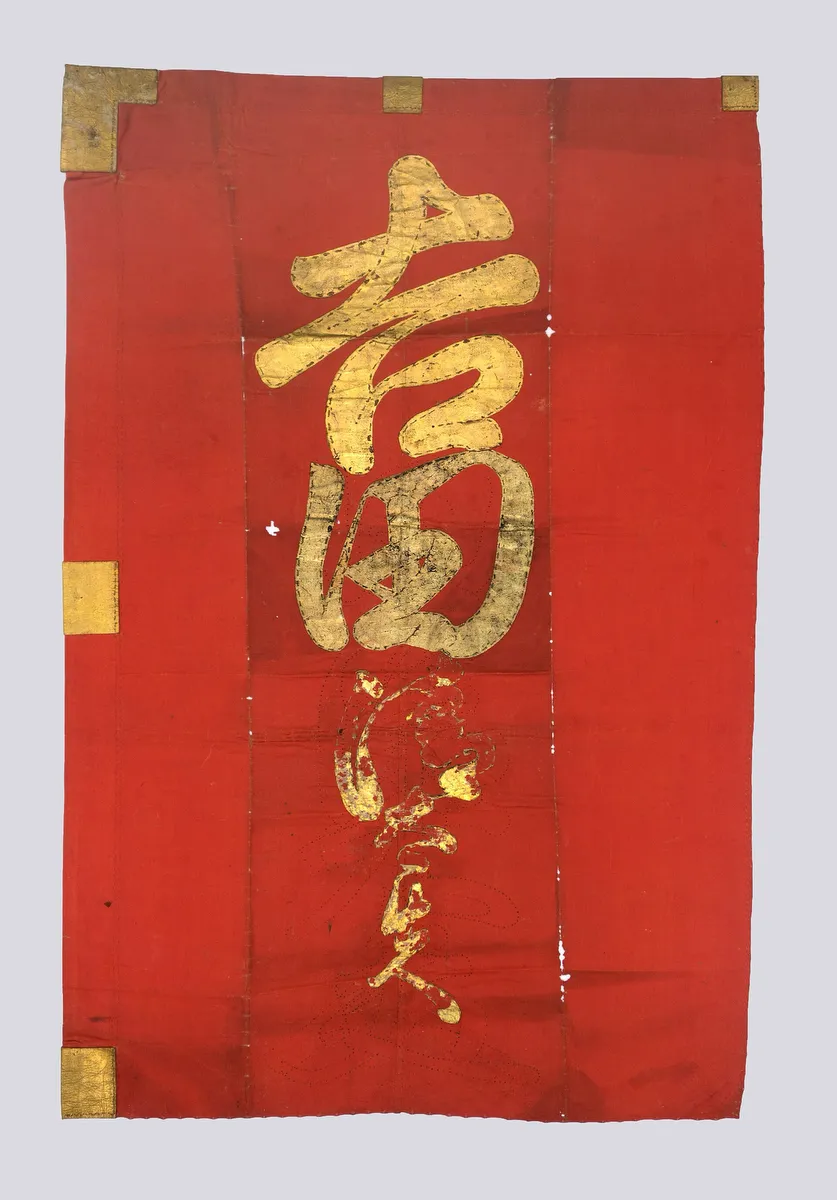
A real sashimono, in red silk with gold characters (Metropolitan Museum of Art, New York).
The Americas: feathers and metal
The Aztecs had their own vexilloids too. They were feather emblems, sometimes with gold pieces, fixed to a frame that high-ranking warriors wore on their backs, just like the Japanese sashimono. They marked out the leader and his unit in combat.
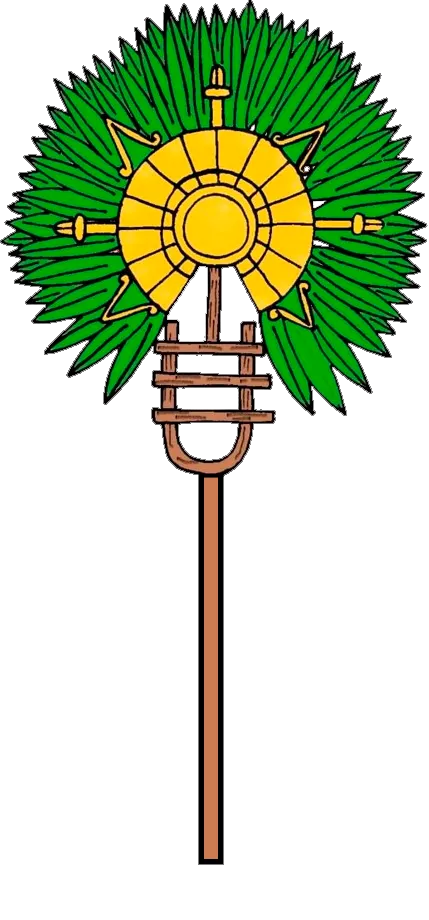
Drawing of an Aztec feather standard, the quetzalteopamitl.
Europe: from coats of arms to national flags
In medieval Europe, nobles also displayed their arms (the design of their shield) on square banners, so that they could be recognised in battle. Many of today’s flags come from there.
The flag of Denmark, the Dannebrog, is among the oldest national flags still in use. According to legend, it fell from the sky during the Battle of Lyndanisse (in today’s Tallinn, Estonia) in 1219. It is a legend: the earliest known image of this flag dates from the 14th century.
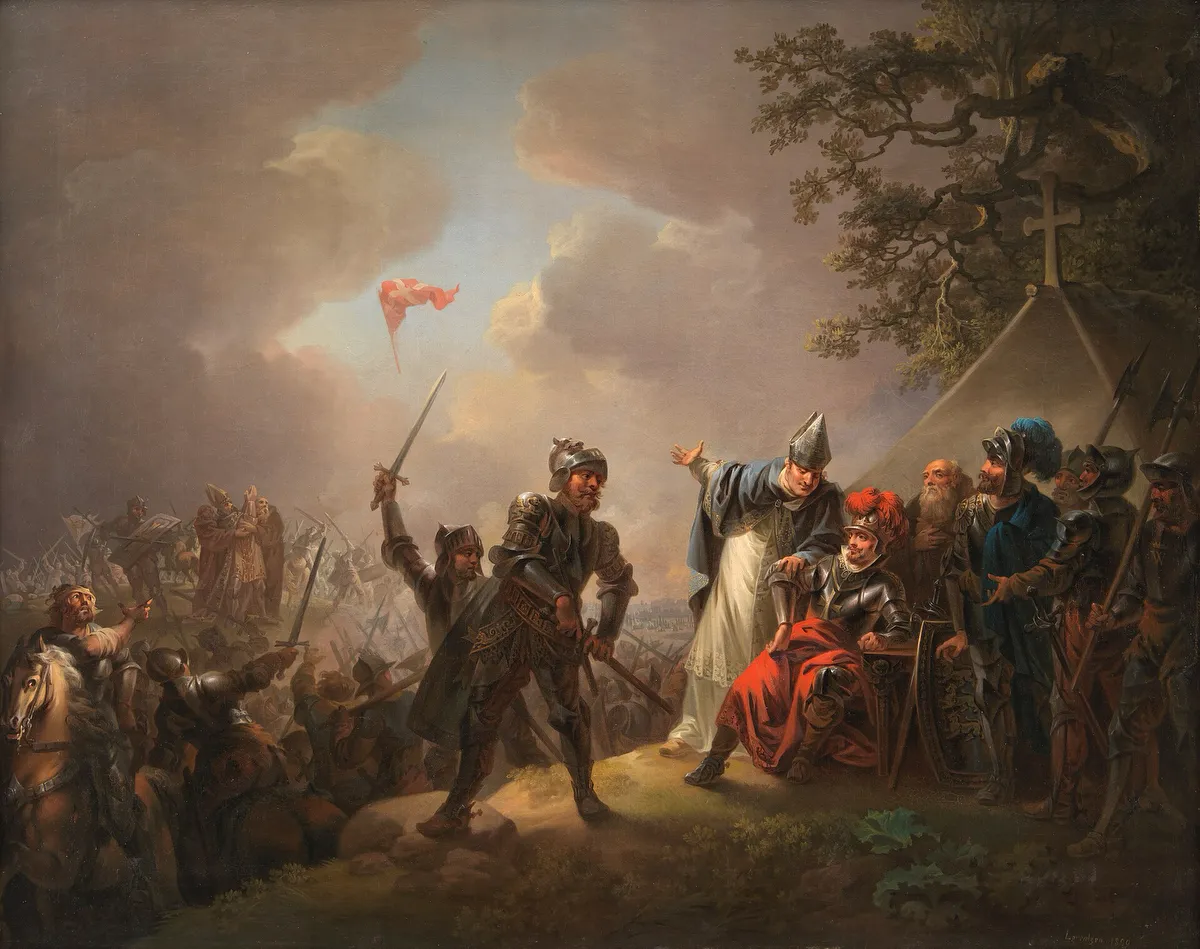
The legend painted: “The Dannebrog falls from the sky”, by C. A. Lorentzen (1809, Statens Museum for Kunst).
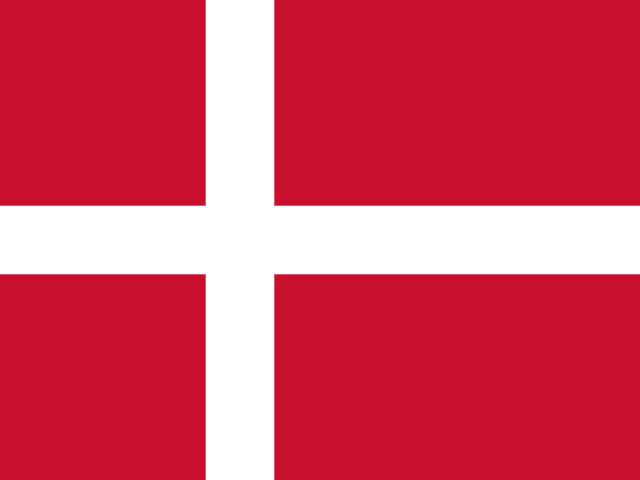
The flag of Denmark today: a white Nordic cross on red.
In the 17th and 18th centuries, every regiment had its own flags. Those of the French army usually bore a large white cross, with quarters in each unit’s own colours.

Flags of Swiss regiments in the service of the King of France, raised between 1671 and 1673.
National flags as we understand them today (the symbol of a country and its citizens, rather than of a king or an army) spread from the late 18th century, with the flag of the United States (1777) and the French tricolour. In the 19th century and, above all, the 20th, as dozens of countries became independent, almost every state in the world adopted its own.
How a flag is described
To describe a flag, vexillologists look at three things:
- The layout: how the field is divided. Horizontal or vertical stripes, a cross, a triangle at the hoist, a canton, a diagonal…
- The figures: what is placed on it. Stars, suns, moons, animals, plants, coats of arms, tools…
- The colours: how many there are and which ones.
At Wiki Banderas we have classified every flag in the archive this way. On the flag elements page you will find each element explained with a drawing, together with every flag that has it: it is the best way to learn to “read” a flag.
What makes a good flag?
Vexillology also studies why some flags work better than others. The most quoted guide is the five principles Ted Kaye gathered in Good Flag, Bad Flag (2006): keep it simple, use meaningful symbolism, use few colours, no lettering or seals, and be distinctive. You will find them explained with examples in the five principles of a good flag.