Skip to content

Wiki Banderas
Open menu

Flag of Benavent de Segrià

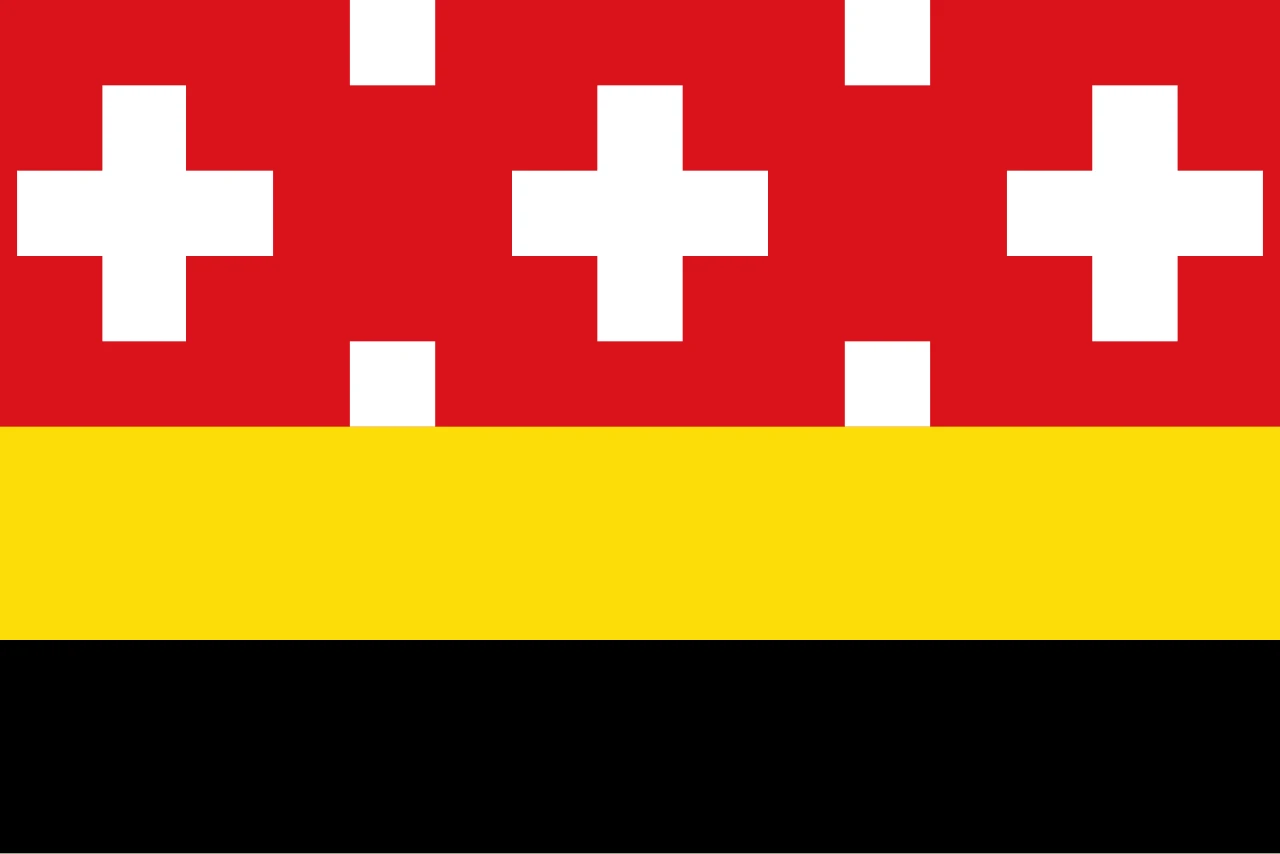
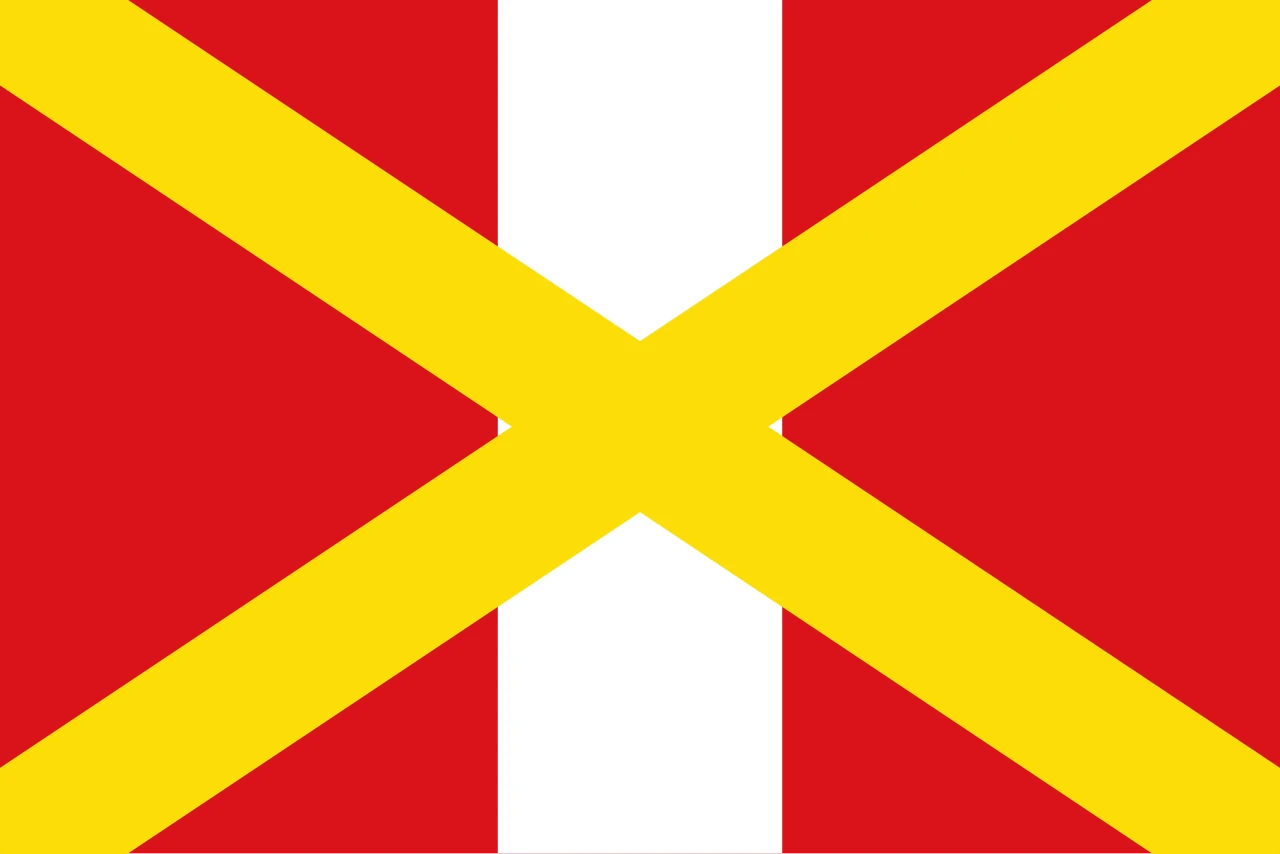
The flag of Benavent de Segrià (Lleida) is red with a white pale and a golden St Andrew's cross: a village of windmills and marquises.

Flag of Benavent de Segrià
Coat of arms

The flag, in figures

Every fact about the flag, each with what it means.

Proportions
2:33 wide for every 2 high. 989 flags in the catalogue share it.
Properties
Normal flagFIAV symbol: the form of the flag.
Use
CivilFIAV symbol: who may fly the flag.
Adopted
199719 February 1997 · 29 years ago
Colours
  • Red
  • White
  • Yellow
Reference shades: the official one may vary slightly.
Coat of arms
YesIt carries the coat of arms on the cloth.
12

Take a closer look

  1. The red cloth

  2. 1

    The white pale

  3. 2

    The gold saltire

How it is described

The flag in the words of vexillology and heraldry.

Vexillological description

It is a red field —the cloth of the flag —with a 2:3 ratio, with a vertical white pale in the centre and a yellow saltire on top.

Pale
a vertical white band, centred, of 2/9 of the length of the field.
Saltire
an X-shaped cross, yellow, set over the pale; its arms measure a sixth of the height.
Field
red, with no other divisions or coat of arms.
What it carries

Each element and how many of the 1,390 flags in the catalogue carry it. In yellow, the rarest.

Its history in dates

Every date in its story, at a glance.

  1. 1995

    The coat of arms, approved on 8 June 1995

  2. 1997

    The flag, published in the DOGC of 19 February 1997

The full story

How it was born, how it has changed and what it means.

Red, with a white pale in the centre crossed by a golden St Andrew’s cross: the flag of Benavent de Segrià (Segrià, Lleida) does not paint the mill that named it —that is the coat of arms’ job —but it leans on it.

How it came about

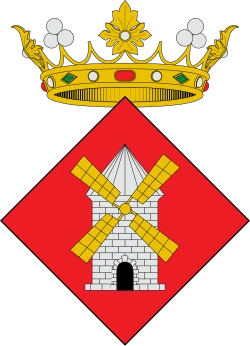
The coat of arms, approved on 8 June 1995, is a song to the wind: on gules, a windmill of argent closed of sable with sails of gold, a “canting arms” that alludes —a sort of speaking portrait —to the name of the village; a marquis’s crown, because Benavent was the seat of a marquisate from 1702. The flag, published in the DOGC of 19 February 1997, took another route: the two geometric pieces of the mill’s sails, the white pale and the golden saltire, on the red of the coat of arms.

How it has changed

No earlier documented version: it has been the only official flag since 1997.

What it means

  • White pale and gold saltire

    the sails of the windmill of the coat of arms, turned into a flag.

  • Red ground

    the gules field of the municipal arms.

  • No mill and no crown

    the flag simplifies; the coat of arms keeps the detail.

Fun facts

  1. A marquisate in the crown

    Benavent was the seat of a marquisate from 1702, and the coat of arms does not hide it: its marquis’s crown stamps the mill with the title of rural nobility.

  2. A flag of sails

    The X-shaped cross of the flag is the golden “aspat” that the coat of arms sets over the mill: the sails of the wind, stretched across the whole field; the white pale acts as the tower that holds them.

Location

How much have you learnt?

Test what you have read about the flag of Benavent de Segrià.

  1. 1. Which one is the flag of Benavent de Segrià?

  2. 2. Which of these elements appears on the flag?

  3. 3. What are the proportions (height:width) of the flag?

  4. 4. In which year was the current flag adopted?

More flags

Accessibility preferences

Accessibility statement

Quick profiles

Text and reading

Text size
Default
Line height
Default
Letter spacing
Default
Word spacing
Default

Colour

Motion and orientation

Cursor