Skip to content

Wiki Banderas
Open menu

Flag of Ceuta

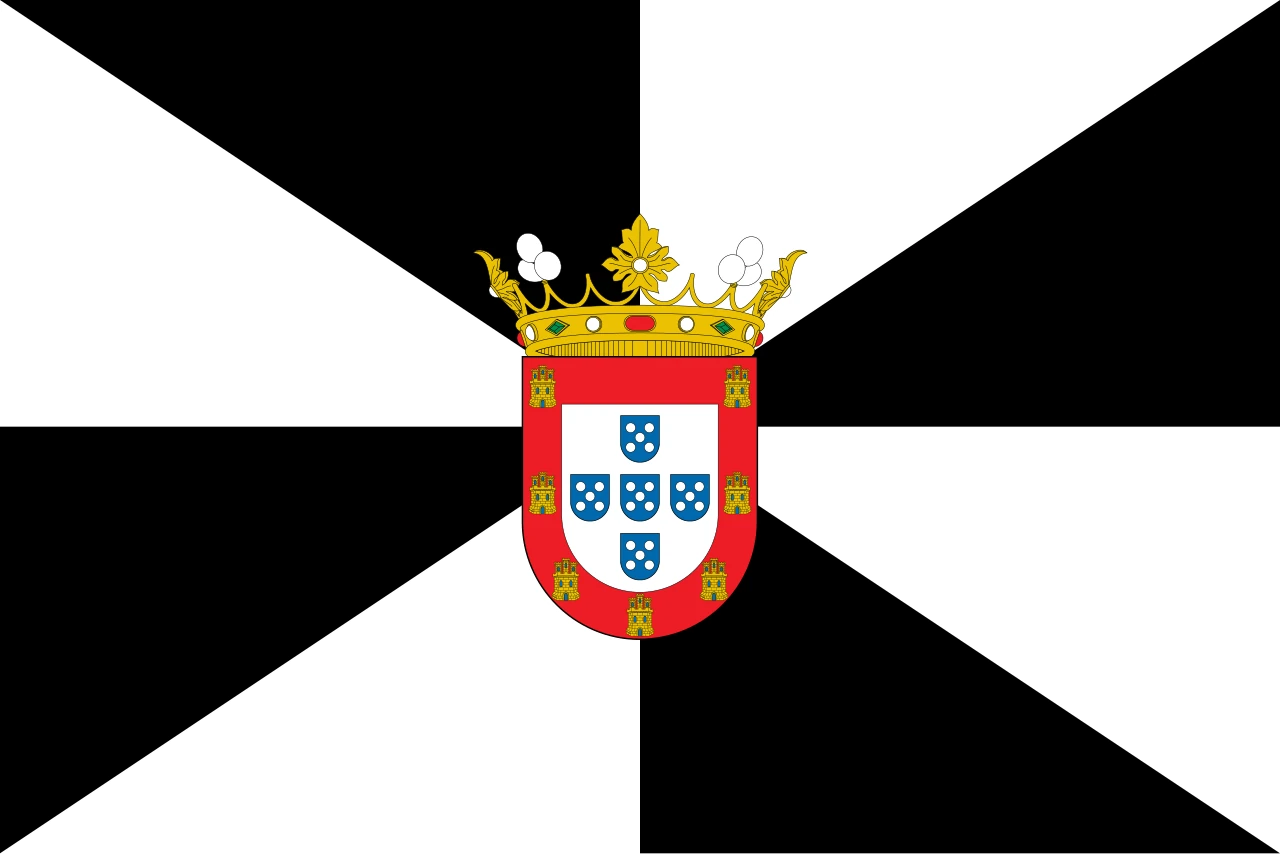
The flag of Ceuta copies that of Lisbon and bears an almost Portuguese coat of arms: a reminder of the time when the city was Portuguese.

Flag of Ceuta
Coat of arms

The flag, in figures

Every fact about the flag, each with what it means.

Proportions
2:33 wide for every 2 high. 989 flags in the catalogue share it.
Properties
Normal flagFIAV symbol: the form of the flag.
Use
CivilFIAV symbol: who may fly the flag.
Adopted
199513 March 1995 · 31 years ago
Colours
  • white
  • black
Reference shades: the official one may vary slightly.
Coat of arms
YesIt carries the coat of arms on the cloth.
12

Take a closer look

  1. The eight gores

  2. 1

    The coat of arms

  3. 2

    The crown

How it is described

The flag in the words of vexillology and heraldry.

Vexillological description

It is a rectangular field with a 2:3 ratio divided into eight triangles that come out of the diagonals and the central lines, alternating white and black, with the coat of arms of the city in the centre.

Triangles
eight, four white and four black.
Upper corner by the flagpole (the pole it is hoisted from)
black; the colours alternate from there.
Coat of arms
in the centre and large; there is an official version without a coat of arms.
Field (the cloth)
only white and black.

What it carries

Each element and how many of the 1,390 flags in the catalogue carry it. In yellow, the rarest.

Its history in dates

Every date in its story, at a glance.

  1. 1415

    In 1415 a Portuguese fleet led by King John I conquered Ceuta

  2. 1668

    Ceuta passed into Spanish hands in 1668, but kept its flag

  3. 1995

    Today it is the standard of the Autonomous City of Ceuta, which has had its own Statute…

The full story

How it was born, how it has changed and what it means.

The flag of Ceuta has the field divided into white and black triangles that come out of the centre, and on top the arms of the city, with a golden crown. It looks very much like the flag of Lisbon, and it is no coincidence: Ceuta was Portuguese for more than two centuries.

How it came about

In 1415 a Portuguese fleet led by King John I conquered Ceuta. The city then adopted the flag of Saint Vincent, that of Lisbon, with arms based on those of Portugal in the centre. That white and black design comes from the old banner of Lisbon, and is one of the oldest in Europe.

Ceuta passed into Spanish hands in 1668, but kept its flag. Today it is the standard of the Autonomous City of Ceuta, which has had its own Statute of Autonomy since 1995.

How it has changed

The flag has been the same since the Portuguese period. What has been regulated over time is the arms in the centre, described by the municipal law in full detail.

What it means

The flag is a mixture of symbols of Lisbon and Portugal:

  • White and black triangles

    the colours of the flag of Saint Vincent, patron of Lisbon.

  • Arms in the centre

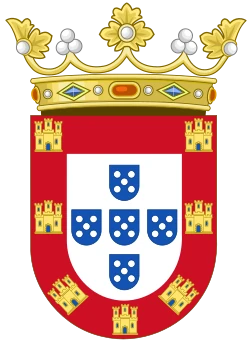
    five blue shields with five white bezants each, in a cross, on a white ground. They are the arms of Portugal.

  • Red border with seven golden castles

    also from the Portuguese arms, though here it carries a marquess’s crown over the whole.

Fun facts

  1. A flag with a Portuguese accent

    Although Ceuta is Spanish, its arms are based on those of Portugal. It has been preserved since the city passed from Portugal to Spain.

  2. The same flag as Lisbon

    The flag of Ceuta and the old flag of Saint Vincent, which Lisbon uses, share the same design of white and black triangles.

  3. Raised in 1415

    According to legend, the person in charge of raising the flag in 1415 was Álvaro Vaz de Almada, after the Portuguese conquest.

Localisation

How much have you learnt?

Test what you have read about the flag of Ceuta.

  1. 1. Which one is the flag of Ceuta?

  2. 2. Which of these elements appears on the flag?

  3. 3. What are the proportions (height:width) of the flag?

  4. 4. In which year was the current flag adopted?

Sources

Text based on the article “Bandera de Ceuta” from the Spanish Wikipedia, published under the licence CC BY-SA 4.0.

Sources consulted:

Credits

Flag image: Ulaidh, Wikimedia Commons · CC BY-SA 4.0.

More flags

Accessibility preferences

Accessibility statement

Quick profiles

Text and reading

Text size
Default
Line height
Default
Letter spacing
Default
Word spacing
Default

Colour

Motion and orientation

Cursor