
Skip to content

Wiki Banderas
Open menu

Flag of Hokkaido

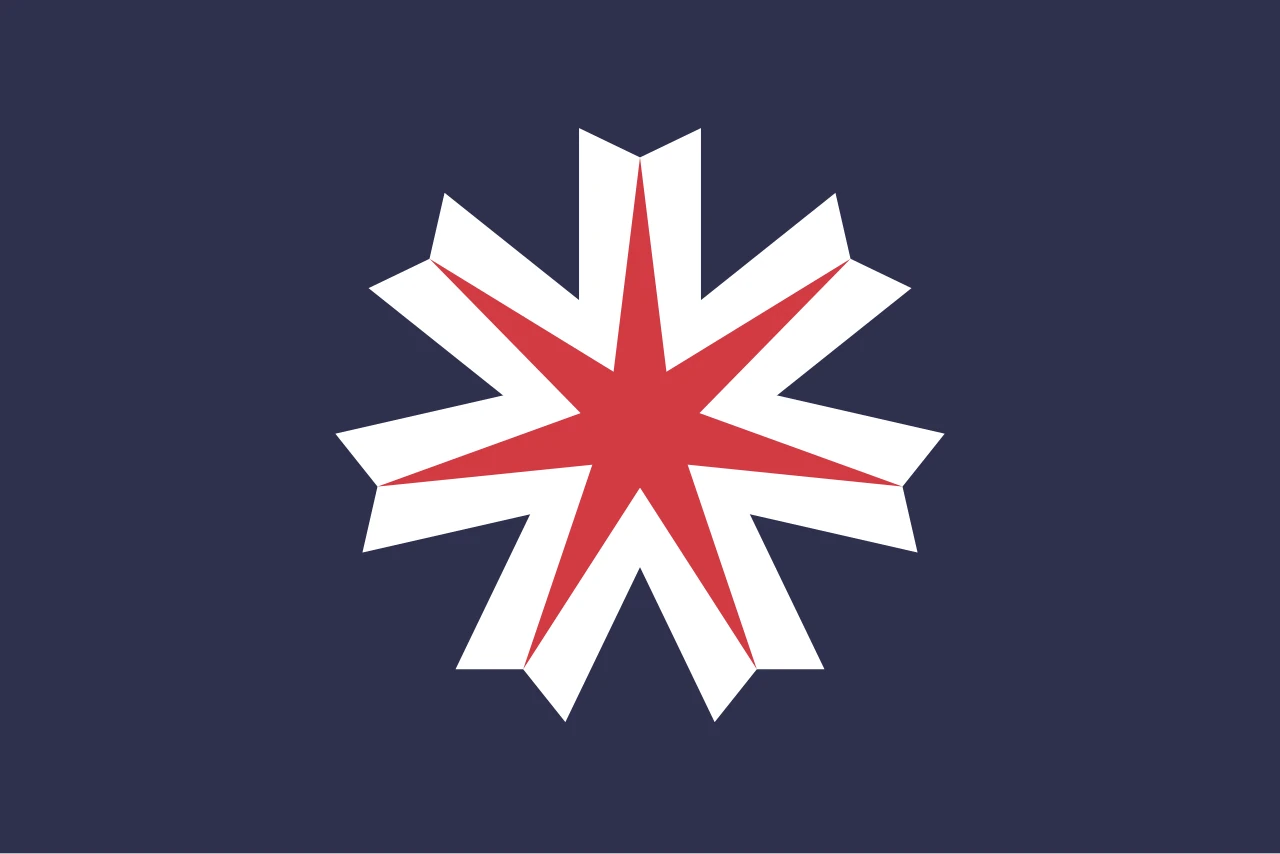
A red seven-pointed star on a blue ground: the flag of Hokkaido comes from the standard of the colonisers of the island, born on a ship in 1872.

Flag of Hokkaido
Coat of arms

The flag, in figures

Every fact about the flag, each with what it means.

Proportions
2:33 wide for every 2 high. 989 flags in the catalogue share it.
Properties
Normal flagFIAV symbol: the form of the flag.
Use
Civil and stateFIAV symbol: who may fly the flag.
Adopted
19671 May 1967 · 59 years ago
Colours
  • blue
  • red
  • white
Reference shades: the official one may vary slightly.
Coat of arms
YesIt carries the coat of arms on the cloth.

Take a closer look

  • Field

  • Star

  • Halo

  • Colours

How it is described

The flag in the words of vexillology and heraldry.

Vexillological description

It is a rectangular field —the cloth of the flag —with a 2:3 ratio, dark blue, with a red seven-pointed star in the centre, surrounded by a white halo.

Field
blue and plain, with no divisions.
Star
centred, red, seven-pointed; it is the only figure painted on the field.
Halo
a layer of white light surrounding the star and filling the gaps between the points.
Colours
blue ground, red on the star and white in the halo.
What it carries

Each element and how many of the 1,390 flags in the catalogue carry it. In yellow, the rarest.

Its history in dates

Every date in its story, at a glance.

  1. 1872

    That standard was born on the ship that carried the colonists, had been official since February…

  2. 1882

    When the Commission was abolished in 1882 the flag disappeared with it: between 1882 and 1967

  3. 1960

    In the 1960s the Japanese prefectures were giving each other flags

  4. 1967

    The committee received more than 7500 design proposals and on 31 March 1967 chose…

  5. 1992

    In 1992, to simplify the identity of the government and avoid confusion

The full story

How it was born, how it has changed and what it means.

The flag of Hokkaido is a dark blue field with a red seven-pointed star surrounded by a halo of white light. It is the standard of the largest and northernmost prefecture of Japan, and its star recalls the one carried by the colonisers who occupied the island in the nineteenth century.

How it came about

In the 1960s the Japanese prefectures were giving each other flags, and Hokkaido wanted one of its own for the centenary of the colonisation of the island. The committee received more than 7500 design proposals and on 31 March 1967 chose the one by Kenichi Kuriyagawa, director of the Hokkaido Institute of Design. On 1 May it was made official by prefecture notification number 775, with the name Emblem and Flag of Hokkaido.

The design looked to the past: the star came from the Hokushin, the blue flag with a red star of the Colonisation Commission, the body that governed the island in its early days. That standard was born on the ship that carried the colonists, had been official since February 1872, and the Commission stopped using it in 1878. When the Commission was abolished in 1882 the flag disappeared with it: between 1882 and 1967, Hokkaido had no symbol of its own.

How it has changed

The current flag has only one version: it appeared in 1967 and has not changed since.

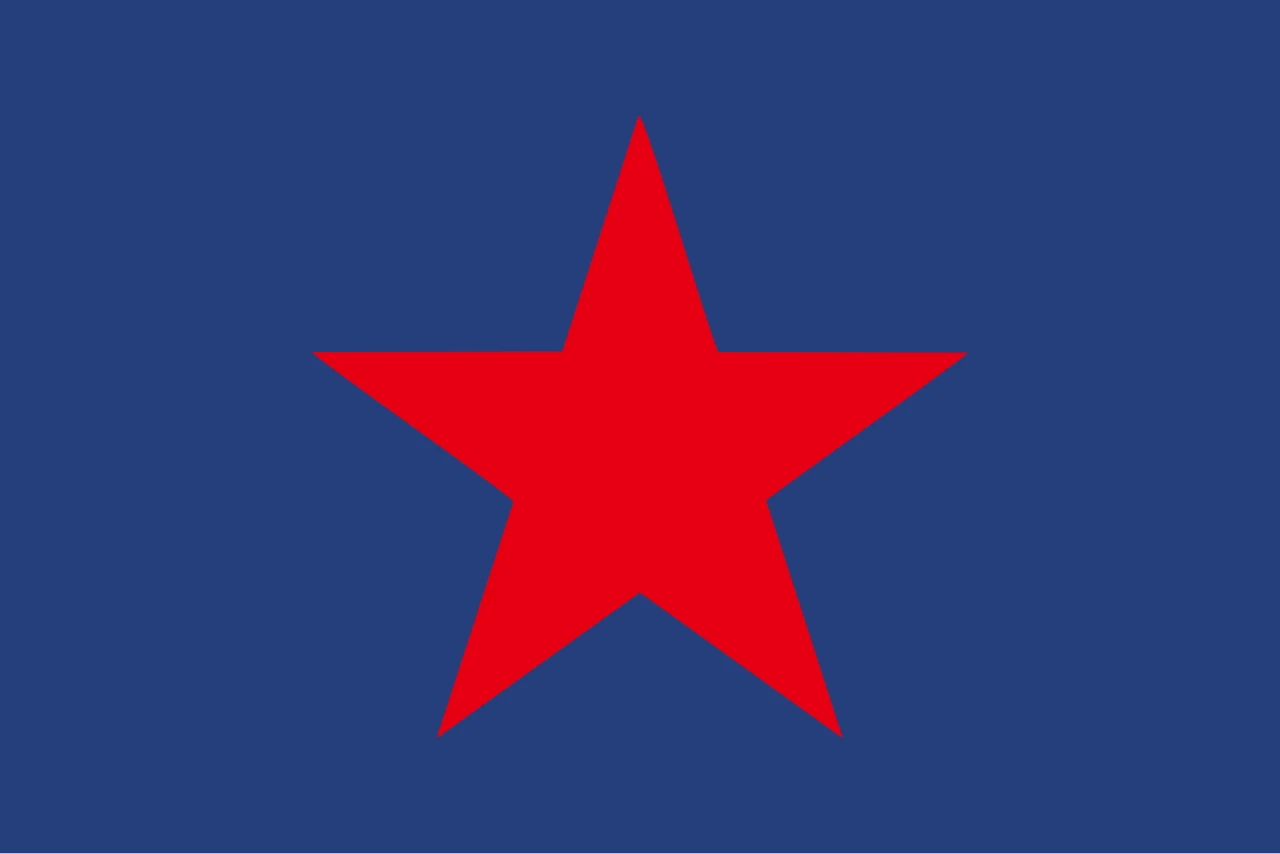
  1. Blue flag with a red five-pointed star in the centre
    Hokkaido Development Commission · Public domain

    1872-1878

    The Hokushin, flag of the Colonisation Commission: a red five-pointed star on a blue ground, taken from the standard of the colonists’ ship.

  2. Current flag of Hokkaido

    1967

    The new flag turned the old star into a seven-pointed one and added a halo of light to it. In 1992, to simplify the identity of the government and avoid confusion, the emblem also became its logo.

What it means

This is Hokkaido’s own official interpretation:

  • Blue

    the sea and the sky of the north.

  • Red seven-pointed star

    the indomitable energy of the people of the island.

  • White light around the star

    the brilliance, the wind and the snow of Hokkaido.

  • Seven points

    they modernise the five-pointed star of the old flag of the colonisers and represent the future.

Fun facts

  1. A flag born on a ship

    The star of Hokkaido comes from the standard that the ship of the colonisers carried on its mast, made the symbol of the Colonisation Commission in 1872.

  2. Seven points, ninety-five years late

    Back in 1872, Kuroda Kiyotaka, head of the Commission, asked for the five-pointed star to be changed for a seven-pointed one. The government refused; the 1967 flag finally gave him his wish.

  3. The emblem has no fixed colours

    The 1967 rule fixes the colours of the flag, but leaves the emblem without mandatory colours: each use can paint it however it likes.

Localisation

How much have you learnt?

Test what you have read about the flag of Hokkaido.

  1. 1. Which one is the flag of Hokkaido?

  2. 2. Which of these elements appears on the flag?

  3. 3. What are the proportions (height:width) of the flag?

  4. 4. In which year was the current flag adopted?

Sources

Text based on the article “Bandera de Hokkaidō” from the Spanish Wikipedia, published under the licence CC BY-SA 4.0.

Sources consulted:

Credits

Flag image: Monaneko, Wikimedia Commons · Public domain.

More flags

Accessibility preferences

Accessibility statement

Quick profiles

Text and reading

Text size
Default
Line height
Default
Letter spacing
Default
Word spacing
Default

Colour

Motion and orientation

Cursor