Skip to content

Wiki Banderas
Open menu

Flag of Neuchâtel

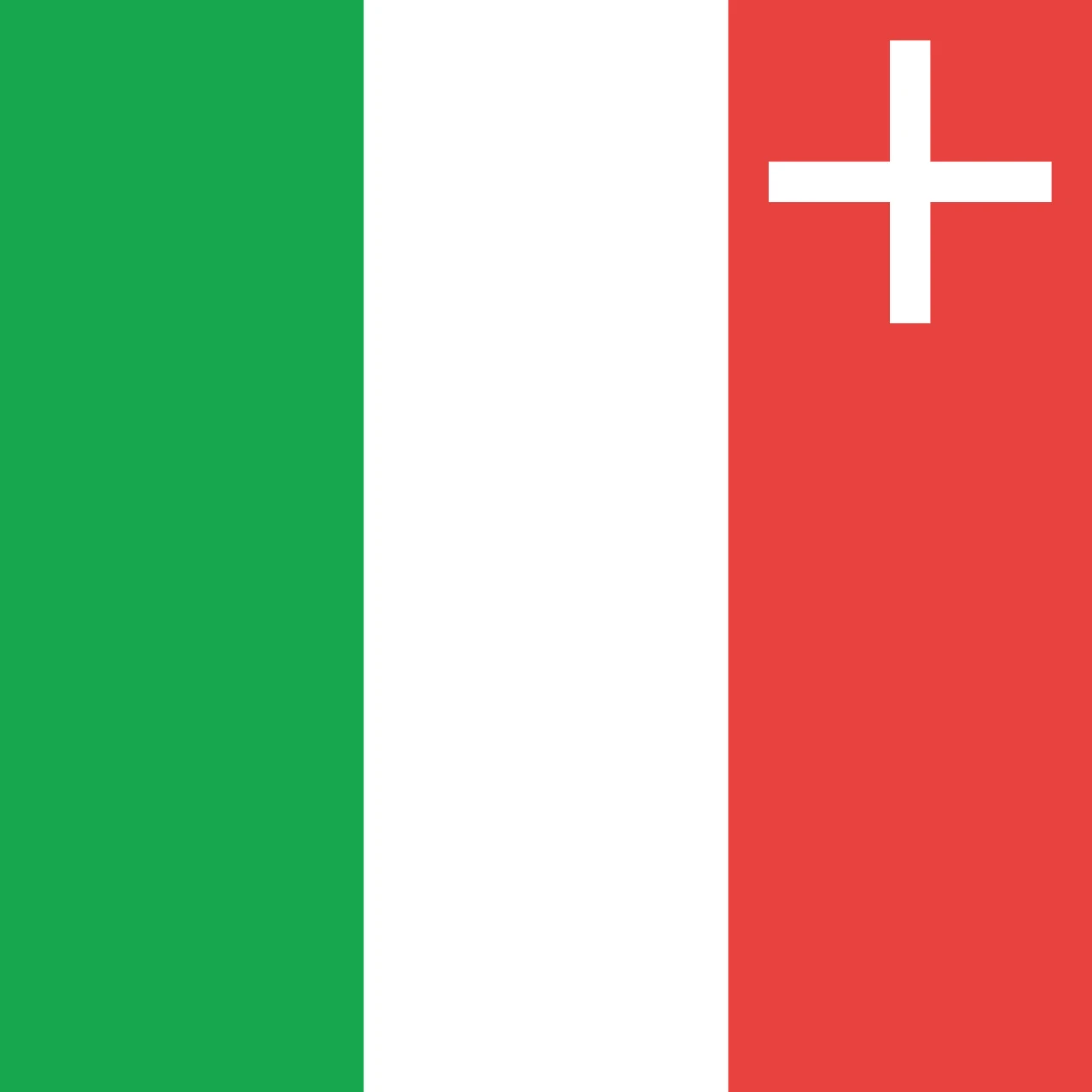
Green, white and red with a Swiss cross: the flag the republicans of 1848 adopted on dethroning the king of Prussia, without ever approving it by law.

Flag of Neuchâtel

The flag, in figures

Every fact about the flag, each with what it means.

Proportions
1:11 wide for every 1 high. 29 flags in the catalogue share it.
Properties
Normal flagFIAV symbol: the form of the flag.
Use
CivilFIAV symbol: who may fly the flag.
Colours
  • Green
  • White
  • Red
Reference shades: the official one may vary slightly.

Take a closer look

  • Stripes

  • Cross

  • Colours

How it is described

The flag in the words of vexillology and heraldry.

Vexillological description

It is a square field divided into three equal vertical stripes (bands of colour): green by the flagpole (the hoist side), white in the middle and red at the fly side (the free side). In the upper corner of the red stripe there is a white cross.

Stripes
three, of the same width, from left to right.
Cross
white and small, in the upper corner of the red band.
Colours
green, white and red.

What it carries

Each element and how many of the 1,390 flags in the catalogue carry it. In yellow, the rarest.

Its history in dates

Every date in its story, at a glance.

  1. 1707

    Neuchâtel lived a unique situation: from 1707 its prince was the king of Prussia

  2. 1848

    On 1 March 1848 the republicans dethroned the prince and adopted the flag of their party

  3. 1857

    In 1857 the king renounced every claim

  4. 1870

    The cross in the corner was added in 1870

  5. 1923

    Returning to the old standard was put to a vote in 1923

The full story

How it was born, how it has changed and what it means.

Three vertical bands, green, white and red, with a white cross by the flagpole: the flag of Neuchâtel is the one that won a revolution without firing a shot.

How it came about

Neuchâtel lived a unique situation: from 1707 its prince was the king of Prussia, and from 1815 the country was a Swiss canton with nominal obedience to that crown. On 1 March 1848 the republicans dethroned the prince and adopted the flag of their party, with no formal law, to the derision of the royalists. In 1857 the king renounced every claim.

How it has changed

The tricolour replaced the old battle standard, a yellow field with a red band and three white arrowheads. The cross in the corner was added in 1870, according to the vexillologist Otto Angst, so as not to confuse it with the Italian flag. Returning to the old standard was put to a vote in 1923, 1931 and 1954, and it always lost.

What it means

  • Red

    the vineyard of the south.

  • White

    the limestone walls of the valleys.

  • Green

    the pastures and forests of the north.

  • Cross

    Switzerland, in its ancient version, with long arms.

Fun facts

  1. The canton with a foreign king

    Between 1815 and 1857, Neuchâtel was a Swiss canton and owed nominal obedience to the king of Prussia: a crown thousands of kilometres away.

  2. Three referenda for the old flag

    The standard of 1350, more tied to the history of the country, was put to a vote in 1923, 1931 and 1954: the revolutionary tricolour always won.

  3. Landscapes explained late

    Matching each stripe with a landscape (vineyards, walls, forests) was collected in 2001 by Le Temps, citing the canton’s archivists.

Localisation

How much have you learnt?

Test what you have read about the flag of Neuchâtel.

  1. 1. Which one is the flag of Neuchâtel?

  2. 2. What are the proportions (height:width) of the flag?

Sources

Sources consulted:

  • Flags of the World (FOTW): Neuchâtel
  • Otto Angst (1992), citado en Flags of the World: cruz añadida en 1870
  • Maurice de Tribolet, citado en Le Temps (4-1-2001) y en Flags of the World: lecturas de los colores

Credits

Flag image: Autor desconocido, Wikimedia Commons · Public domain.

More flags

Accessibility preferences

Accessibility statement

Quick profiles

Text and reading

Text size
Default
Line height
Default
Letter spacing
Default
Word spacing
Default

Colour

Motion and orientation

Cursor