Every fact about the flag, each with what it means.
Proportions
2:33 wide for every 2 high. 989 flags in the catalogue share it.
Properties
Normal flagFIAV symbol: the form of the flag.
Use
CivilFIAV symbol: who may fly the flag.
Adopted
199912 January 1999 · 27 years ago
Colours
yellow
red
blue
white
Reference shades: the official one may vary slightly.
Coat of arms
YesIt carries the coat of arms on the cloth.
Take a closer look
The divided cloth
1
The dolphin
2
The eagle of Nice
How it is described
The flag in the words of vexillology and heraldry.
Vexillological description
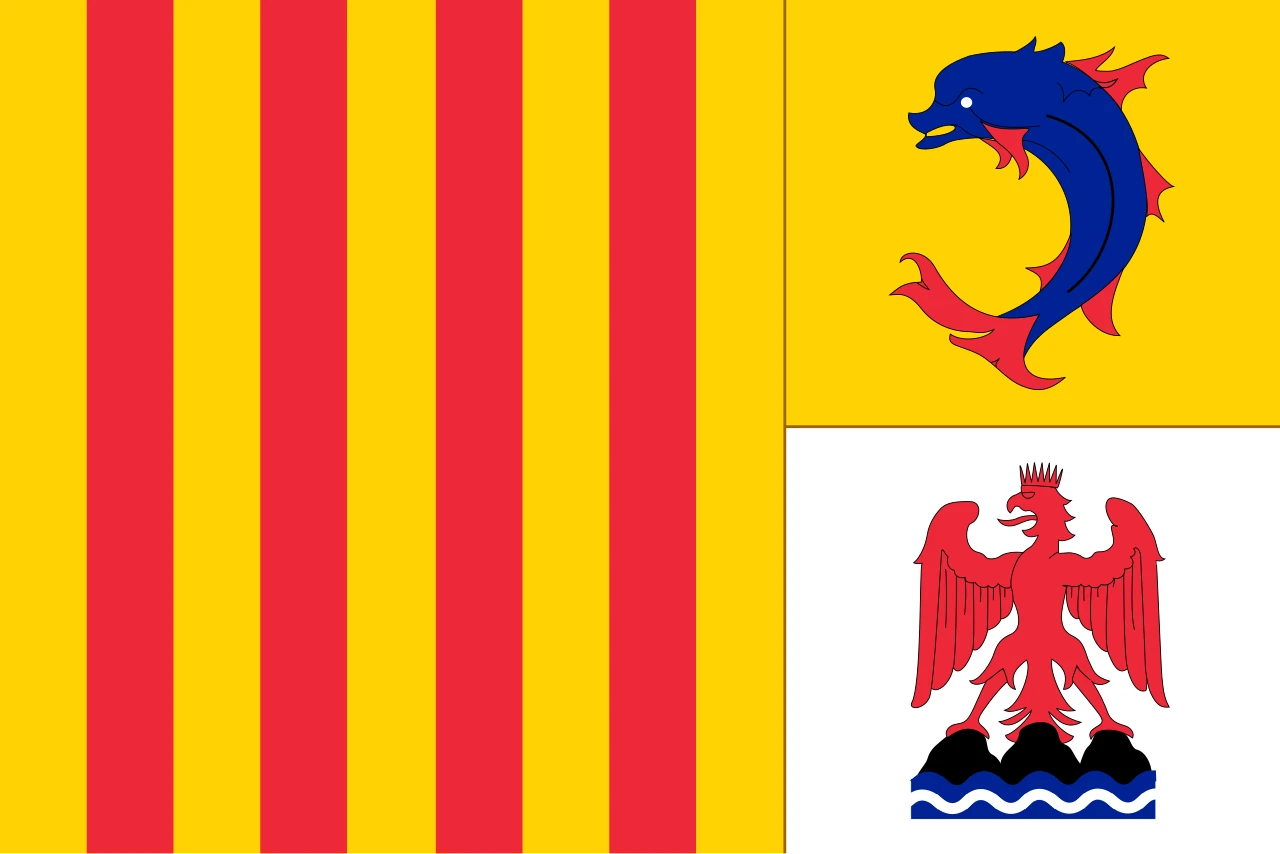
It is a rectangular field with a 2:3 ratio with three parts. The left one bears vertical stripes —bands of colour from top to bottom— in red and yellow; the upper right is yellow with a blue dolphin; the lower one is white with a red eagle.
Stripes
on the left, vertical, red and yellow.
Dolphin
at the top right, blue, on yellow.
Eagle
at the bottom right, red, on white.
Águila
abajo a la derecha, roja, sobre blanco.
What it carries
Each element and how many of the 1,390 flags in the catalogue carry it. In yellow, the rarest.
Its first flag was a map of the region made of black and white pixels, and the next one (used…
1999
On 12 January 1999 the president of the regional council
2018
Since 2018 the regional council has presented itself under the name “Région Sud”
The full story
How it was born, how it has changed and what it means.
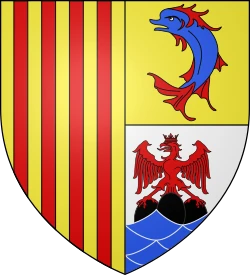
The flag of Provence-Alpes-Côte d’Azur (in French, Provence-Alpes-Côte d’Azur, abbreviated “PACA”) mixes three coats of arms into a single one. On the left, the vertical red and yellow stripes of Provence; at the top right, a blue dolphin; and at the bottom right, a red eagle.
How it came about
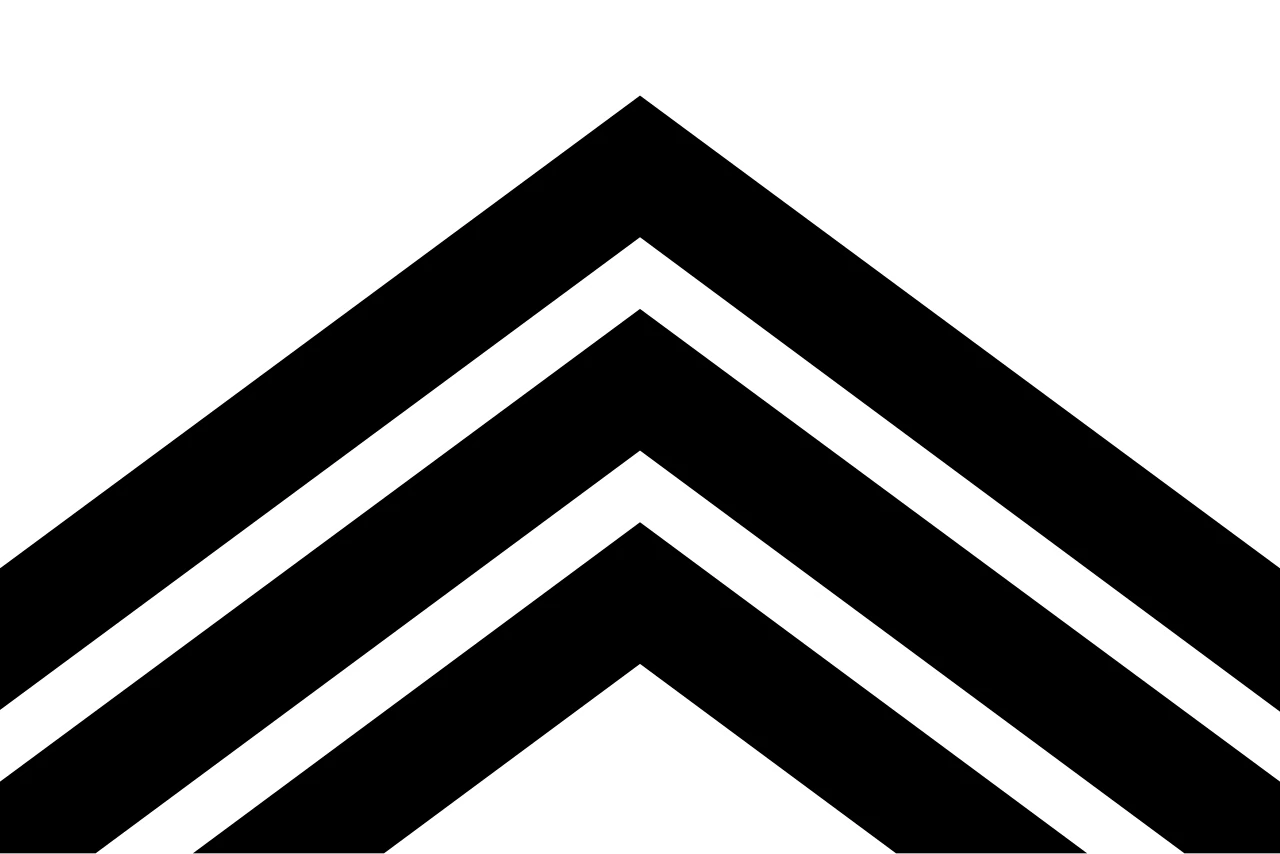
The region brings together territories that had different histories: Provence, the Dauphiné and the county of Nice. Its first flag was a map of the region made of black and white pixels, and the next one (used at least from 1997) showed the map with each department in a different colour.
On 12 January 1999 the president of the regional council, Michel Vauzelle, presented a new flag, which replaced those using maps. It brought together the traditional symbols of the three territories. It is a flag of widespread use, but no rule defines it.
How it has changed
Before 1999 the region used two flags with maps, without historic symbols. The current one, with the three coats of arms, has not changed since 1999. Since 2018 the regional council has presented itself under the name “Région Sud”, though the official name of the region also includes Provence-Alpes-Côte d’Azur.
What it means
Yellow and red stripes
they are the traditional colours of Provence.
Blue dolphin on yellow
it is the emblem of the Dauphiné, an old Alpine province.
Red eagle on white
it is the eagle of the county of Nice, perched on rocks with waves.
Fun facts
A flag with a map and colours
The flag used at least from 1997 showed the map of the region with each department in a different colour. Three wavy blue lines represented the Mediterranean.
A first design in black and white
The first flag of the region was a map of the region made with black and white lines, looking like pixels.
Stripes with a Catalan past
The red and yellow stripes of Provence are associated with the counts of Barcelona, who ruled Provence between 1112 and 1245.
Localisation
How much have you learnt?
Test what you have read about the flag of Provenza-Alpes-Costa Azul.