Skip to content

Wiki Banderas
Open menu

Bandera de Salines

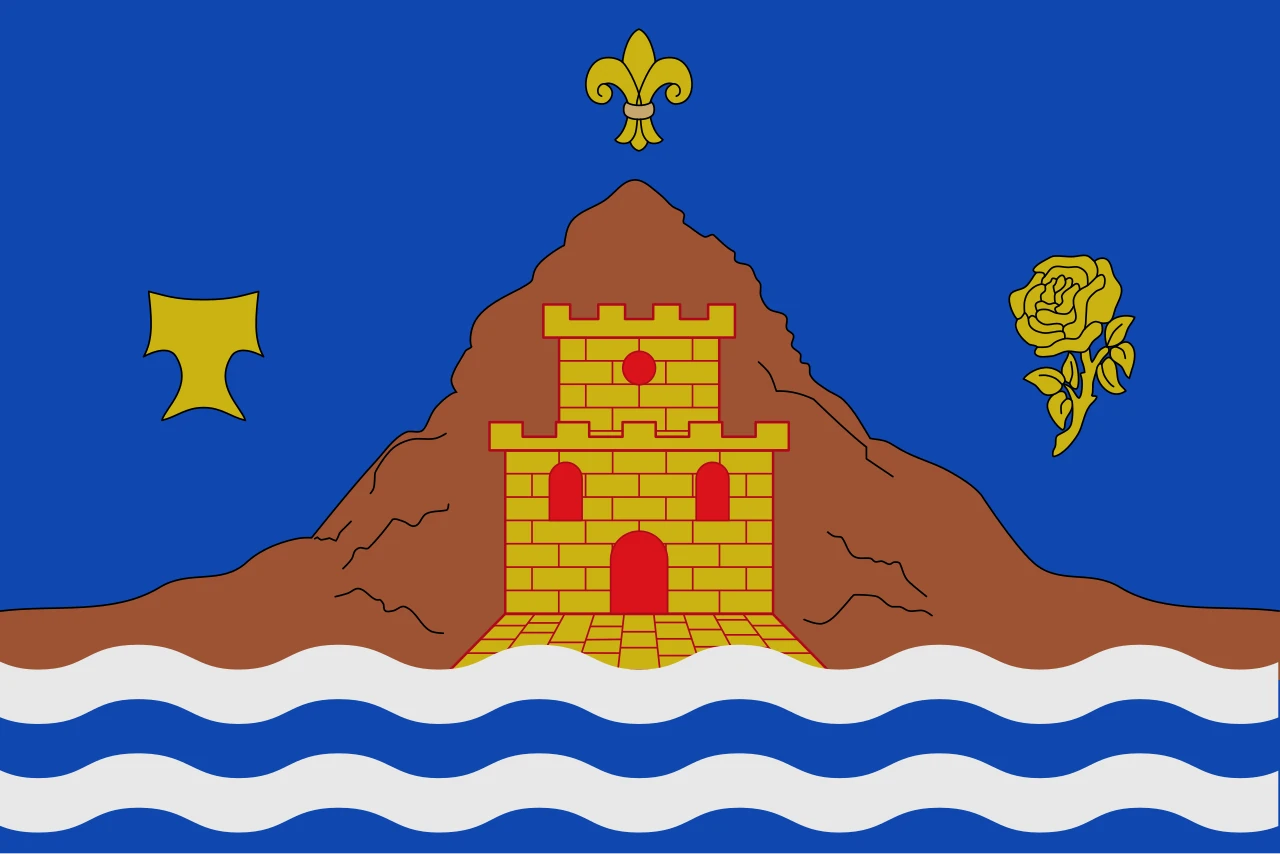
Blue with a mountain in natural colour over waves, crowned by the Andalusian tower of Salines and the arms of its two patron saints.

Bandera de Salines
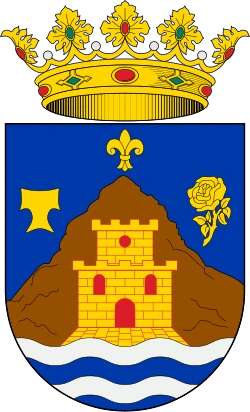
Coat of arms

The flag, in figures

Every fact about the flag, each with what it means.

Proportions
2:33 wide for every 2 high. 989 flags in the catalogue share it.
Properties
Normal flagFIAV symbol: the form of the flag.
Use
CivilFIAV symbol: who may fly the flag.
Adopted
201931 January 2019 · 7 years ago
Colours
  • blue
  • white
  • yellow
  • red
Reference shades: the official one may vary slightly.
Coat of arms
YesIt carries the coat of arms on the cloth.
1234

Take a closer look

  1. The blue field

  2. 1

    The tower

  3. 2

    The fleur-de-lis

  4. 3

    The rose

  5. 4

    The tau cross

How it is described

The flag in the words of vexillology and heraldry.

Vexillological description

It is a rectangular field with a 2:3 ratio, blue. Over white waves it bears a mountain in natural colour, crowned by a yellow tower, with a fleur-de-lis on its left and a rose on its right.

Field (the cloth)
blue.
Waves
of pearl grey-white and blue, in the lower part.
Mountain
in natural colour, in the centre.
Tower
yellow, crowning the mountain.
Fleur-de-lis and rose
yellow, on each side of the tower.
Flor de lis y rosa
de amarillo, a cada lado de la torre.
Its history in dates

Every date in its story, at a glance.

  1. 2006

    Its coat of arms was approved by Resolution of 10 February 2006

  2. 2008

    The flag came two years later, by Resolution of 26 May 2008

The full story

How it was born, how it has changed and what it means.

The flag of Salines is a whole landscape: sea, mountain and the tower that crowns the hill. The mountain is drawn in its real colour, instead of a heraldic colour.

How it came about

Salines is a municipality of the Alto Vinalopó, in the province of Alicante, next to the Salines lagoon and the sierra of the same name. Its coat of arms was approved by Resolution of 10 February 2006, published in DOGV number 5,207. The flag came two years later, by Resolution of 26 May 2008, of the conseller de Presidencia, published in DOCV number 5,660.

The coat of arms represents the old Andalusian tower of Salines and the geographical situation of the town, next to the lagoon and the sierra. The fleur-de-lis is of Saint Anthony the Great, titular of the parish, and the rose is of Our Lady of the Rosary, patroness of the locality.

How it has changed

It has never changed. It was approved in 2008 and there are no documented later modifications.

What it means

  • Blue

    the ground of the field.

  • Mountain in natural colour

    the Salines sierra, next to the lagoon.

  • Golden tower

    the old Andalusian tower.

  • Fleur-de-lis

    Saint Anthony the Great, patron of the parish.

  • Rose

    Our Lady of the Rosary, patroness of the town.

Fun facts

  1. A mountain in real colour

    The mountain on the flag is not of a heraldic colour: it is drawn in its natural colour, with the rock and the vegetation as they are seen. It is a rare exception. Almost all the mountains on coats of arms are argent or vert, for dyeing reasons; here someone has attempted a portrait.

  2. Two saints at the sides of the tower

    The flag of Salines is flanked by the two saints of the town: the fleur-de-lis of Saint Anthony the Great, by the flagpole, and the rose of Our Lady of the Rosary, at the fly. Neither is a local symbol: they are the titular of the parish and the patroness of the locality.

  3. A castle inside a mountain

    The Andalusian tower that crowns the mountain is not a castle: it is the watchtower that stood at the top of the hill, of which remains survive. The coat of arms of Salines places it on the hill, where it was.

Localisation

How much have you learnt?

Test what you have read about the flag of Salines.

  1. 1. Which one is the flag of Salines?

  2. 2. Which of these elements appears on the flag?

  3. 3. What are the proportions (height:width) of the flag?

  4. 4. In which year was the current flag adopted?

Sources

Sources consulted:

Credits

Flag image: Macondo, Wikimedia Commons · CC BY-SA 4.0.

More flags

Accessibility preferences

Accessibility statement

Quick profiles

Text and reading

Text size
Default
Line height
Default
Letter spacing
Default
Word spacing
Default

Colour

Motion and orientation

Cursor