Red, black and three white saltires: the flag of Amsterdam copies the city’s coat of arms, and its X-shaped crosses are even on the bollards of the streets.
Jan Persijn was lord of Amsterdam between 1280 and 1282
1975
The municipal council approved the current one on 5 February 1975
The full story
How it was born, how it has changed and what it means.
The flag of Amsterdam has three stripes: red, black and red. On the middle one it carries three white saltires, which are crosses in the shape of an X. They are the most seen symbol of the city.
How it came about
The colours and the saltires come from the coat of arms of the city. Most likely they stem from the arms of the Persijn family, nobles who held lands beside the Amstel river. Jan Persijn was lord of Amsterdam between 1280 and 1282.
For centuries the city used flags with red, white and black, but none was official. The municipal council approved the current one on 5 February 1975, although it was already visible before: it appears, for instance, on the programme of the 1928 Amsterdam Olympic Games.
How it has changed
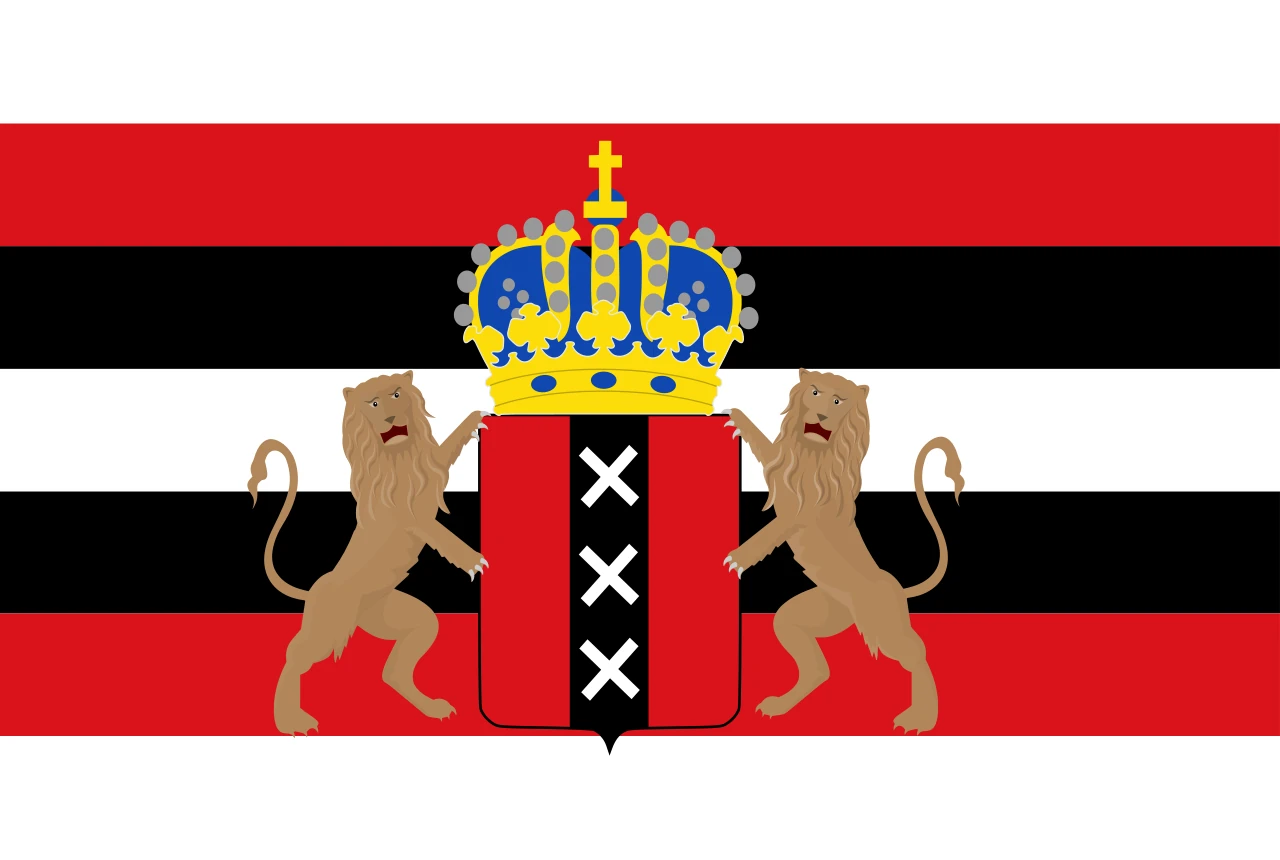
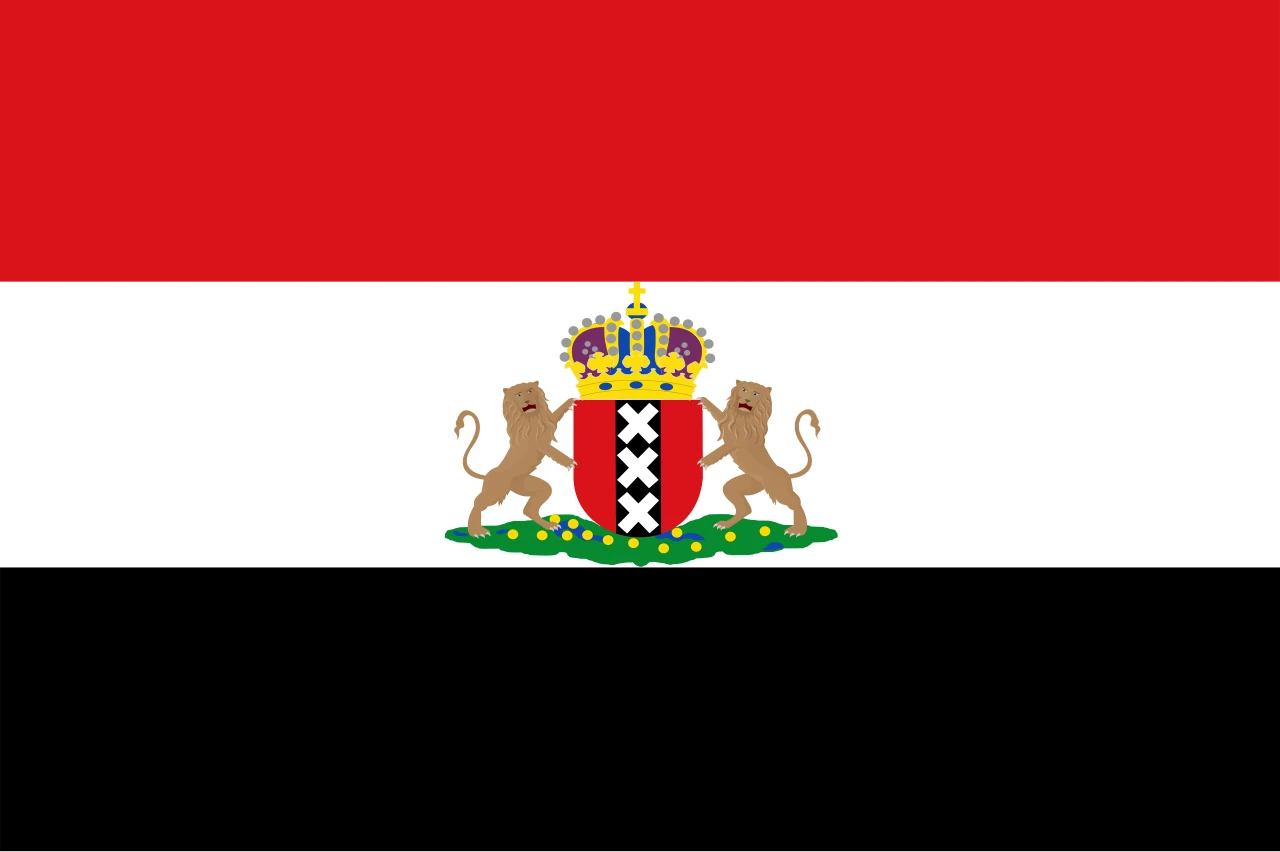
Before 1975 the city combined the same colours in several ways, almost always with the full coat of arms in the centre.
Three stripes, red, white and black, with the coat of arms in the middle. It was used for centuries without being official.
1975
The coat of arms is removed and only its central part is left: the red, the black and the three saltires.
What it means
Nobody knows for certain what the saltires mean. These are the explanations that are given:
Red, black and saltires
according to the city council, they come from the coat of arms of the Persijn family. The neighbouring towns of Amstelveen and Ouder-Amstel, which also belonged to this family, have similar coats of arms.
Black stripe
it is usually read as the Amstel river, which gave the city its name. In the coats of arms of Dordrecht and Delft, another central stripe also represents water.
Three saltires
another theory says they mark three fords, places where the Amstel could be crossed on foot.
Fun facts
The legend of fire, water and plague does not hold
Many people say the three saltires protect from fires, floods and plague. But the noble families of the area already used the three saltires before the Black Death reached Europe.
A motto much younger than the saltires
The coat of arms carries the motto ‘Heldhaftig, Vastberaden, Barmhartig’: brave, resolute and compassionate. Queen Wilhelmina gave it on 29 March 1947, for the February 1941 strike against the persecution of the Jews. Sometimes each saltire is said to stand for one of those words, but the saltires are centuries older.
The saltires of the bollards
The ‘amsterdammertjes’, the posts that separate the pavement from the roadway, have the three saltires of the flag carved into them.
The captain’s armband at Ajax
The captain of Ajax, the great football team of the city, wears the flag of Amsterdam on his armband.
Location
Buy the flag
Buy the flag on AmazonAffiliate link: if you buy, Wiki Banderas receives a small commission.
Buy the flag on AmazonAffiliate link: if you buy, Wiki Banderas receives a small commission.
How much have you learnt?
Test what you have read about the flag of Amsterdam.