Skip to content

Wiki Banderas
Open menu

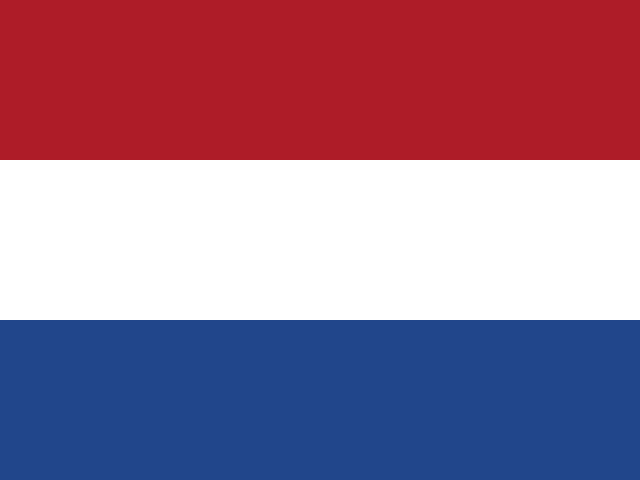
Flag of Kingdom of the Netherlands

Red, white and blue in three stripes: one of the oldest tricolours in the world, born in the rebellion against Philip II.

Flag of Kingdom of the Netherlands
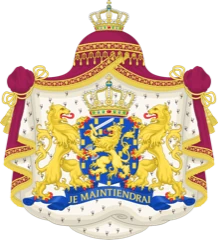
Coat of arms

The flag, in figures

Every fact about the flag, each with what it means.

Proportions
2:33 wide for every 2 high. 989 flags in the catalogue share it.
Properties
Normal flagFIAV symbol: the form of the flag.
Use
Civil, state and military, on land and at seaFIAV symbol: who may fly the flag.
Adopted
193719 February 1937 · 89 years ago
Colours
  • vermilion
  • white
  • cobalt blue
Reference shades: the official one may vary slightly.
Coat of arms
YesIt carries the coat of arms on the cloth.
Origin
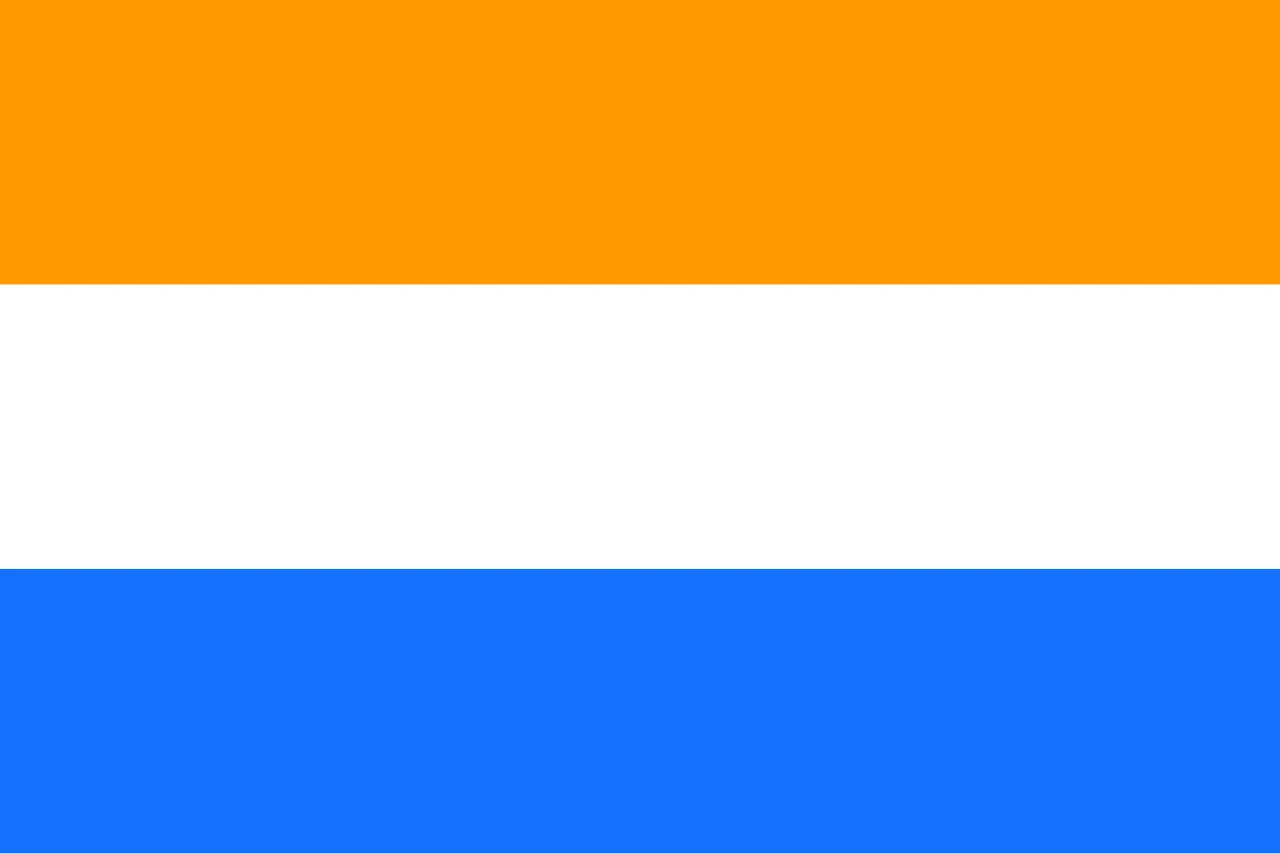
Prinsenvlag (Prince’s Flag)
123

Take a closer look

  1. The three stripes

  2. 1

    The red stripe

  3. 2

    The white stripe

  4. 3

    The blue stripe

How it is described

The flag in the words of vexillology and heraldry.

Vexillological description

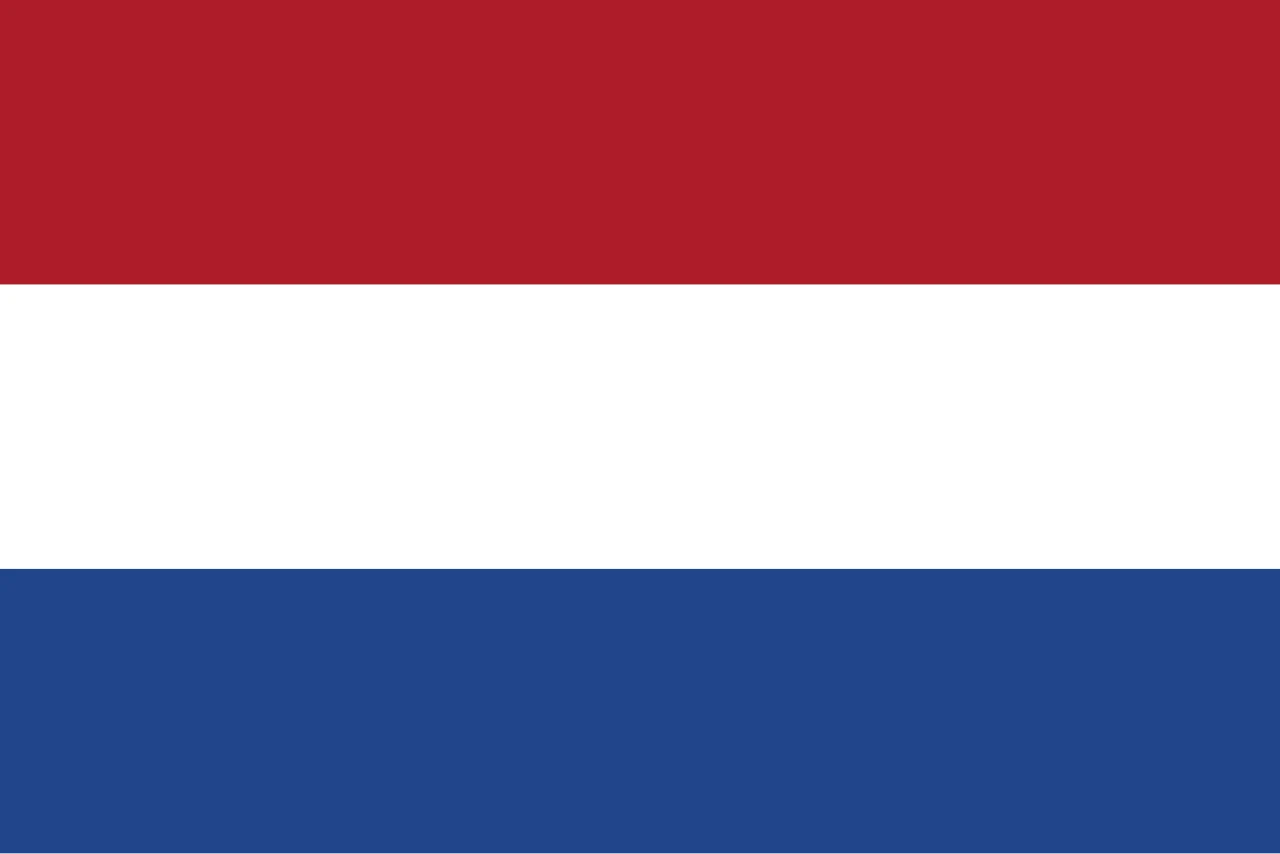
It is a rectangular field with a 2:3 ratio and three equal horizontal stripes.

Stripes
from top to bottom, red, white and blue, of the same thickness.
The blue
an intense cobalt blue, fixed together with the other shades by the Dutch government: it is not the light blue of Luxembourg.
Origin
the colours come from the orange of the House of Orange-Nassau, which led the independence from Spain; the orange disappeared from the field but survives in the princely flag.
What it carries

Each element and how many of the 1,390 flags in the catalogue carry it. In yellow, the rarest.

Its history in dates

Every date in its story, at a glance.

  1. 1568

    In 1568 several provinces of the Netherlands rose against Philip II of Spain

  2. 1570

    In the 1570s those colours passed to the flags of the rebel ships

  3. 1575

    The oldest known coloured image dates from 1575

The full story

How it was born, how it has changed and what it means.

The flag of the Netherlands is three horizontal stripes of the same width: red above, white in the middle and blue below. It looks very simple, but it is one of the oldest tricolours in the world still in use. Flags such as those of France or Russia were modelled on it.

How it came about

It all began with a rebellion. In 1568 several provinces of the Netherlands rose against Philip II of Spain. A nobleman, William of Orange, put himself at the head of the rebels, and he used the colours orange, white and blue.

In the 1570s those colours passed to the flags of the rebel ships. They called it the Prinsenvlag, “the prince’s flag”. The oldest known coloured image dates from 1575.

How it has changed

The original orange ended up being turned into red, and it has stayed that way.

  1. Prinsenvlag, an orange, white and blue flag
    Miyamaki, Oren neu dag, Artem Karimov, Golradir · Public domain

    1570s

    The rebel ships carry the colours of William of Orange: orange, white and blue.

  2. Red, white and blue flag

    1630-1660

    The orange is gradually changed for red. It is a political gesture: the republic distances itself from the Orange family.

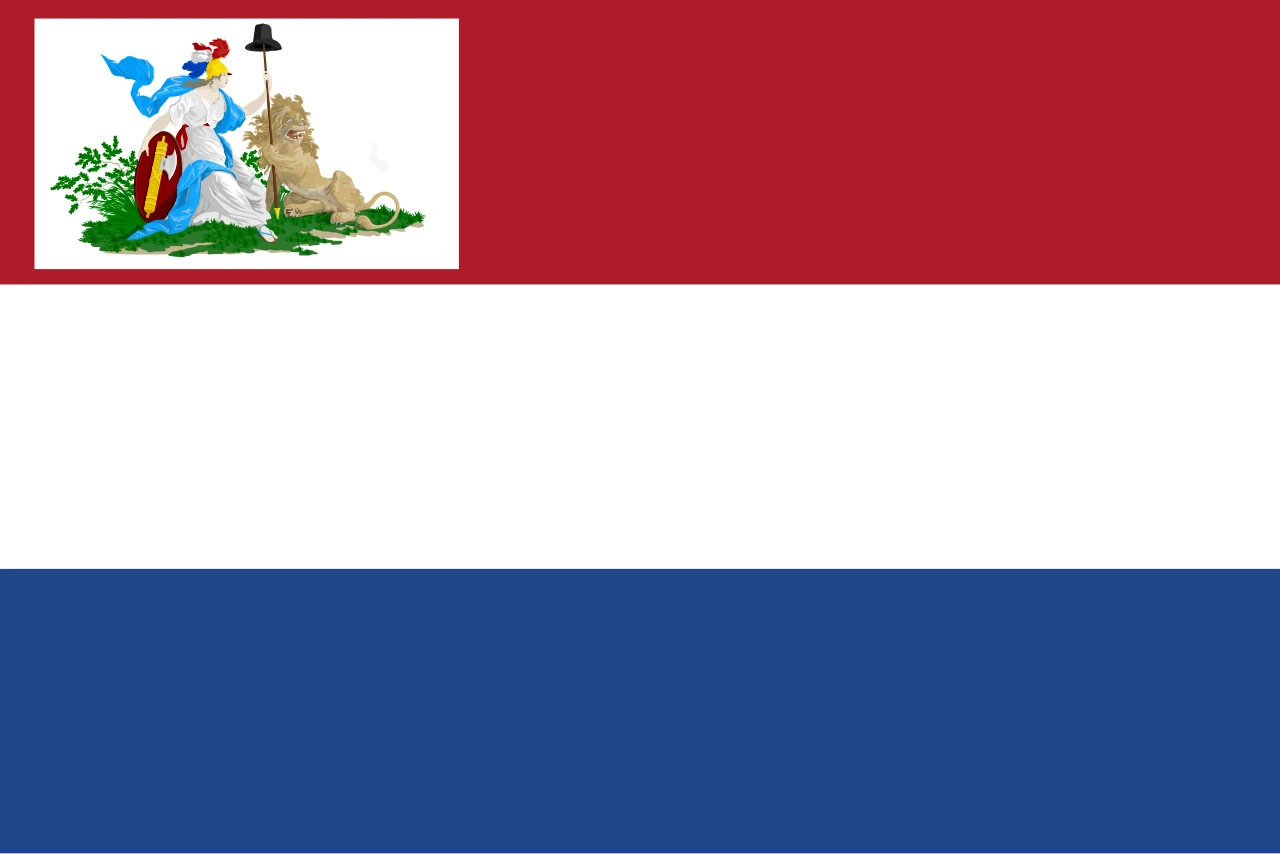
  3. Red, white and blue tricolour with a woman and a lion in the upper corner
    Tom Lemmens · CC0

    Late 18th century

    Under French rule, the tricolour carries for a few years a figure of a woman with a lion in the corner. The simple design soon returns.

  4. Current flag of the Netherlands

    1937

    Some groups, among them the Dutch Nazis, call for a return to the orange. To settle the debate, Queen Wilhelmina signs a decree on 19 February: the colours are red, white and blue.

What it means

The colours were not chosen for what they symbolise, but for who was wearing them:

  • Red

    it took the place of the orange when the republic wanted to mark its distance from the princes of Orange.

  • White and blue

    they come from the colours William of Orange used.

  • Orange

    it is no longer on the flag, but it remains the colour of the royal family and of Dutch supporters.

Fun facts

  1. The shortest decree

    The text of 1937 has a single sentence: “The colours of the flag of the Kingdom of the Netherlands are red, white and blue”. The Queen did not sign it at the palace, but on holiday in Zell am See, in Austria.

  2. An orange pennant

    On King’s Day (27 April) and on the birthdays of the royal family, an orange pennant is hoisted above the flag. It is never put out when the flag is at half mast.

  3. Almost the twin of Luxembourg

    The flag of Luxembourg has the same stripes. The Dutch one is slightly less elongated and its shades of red and blue are darker.

  4. Grandmother of the Russian flag

    According to the most repeated account, Tsar Peter the Great, who learned to build ships in Holland, took these colours for Russian merchant ships, changing the order of the stripes.

Country facts

Where it is and what borders it.

Capital
Amsterdam
Area
41,850 km²
Country
Kingdom of the Netherlands
Continent
Europe
Subregion
Western Europe
Independent state
Yes
UN member
Yes
ISO code
NLD · NL

2 neighbouring countries

How much have you learnt?

Test what you have read about the flag of Kingdom of the Netherlands.

  1. 1. Which one is the flag of Kingdom of the Netherlands?

  2. 2. What are the proportions (height:width) of the flag?

  3. 3. In which year was the current flag adopted?

Sources

Text based on the article “Bandera de los Países Bajos” from the Spanish Wikipedia, published under the licence CC BY-SA 4.0.

Sources consulted:

Credits

Flag image: Zscout370, Wikimedia Commons · Public domain.

More flags

Accessibility preferences

Accessibility statement

Quick profiles

Text and reading

Text size
Default
Line height
Default
Letter spacing
Default
Word spacing
Default

Colour

Motion and orientation

Cursor