Skip to content

Wiki Banderas
Open menu

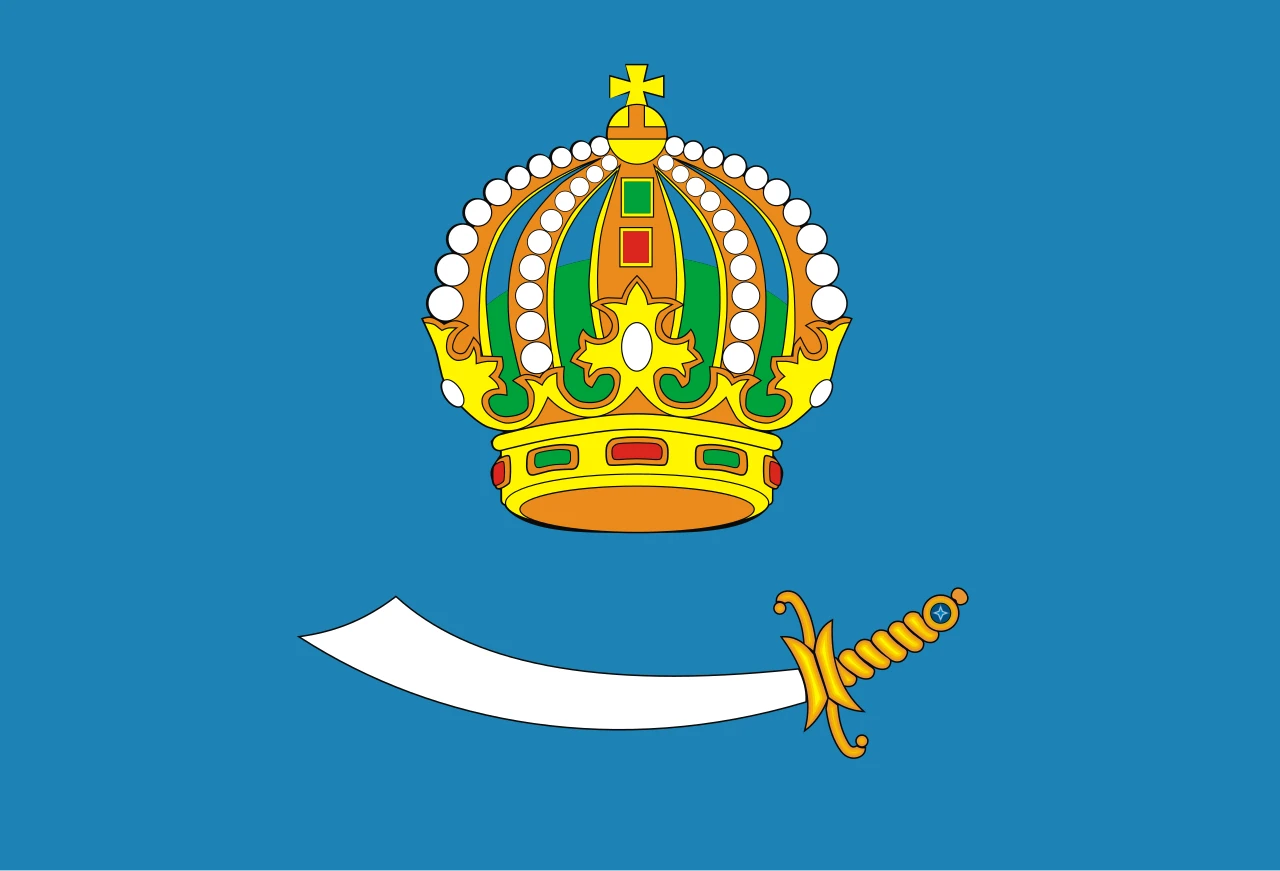
Flag of Astrakhan

Blue with an imperial crown and a curved sabre, without touching the edges: the flag of Astrakhan Oblast.

Flag of Astrakhan
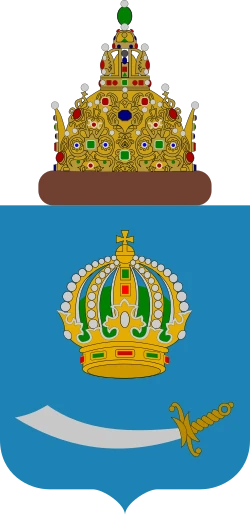
Coat of arms

The flag, in figures

Every fact about the flag, each with what it means.

Proportions
15:2222 wide for every 15 high. 3 flags in the catalogue share it.
Properties
Normal flagFIAV symbol: the form of the flag.
Use
CivilFIAV symbol: who may fly the flag.
Adopted
200113 December 2001 · 25 years ago
Colours
  • blue
  • yellow
  • green
  • white
  • red
Reference shades: the official one may vary slightly.
Coat of arms
YesIt carries the coat of arms on the cloth.
12

Take a closer look

  1. The sky-blue field

  2. 1

    The imperial crown

  3. 2

    The scimitar

How it is described

The flag in the words of vexillology and heraldry.

Vexillological description

It is a rectangular field in blue, with two figures that do not touch the edges.

Ground
blue in a single colour, plain.
Imperial crown
at the top and in the centre, with figures in yellow and green, white pearls, topped by a cross.
Curved sabre
at the bottom, with a white blade and a yellow hilt and guard.
What it carries

Each element and how many of the 1,390 flags in the catalogue carry it. In yellow, the rarest.

The full story

How it was born, how it has changed and what it means.

The flag of Astrakhan is a blue field with two figures: an imperial crown at the top and a curved sabre below.

How it came about

Astrakhan is an oblast in southern Russia, at the mouth of the Volga. The date on record is 13 December 2001.

The crown has the form of the Russian imperial crown, with two cross finials at the top and a red oval in the centre. The sabre is curved, with a white blade and a yellow guard and hilt.

How it has changed

No earlier versions are documented.

What it means

  • Blue

    the background of the field, in a single colour, plain.

  • Imperial crown

    at the top, in yellow and green, with white pearls and two cross finials.

  • Curved sabre

    at the bottom, with a white blade and a yellow guard and hilt.

  • Position

    the two figures are centred and touch no edge of the field.

Fun facts

  1. The sabre does not touch the edge

    The curved blade falls short: it does not reach the edge of the field. The two figures sit loose in the blue, with no frame or band holding them.

  2. A crown and a weapon

    The two figures are symbols of power: the crown represents the state and the sabre its defence. It is a set of emblems rather than a scene.

  3. Everything on a single colour

    Across the whole flag, the ground is one plain blue. There are no stripes, no waves and no textures: the movement comes from the two figures, not from the field.

Location

How much have you learnt?

Test what you have read about the flag of Astrakhan.

  1. 1. Which one is the flag of Astrakhan?

  2. 2. Which of these elements appears on the flag?

  3. 3. In which year was the current flag adopted?

Sources

Sources consulted:

Credits

Flag image: drawn by Conscious, Wikimedia Commons · Public domain.

More flags

Accessibility preferences

Accessibility statement

Quick profiles

Text and reading

Text size
Default
Line height
Default
Letter spacing
Default
Word spacing
Default

Colour

Motion and orientation

Cursor