According to legend, King Sancho VII the Strong took them in 1212 from the palisade he broke…
1910
The flag was born on 15 July 1910
1982
In 1982, the Amejoramiento del Fuero law made it official
The full story
How it was born, how it has changed and what it means.
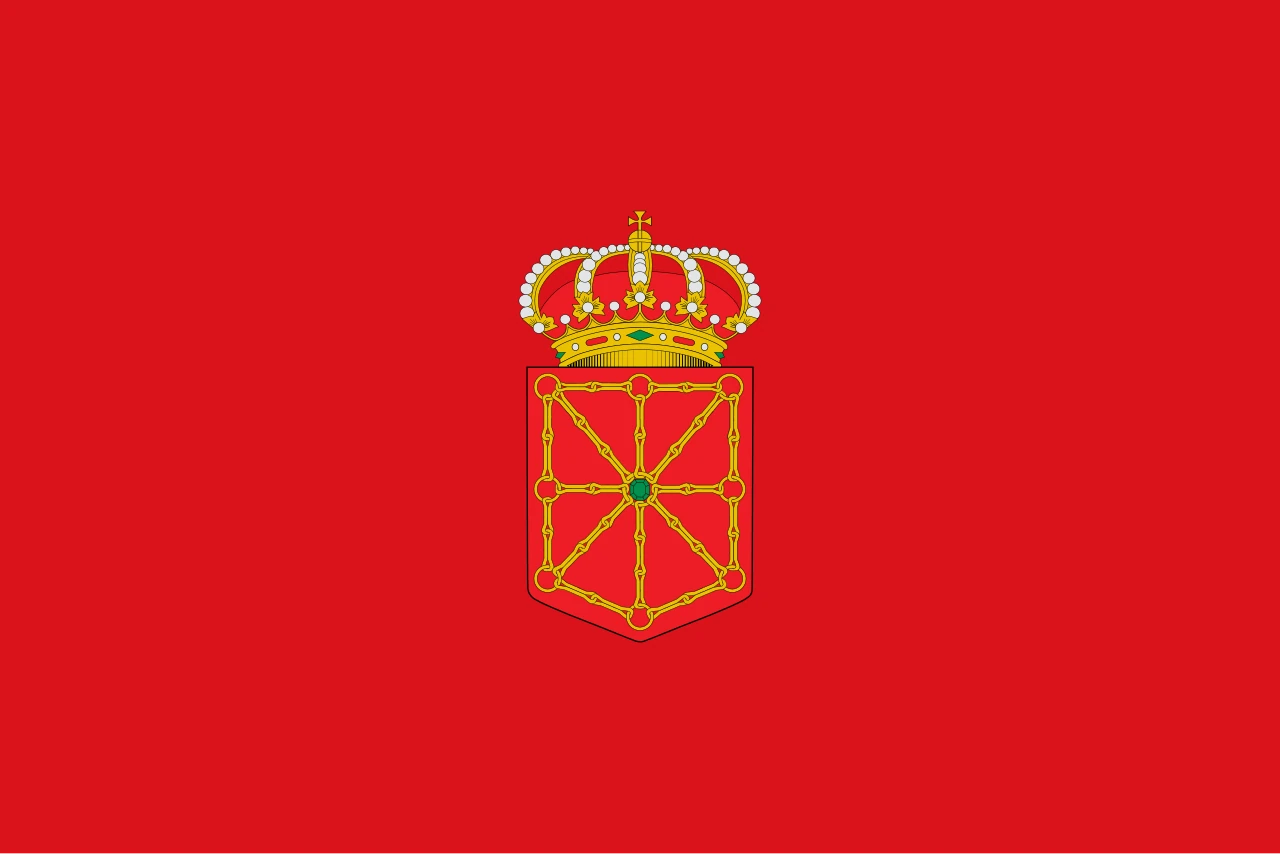
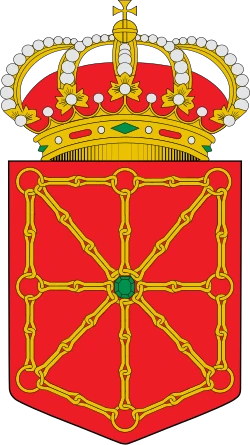
The flag of Navarra is a red field with the arms of the old kingdom in the centre: some golden chains, a green emerald and a royal crown. Although the coat of arms is medieval, the flag as we know it is only a little over a hundred years old.
How it came about
During the Middle Ages, the Navarrese king had a pendón, a personal standard carried by an ensign, bearing his arms: chains of gold on red. But it belonged to the king, not to a territory, and historians debate whether there was properly a flag of Navarra before the twentieth century.
The flag was born on 15 July 1910. The Provincial Council, that is, the government of the province, had noticed that it lacked one, and commissioned a report from three historians: Arturo Campión, Julio Altadill and Hermilio de Olóriz. They settled on a red flag with the coat of arms in the centre. It was hoisted for the first time the following day. In 1982, the Amejoramiento del Fuero law made it official.
How it has changed
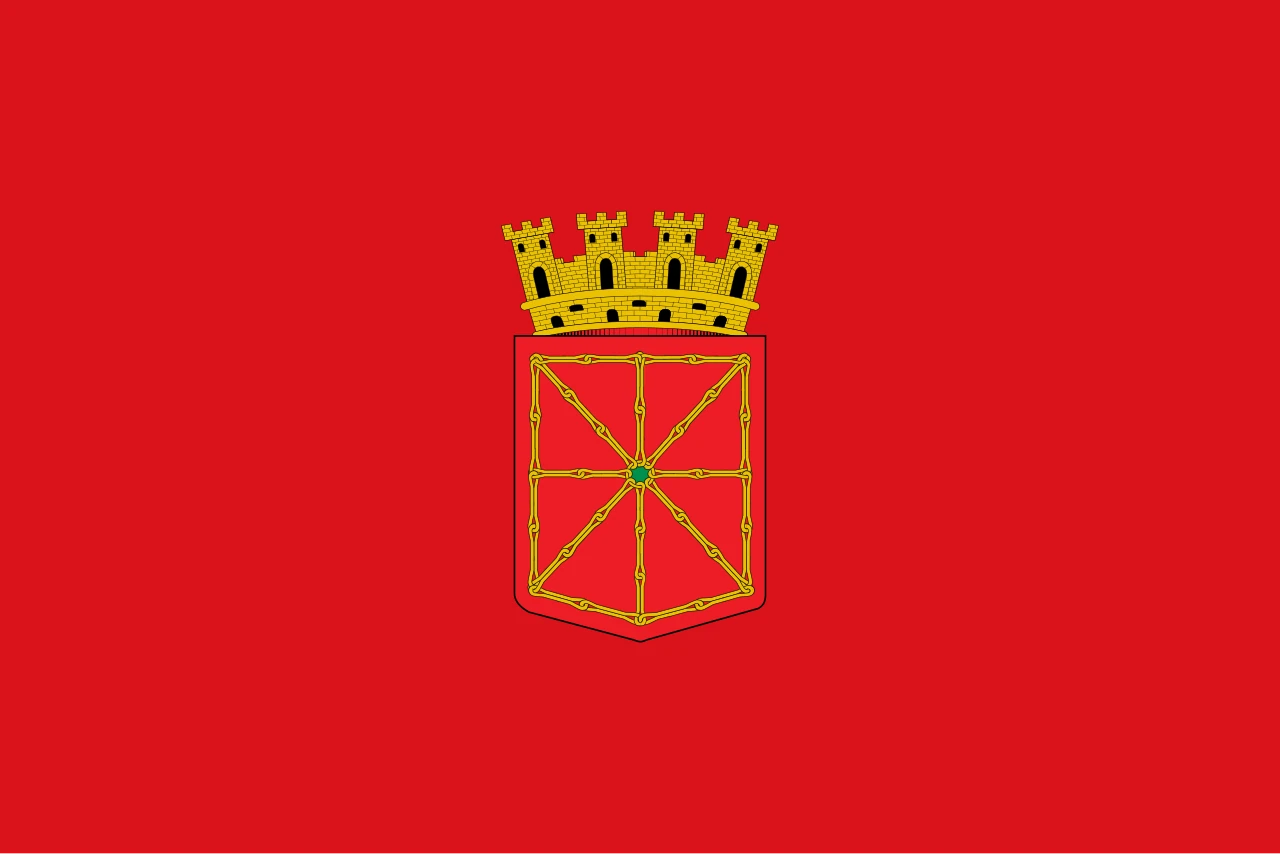
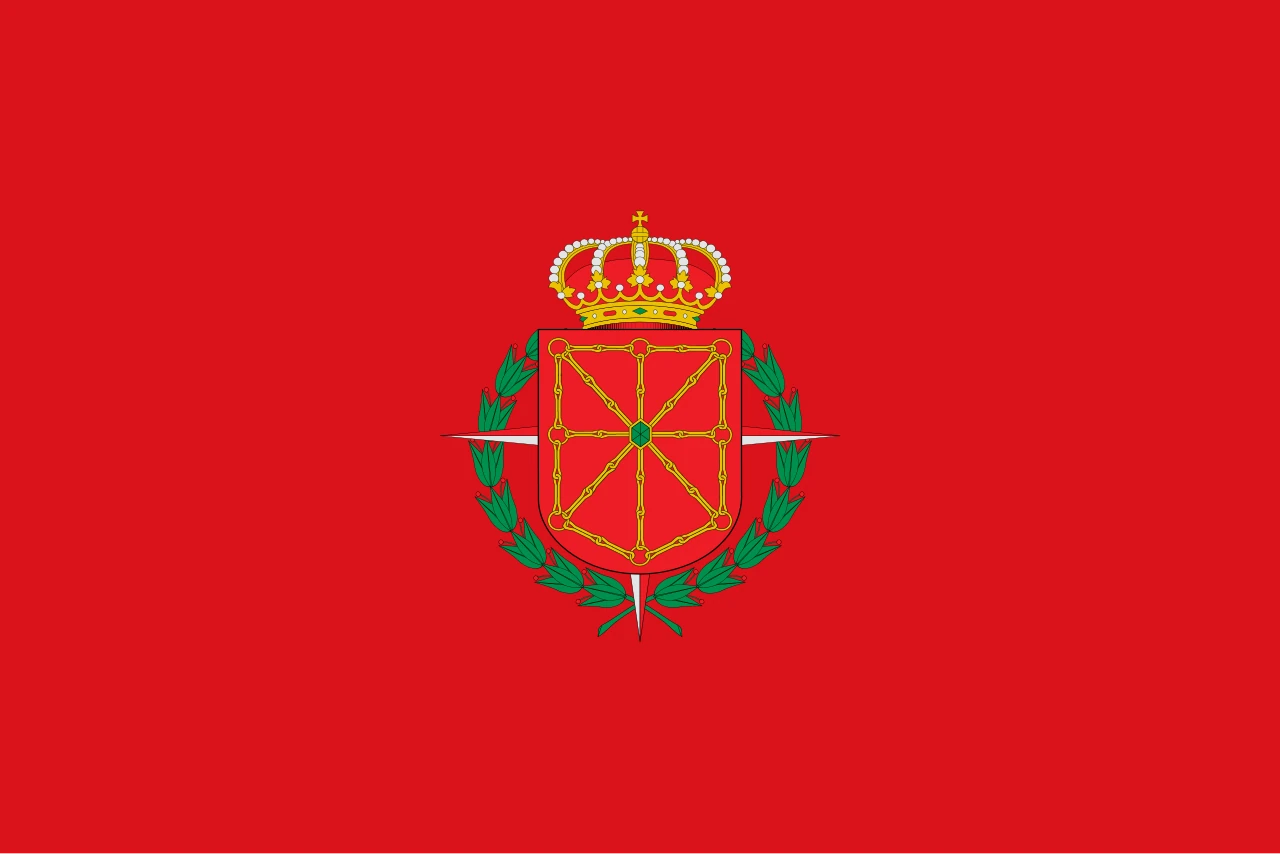
The design has been the same since 1910. The only thing that changed was the coat of arms in the centre, on two occasions.
In the middle of the Civil War, a decree recovers the royal crown and adds to the coat of arms the Laureate Cross of Saint Ferdinand.
1981
The Parliament of Navarra removes the cross and the flag recovers its original design.
What it means
The law describes the coat of arms but does not give a meaning to each element:
Red
the traditional colour of the standard of the kings of Navarra.
Chains of gold
the arms of the kingdom. According to legend, King Sancho VII the Strong took them in 1212 from the palisade he broke at the battle of Las Navas de Tolosa, but today it is known that he never used them.
Emerald
the green stone at the centre, where the eight arms of the chain meet.
Royal crown
the symbol of the old Kingdom of Navarra.
Fun facts
A legend that is not the king’s
The story that the chains come from the battle of Las Navas de Tolosa was fixed by Father Moret in the seventeenth century. Documents of the time show that Sancho VII used an eagle on his seals, not chains.
Two flags since 1910
When it created the flag, the Council also commissioned a guion, a smaller square flag with the chains filling the whole field. It is still used at events such as the awarding of the Príncipe de Viana Prize.
Hoisted the following day
It was hoisted for the first time on 16 July 1910, one day after the design was approved.
Localisation
How much have you learnt?
Test what you have read about the flag of Navarra.