Skip to content

Wiki Banderas
Open menu

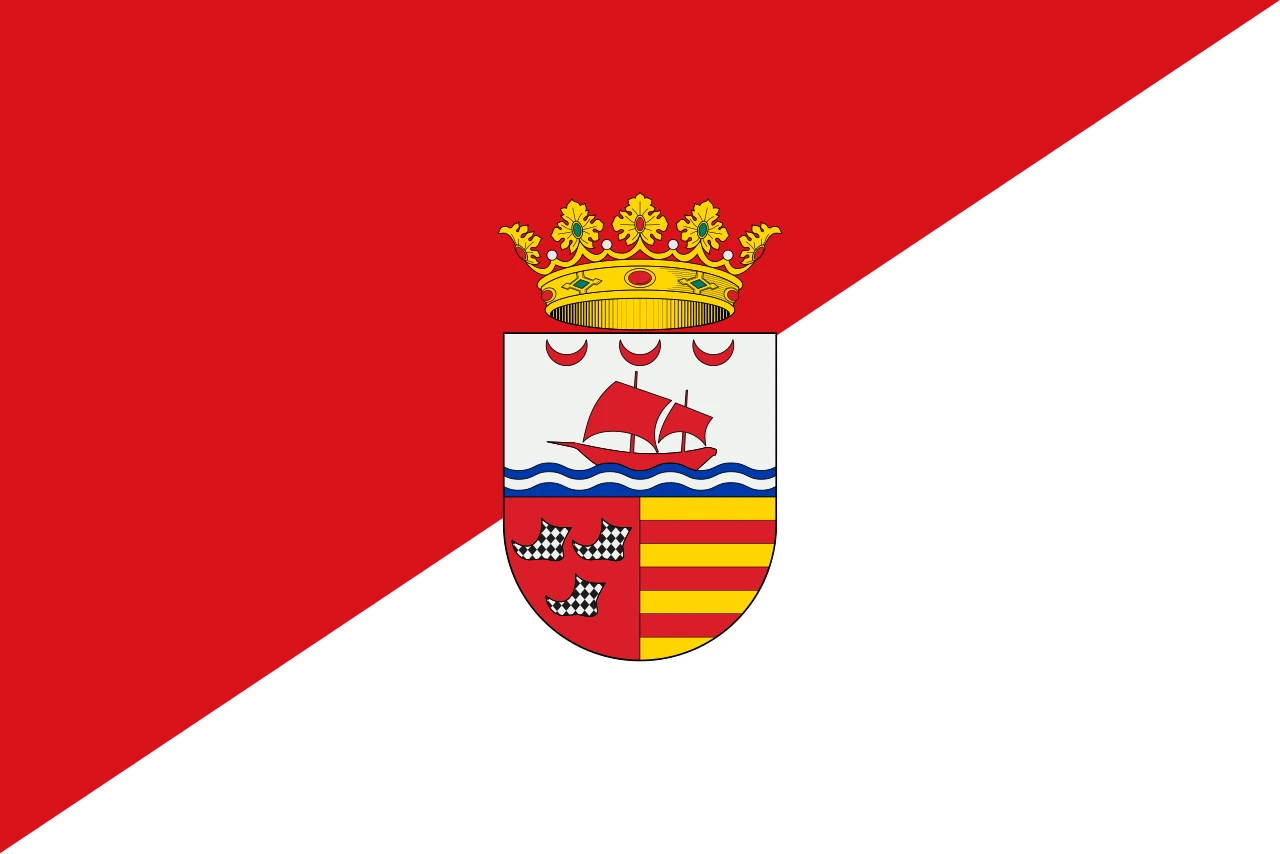
Flag of Barxeta

Upper half red and lower half white, with the coat of arms of the boat and the two crescents in the centre.

Flag of Barxeta
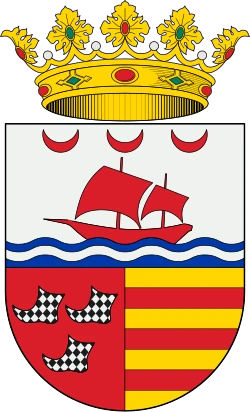
Coat of arms

The flag, in figures

Every fact about the flag, each with what it means.

Proportions
2:33 wide for every 2 high. 989 flags in the catalogue share it.
Properties
Normal flagFIAV symbol: the form of the flag.
Use
CivilFIAV symbol: who may fly the flag.
Adopted
19943 October 1994 · 32 years ago
Colours
  • red
  • white
Reference shades: the official one may vary slightly.
Coat of arms
YesIt carries the coat of arms on the cloth.
123

Take a closer look

  1. The cloth divided into two halves

  2. 1

    The municipal coat of arms

  3. 2

    The royal crown

  4. 3

    The boat

How it is described

The flag in the words of vexillology and heraldry.

Vexillological description

It is a rectangular field with a 2:3 ratio, divided horizontally in half. The upper half is red and the lower one white. The municipal coat of arms, crowned, goes in the centre of the field.

Field (the cloth)
two equal horizontal stripes.
Upper stripe
red.
Lower stripe
white.
Coat of arms
in the centre, with a crown as its crest.
What it carries

Each element and how many of the 1,390 flags in the catalogue carry it. In yellow, the rarest.

The full story

How it was born, how it has changed and what it means.

The flag of Barxeta is a field split in two halves, red and white, with the coat of arms in the centre. What the history of the village tells is in that coat of arms: a boat, two crescents and two surnames.

How it came about

Barxeta is a municipality in the Costera, in the province of Valencia. Its coat of arms was approved by Resolution of 14 July 1992, of the conseller de Administració Pública, published in DOGV number 1,845.

The boat is a canting element, a play on the name of the village. The two crescents recall that Barxeta was an old Moorish farmhouse. And under the boat appear the arms of the Zapata and the Tallada, ancient lords of the place.

How it has changed

It has never changed. It was approved in 1992 and there are no documented later modifications.

What it means

  • Red

    the upper half.

  • White

    the lower half.

  • Coat of arms

    in the centre, with a crown as its crest.
  • Boat

    the canting element, the play on the name Barxeta.

  • Two crescents

    the old Moorish farmhouse.

  • Zapata and Tallada

    the ancient lords of the town.

Fun facts

  1. A name that sounds like a boat

    Barxeta sounds like “little boat”, and its coat of arms bears a boat. It is a canting element, like the pine of Pina, the flower of Matet or the pine of Pego. In the Costera, the play on words between the place name and the coat of arms is constant.

  2. Two crescents for the Moors

    The two crescents are not an Islamic symbol in general but a specific sign: the Moorish farmhouse. When a Valencian village wants to recall a Muslim origin, it almost always does so with crescents.

  3. Two surnames in the same coat of arms

    Under the boat appear the arms of the Zapata and of the Tallada. They are two different families in a single shield, joined by the same lordship. Many Valencian municipal arms accumulate two lineages like this, one above the other.

Location

How much have you learnt?

Test what you have read about the flag of Barxeta.

  1. 1. Which one is the flag of Barxeta?

  2. 2. Which of these elements appears on the flag?

  3. 3. What are the proportions (height:width) of the flag?

  4. 4. In which year was the current flag adopted?

Sources

Sources consulted:

Credits

Flag image: Macondo, Wikimedia Commons · CC BY-SA 4.0.

More flags

Accessibility preferences

Accessibility statement

Quick profiles

Text and reading

Text size
Default
Line height
Default
Letter spacing
Default
Word spacing
Default

Colour

Motion and orientation

Cursor