Skip to content

Wiki Banderas
Open menu

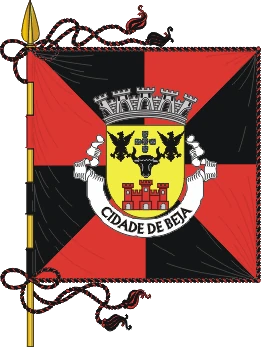
Flag of Beja

Eight red and black gironnies with the coat of arms of the bull, the eagles and the castle: the flag of Beja was published in 1938.

Flag of Beja
Coat of arms

The flag, in figures

Every fact about the flag, each with what it means.

Proportions
2:33 wide for every 2 high. 989 flags in the catalogue share it.
Properties
Normal flagFIAV symbol: the form of the flag.
Use
CivilFIAV symbol: who may fly the flag.
Adopted
19384 April 1938 · 88 years ago
Colours
  • red
  • black
  • gold
  • silver
Reference shades: the official one may vary slightly.
Coat of arms
YesIt carries the coat of arms on the cloth.
123

Take a closer look

  1. The gyronny cloth

  2. 1

    A black wedge

  3. 2

    The city coat of arms

  4. 3

    The mural crown

How it is described

The flag in the words of vexillology and heraldry.

Vexillological description

It is a rectangular field —the cloth of the flag —with a 2:3 ratio, cut into eight gironnies that alternate red and black, with the coat of arms of the city in the centre.

Field
eight gironnies (triangular wedges that come out of the centre), four red and four black.
Coat of arms
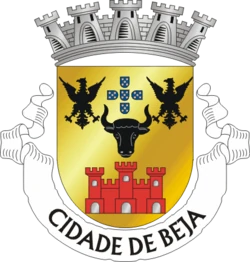
gold, with the head of a bull, two black eagles, a red castle and three small shields; it is topped by the crown of five towers of a city.
Stripes
there are none; a stripe is a band of colour, and here the colours only change in the gironnies.
The full story

How it was born, how it has changed and what it means.

The flag of Beja is a field cut into eight gironnies that alternate red and black, with the coat of arms of the city in the centre.

How it came about

Beja is a city in southern Portugal. Its flag was published on 4 April 1938.

The coat of arms is gold, with the head of a bull, two black eagles, a red castle and three small shields, topped by the crown of five towers that marks city status.

How it has changed

It has never changed. It was published in 1938 and there are no documented later modifications.

What it means

  • Eight gironnies

    four red and four black. A giron is a triangular wedge that comes out of the centre.

  • Coat of arms

    gold, in the centre, with the head of a bull, two black eagles, a red castle and three small shields.

  • Crown

    of five towers, topping the coat of arms.

  • No stripes

    the colours only change inside the gironnies.

Fun facts

  1. A bull, two eagles and a castle

    The coat of arms of Beja brings three figures together: a bull, two eagles and a castle. With the three small shields besides, that is at least six elements in a single shield. It is an accumulative coat of arms, of the kind that lists honours received rather than a single emblem.

  2. The crown of five towers

    The crown of five towers over the coat of arms is the mark of Portuguese cities, as against the royal crown of municipalities or that of towns. It is not decorative: it is the title the shield carries.

  3. Red and black, alternating in gironnies

    The field uses no stripes: the colours change in eight wedges coming out of the centre. It is the same device as gyronny, but here with only two colours and eight parts, which makes the golden coat of arms in the centre stand out by contrast.

Location

How much have you learnt?

Test what you have read about the flag of Beja.

  1. 1. Which one is the flag of Beja?

  2. 2. Which of these elements appears on the flag?

  3. 3. What are the proportions (height:width) of the flag?

  4. 4. In which year was the current flag adopted?

Sources

Sources consulted:

Credits

Flag image: Autor desconocido, Wikimedia Commons · CC BY-SA 3.0.

More flags

Accessibility preferences

Accessibility statement

Quick profiles

Text and reading

Text size
Default
Line height
Default
Letter spacing
Default
Word spacing
Default

Colour

Motion and orientation

Cursor