Every fact about the flag, each with what it means.
Proportions
2:33 wide for every 2 high. 989 flags in the catalogue share it.
Properties
Normal flagFIAV symbol: the form of the flag.
Use
Civil, state and militaryFIAV symbol: who may fly the flag.
Adopted
19691969 · 57 years ago
Colours
Yellow
Orange
White
Reference shades: the official one may vary slightly.
Coat of arms
YesIt carries the coat of arms on the cloth.
Designer
Mayum Choying Wangmo Dorji
Take a closer look
The two triangles
1
The dragon head
2
The claw with a jewel
How it is described
The flag in the words of vexillology and heraldry.
Vexillological description
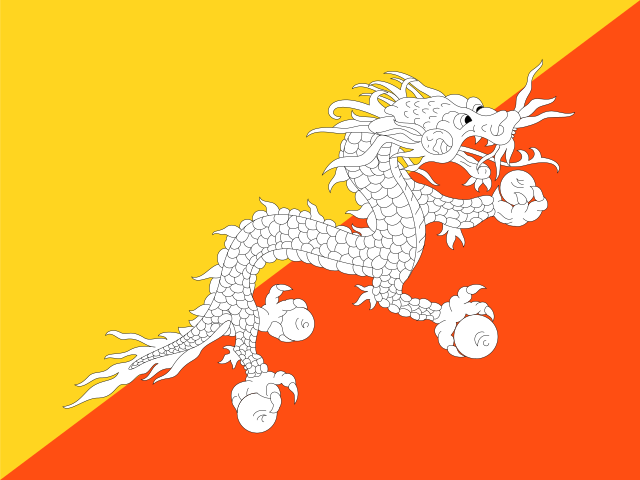
It is a field with a 2:3 ratio cut diagonally —from the lower corner next to the flagpole to the upper corner of the free side— into two triangles: the upper one yellow, the lower one orange.
Dragon
a white dragon, the Druk, lying along the diagonal with its head at the top, near the outer edge; it is so big that it touches both triangles and takes up almost the whole field.
Features
open mouth without tongue, drawn scales and on the four claws round balls, which are jewels.
Official design
the 1972 standards fixed the drawing, the colours and the size of the dragon.
What it carries
Each element and how many of the 1,390 flags in the catalogue carry it. In yellow, the rarest.
According to tradition, around the year 1200 a Tibetan Buddhist master heard three thunderclaps…
1947
The first was designed in 1947 by Mayum Choying Wangmo Dorji at the king’s request
1972
In 1972 official standards fix the design
The full story
How it was born, how it has changed and what it means.
The flag of Bhutan is cut diagonally into two triangles, one yellow and one orange, with a large white dragon in the centre. It is the Druk, the thunder dragon, which gives the country its name: the Bhutanese call their land Druk Yul, ‘the land of the thunder dragon’.
How it came about
The dragon comes from religion. According to tradition, around the year 1200 a Tibetan Buddhist master heard three thunderclaps at the place where he was going to found a monastery and called it Druk. From there came the name of a Buddhist school, the drukpa, which ended up being the main one in Bhutan.
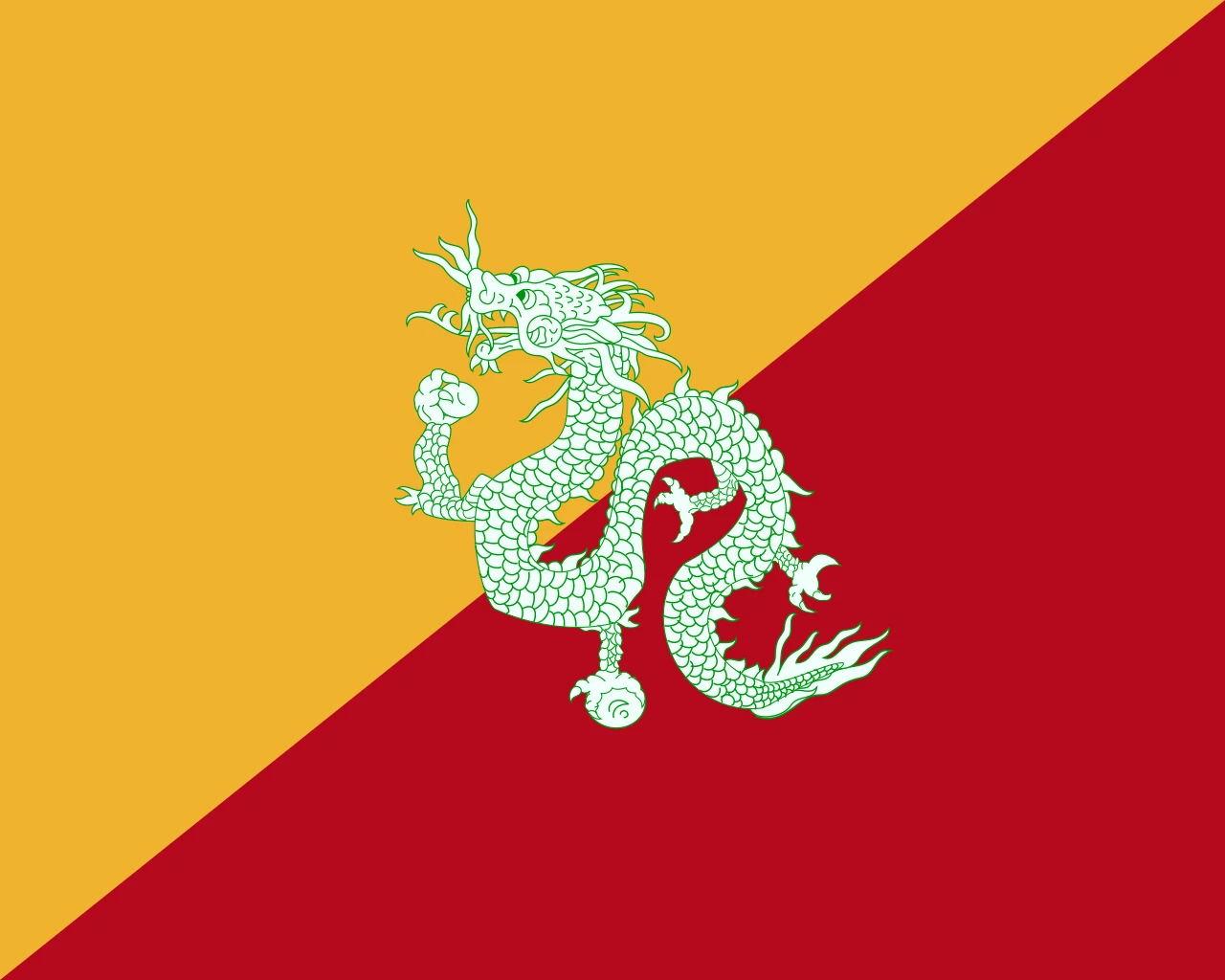
Even so, the country did not have a flag until the mid-20th century. The first was designed in 1947 by Mayum Choying Wangmo Dorji at the king’s request, and it was shown in 1949, during the signing of a treaty with India. It was almost square, yellow and red, with a green dragon in the centre.
How it has changed
In only twenty years the flag changed its shape, its colours and its dragon.
Yellow and red, almost square, with a green dragon. The image is a reconstruction made from photographs of the time.
1956
During a journey by the king through the east of the country, the dragon becomes white.
1969
Dasho Shingkhar Lam, the king’s secretary, makes it rectangular, places the dragon along the diagonal and changes the red for orange. In 1972 official standards fix the design.
What it means
The 1972 standards explain each element:
Yellow
the secular power of the king. The king wears a scarf of this colour at ceremonies.
Orange
Buddhism and its monasteries.
Dragon on the line
it straddles the two colours because the two traditions, the secular and the religious, are equally important.
White of the dragon
the purity of thought and action that unites the different peoples of the country.
Jewels in the claws
the wealth of the country and the security of its people.
Open mouth
the strength of the gods and goddesses who protect Bhutan.
Fun facts
Rectangular because of India
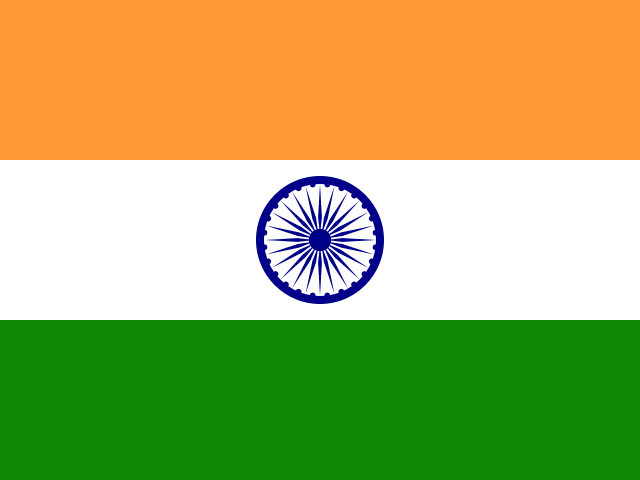
The first flag was almost square. On seeing the Indian flag during an official visit, the Bhutanese officials thought it flew better and copied its proportions.
A dragon that does not look at the ground
The dragon was placed along the diagonal so that, with the flag hanging, it would not seem to be looking down at the earth.
Thunder is dragons
In Bhutan it is traditionally said that thunder is the roar of dragons. That is why the thunder dragon is the symbol of the country.
Buy the flag
Buy the flag on AmazonAffiliate link: if you buy, Wiki Banderas receives a small commission.
Buy the flag on AmazonAffiliate link: if you buy, Wiki Banderas receives a small commission.
Buy the flag on AmazonAffiliate link: if you buy, Wiki Banderas receives a small commission.




 People's Republic of China
 India