Skip to content

Wiki Banderas
Open menu

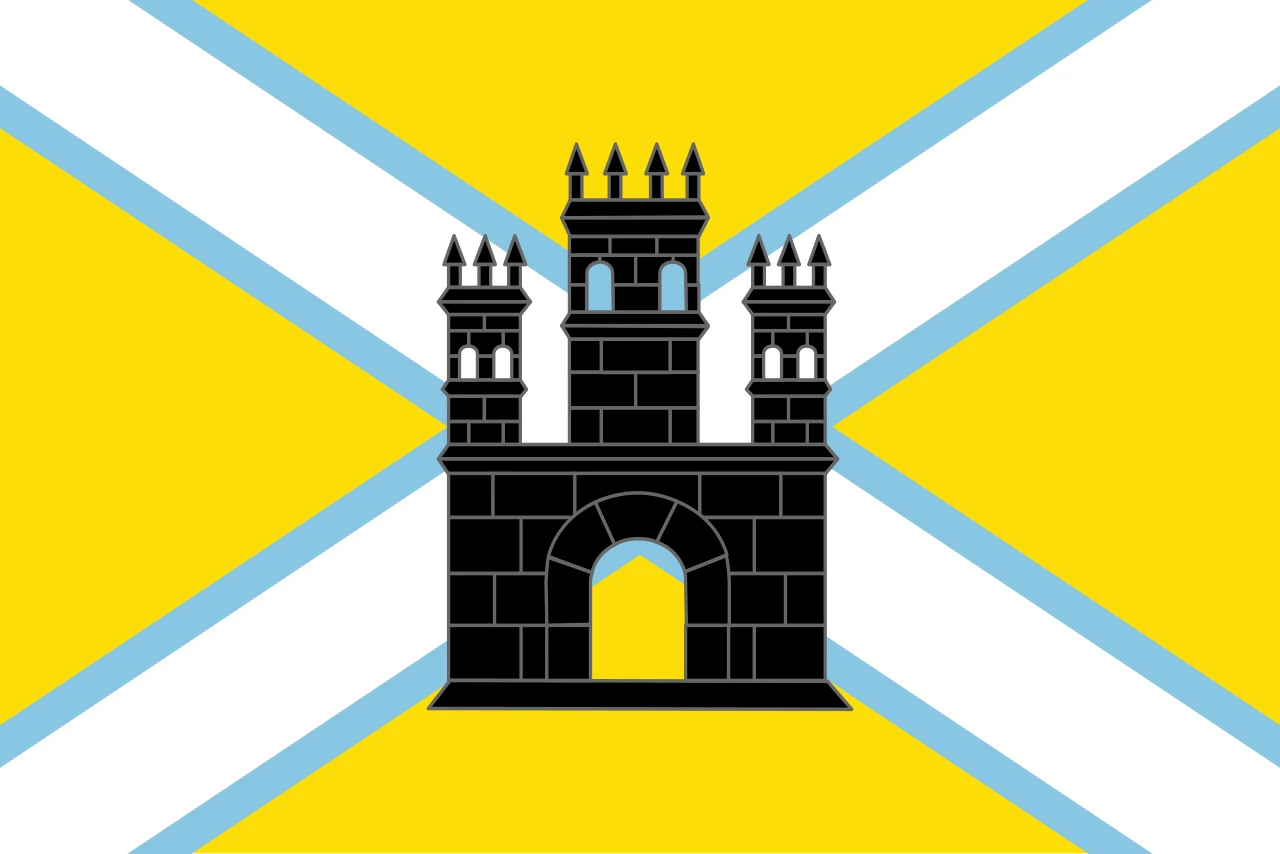
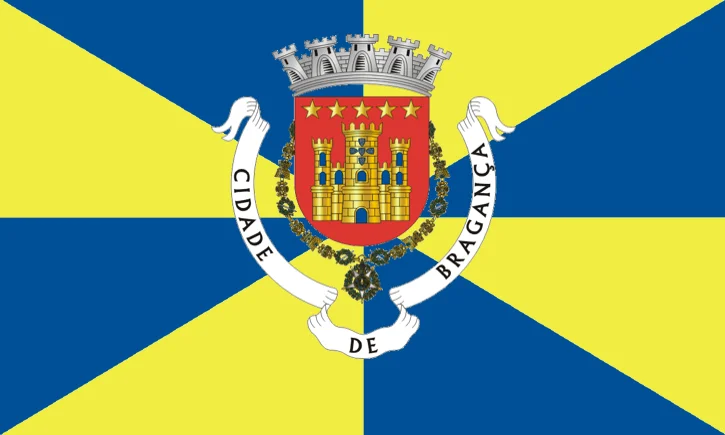
Flag of Braganza

Eight yellow and blue gironnies with the castle of the city that gave the Braganza dynasty its name: the flag of Bragança was published in 1935.

Flag of Braganza
Coat of arms

The flag, in figures

Every fact about the flag, each with what it means.

Proportions
2:33 wide for every 2 high. 989 flags in the catalogue share it.
Properties
Normal flagFIAV symbol: the form of the flag.
Use
CivilFIAV symbol: who may fly the flag.
Adopted
193527 April 1935 · 91 years ago
Colours
  • yellow
  • blue
Reference shades: the official one may vary slightly.
Coat of arms
YesIt carries the coat of arms on the cloth.
12

Take a closer look

  1. The eight gores

  2. 1

    The coat of arms

  3. 2

    The scroll

How it is described

The flag in the words of vexillology and heraldry.

Vexillological description

It is a rectangular field with a 2:3 ratio divided into eight gironnies, which are eight triangles that start at the centre and reach the edges. They alternate yellow and blue, and in the middle goes the coat of arms of the city.

Field (the cloth)
yellow and blue, with no outer border.
Gironnies
four yellow and four blue, arranged around the centre.
Coat of arms
in the centre; it bears a castle and a crown.
What it carries

Each element and how many of the 1,390 flags in the catalogue carry it. In yellow, the rarest.

Its history in dates

Every date in its story, at a glance.

  1. 1640

    Bragança is a city in north-eastern Portugal, near Spain, and it gave its name to the family that…

  2. 1930

    It was the time when the Portuguese town councils adapted their symbols to the rules of 1930

  3. 1935

    Flag and coat of arms were published in the Diário do Governo (I Série) on 27 April 1935

The full story

How it was born, how it has changed and what it means.

The flag of Bragança (Braganza in Spanish) is yellow and blue, in eight gironnies, with the coat of arms of the city’s castle in the centre. Bragança is a city in north-eastern Portugal, near Spain, and it gave its name to the family that ruled the country from 1640 to 1910.

How it came about

Flag and coat of arms were published in the Diário do Governo (I Série) on 27 April 1935. It was the time when the Portuguese town councils adapted their symbols to the rules of 1930. Those rules required city flags to be divided into eight gironnies, in the main colours of the coat of arms, like that of Lisbon.

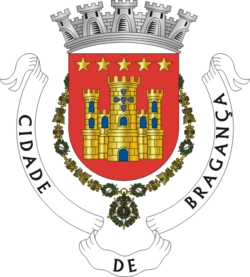
The coat of arms bears a castle of gold with blue windows, five gold stars above it and, according to Flags of the World, the arms of Sancho I: five blue small shields in a cross. Hence the yellow and the blue.

How it has changed

I did not find a Bragança flag before the one of 1935. The town council also uses a modern logo, with a stylised castle, but that is not the official flag.

  1. Before 1935

    I did not find any flag or coat of arms documented before those of 1935.

  2. Current banner of Bragança: yellow and blue gironnies with the coat of arms of the city
    Hugito ddd · CC BY-SA 4.0

    1935

    Current official flag and coat of arms, in yellow and blue. Their colours do not come from the flag of Portugal: city flags take the colours of their coat of arms.

What it means

  • Yellow and blue

    the colours of the gold castle with blue windows and of the quinas small shields.

  • Castle

    the castle of Bragança, the symbol of the border city.

  • Five gold stars

    they go above the castle.

  • Blue small shields

    the arms of Sancho I, a Portuguese king.

  • Mural crown and collar

    they mark that it is a city and that it holds the decoration of the Order of the Tower and the Sword.

Fun facts

  1. A dynasty named after a city

    The house of Braganza gave Portugal its kings from 1640 to 1910 and Brazil its emperors from 1822 to 1889. The family’s castle, from the twelfth century, still stands in this city.

  2. The city has two symbols

    Besides the traditional coat of arms and flag, the town council uses a modern logo by Rui Carvalho, with a castle wall that forms an “M”.

Location

How much have you learnt?

Test what you have read about the flag of Braganza.

  1. 1. Which one is the flag of Braganza?

  2. 2. Which of these elements appears on the flag?

  3. 3. What are the proportions (height:width) of the flag?

  4. 4. In which year was the current flag adopted?

Sources

Sources consulted:

Credits

Flag image: Hugito ddd, Wikimedia Commons · CC BY-SA 4.0.

More flags

Accessibility preferences

Accessibility statement

Quick profiles

Text and reading

Text size
Default
Line height
Default
Letter spacing
Default
Word spacing
Default

Colour

Motion and orientation

Cursor