Every fact about the flag, each with what it means.
Proportions
76:9999 wide for every 76 high. 2 flags in the catalogue share it.
Properties
Normal flagFIAV symbol: the form of the flag.
Use
CivilFIAV symbol: who may fly the flag.
Adopted
198325 February 1983 · 43 years ago
Colours
red
white
yellow
purple
Reference shades: the official one may vary slightly.
Coat of arms
YesIt carries the coat of arms on the cloth.
Take a closer look
The quartered cloth
1
The castles
2
The lions
How it is described
The flag in the words of vexillology and heraldry.
Vexillological description
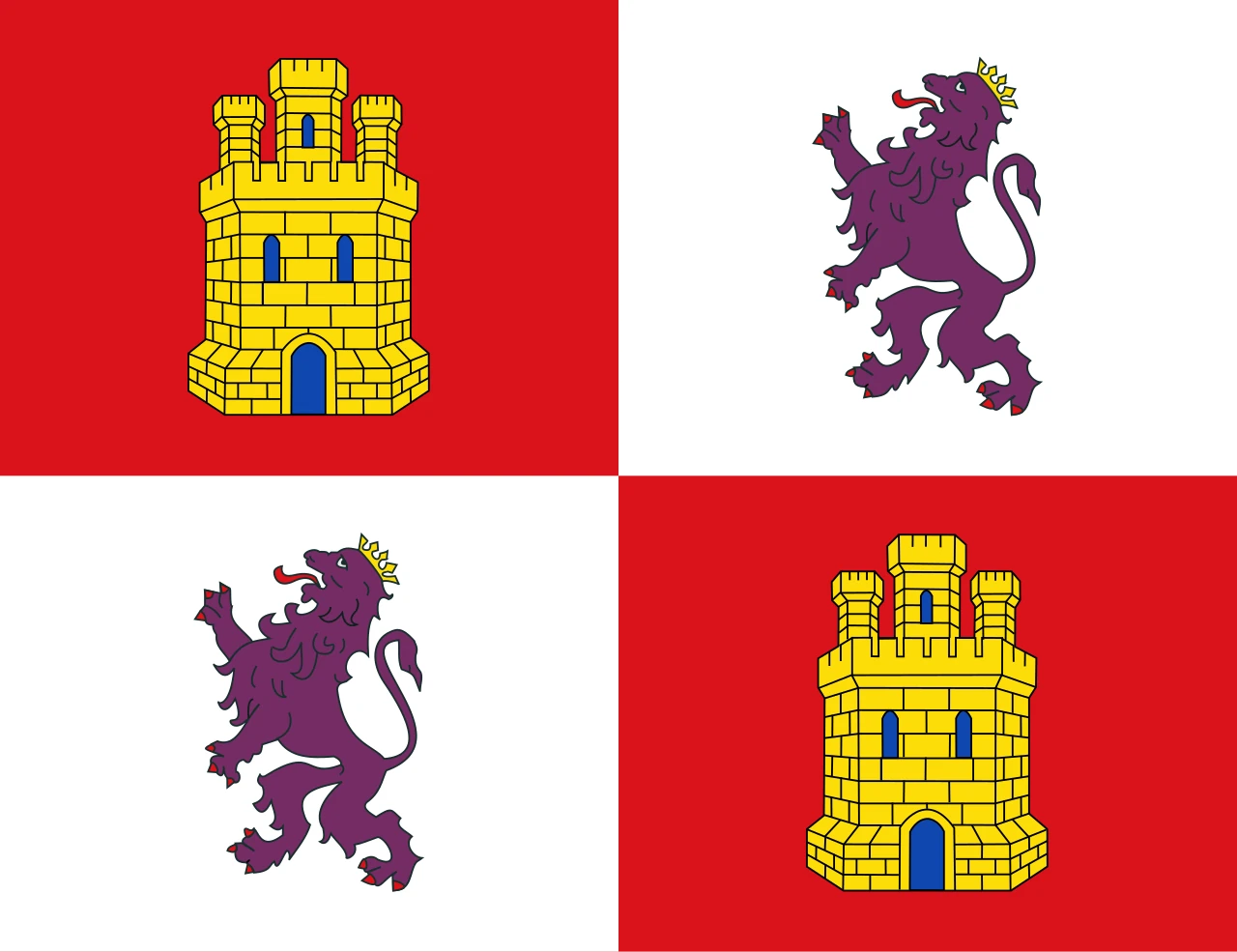
It is a rectangular field with a 76:99 ratio, wider than it is high, divided into four equal quarters: two red with golden castles and two white with purple lions.
Quarters
four, in two rows of two.
Castles
golden on a red ground, at the top left and at the bottom right.
Lions
purple on a white ground, in the other two quarters.
Coat of arms
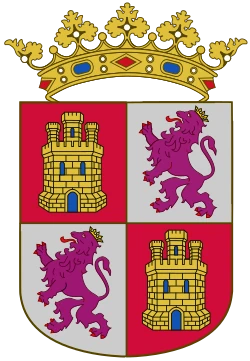
there is none: the figures go directly onto the field.
What it carries
Each element and how many of the 1,390 flags in the catalogue carry it. In yellow, the rarest.
In 1230, King Ferdinand III inherited both kingdoms: Castile from his mother and León from…
1983
When the autonomous community was created, its Statute of Autonomy of 1983 recovered that design…
1989
In 1989 a decree fixed its measurements and colours more precisely
The full story
How it was born, how it has changed and what it means.
The flag of Castile and León is divided into four panels, like a chessboard. In two of them, red, there is a golden castle; in the other two, white, a purple lion. It is not a flag of stripes: it is a medieval coat of arms passed straight onto cloth, which in vexillology, the study of flags, is called a heraldic flag.
How it came about
Castile and León were two different kingdoms during the Middle Ages. Each had its symbol: Castile, a golden castle on red; León, a lion on white. It was a play on words with their names, something very usual in the coats of arms of the time.
In 1230, King Ferdinand III inherited both kingdoms: Castile from his mother and León from his father. To show that neither ruled over the other, he joined the two symbols in a single coat of arms, divided into four parts. That coat of arms represented the Crown of Castile for centuries.
When the autonomous community was created, its Statute of Autonomy of 1983 recovered that design as the official flag.
How it has changed
The design has not changed since 1983. In 1989 a decree fixed its measurements and colours more precisely.
What it means
Each quarter represents one of the two old kingdoms:
Golden castle on red
the Kingdom of Castile.
Purple lion on white
the Kingdom of León.
Four equal quarters
the union of the two kingdoms in equality, just as Ferdinand III wanted to show it.
Fun facts
An idea that half of Europe copied
The coat of arms of Ferdinand III is considered one of the first to use quartering, the division into four parts to join the symbols of two families or kingdoms. It later spread across the whole continent.
Unusual measurements
A decree of 1989 fixes it at 76 parts high by 99 long, a ratio almost no other flag uses.
A lion of a rare colour
The lion is purple, one of the least frequent colours in heraldry. That is why it is painted anywhere from purple to dark red.
Location
How much have you learnt?
Test what you have read about the flag of Castile and León.



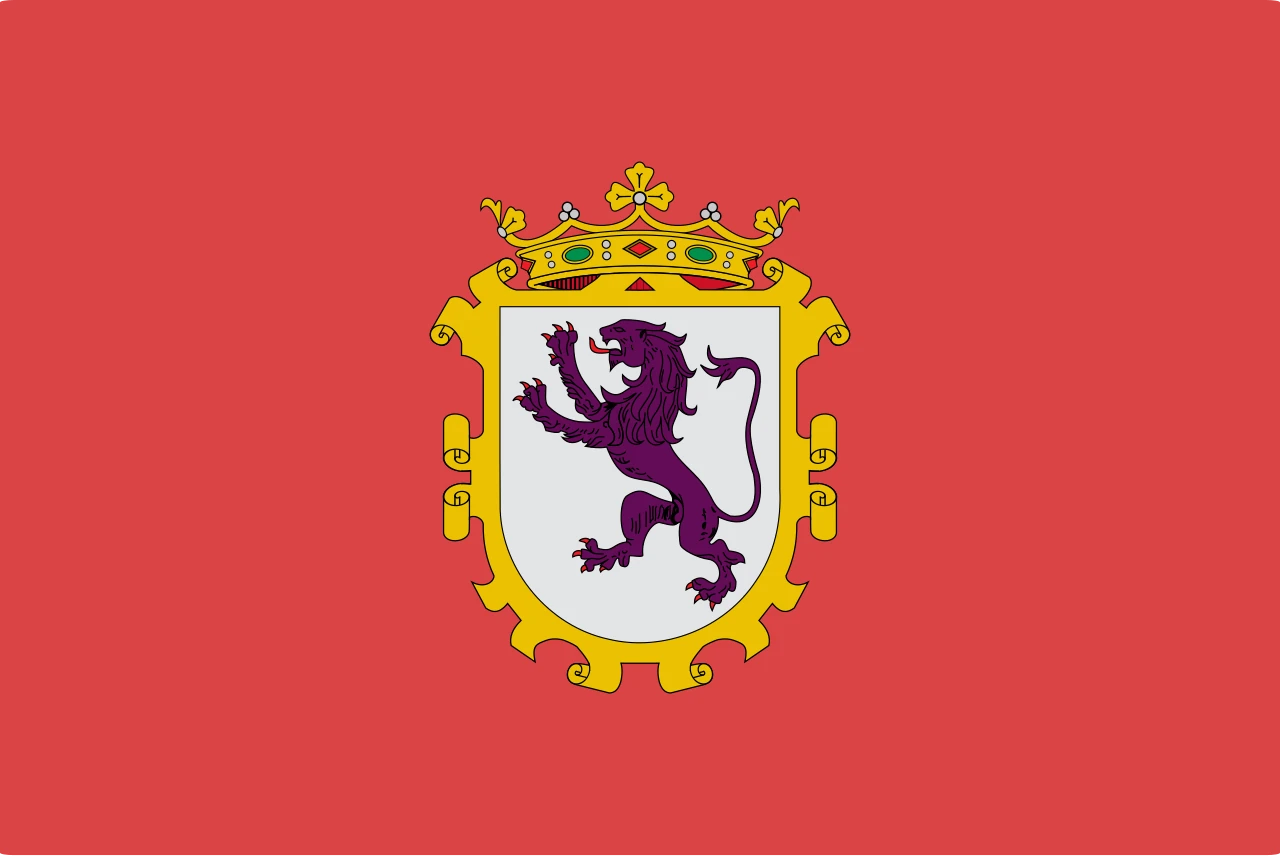 León ↗