Every fact about the flag, each with what it means.
Proportions
2:33 wide for every 2 high. 989 flags in the catalogue share it.
Properties
Normal flagFIAV symbol: the form of the flag.
Use
CivilFIAV symbol: who may fly the flag.
Adopted
198325 February 1983 · 43 years ago
Colours
green
white
black
Reference shades: the official one may vary slightly.
Coat of arms
YesIt carries the coat of arms on the cloth.
Take a closer look
The three stripes
1
The green stripe
2
The white stripe
3
The black stripe
4
The coat of arms
How it is described
The flag in the words of vexillology and heraldry.
Vexillological description
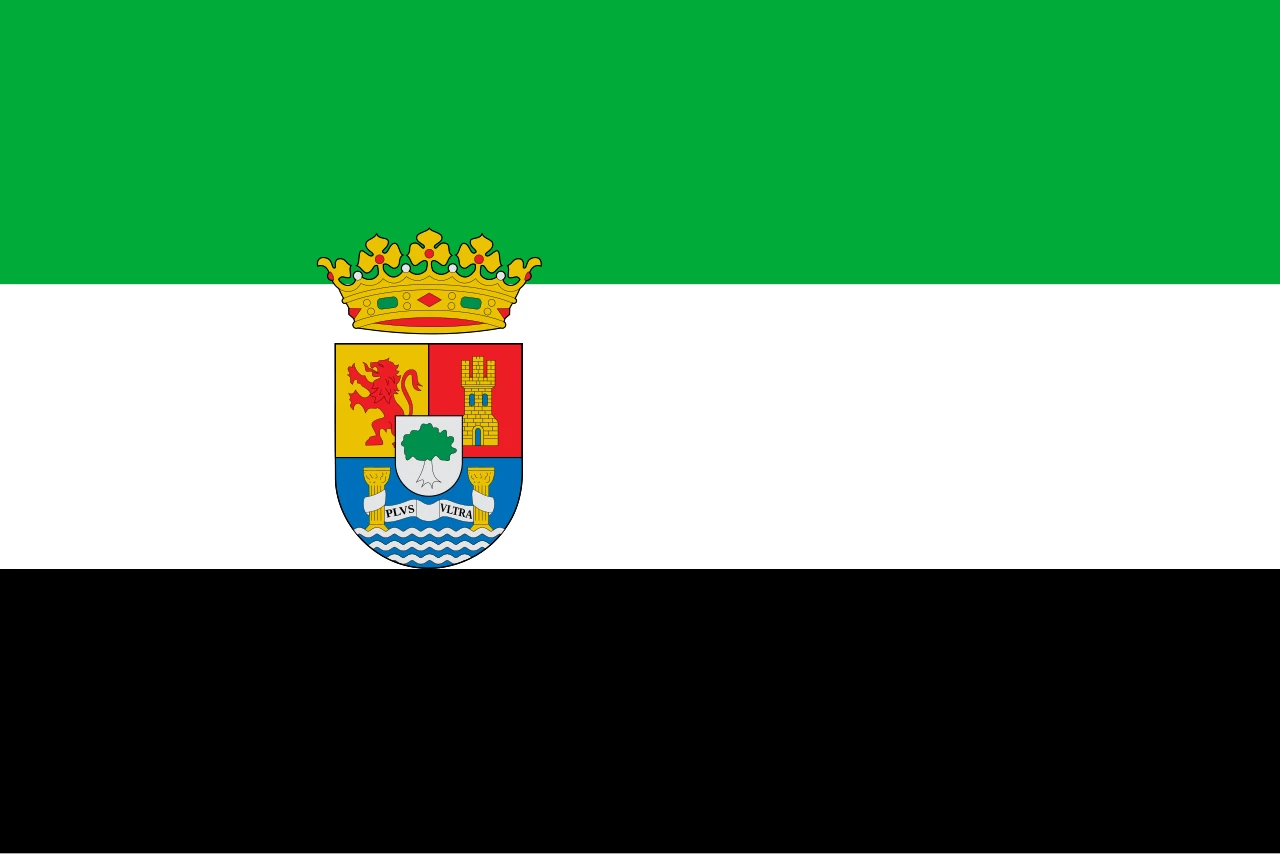
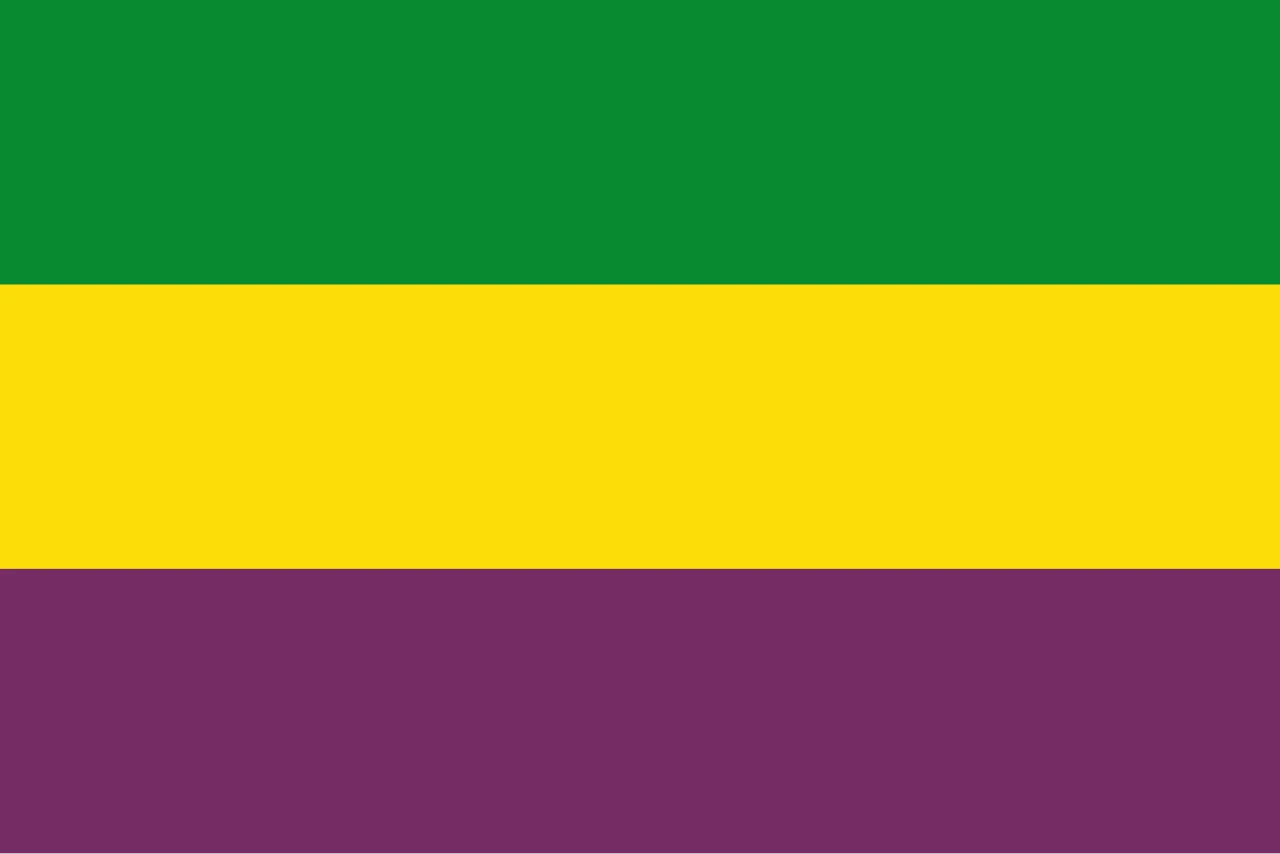
It is a rectangular field with a 2:3 ratio divided into three bands of equal height. The civil version shows only those bands; the official one adds the coat of arms in the centre.
Field
a 2:3 rectangle, wider than high, the cloth that flies on the flagpole (the pole).
Stripes
three horizontal bands of the same size, from top to bottom: green, white and black.
Coat of arms
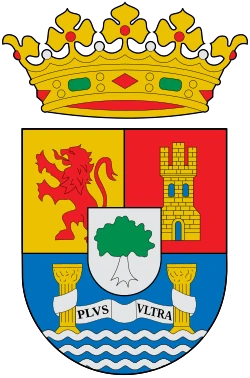
only in the official version, centred over the three stripes.
Fly side
the edge opposite the flagpole is left plain, with no figure.
What it carries
Each element and how many of the 1,390 flags in the catalogue carry it. In yellow, the rarest.
Its first known public appearance was in Oliva de la Frontera (Badajoz), on 14 November 1976,…
1983
The Statute of Autonomy of 1983 made it the official flag
1985
In 1985 a law added the version with the coat of arms for institutional use
The full story
How it was born, how it has changed and what it means.
The flag of Extremadura has three equal horizontal stripes: green, white and black. The version used by the institutions also bears the coat of arms in the centre. It is a very young flag, but it became so popular within a few years that the Statute of Autonomy adopted it without discussion.
How it came about
It appeared in the mid-seventies, after Franco’s death, when autonomy was being demanded in many regions of Spain. Its first known public appearance was in Oliva de la Frontera (Badajoz), on 14 November 1976, and it was presented to the newspapers in February 1977.
Who designed it is half a mystery. Several people have claimed the idea. The version with the most support says it was the lawyer from Oliva de la Frontera Martín Rodríguez Contreras, but a history teacher, Antonio Galache, has also claimed authorship. The Statute of Autonomy of 1983 made it the official flag.
How it has changed
The three stripes have not changed since 1983. In 1985 a law added the version with the coat of arms for institutional use.
What it means
There is no single meaning. The explanation given by the official publications looks at the Middle Ages:
Green
the Order of Alcántara, a religious order of knights that was very powerful in what is now the province of Cáceres.
White
the standard of the Kingdom of León, which repopulated the region after the Reconquista.
Black
the banner of the Aftasid kings, who ruled the Muslim kingdom of Badajoz in the eleventh century.
Another popular interpretation says that the green is hope, the white the purity of nature and the black the sorrow for the many Extremadurans who had to emigrate.
Fun facts
The colours of two football teams?
A very widespread theory says the flag joins the colours of Cacereño, green and white, and Badajoz, white and black. In reality, both clubs took colours that were already traditional in their provinces.
Several fathers for one flag
At least two people have publicly claimed to have invented it, and even the widow of one of them wrote to the newspapers to defend her husband.
It was born in a village
It was not presented in a capital but in Oliva de la Frontera, a village in Badajoz, in November 1976.
Location
How much have you learnt?
Test what you have read about the flag of Extremadura.