
Skip to content

Wiki Banderas
Open menu

Flag of Fukui

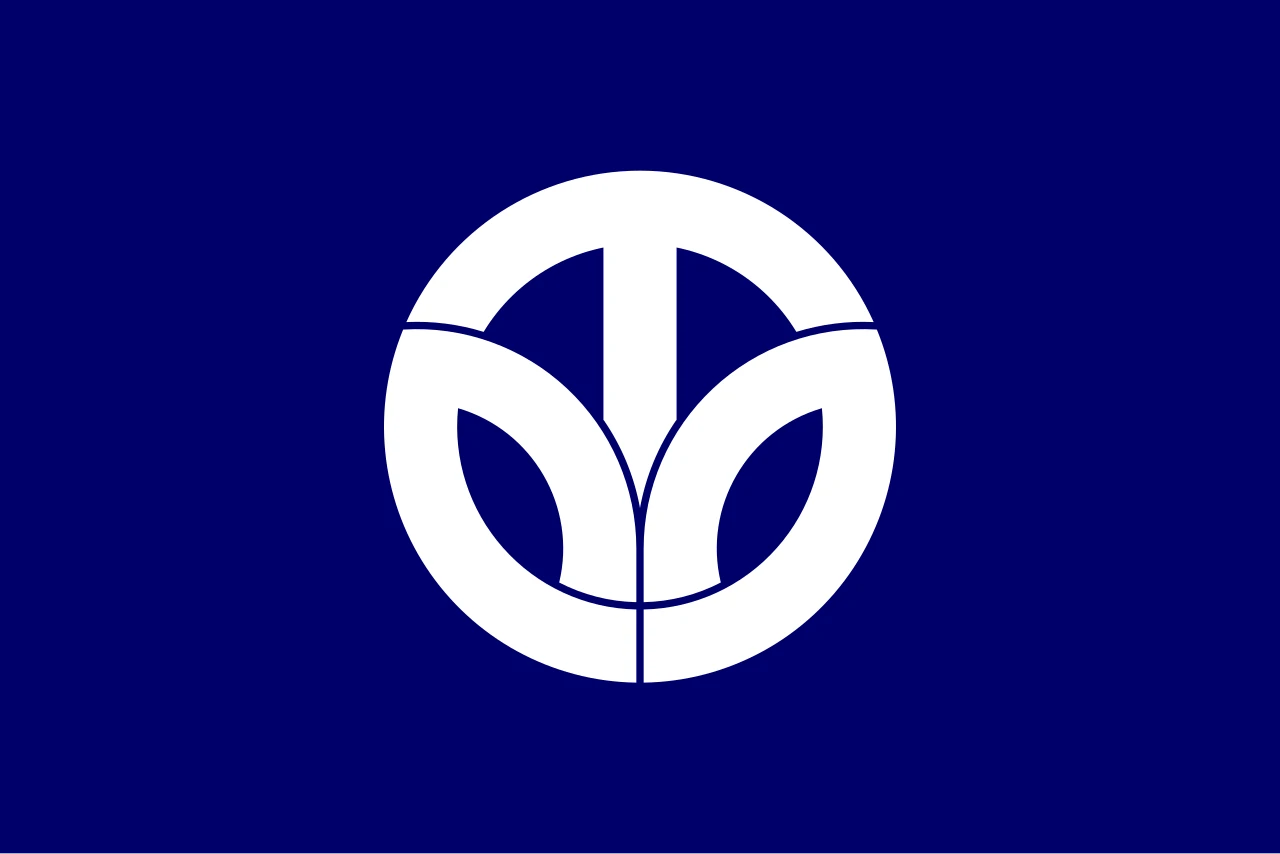
The katakana of Fukui tied into a white circle on an indigo field: flag and emblem were born together on 28 March 1952.

Flag of Fukui
Coat of arms

The flag, in figures

Every fact about the flag, each with what it means.

Proportions
2:33 wide for every 2 high. 989 flags in the catalogue share it.
Properties
Normal flagFIAV symbol: the form of the flag.
Use
CivilFIAV symbol: who may fly the flag.
Adopted
195228 March 1952 · 74 years ago
Colours
  • blue
  • white
Reference shades: the official one may vary slightly.
Coat of arms
YesIt carries the coat of arms on the cloth.

Take a closer look

  • Field

  • Emblem

  • Charge

  • Position

How it is described

The flag in the words of vexillology and heraldry.

Vexillological description

It is a rectangular field with a 2:3 ratio in indigo blue, with the emblem of the prefecture in white and centred. There are no other drawings: a plain field with a figure on top.

Field
a 2:3 rectangle, plain (a single colour, no divisions), in indigo blue.
Emblem
a ring in the centre, formed by three syllables of the name curled into each other.
Charge
in vexillology, what is drawn on the field; here it is a single white figure.
Position
the ring sits equally far from the flagpole (the pole) and from the fly side (the opposite edge).
What it carries

Each element and how many of the 1,390 flags in the catalogue carry it. In yellow, the rarest.

The full story

How it was born, how it has changed and what it means.

The flag of Fukui is a white circle on a dark blue, almost indigo field. Looked at calmly, it is not a simple ring: the strokes form the katakana フ・ク・イ (fukui), the three syllables of the name of the prefecture tied into a single figure.

How it came about

The emblem of the prefecture was approved on 28 March 1952, and the announcement was brief but complete: in its notes it stated that, when used as a flag, the field should be indigo blue with the drawing in white. So flag and emblem were born on the same day and out of the same paperwork, something not unusual in Japan.

How it has changed

It has not changed since 1952.

What it means

  • White circle

    according to the official explanation, it looks like a leaf sprouting between its first two little leaves, and holds inside the prefecture’s wish for development; it has also been read as the harmony and cooperation of its people.

  • Indigo and white

    the two colours that the 1952 announcement itself fixed for the flag.

Fun facts

  1. The first emblem with mandatory colours

    Fukui’s is thought to have been the first Japanese prefectural emblem to fix its colours in use: indigo or black. Before that, each prefecture chose the shade on the spur of the moment.

  2. A flag you can read

    Many of Japan’s prefectural flags are the letters of the name turned into a drawing; Fukui’s is one of the most literal: it spells out フ・ク・イ.

Location

How much have you learnt?

Test what you have read about the flag of Fukui.

  1. 1. Which one is the flag of Fukui?

  2. 2. Which of these elements appears on the flag?

  3. 3. What are the proportions (height:width) of the flag?

  4. 4. In which year was the current flag adopted?

Sources

Sources consulted:

Credits

Flag image: This logo image consists only of simple geometric shapes or text. It does not meet the threshold of originality needed for copyright protection, and is therefore in the public domain. Although it is free of copyright restrictions, this image may still be subject to other restrictions. See WP:PD § Fonts and typefaces or Template talk:PD-textlogo for more information., Wikimedia Commons · Public domain.

More flags

Accessibility preferences

Accessibility statement

Quick profiles

Text and reading

Text size
Default
Line height
Default
Letter spacing
Default
Word spacing
Default

Colour

Motion and orientation

Cursor