Skip to content

Wiki Banderas
Open menu

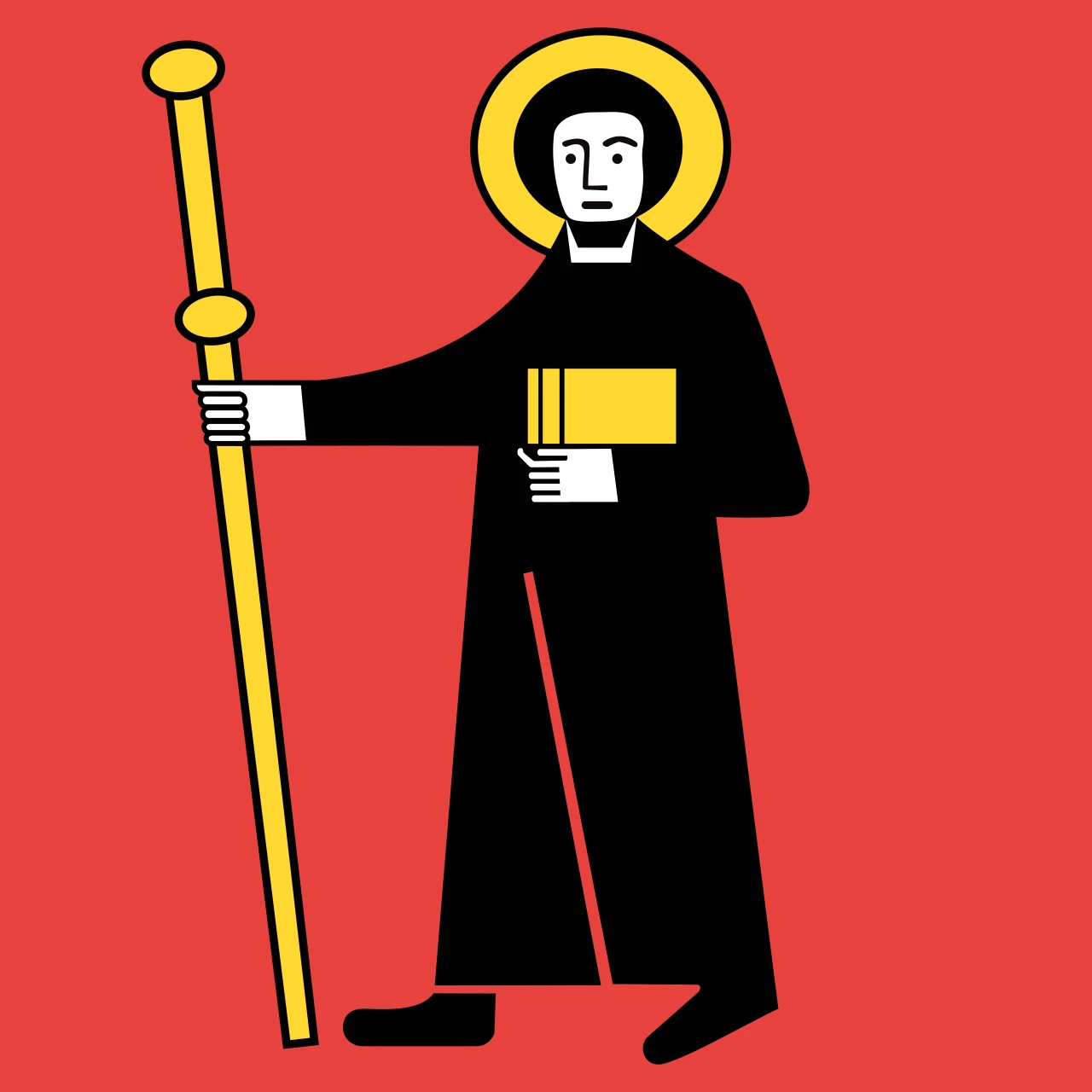
Flag of Glaris

A saint with a crozier and a Bible walks over the red: Glaris is the only canton whose flag carries a person, and its current version was approved in 1959.

Flag of Glaris

The flag, in figures

Every fact about the flag, each with what it means.

Proportions
1:11 wide for every 1 high. 29 flags in the catalogue share it.
Properties
Normal flagFIAV symbol: the form of the flag.
Use
CivilFIAV symbol: who may fly the flag.
Adopted
195925 June 1959 · 67 years ago
Colours
  • Red
  • Black
  • Yellow
Reference shades: the official one may vary slightly.
123

Take a closer look

  1. The red cloth

  2. 1

    Saint Fridolin

  3. 2

    The book

  4. 3

    The halo

How it is described

The flag in the words of vexillology and heraldry.

Vexillological description

It is a square field, with a 1:1 ratio, with a plain red ground. On it walks a full-length saint, placed at the centre of the field.

Field
square (1:1), the usual shape of the flags of the Swiss cantons.
No divisions
a single red ground, with no stripes, crosses or coats of arms.
Figure
a man in a black habit, with a golden halo, a crozier in one hand and a book in the other.
Position
he walks towards the flagpole (the pole it is hoisted from) and looks forwards.
What it carries

Each element and how many of the 1,390 flags in the catalogue carry it. In yellow, the rarest.

Its history in dates

Every date in its story, at a glance.

  1. 1352

    Glaris joined the Confederation in 1352

  2. 1388

    The saint first appears on the flag in 1388, at the Battle of Näfels

  3. 1437

    Until the nineteenth century every maker painted Fridolin in their own way: with a hat or without,…

  4. 1941

    The government fixed the emblem by law in 1941 and on 25 June 1959 decreed the current stylised…

The full story

How it was born, how it has changed and what it means.

The flag of Glaris is unusual: instead of an animal or a symbol it carries a man, Saint Fridolin, who walks towards the flagpole looking straight ahead, the only saint on a cantonal flag.

How it came about

Fridolin was, according to tradition, an Irish missionary who Christianised the region in the sixth century by founding the monastery of Säckingen, distant lord of Glaris. The saint first appears on the flag in 1388, at the Battle of Näfels. Glaris joined the Confederation in 1352.

How it has changed

Until the nineteenth century every maker painted Fridolin in their own way: with a hat or without, with a red or green Bible, and between 1437 and 1578 with an abbot’s crozier instead of the pilgrim’s staff. The government fixed the emblem by law in 1941 and on 25 June 1959 decreed the current stylised version by the graphic designer Ernst Keller.

What it means

  • Saint Fridolin

    patron of the canton, its evangeliser according to tradition; his existence is not confirmed.

  • Crozier and Bible

    attributes of the pilgrim and of the abbot.

Fun facts

  1. A dead man testifies in court

    According to legend, Count Urs bequeathed Glaris to Fridolin’s monastery, and when his brother challenged the will the saint resurrected Urs so that he could confirm it.

  2. The white tail of the streamer

    From the fourteenth century to 1792 the flag of Glaris carried at the top a white streamer, the Schwenkel.

  3. The saint on the wall

    The chronicle of Schilling, of 1513, painted Saint Fridolin on the wall of Näfels, encouraging the defenders of 1388.

Localisation

How much have you learnt?

Test what you have read about the flag of Glaris.

  1. 1. Which one is the flag of Glaris?

  2. 2. Which of these elements appears on the flag?

  3. 3. What are the proportions (height:width) of the flag?

  4. 4. In which year was the current flag adopted?

Sources

Sources consulted:

Credits

Flag image: Autor desconocido, Wikimedia Commons · Public domain.

More flags

Accessibility preferences

Accessibility statement

Quick profiles

Text and reading

Text size
Default
Line height
Default
Letter spacing
Default
Word spacing
Default

Colour

Motion and orientation

Cursor