Skip to content

Wiki Banderas
Open menu

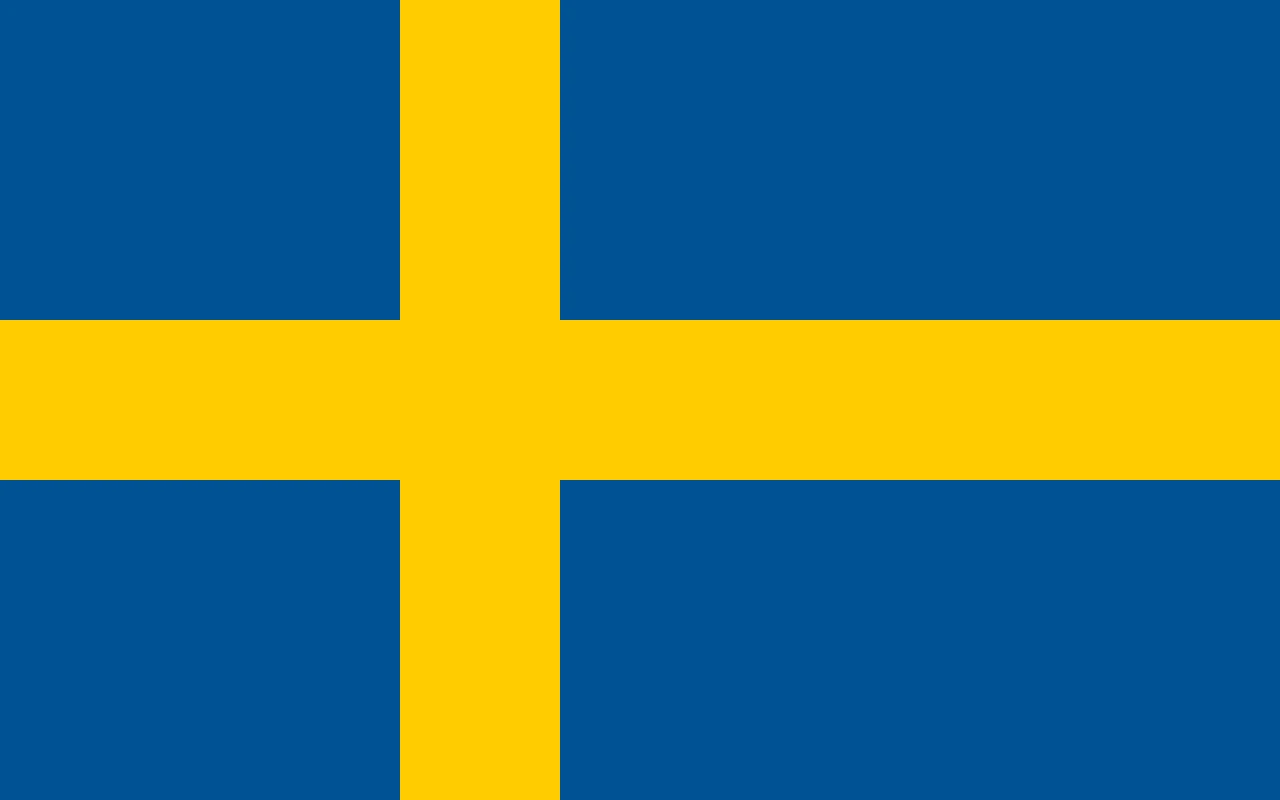
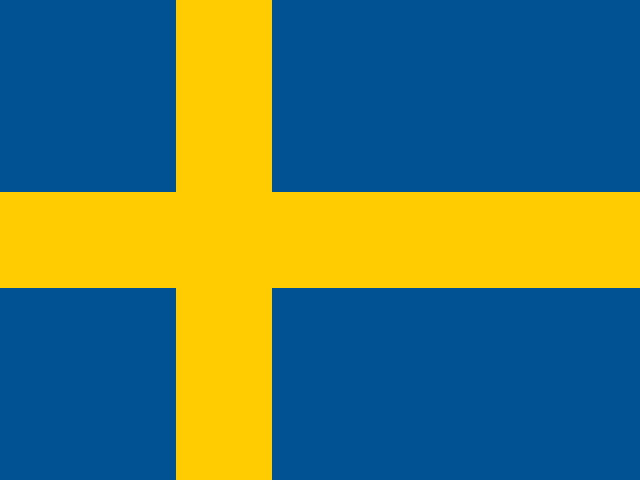
Flag of Sweden

A yellow cross on a blue ground that takes its colours from the Swedish royal arms and its shape from the other Nordic flags.

Flag of Sweden
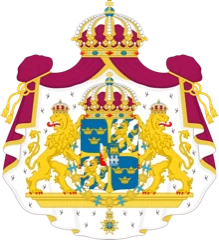
Coat of arms

The flag, in figures

Every fact about the flag, each with what it means.

Proportions
5:88 wide for every 5 high. 9 flags in the catalogue share it.
Properties
Normal flagFIAV symbol: the form of the flag.
Use
Civil and state, on land and at seaFIAV symbol: who may fly the flag.
Adopted
190622 June 1906 · 120 years ago
Colours
  • blue
  • yellow
Reference shades: the official one may vary slightly.
Coat of arms
YesIt carries the coat of arms on the cloth.
123

Take a closer look

  1. The blue field

  2. 1

    The Nordic cross

  3. 2

    The blue by the hoist

  4. 3

    The blue by the fly

How it is described

The flag in the words of vexillology and heraldry.

Vexillological description

It is a rectangular field with a 5:8 ratio, blue, with a yellow Nordic cross shifted towards the flagpole.

Cross
yellow (in practice, gold), as in Denmark or Norway.
Measurements
the rule says that the arms of the cross measure a fifth of the height and that the vertical one is centred so that 3 units of blue are left at the hoist and 5 at the fly, on a width of 8.
Colours
the blue and yellow come from the thirteenth-century Swedish coat of arms.
What it carries

Each element and how many of the 1,390 flags in the catalogue carry it. In yellow, the rarest.

Its history in dates

Every date in its story, at a glance.

  1. 1442

    In 1442 there appears the coat of arms Sweden still uses today

  2. 1569

    By the sixteenth century the flag already existed: a royal order of 1569 required that the yellow…

  3. 1905

    After the separation of 1905, Sweden withdraws the badge and a law fixes the present design…

  4. 1982

    Today it is governed by another law, of 1982

The full story

How it was born, how it has changed and what it means.

The flag of Sweden is blue with a yellow cross. Very few flags combine only these two colours, so it is easy to recognise. Its shape makes it a sister to those of its northern neighbours; its colours, on the other hand, come from the arms of the kingdom.

How it came about

Nobody knows when it was first used. What is clear is where the colours come from: from the thirteenth century the Swedish kings bore blue and gold on their arms. In 1442 there appears the coat of arms Sweden still uses today, a blue ground quartered by a golden cross.

By the sixteenth century the flag already existed: a royal order of 1569 required that the yellow cross always appear on Swedish standards. The idea of shifting the cross towards the flagpole, rather than leaving it in the centre, was very probably taken from the Danish Dannebrog. There is also a legend: King Erik IX would have seen a golden cross shining in the sky during an expedition to Finland, in the twelfth century. No document confirms it.

How it has changed

The drawing of the cross has not changed; what has come and gone are the swallowtails and the badges.

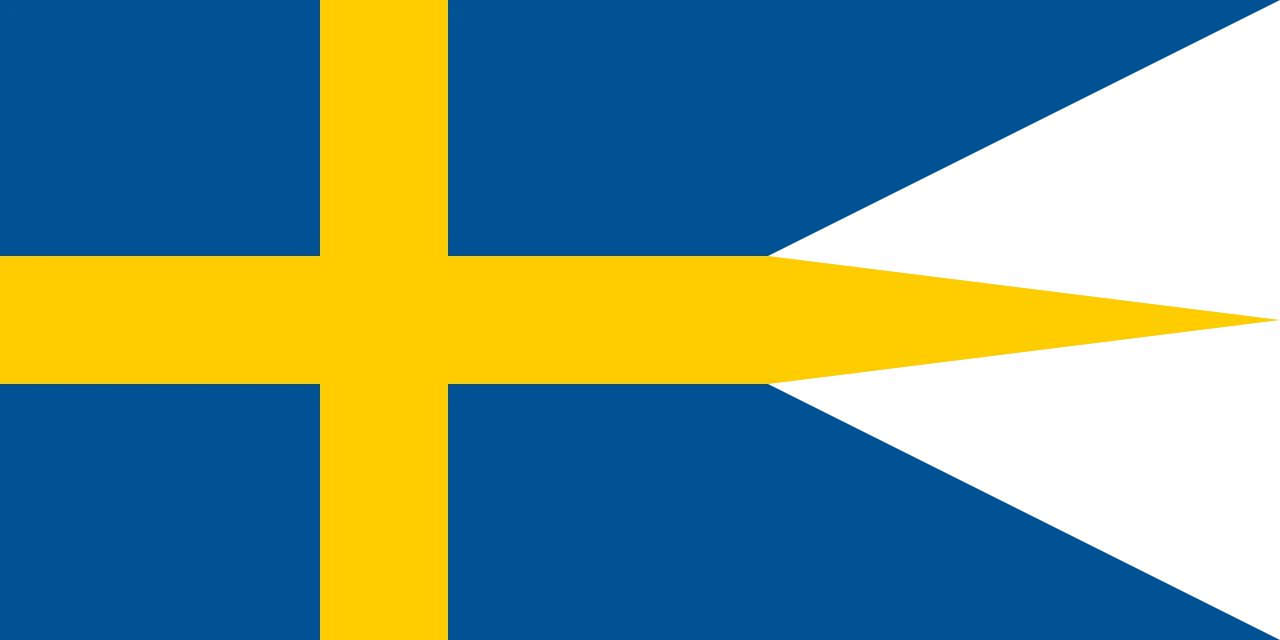
  1. Swedish flag ending in three points
    User: David Newton · CC BY-SA 3.0

    17th century

    A version with three points appears, which the Navy, the Army and the royal family still use.

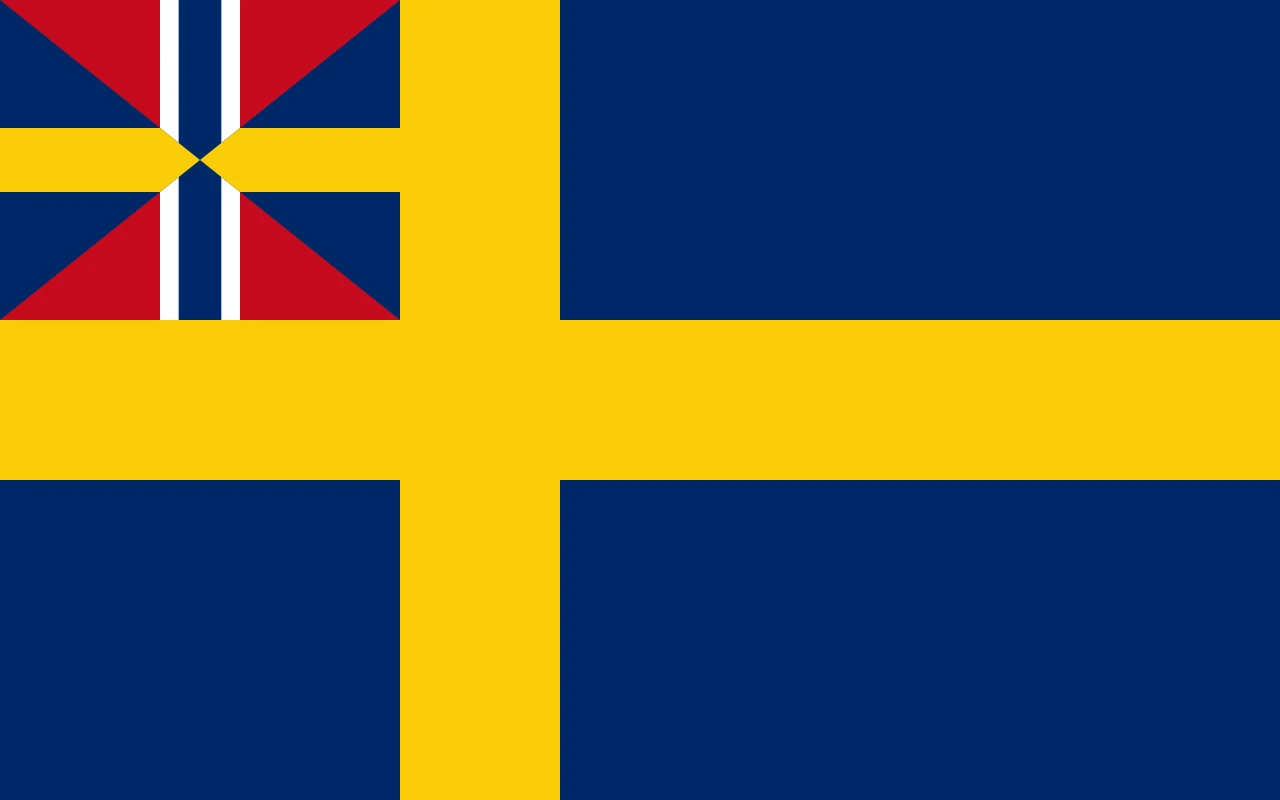
  2. Swedish flag with the union with Norway badge in the upper corner
    Jeltz · Public domain

    1844-1905

    Sweden and Norway share a king, and their flags carry in the upper corner a badge in the colours of both countries.

  3. Current flag of Sweden

    1906

    After the separation of 1905, Sweden withdraws the badge and a law fixes the present design and colours. Today it is governed by another law, of 1982.

What it means

The law assigns it no meaning. What explains the flag is its origin:

  • Blue and yellow

    the colours of the Swedish royal arms since the Middle Ages.

  • Cross

    Christianity, as in the rest of the Nordic flags.

  • Shifted cross

    the model that began in Denmark and which the other countries of the area followed.

Fun facts

  1. A “herring salad”

    The badge of the union with Norway was a mosaic of stripes and crosses in colour. On either side of the border it was mockingly nicknamed sillsallad, “herring salad”.

  2. Its own day

    Since 1916, 6 June is celebrated as Flag Day. It was chosen because on that day, in 1523, Gustav Vasa was elected king. In 1983 the date also became Sweden’s National Day.

  3. With a timetable

    The flag is hoisted at 8 a.m. from March to October and at 9 the rest of the year, and lowered at sunset.

Country facts

Where it is and what borders it.

Capital
Stockholm
Area
450,295 km²
Country
Kingdom of Sweden
Continent
Europe
Subregion
Northern Europe
Independent state
Yes
UN member
Yes
ISO code
SWE · SE

2 neighbouring countries

How much have you learnt?

Test what you have read about the flag of Sweden.

  1. 1. Which one is the flag of Sweden?

  2. 2. Which of these elements appears on the flag?

  3. 3. In which year was the current flag adopted?

Sources

Text based on the article “Bandera de Suecia” from the Spanish Wikipedia, published under the licence CC BY-SA 4.0.

Sources consulted:

Credits

Flag image: Jon Harald Søby and others., Wikimedia Commons · Public domain.

More flags

Accessibility preferences

Accessibility statement

Quick profiles

Text and reading

Text size
Default
Line height
Default
Letter spacing
Default
Word spacing
Default

Colour

Motion and orientation

Cursor