Every fact about the flag, each with what it means.
Proportions
3:55 wide for every 3 high. 24 flags in the catalogue share it.
Properties
Normal flagFIAV symbol: the form of the flag.
Use
CivilFIAV symbol: who may fly the flag.
Adopted
198617 February 1986 · 40 years ago
Colours
Blue
Red
White
Reference shades: the official one may vary slightly.
Coat of arms
YesIt carries the coat of arms on the cloth.
Origin
Flag of France, without the white stripe
Take a closer look
The two stripes
1
The blue stripe
2
The palm tree
3
The coat of arms
How it is described
The flag in the words of vexillology and heraldry.
Vexillological description
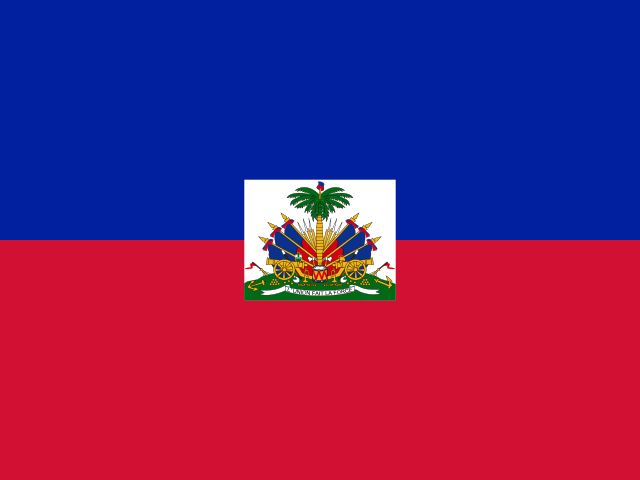
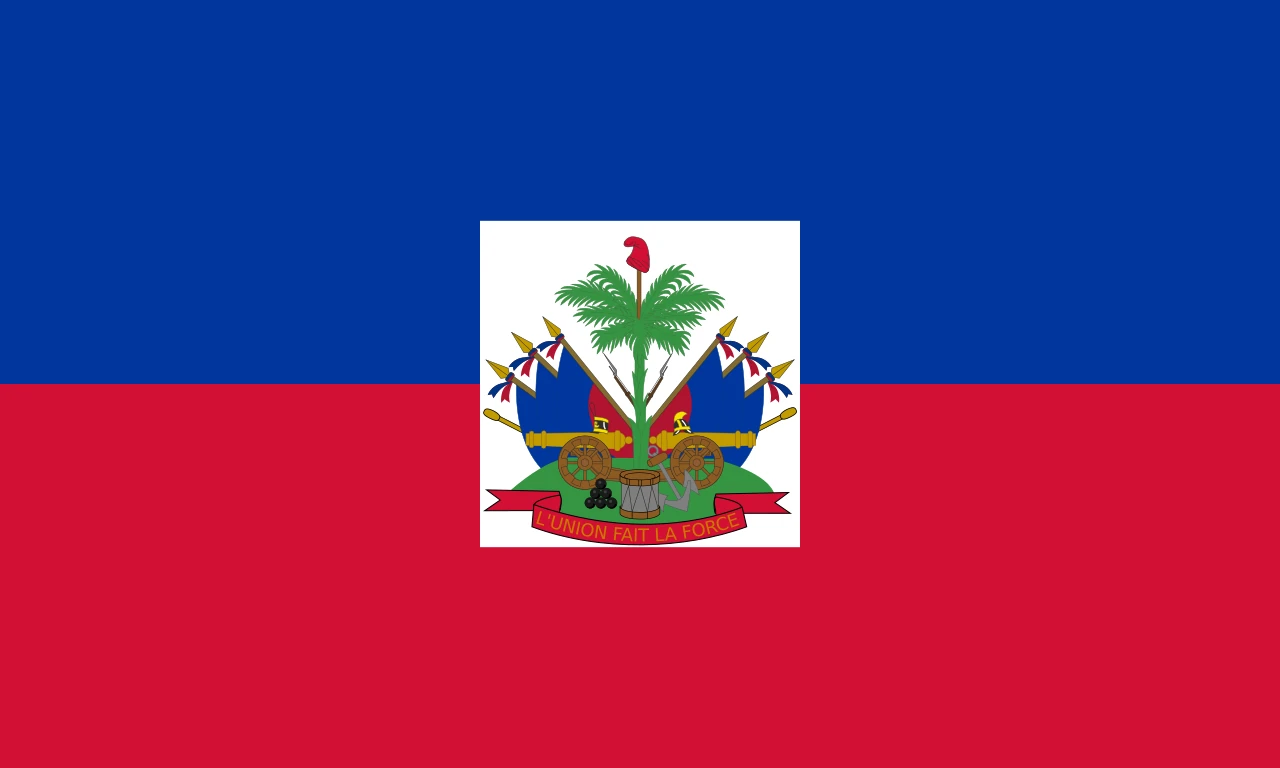
It is a rectangular field —the field is the cloth of the flag— with a 3:5 ratio, divided in half into two horizontal stripes: blue on top and red below. In the centre, a white rectangle carries the coat of arms of the country.
Stripes
two bands of the same height; a stripe is a band of colour.
White rectangle
centred, on the line where the two stripes meet.
Colours
blue and red on the field and white in the rectangle; the other colours are inside the coat of arms.
What it carries
Each element and how many of the 1,390 flags in the catalogue carry it. In yellow, the rarest.
In 1791 a great rebellion broke out which ended up becoming a war of independence
1803
According to tradition, on 18 May 1803
1804
On 1 January 1804 Haiti declared its independence
1806
After Dessalines’ death in 1806 the blue and red come back
1964
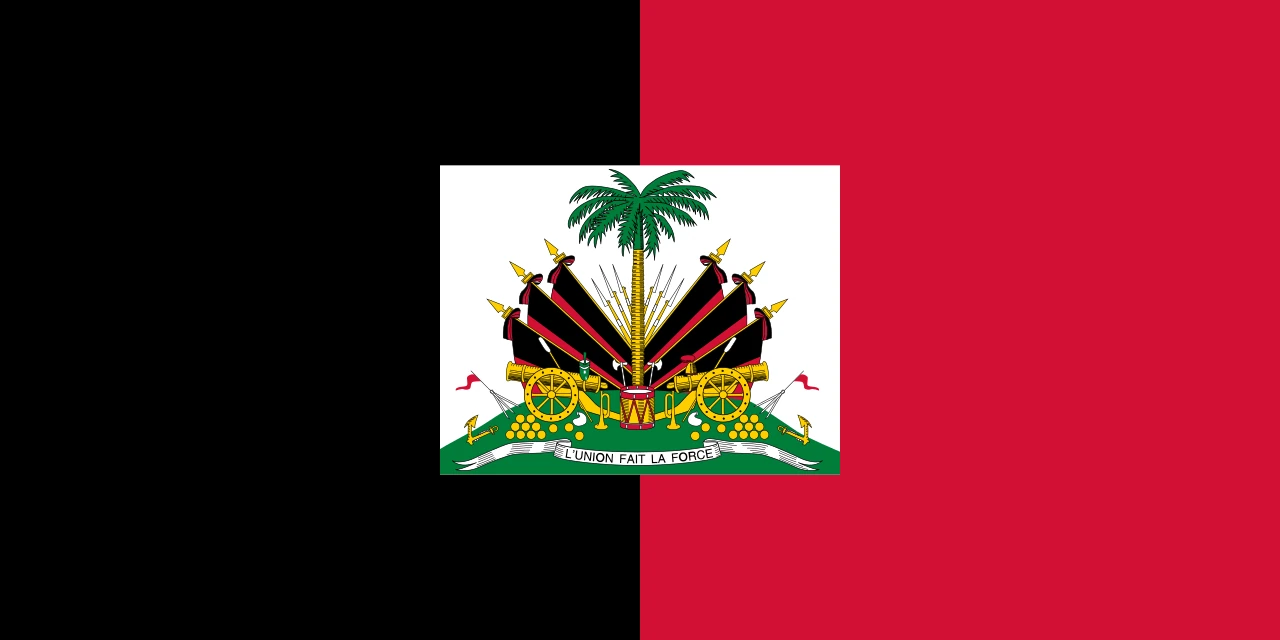
Except for a break in the mid-19th century, it lasts until 1964
The full story
How it was born, how it has changed and what it means.
The flag of Haiti has two horizontal stripes, blue on top and red below, and in the centre a white rectangle with the coat of arms of the country. It is the flag of the first republic founded by former slaves, and it was born from a very clear gesture: to break the flag of the country that had enslaved them.
How it came about
In the late 18th century Haiti was Saint-Domingue, the richest colony of France, worked by hundreds of thousands of African slaves. In 1791 a great rebellion broke out which ended up becoming a war of independence.
According to tradition, on 18 May 1803, at a congress of the rebel leaders in Arcahaie, General Jean-Jacques Dessalines took a French flag, the one with blue, white and red stripes, and tore off the white stripe. A young seamstress, Catherine Flon, sewed the two that were left together. On 1 January 1804 Haiti declared its independence.
How it has changed
The flag has changed colours and layout several times, depending on who governed the country.
After Dessalines’ death in 1806 the blue and red come back, now horizontal and with the coat of arms in the centre. Except for a break in the mid-19th century, it lasts until 1964.
The dictator François Duvalier brings back Dessalines’s black and red flag.
1986
Ten days after the fall of Jean-Claude Duvalier, son of the previous one, the blue and red flag comes back.
What it means
The colours tell who made the independence:
Blue
the black population.
Red
the mulattoes, people with African and European ancestors. Together, blue and red represent the union of the two groups against France.
White torn off
the departure of the French colonists.
Coat of arms
a royal palm, the tree typical of the island, crowned with the red cap of liberty, over cannons, rifles and flags.
Motto
L’union fait la force, ‘union makes strength’.
Fun facts
Liechtenstein’s twin
At the 1936 Olympic Games it was discovered that the flag of Liechtenstein was identical to the Haitian one without the coat of arms. The following year Liechtenstein added a crown to set itself apart.
A public holiday for the flag
Every 18 May Haiti celebrates Flag Day, in memory of the congress of Arcahaie. Catherine Flon, the seamstress, is one of the symbols of the independence.
Flags inside the flag
The coat of arms in the centre carries several Haitian flags next to cannons and rifles. It is one of the few national flags that depict themselves.
Buy the flag
Buy the flag on AmazonAffiliate link: if you buy, Wiki Banderas receives a small commission.
Buy the flag on AmazonAffiliate link: if you buy, Wiki Banderas receives a small commission.
Flag image: (colours and size changes of the now deleted versions) Madden, Vzb83, Denelson83, Chanheigeorge, Zscout370 and Nightstallion Coat of arms :Lokal_Profil and Myriam Thyes, Wikimedia Commons · Public domain.




 Dominican Republic