Skip to content

Wiki Banderas
Open menu

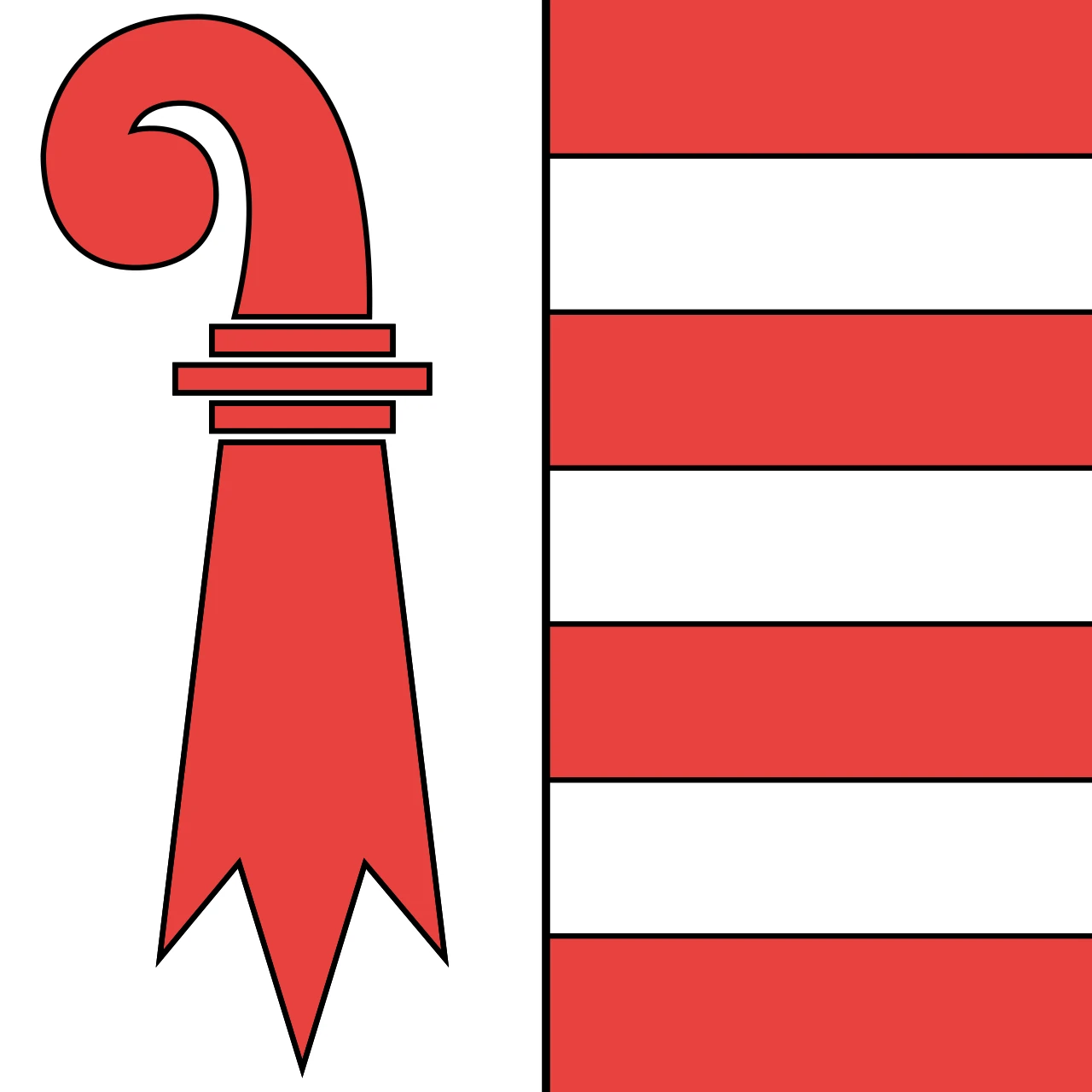
Flag of Jura

White half with a crosier, half with stripes: the separatist flag that in 1977 became official in the newest canton of Switzerland, born in 1979.

Flag of Jura

The flag, in figures

Every fact about the flag, each with what it means.

Proportions
1:11 wide for every 1 high. 29 flags in the catalogue share it.
Properties
Normal flagFIAV symbol: the form of the flag.
Use
CivilFIAV symbol: who may fly the flag.
Adopted
197720 March 1977 · 49 years ago
Colours
  • White
  • Red
Reference shades: the official one may vary slightly.

Take a closer look

  • Field

  • Crosier

  • Stripes

  • Coat of arms

How it is described

The flag in the words of vexillology and heraldry.

Vexillological description

It is a square field, divided into two equal halves by a vertical line.

Field (the cloth of the flag)
white next to the flagpole, red at the fly side (the edge opposite the flagpole).
Crosier
on the white half there is a red crosier, the curved staff of a bishop, with the hook towards the flagpole.
Stripes
the red half carries seven horizontal stripes of the same thickness: four red and three white.
Coat of arms
it carries none; the design is already the emblem of the canton.

What it carries

Each element and how many of the 1,390 flags in the catalogue carry it. In yellow, the rarest.

Its history in dates

Every date in its story, at a glance.

  1. 1815

    From 1815 the French-speaking Jura districts belonged to German-speaking Bern

  2. 1949

    The heraldist Paul Boesch designed this flag, presented in 1949

  3. 1951

    It has not changed since 1951: the new canton adopted the flag of the movement as it was

  4. 1977

    On 20 March 1977 the people of Jura approved the constitution that defines these emblems

The full story

How it was born, how it has changed and what it means.

The flag of Jura is divided in two: a red crosier on white on the left, red and white stripes on the right. The youngest of Switzerland: from the flag of a movement to the flag of a canton.

How it came about

From 1815 the French-speaking Jura districts belonged to German-speaking Bern, and from the forties separatism grew. The heraldist Paul Boesch designed this flag, presented in 1949; in 1951 the Bernese government authorised it to be flown as the “Jura flag”. On 20 March 1977 the people of Jura approved the constitution that defines these emblems, and on 1 January 1979 the canton was constituted.

How it has changed

It has not changed since 1951: the new canton adopted the flag of the movement as it was.

What it means

  • Red crosier

    the staff of the prince-bishop of Basel, lord of these lands from the fourteenth century to 1815.

  • Seven stripes

    the seven districts that Bern recognised as the Jura people; when the canton was formed with three, the three white ones are read as its own.

Fun facts

  1. Approved by the canton that was going to abandon it

    Bern authorised the separatist flag in 1951; twenty-six years later it was flying in the canton born from it.

  2. Seven districts, three volunteers

    Only three of the seven Jura districts voted to join the new canton in 1978; Laufen, the German-speaking one, ended up in Basel-Country in 1994.

  3. Moutier switched sides in 2026

    Moutier refused to join Jura in 1998 by forty-one votes; the yes of 2017, ratified in 2021, made the city change canton on 1 January 2026.

Localisation

How much have you learnt?

Test what you have read about the flag of Jura.

  1. 1. Which one is the flag of Jura?

  2. 2. Which of these elements appears on the flag?

  3. 3. What are the proportions (height:width) of the flag?

  4. 4. In which year was the current flag adopted?

Sources

Sources consulted:

Credits

Flag image: Autor desconocido, Wikimedia Commons · Public domain.

More flags

Accessibility preferences

Accessibility statement

Quick profiles

Text and reading

Text size
Default
Line height
Default
Letter spacing
Default
Word spacing
Default

Colour

Motion and orientation

Cursor