Every fact about the flag, each with what it means.
Proportions
2:33 wide for every 2 high. 989 flags in the catalogue share it.
Properties
Normal flagFIAV symbol: the form of the flag.
Use
CivilFIAV symbol: who may fly the flag.
Colours
red
yellow
Reference shades: the official one may vary slightly.
Coat of arms
YesIt carries the coat of arms on the cloth.
Take a closer look
Field
Figures
Colours
How it is described
The flag in the words of vexillology and heraldry.
Vexillological description
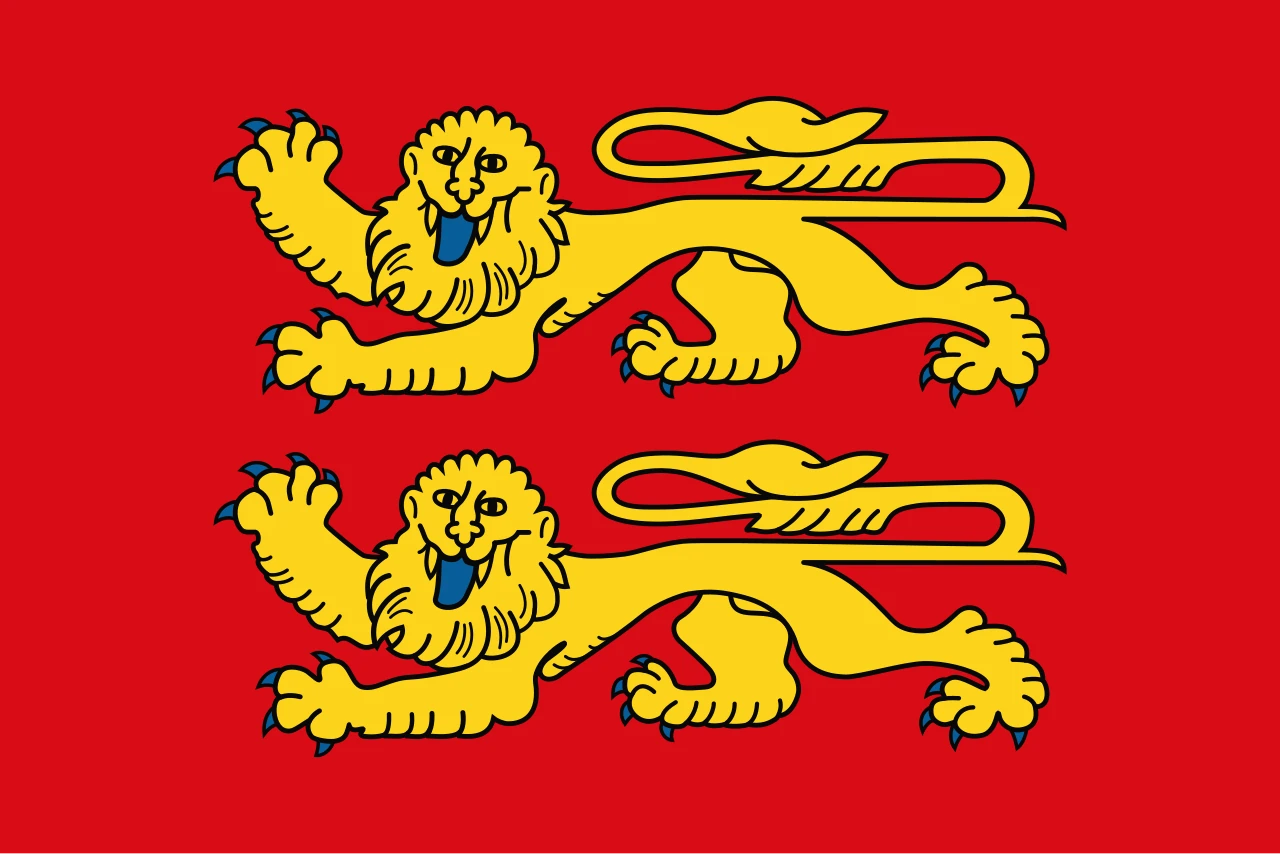
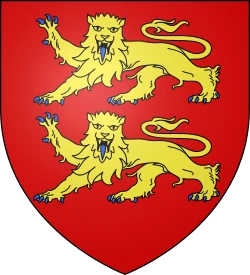
It is a rectangular red field with two golden leopards, one above the other, walking and looking forwards. There is no centred coat of arms: the flag already is the coat of arms of Normandy spread over the whole field.
Field (the cloth)
red, with no divisions.
Figures
two golden leopards, one above the other.
Colours
red and gold.
What it carries
Each element and how many of the 1,390 flags in the catalogue carry it. In yellow, the rarest.
King Richard the Lionheart used a shield with two lions in 1195
1204
In 1204 Normandy passed to France and the coat of arms went on representing it
1941
As the flag of the old province it is more recent: in 1941 the scholar Jacques Meurgey assigned…
2014
A law of November 2014 merged them into one
2015
Until 2015 Normandy was divided into two regions, Upper and Lower Normandy
2016
In March 2016 it presented a new logo
The full story
How it was born, how it has changed and what it means.
The flag of Normandy is red and bears two golden animals, one above the other, walking and looking forwards. In heraldry (the science of coats of arms) they are called “leopards”, though they look like lions. It is not an official flag of the region, but the traditional one, seen at castles, churches and festivals.
How it came about
It is a coat of arms turned into a flag: it reproduces the arms of Normandy, with two golden leopards on a red ground. Those animals are associated with the Plantagenets, the family that ruled Normandy and England in the twelfth century. King Richard the Lionheart used a shield with two lions in 1195, according to the oldest surviving seal. In 1204 Normandy passed to France and the coat of arms went on representing it.
As the flag of the old province it is more recent: in 1941 the scholar Jacques Meurgey assigned those two leopards as the arms of the province, and from there comes the flag seen today.
How it has changed
The drawing of the two leopards has not changed, although commercial flags vary in details: some have blue tongues and claws and others red ones.
Until 2015 Normandy was divided into two regions, Upper and Lower Normandy. A law of November 2014 merged them into one. The traditional flag was then raised at the headquarters of the two regions. The regional council distributed more than 50,000 flags at sporting events. In March 2016 it presented a new logo, with a shape recalling the sail of a Viking ship and the two leopards, and its institutional flag is white with that logo.
What it means
Red ground
it is a traditional colour in Normandy; medieval chroniclers already speak of red standards.
Two golden leopards
inherited from the dukes of Normandy; in the arms of England there were three, and in those of Aquitaine, one.
Blue tongue and claws
they can be seen in some versions and not others; it varies by manufacturer.
Fun facts
Lions or leopards?
In heraldry, an animal that walks looking forwards is called a “leopard”, even when it is drawn as a lion. That is why those of Normandy are “leopards”.
Normandy, two leopards; England, three
Around 1200, the arms of the kingdom of England bore three golden leopards on red, those of the duchy of Normandy two and those of Aquitaine one.
A flag to celebrate the reunification
Between January 2015 and February 2016 the councils of the two regions gave away more than 50,000 flags to the spectators of 18 sporting events.
Localisation
How much have you learnt?
Test what you have read about the flag of Normandy.