
Skip to content

Wiki Banderas
Open menu

Bandera de Saga

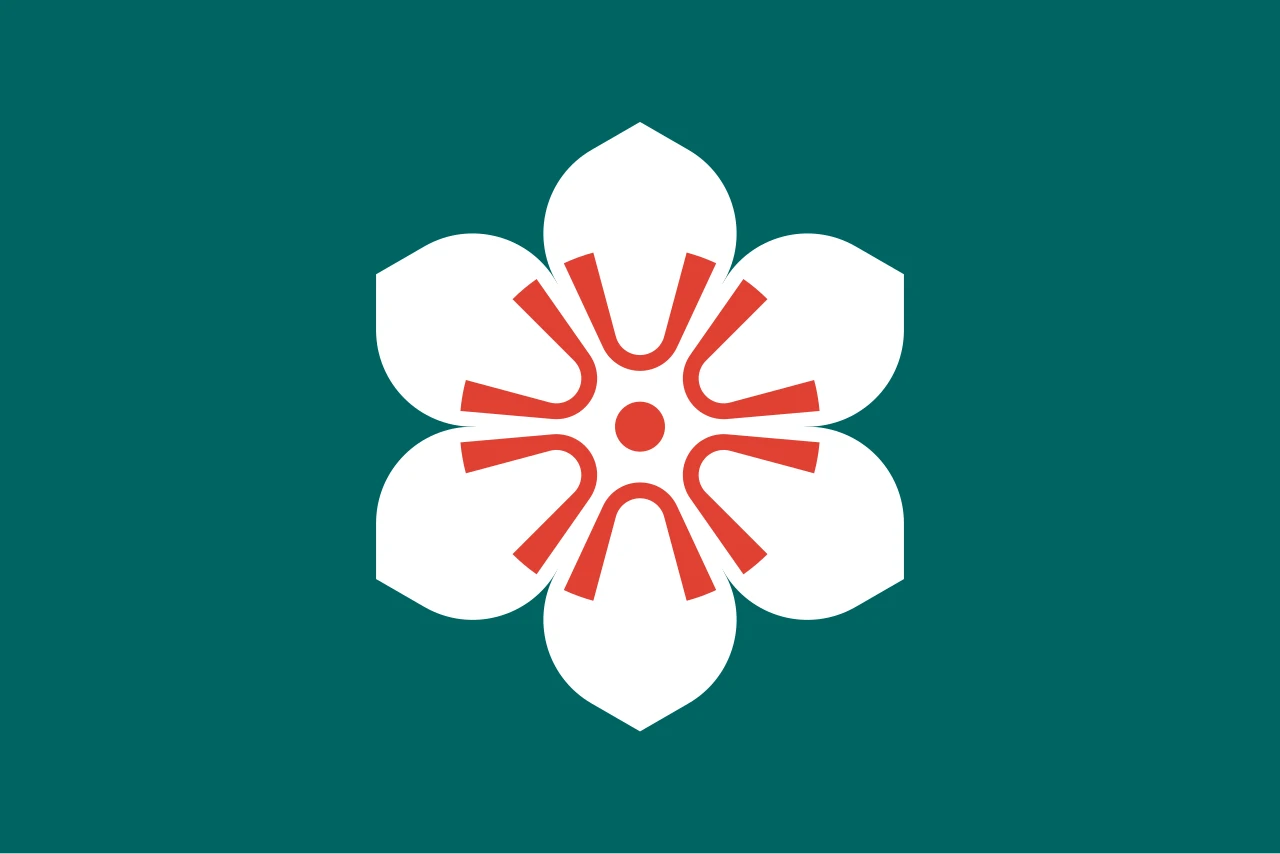
Dark green with a white camellia flower with a vermilion heart: the flag of Saga, of 1968, differs from the 1936 prefectural emblem.

Bandera de Saga
Coat of arms

The flag, in figures

Every fact about the flag, each with what it means.

Proportions
2:33 wide for every 2 high. 989 flags in the catalogue share it.
Properties
Normal flagFIAV symbol: the form of the flag.
Use
CivilFIAV symbol: who may fly the flag.
Adopted
196811 December 1968 · 58 years ago
Colours
  • green
  • white
  • red
Reference shades: the official one may vary slightly.
Coat of arms
YesIt carries the coat of arms on the cloth.

Take a closer look

  • Field

  • Flower

  • Heart of the flower

  • Corazón de la flor

How it is described

The flag in the words of vexillology and heraldry.

Vexillological description

It is a rectangular field —the cloth of the flag —with a 2:3 ratio, dark green and without divisions, with a white camellia flower in the centre.

Field
dark green; the flagpole (the pole it is hoisted from) is on the left and the drawing does not change side.
Flower
in the centre, white, with six petals; it takes up five sevenths of the height of the field.
Heart of the flower
the stamens and pistil are vermilion, a very vivid orange-leaning red.
Corazón de la flor
los estambres y el pistilo son bermellón, un rojo anaranjado muy vivo.
What it carries

Each element and how many of the 1,390 flags in the catalogue carry it. In yellow, the rarest.

Its history in dates

Every date in its story, at a glance.

  1. 1936

    The flag, however, does not use the prefectural emblem: that one was earlier, from 1936,…

  2. 1968

    The prefecture approved the flag on 11 December 1968 by official notification

The full story

How it was born, how it has changed and what it means.

A dark green field with a white flower with a vermilion heart: the flag of Saga depicts a camellia flower, the tree most characteristic of this small prefecture in the northwest of Kyushu, in the south of Japan.

How it came about

The prefecture approved the flag on 11 December 1968 by official notification. The drawing is the camellia flower, the official tree of Saga and also its prefectural flower.

The flag, however, does not use the prefectural emblem: that one was earlier, from 1936, and was never withdrawn. Saga is one of the few Japanese prefectures with two distinct symbols: an old emblem and a more modern flag that do not resemble each other.

How it has changed

The flag has not changed since 1968, and no earlier versions of it are known.

What it means

The prefecture explained the symbolism of the flower when it approved it:

  • White petals

    they mean “uprightness” and “cleanliness”.

  • Vermilion stamens and pistil

    they represent “sincerity” and “passion”.

  • Six petals and six stamens

    their number and shape express “harmony and vigorous development”.

  • Dark green

    the ground; Flags of the World attributes hope and peace to it, but I could not confirm that in the prefectural explanation.

Fun facts

  1. Three ka that wish for prosperity

    The emblem of 1936 gathers three katakana 「カ」 in a circle, like people holding hands: it is cooperation and, read together, they recall 「sakae」, to prosper, in Japanese

  2. A symbol from 1992 that beat the flag

    In 1992 Saga approved a third design, the green ring “circle of rich expansion”; today the government uses it more than the 1936 emblem in its communications

  3. The flower measures five sevenths

    The 1968 notification also fixed the measurements: a flag with a 2:3 ratio and a central flower five sevenths of the height of the field

Localisation

How much have you learnt?

Test what you have read about the flag of Saga.

  1. 1. Which one is the flag of Saga?

  2. 2. Which of these elements appears on the flag?

  3. 3. What are the proportions (height:width) of the flag?

  4. 4. In which year was the current flag adopted?

More flags

Accessibility preferences

Accessibility statement

Quick profiles

Text and reading

Text size
Default
Line height
Default
Letter spacing
Default
Word spacing
Default

Colour

Motion and orientation

Cursor