Skip to content

Wiki Banderas
Open menu

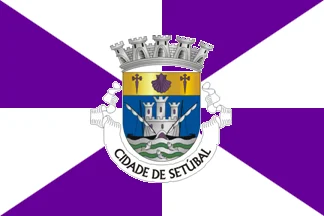
Flag of Setúbal

Eight purple and white triangles with a castle, ships and fish: the flag of Setúbal was published in the official gazette on 5 March 1936.

Flag of Setúbal
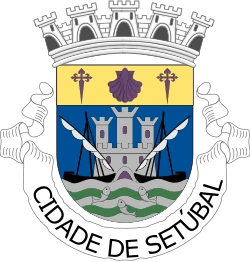
Coat of arms

The flag, in figures

Every fact about the flag, each with what it means.

Proportions
2:33 wide for every 2 high. 989 flags in the catalogue share it.
Properties
Normal flagFIAV symbol: the form of the flag.
Use
CivilFIAV symbol: who may fly the flag.
Adopted
19365 March 1936 · 90 years ago
Colours
  • purple
  • white
  • blue
  • gold
Reference shades: the official one may vary slightly.
Coat of arms
YesIt carries the coat of arms on the cloth.

Take a closer look

  • Gores

  • Arms

  • Figures

  • Figuras

How it is described

The flag in the words of vexillology and heraldry.

Vexillological description

It is a rectangular field with a 2:3 ratio divided into eight purple and white gores, with the city arms in the centre.

Gores
the gores are triangular wedges that all start at the centre; four purple and four white, alternating.
Arms
centred, with a mural crown of five towers and a white scroll with the name of the city.
Figures
inside the arms you can see a castle, ships, fish and a shell over waves.
Figuras
dentro del escudo se ven un castillo, barcos, peces y una concha sobre ondas.
Its history in dates

Every date in its story, at a glance.

  1. 1930

    In the 1930s Portugal gave each municipality a flag with its arms in the centre and a ground that…

  2. 1936

    The flag and the arms were published on 5 March 1936 in the Diário do Governo

The full story

How it was born, how it has changed and what it means.

The flag of Setúbal has eight triangles, four purple and four white, with the city arms in the centre. The arms bring together a castle, two ships, three fish and a shell. Setúbal is a port city at the mouth of the river Sado, south of Lisbon.

How it came about

In the 1930s Portugal gave each municipality a flag with its arms in the centre and a ground that indicates its category. Setúbal, being a city, got the eight-triangle ground. The flag and the arms were published on 5 March 1936 in the Diário do Governo, the official gazette now called the Diário da República.

How it has changed

There are no earlier documented versions: the 1936 one is the first official flag and is still the current one. The sources consulted do not record any later changes either.

What it means

  • Purple and white gored ground

    the eight triangles indicate that Setúbal is a city. The purple also appears in the castle and the shell of the arms.

  • Wavy sea

    the green and white waves at the base of the arms.

  • Two ships and three fish

    the city lives from the sea and from fishing.

  • Silver castle

    the castle of the city, with a purple door.

  • Shell and two crosses of Saint James

    they sit on a golden band at the top of the arms.

  • Mural crown of five towers

    the sign of a city.

  • White scroll

    “Cidade de Setúbal”.

Fun facts

  1. A city since 1860

    Although it is ancient, Setúbal was not officially a city until April 1860, when King Peter V decided it.

  2. The capital of the sardine

    At the beginning of the twentieth century it was the most important fishing centre in Portugal, above all for processing and exporting sardines.

Localisation

How much have you learnt?

Test what you have read about the flag of Setúbal.

  1. 1. Which one is the flag of Setúbal?

  2. 2. Which of these elements appears on the flag?

  3. 3. What are the proportions (height:width) of the flag?

  4. 4. In which year was the current flag adopted?

Sources

Sources consulted:

Credits

Flag image: Gonçalo Veiga, Wikimedia Commons · CC BY-SA 4.0.

More flags

Accessibility preferences

Accessibility statement

Quick profiles

Text and reading

Text size
Default
Line height
Default
Letter spacing
Default
Word spacing
Default

Colour

Motion and orientation

Cursor