Skip to content

Wiki Banderas
Open menu

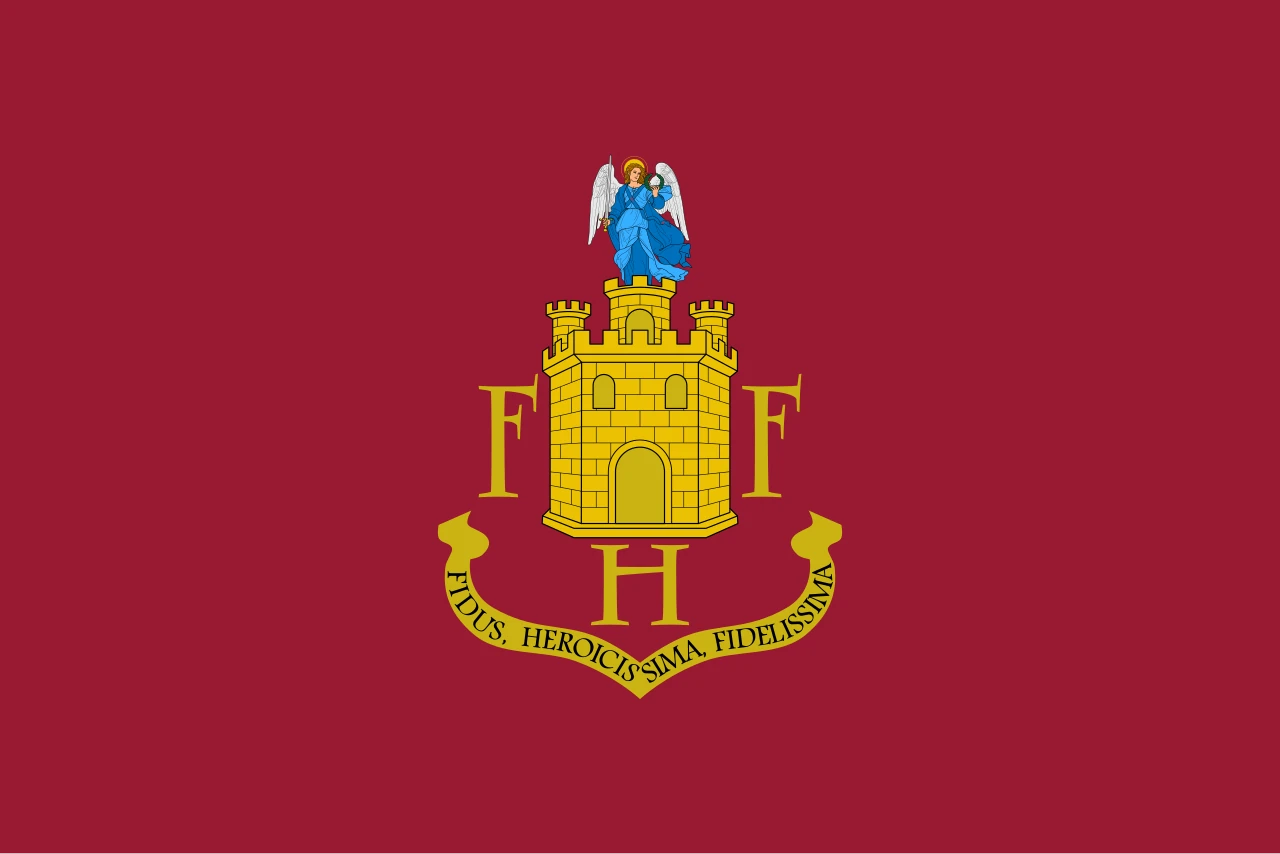
Flag of Sogorb

Carmine with the castle of Sogorb in gold, a guardian angel above and two serpents at the sides, all with a motto in black.

Flag of Sogorb
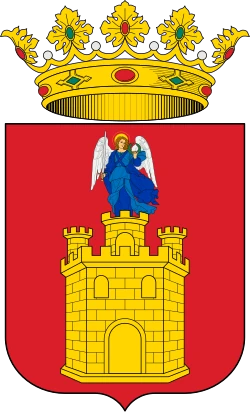
Coat of arms

The flag, in figures

Every fact about the flag, each with what it means.

Proportions
2:33 wide for every 2 high. 989 flags in the catalogue share it.
Properties
Normal flagFIAV symbol: the form of the flag.
Use
CivilFIAV symbol: who may fly the flag.
Adopted
200014 December 2000 · 26 years ago
Colours
  • crimson
  • yellow
  • black
Reference shades: the official one may vary slightly.
Coat of arms
YesIt carries the coat of arms on the cloth.
1234

Take a closer look

  1. The crimson field

  2. 1

    The castle

  3. 2

    The guardian angel

  4. 3

    The letters F

  5. 4

    The scroll

How it is described

The flag in the words of vexillology and heraldry.

Vexillological description

It is a rectangular field with a 2:3 ratio, in carmine red. In the centre it carries the municipal arms: a gold castle with the masonry marked in black, flown over by a guardian angel and flanked by two gold serpents. In black, the motto of the arms.

Field (the cloth)
carmine, with no stripes or divisions.
Castle
gold, in the centre.
Guardian angel
over the castle.
Serpents
two, gold, at each side of the castle.
Motto
in black, that of the arms.
Lema
en negro, el del escudo.

What it carries

Each element and how many of the 1,390 flags in the catalogue carry it. In yellow, the rarest.

Its history in dates

Every date in its story, at a glance.

  1. 1873

    In 1873 the historian Bernardo Mundina already described the council’s seal with the gateway…

  2. 2000

    Its arms were rehabilitated by Resolution of 20 June 2000

The full story

How it was born, how it has changed and what it means.

The flag of Sogorb repeats its arms on a carmine ground. It is a rare case: instead of bearing the arms laid on a field of colour, it draws them whole and centred, like a seal.

How it came about

Sogorb is a municipality of Alto Palancia, with a castle that belonged to the Duchy of Valencia. Its arms were rehabilitated by Resolution of 20 June 2000, of the conseller of Justícia i Administracions Públiques, published in DOGV number 3,797. The flag came six months later, by Resolution of 14 December 2000, published in DOGV number 3,921.

The arms are the ones the town council traditionally used: the castle of the city, protected by a guardian angel and surrounded by two serpents. In 1873 the historian Bernardo Mundina already described the council’s seal with the gateway of the castle crowned with battlements and the angel above.

How it has changed

It has never changed. It was approved at the end of 2000 and there are no documented later modifications.

What it means

  • Carmine

    the ground of the field, a dark red.

  • Gold castle

    the fortress of Sogorb, the central motif.

  • Guardian angel

    its protector.

  • Two serpents

    two, gold, flank the castle.

  • Motto in black

    that of the arms.

Fun facts

  1. The arms were already described in 1873

    In the “Historia, Geografía y Estadística de la Provincia de Castellón”, by Bernardo Mundina, of 1873, the seal of the Sogorb town council is already described as a fortress gateway crowned with battlements with an angel above. The drawing approved in 2000 is almost the same one the village used a hundred and thirty years ago.

  2. A triple motto on the flag

    The arms carry a motto in black with three words: Fidus, Heroicisima, Fidelisima. The flag reproduces it on the carmine. It is rare to see such a long motto on such a small flag, and the lettering clashes hard against the red.

  3. Six months between the arms and the flag

    The arms were rehabilitated in June 2000 and the flag was approved in December, also of 2000. It is probably the fastest approval in the district.

Localisation

How much have you learnt?

Test what you have read about the flag of Sogorb.

  1. 1. Which one is the flag of Sogorb?

  2. 2. Which of these elements appears on the flag?

  3. 3. What are the proportions (height:width) of the flag?

  4. 4. In which year was the current flag adopted?

Sources

Sources consulted:

Credits

Flag image: Macondo, Wikimedia Commons · CC BY-SA 4.0.

More flags

Accessibility preferences

Accessibility statement

Quick profiles

Text and reading

Text size
Default
Line height
Default
Letter spacing
Default
Word spacing
Default

Colour

Motion and orientation

Cursor