Every fact about the flag, each with what it means.
Proportions
2:33 wide for every 2 high. 989 flags in the catalogue share it.
Properties
Normal flagFIAV symbol: the form of the flag.
Use
CivilFIAV symbol: who may fly the flag.
Adopted
191728 September 1917 · 109 years ago
Colours
red
white
blue
Reference shades: the official one may vary slightly.
Coat of arms
YesIt carries the coat of arms on the cloth.
Nickname
Thong Trairong (‘the tricolour flag’)
Take a closer look
The five stripes
1
The blue stripe
2
The red stripes
3
The white stripes
How it is described
The flag in the words of vexillology and heraldry.
Vexillological description
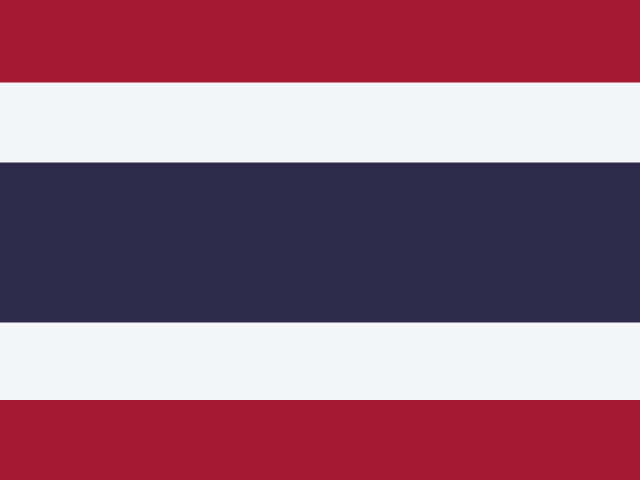
It is a rectangular field with a 2:3 ratio made up of five horizontal stripes, only the middle one of which is twice as wide. The 1979 flag law measures it in parts: six wide by nine long.
Stripes
from top to bottom, red, white, blue, white and red.
Thickness
the blue stripe measures twice as much as the other four, which are equal to each other.
Field
no coat of arms, figures or inscriptions.
What it carries
Each element and how many of the 1,390 flags in the catalogue carry it. In yellow, the rarest.
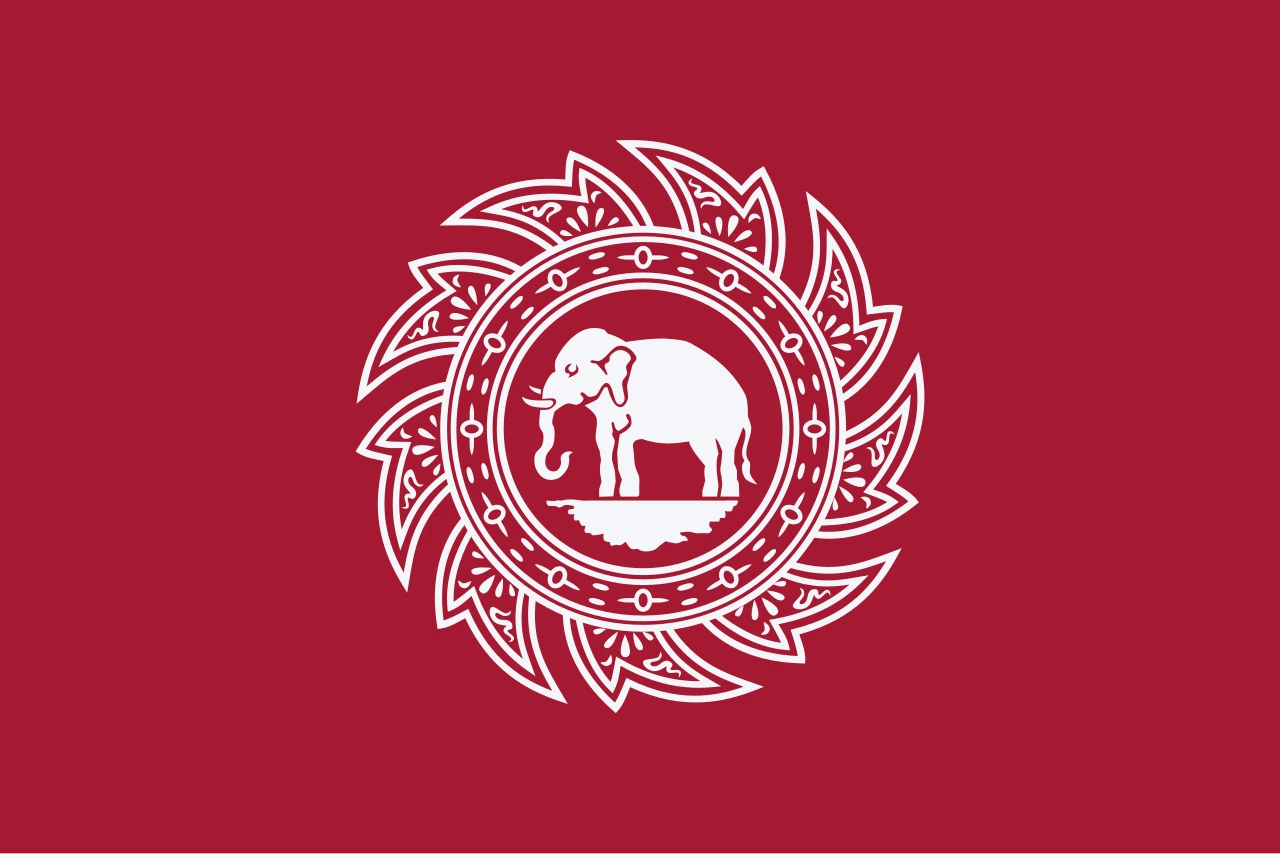
In 1916 King Vajiravudh decided to replace the elephant flag with a simpler design…
1917
A year later, on 28 September 1917, the middle stripe became blue
1939
Thailand was called Siam until 1939
The full story
How it was born, how it has changed and what it means.
The flag of Thailand has five horizontal stripes: red, white, blue, white and red. The blue stripe in the centre is twice as wide as the others. In Thai it is called Thong Trairong, which means ‘the tricolour flag’.
How it came about
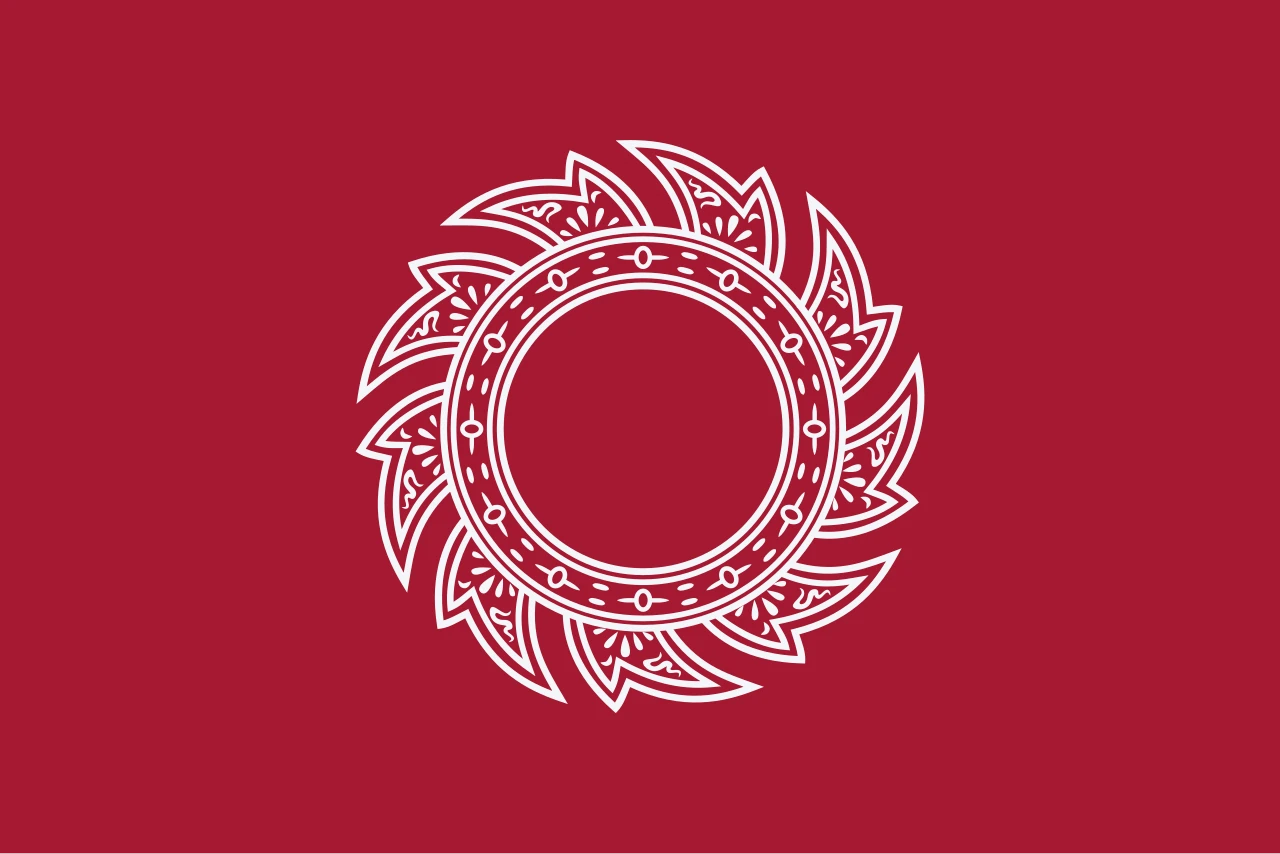
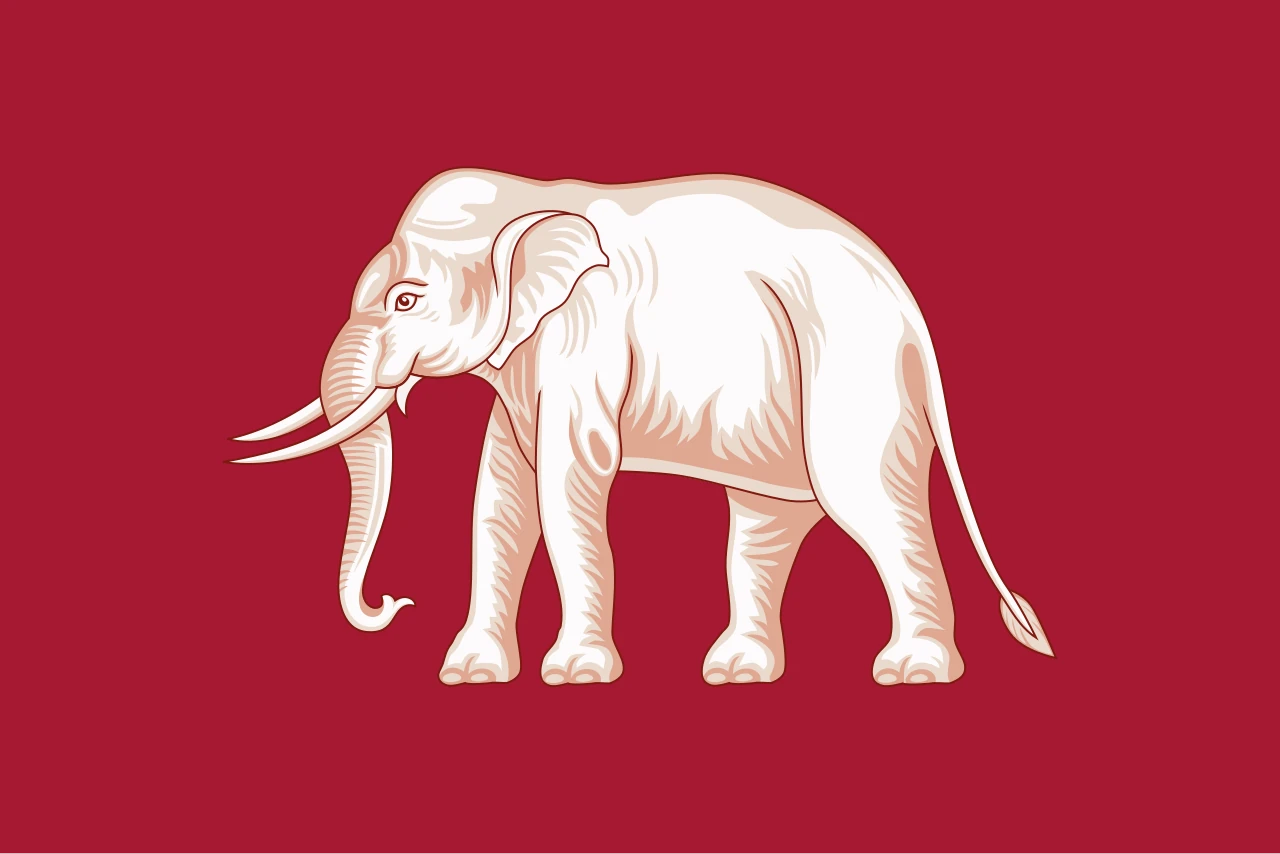
Thailand was called Siam until 1939. Its first flag was probably a plain red cloth, used in the 17th century. Over time the kings added their symbols to it, above all the white elephant, a sacred animal linked to royalty.
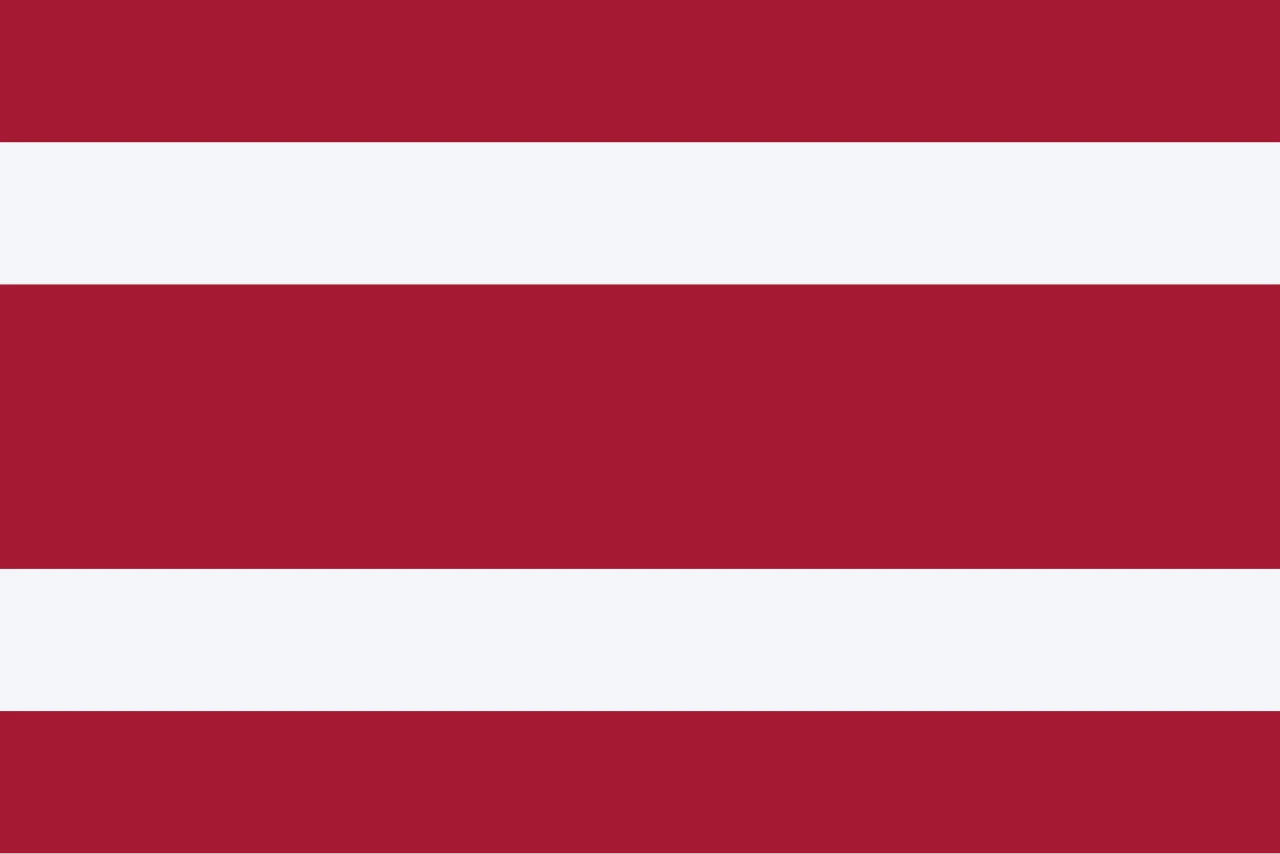
In 1916 King Vajiravudh decided to replace the elephant flag with a simpler design of red and white stripes that would look the same however it was hung. A year later, on 28 September 1917, the middle stripe became blue. That same summer Siam had entered the First World War alongside France, the United Kingdom and the United States, whose flags are also red, white and blue.
How it has changed
In three centuries the flag went from a red cloth to an elephant and, at the end, to stripes.
Vajiravudh replaces the elephant with five red and white stripes.
1917
The middle stripe becomes blue and wider. It is the current flag.
What it means
The law does not explain it, but the most widespread reading ties the three colours to the motto ‘nation, religion, king’:
Red
the nation and its people.
White
the religion, above all Buddhism.
Blue
the monarchy. It is said to have been the colour of King Vajiravudh, although sources do not agree on the reason.
Fun facts
An elephant hung upside down
According to a much-repeated story, in 1916 the king saw an elephant flag hung upside down during some floods and decided to create one that could not be put on wrong. It is an unconfirmed popular anecdote.
The country stops twice a day
Every day, at 8 am and 6 pm, the anthem plays on the radio, on television and in many public places while the flag is raised or lowered. The custom is to stop and stay still until it ends.
It has its own day
Since 2017, 28 September is National Flag Day, in memory of the day the tricolour was adopted.
Buy the flag
Buy the flag on AmazonAffiliate link: if you buy, Wiki Banderas receives a small commission.





 Myanmar
 Cambodia
 Laos
 Malaysia