Skip to content

Wiki Banderas
Open menu

Flag of Region of Apurímac

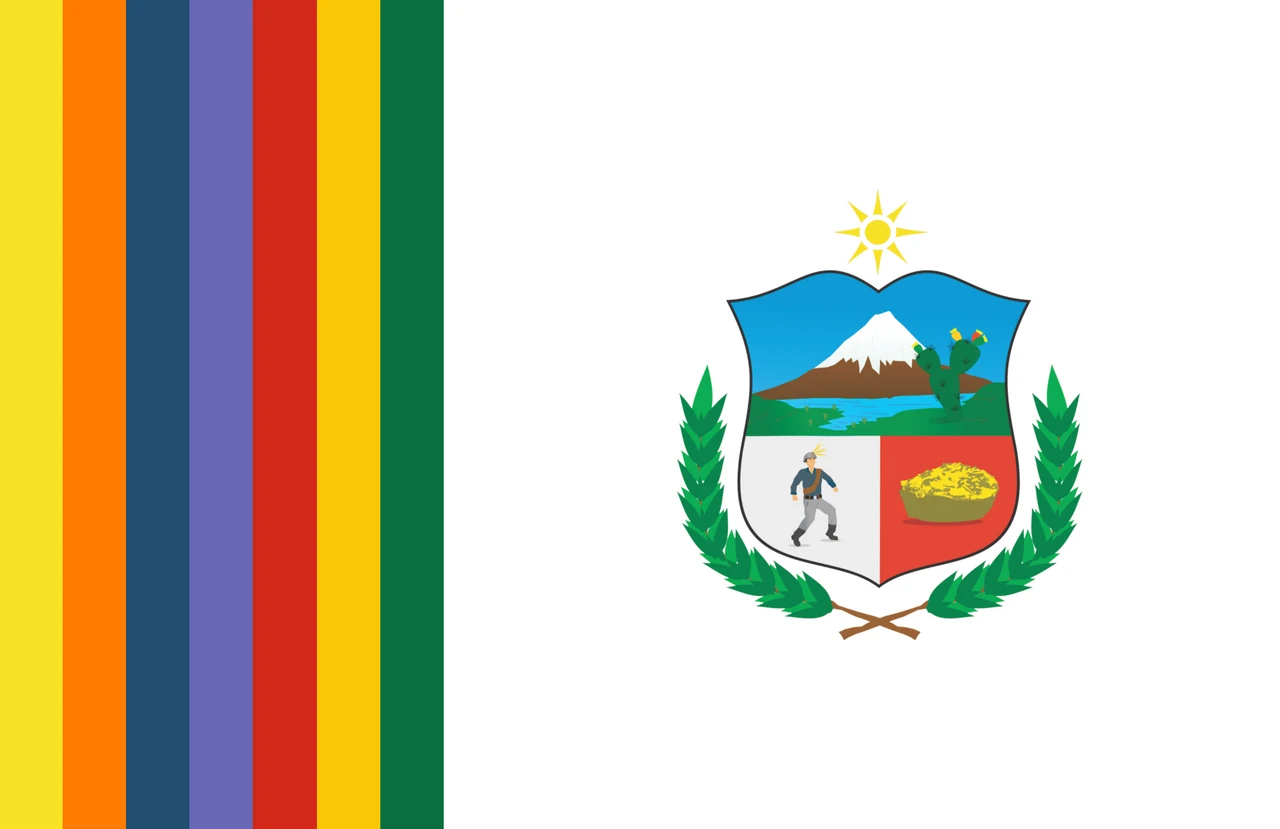
The flag of Apurímac (Peru) adds seven stripes of colour to the flagpole and a white field with a coat of arms: the department of the “god who speaks”.

Flag of Region of Apurímac
Coat of arms

The flag, in figures

Every fact about the flag, each with what it means.

Proportions
17:2626 wide for every 17 high. 4 flags in the catalogue share it.
Properties
Normal flagFIAV symbol: the form of the flag.
Use
CivilFIAV symbol: who may fly the flag.
Colours
  • White
  • Yellow
  • Orange
  • Blue
  • Purple
  • Red
  • Green
  • Brown
Reference shades: the official one may vary slightly.
Coat of arms
YesIt carries the coat of arms on the cloth.
123

Take a closer look

  1. The white field

  2. 1

    The seven-colour stripe

  3. 2

    The regional coat of arms

  4. 3

    The sun

How it is described

The flag in the words of vexillology and heraldry.

Vexillological description

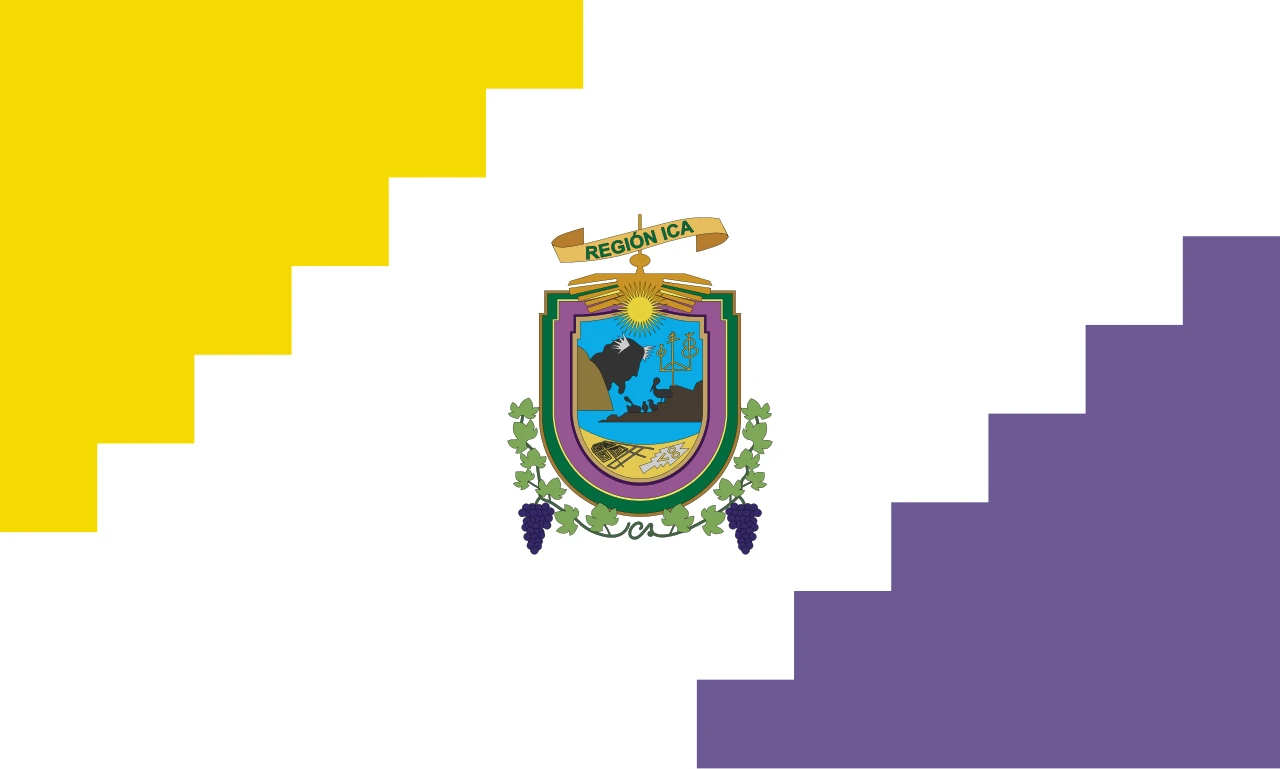
It is a white flag with a stripe (stripe: each band of colour) of seven colours against the flagpole (the pole it is hoisted on) and the coat of arms over the rest of the field.

Stripe
seven vertical bands together —yellow, orange, blue, violet, red, gold and green—, all of the same width.
Field
white in everything that remains, with no divisions.
Coat of arms
in the centre of the white field, shifted towards the fly side (the free edge on the right).
The full story

How it was born, how it has changed and what it means.

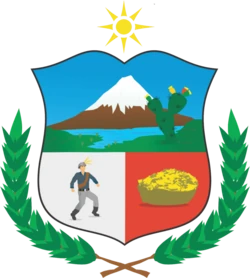
Seven stripes of colour by the mast —yellow, orange, blue, violet, red, gold and green— open the flag of Apurímac, and the rest of the field is white with a coat of arms of mountains, a lagoon, a dancer and a basket of gold coins. It is the banner of the regional government of this Andean department in southern Peru.

How it came about

Apurímac —whose name, from the Quechua apu rimaq, means “the god who speaks” or “great oracle”— was organised as a region with its own government on 18 November 2002, like the other Peruvian departments. Its flag brings together the two languages usual in these banners: a stripe of colours by the mast, adding seven tones, and the coat of arms on a white field, surrounded by laurels.

How it has changed

No versions are documented: the image in circulation is that of the regional government, reproduced as a free file by Wikimedia contributors (CC BY-SA 4.0) on the basis of the official coat of arms.

What it means

No rule consulted explains the coat of arms; what follows is the usual reading of its pieces:

  • Snow-capped peak and lagoon

    the high Andean mountain and water, in the upper quarter.

  • Dancer

    the folklore of the region, in the lower left quarter.

  • Basket full of gold

    mining, in the lower right.

  • Guacamayo

    the bird of the high forest that appears beside the lake.

Fun facts

  1. The oracle that gives it its name

    Apurímac is not named after a chieftain or a city, but after a river whose Quechua name, apu rimaq, is translated as “the god who speaks” or “great oracle”.

  2. Land of the Chancas

    The territory was the heart of the Chancas, the warrior people who came close to defeating the Incas before the army of Pachacútec stopped them, according to the historical tradition collected in the Spanish Wikipedia.

Location

How much have you learnt?

Test what you have read about the flag of Region of Apurímac.

  1. 1. Which one is the flag of Region of Apurímac?

  2. 2. Which of these elements appears on the flag?

Sources

Sources consulted:

Credits

Flag image: JuanMRB.pe, Wikimedia Commons · CC BY-SA 4.0.

More flags

Accessibility preferences

Accessibility statement

Quick profiles

Text and reading

Text size
Default
Line height
Default
Letter spacing
Default
Word spacing
Default

Colour

Motion and orientation

Cursor