In 1907 someone proposed in a newspaper using the cock
1913
Pierre Paulus painted it in 1913, and the region made it official in 1998
1975
It had to wait a long time to become official: in 1975 the French-speaking Community of Belgium…
The full story
How it was born, how it has changed and what it means.
The flag of Wallonia, the region of southern Belgium where French is spoken, is yellow with a red cock. The cock has a foot raised and its beak closed: that is why it is called ‘the proud cock’. Pierre Paulus painted it in 1913, and the region made it official in 1998.
How it came about
In the early 20th century the Walloon Movement, which defended the language and culture of the Walloons, was looking for a flag of its own. There were years of debate. In 1907 someone proposed in a newspaper using the cock, the symbol of France, and the idea gained support.
On 20 April 1913 the activists of the movement adopted the red cock on yellow that the painter Pierre Paulus had drawn. It had to wait a long time to become official: in 1975 the French-speaking Community of Belgium took it up, and on 15 July 1998 the parliament of the Walloon Region approved it as its flag.
How it has changed
The drawing has not changed since 1913. What changed was its use: it went from being the flag of a movement to being the official flag of the region.
Other flags and proposals
Before the cock, the Walloon Movement discussed other ideas.
Propuesta · 1902
Red and yellow, nothing else
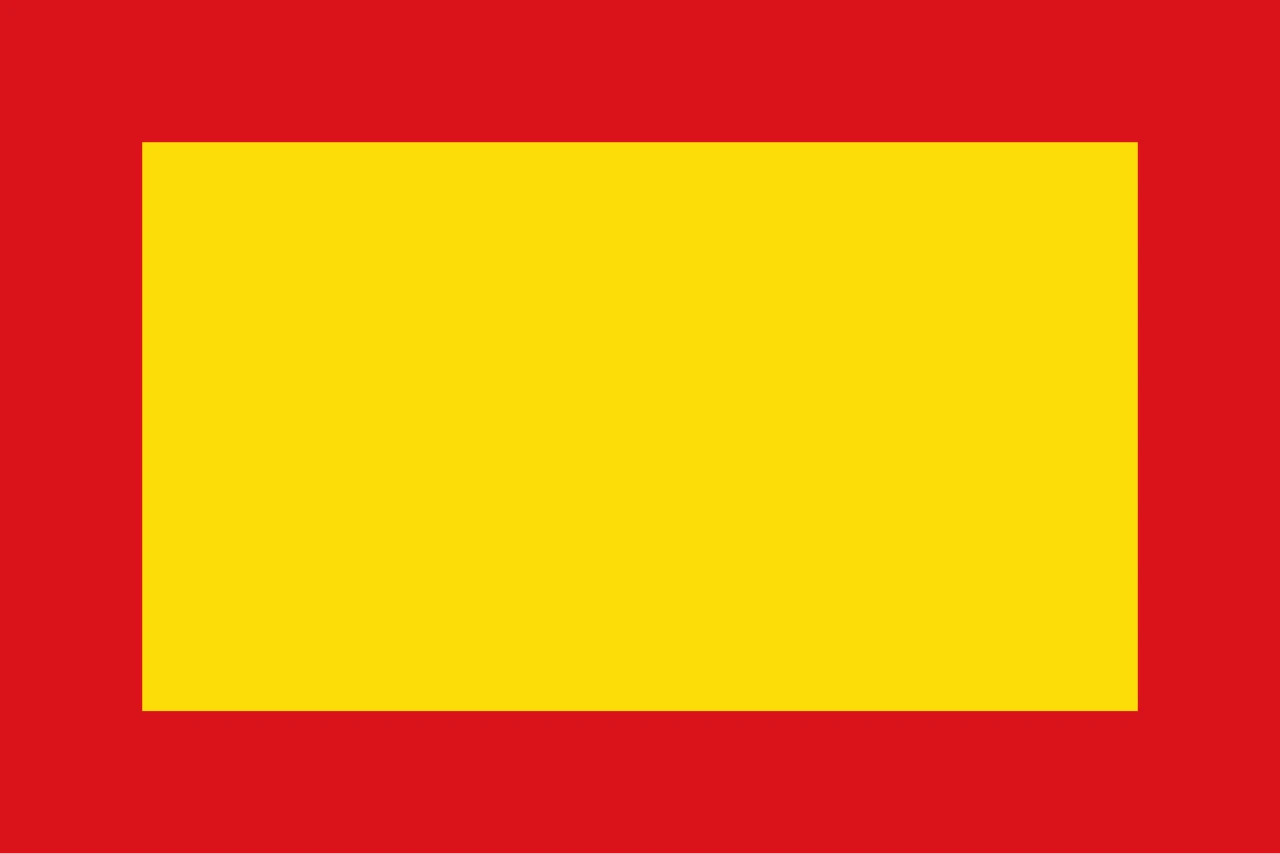
The activist De Warsage proposed a small flag, only red and yellow.
Propuesta · 1902
The flag of the shields
Charles-J. Comhaire, founder of the society Le Vieux-Liège, defended a very large flag with the shields of the Walloon cities.
What it means
Cock
it comes from the Gallic cock, the symbol of France, which many Walloons admired.
Red and yellow
the colours of the flag of the city of Liège.
Raised foot and closed beak
the ‘proud’ posture, which gives the cock a brave air.
Fun facts
A cock with no tradition
There were no cocks in Wallonia’s old coats of arms. The symbol was borrowed from France, because many Walloon activists admired the French Republic.
Debut in a theatre programme
The first known Walloon cock appeared on 2 April 1913, drawn in ink on the programme of a charity gala at the Théâtre Royal de Liège.
The original painting is in a museum
Pierre Paulus’s watercolour of the cock is kept in the Musée de la Vie Wallonne, in Liège.
Location
Buy the flag
Buy the flag on AmazonAffiliate link: if you buy, Wiki Banderas receives a small commission.
Buy the flag on AmazonAffiliate link: if you buy, Wiki Banderas receives a small commission.
How much have you learnt?
Test what you have read about the flag of Wallonia.