Skip to content

Wiki Banderas
Open menu

Flag of Antwerp (Province)

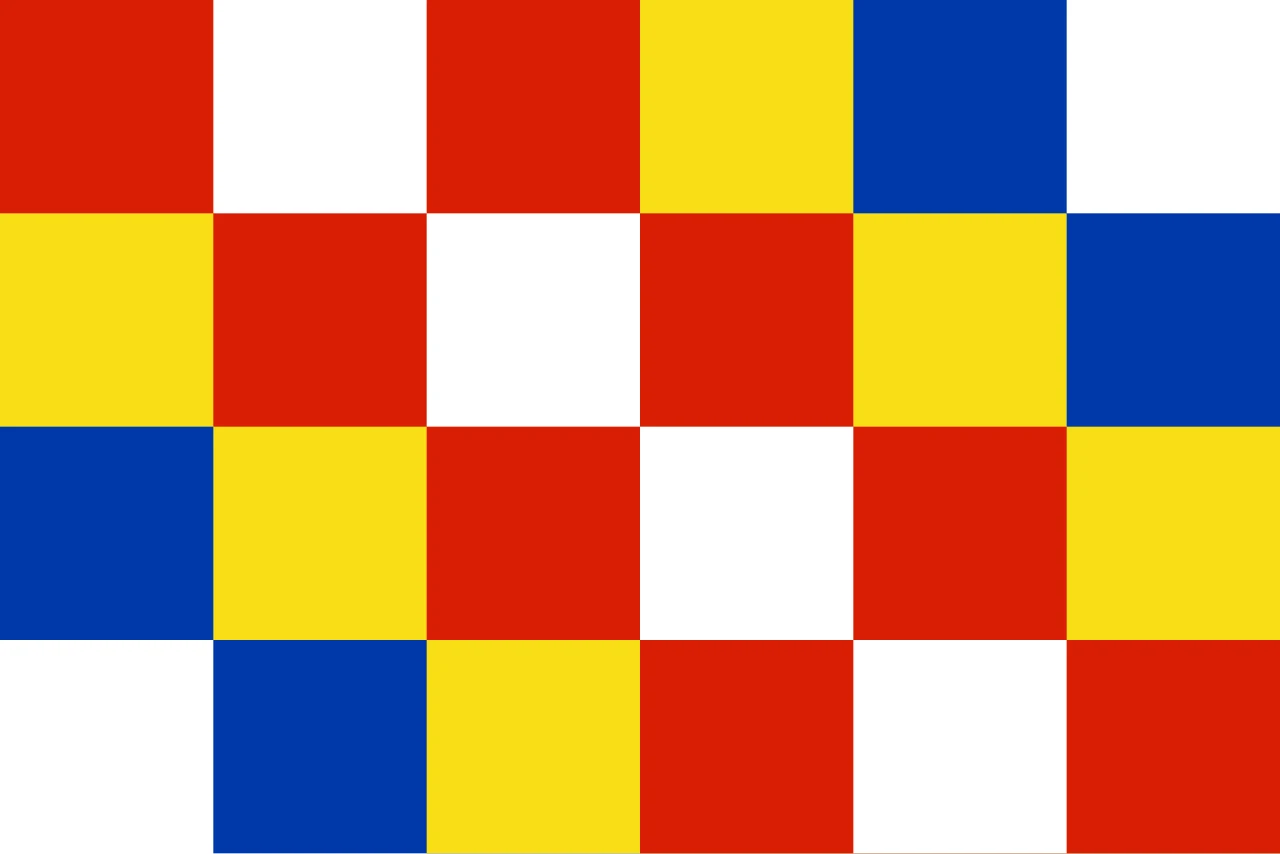
A chequerboard of 24 red, white, yellow and blue squares: the flag of the province of Antwerp brings together the colours of its three capitals.

Flag of Antwerp (Province)
Coat of arms

The flag, in figures

Every fact about the flag, each with what it means.

Proportions
2:33 wide for every 2 high. 989 flags in the catalogue share it.
Properties
Normal flagFIAV symbol: the form of the flag.
Use
CivilFIAV symbol: who may fly the flag.
Adopted
199618 October 1996 · 30 years ago
Colours
  • Red
  • White
  • Yellow
  • Blue
Reference shades: the official one may vary slightly.
Coat of arms
YesIt carries the coat of arms on the cloth.

Take a closer look

  • Squares

  • Starting point

  • Middle rows

How it is described

The flag in the words of vexillology and heraldry.

Vexillological description

It is a chequerboard with a 2:3 ratio made up of 24 equal squares: eight red, six white, six yellow and four blue.

Squares
arranged in four rows of six, so that each square repeats the colour of those above-left and below-right; the colours do not form columns but diagonal stripes.
Starting point
the square in the upper corner next to the flagpole is red, as in the neighbouring flag of North Brabant.
Middle rows
the two middle rows carry the colours of the city of Antwerp, red and white, which is thus in a dominant position; on the outside are those of Mechelen, yellow and red, and of Turnhout, white and blue.
What it carries

Each element and how many of the 1,390 flags in the catalogue carry it. In yellow, the rarest.

Its history in dates

Every date in its story, at a glance.

  1. 1928

    The province’s first flag of its own dates from 26 October 1928

  2. 1996

    The current chequerboard was approved by the provincial council on 18 October 1996…

The full story

How it was born, how it has changed and what it means.

The flag of the province of Antwerp (Belgium) is a chequerboard: twenty-four squares arranged in four rows of six, in four colours —red, white, yellow and blue—. It looks like a game, but it is a political map: each square keeps the colours of one of the cities of the province.

How it came about

Antwerp belongs to the old family of the duchy of Brabant, the land of chequered flags: the neighbouring Dutch province of North Brabant uses the same chequerboard, only in red and white. The province’s first flag of its own dates from 26 October 1928, and was a vertical yellow-red-white tricolour recommended by the Council of Heraldry; Turnhout, one of the district capitals, was missing its blue, and the flag was never accepted: it was forgotten, although it remained official until 1997. The current chequerboard was approved by the provincial council on 18 October 1996 and by the Flemish Government on 7 January 1997.

How it has changed

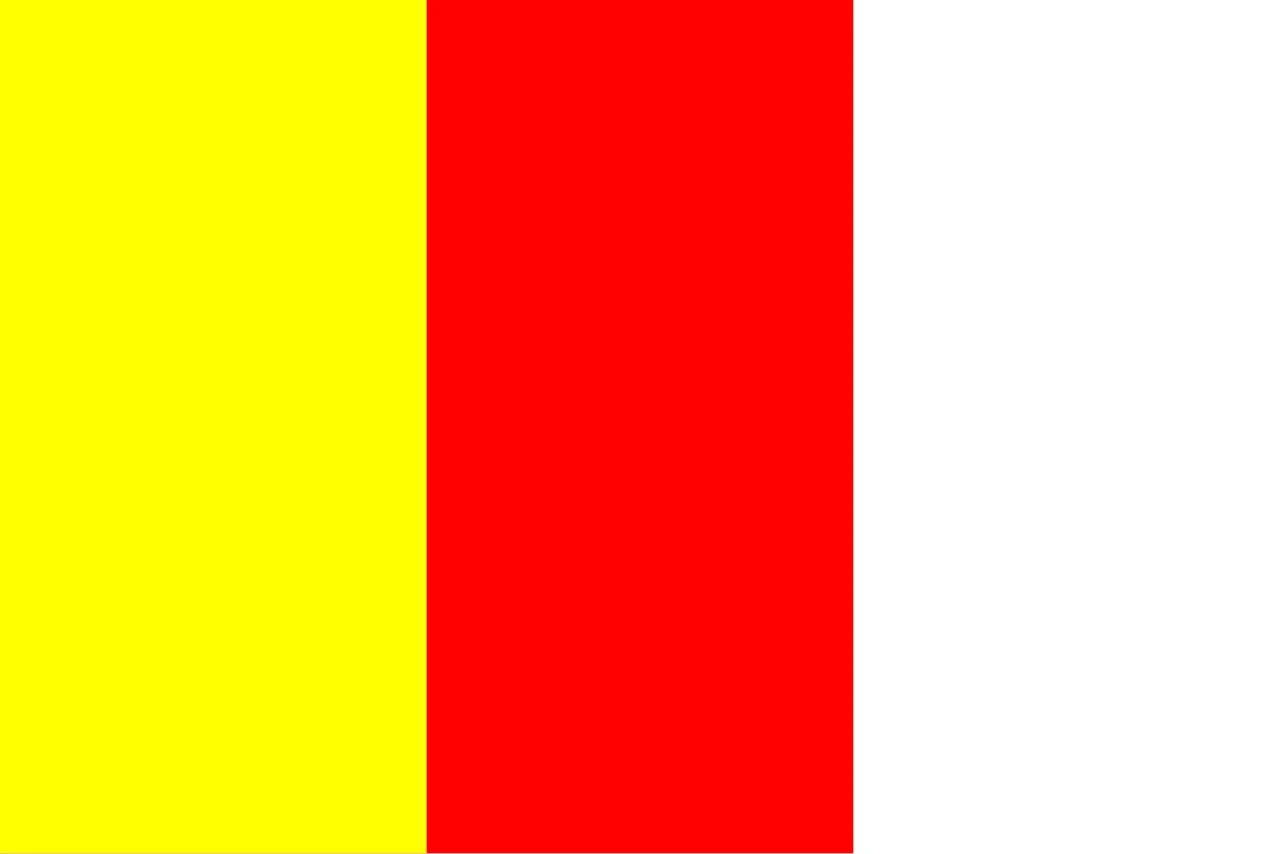
  1. Flag of Antwerp province from 1928: vertical yellow, red and white tricolour
    NINTENPUG · Public domain

    1928-1997

    Vertical yellow-red-white tricolour adopted in 1928: official but never accepted, because it left out Turnhout’s blue.

  2. Current flag of Antwerp province: chequerboard of 24 red, white, yellow and blue squares

    1996

    From 18 October 1996, the chequerboard of 24 squares that brings together the colours of the three district capitals.

What it means

  • Red and white

    the colours of the city of Antwerp, which occupy the middle rows of the chequerboard.

  • Yellow and red

    those of Mechelen, capital of the other district.

  • White and blue

    those of Turnhout, the third capital.

  • The squares

    the tradition of chequered flags of the duchy of Brabant.

Fun facts

  1. A heraldic scandal that lasted 69 years

    The 1928 flag was never liked —it lacked Turnhout’s blue— and fell into oblivion; all the same, it stayed official until the current one was approved in 1996.

  2. The same chequerboard as the Netherlands

    The flag of the Dutch province of North Brabant follows the same Brabantine chequered model: the two Brabants, separated two centuries ago, wear twin chequerboards.

  3. Diagonals of one colour

    The squares are arranged so that each one matches in colour the ones above-left and below-right: the chequerboard forms diagonal stripes of colour, not columns.


Location


Buy the flag

Buy the flag on AmazonAffiliate link: if you buy, Wiki Banderas receives a small commission.

How much have you learnt?

Test what you have read about the flag of Antwerp (Province).

  1. 1. Which one is the flag of Antwerp (Province)?

  2. 2. What are the proportions (height:width) of the flag?

  3. 3. In which year was the current flag adopted?

More flags

Accessibility preferences

Accessibility statement

Quick profiles

Text and reading

Text size
Default
Line height
Default
Letter spacing
Default
Word spacing
Default

Colour

Motion and orientation

Cursor