Every fact about the flag, each with what it means.
Proportions
4:55 wide for every 4 high. 3 flags in the catalogue share it.
Properties
Historical flagFIAV symbol: the form of the flag.
Use
CivilFIAV symbol: who may fly the flag.
Adopted
18441844 · 182 years ago
Colours
red
blue
yellow
white
Reference shades: the official one may vary slightly.
Coat of arms
YesIt carries the coat of arms on the cloth.
Nickname
The herring salad
Origin
Flags of Sweden and Norway
Out of use since
1 November 1905
Take a closer look
Top and bottom triangles
Side triangles
Centre
How it is described
The flag in the words of vexillology and heraldry.
Vexillological description
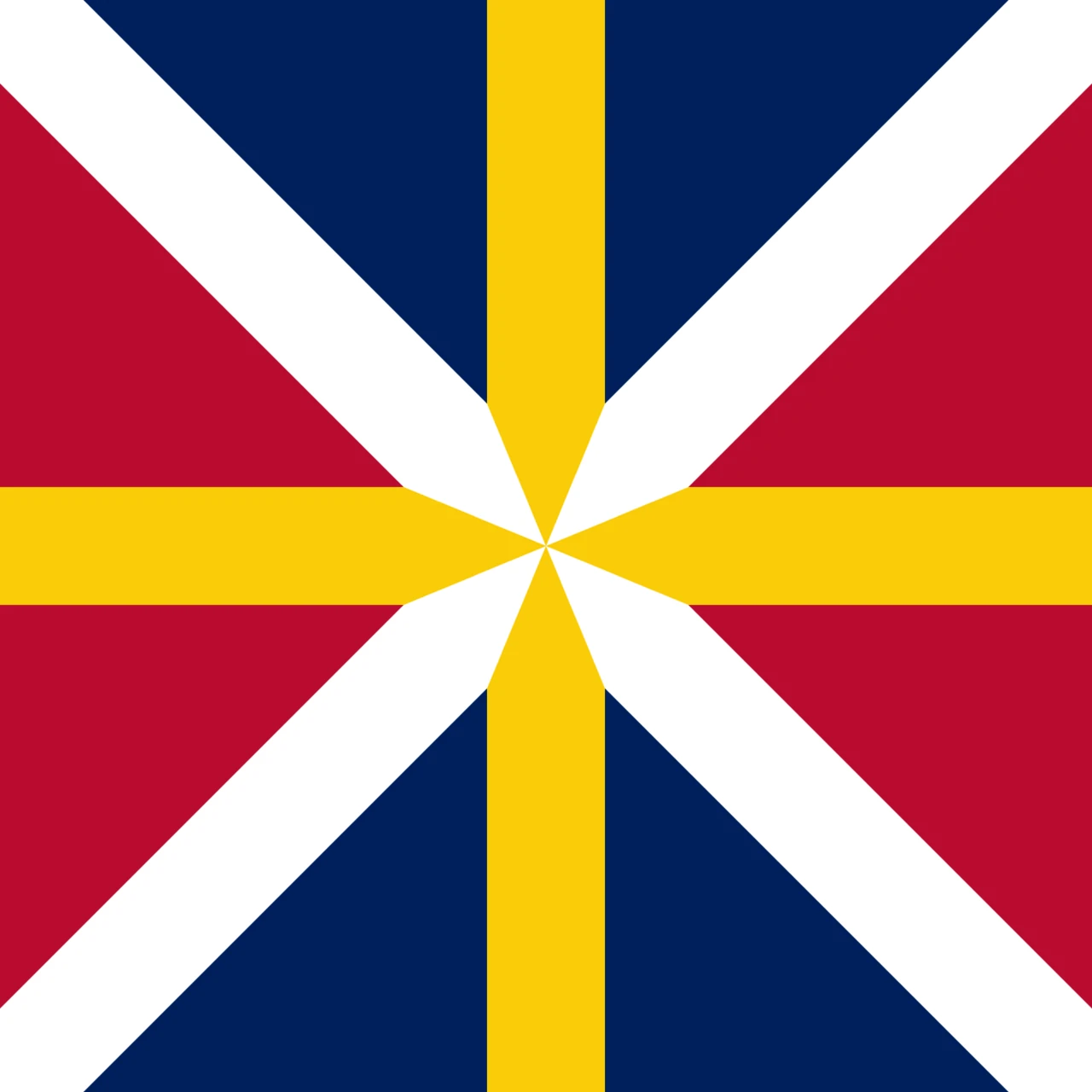
It is a rectangular field with a 4:5 ratio divided by two diagonals into four triangles, with a cross over it. It mixes the flags of Sweden and Norway in equal parts.
Top and bottom triangles
red, with the Norwegian cross, white with a blue centre, upright.
Side triangles
blue, with the yellow bar of the Swedish cross horizontally.
Centre
the two crosses cross at a point, with neither one on top of the other.
What it carries
Each element and how many of the 1,390 flags in the catalogue carry it. In yellow, the rarest.
Between 1814 and 1905 Sweden and Norway had the same king
1844
They did not share a flag, but from 1844 both carried this symbol in the corner of their own:…
1905
Sweden removed it on 1 November 1905
The full story
How it was born, how it has changed and what it means.
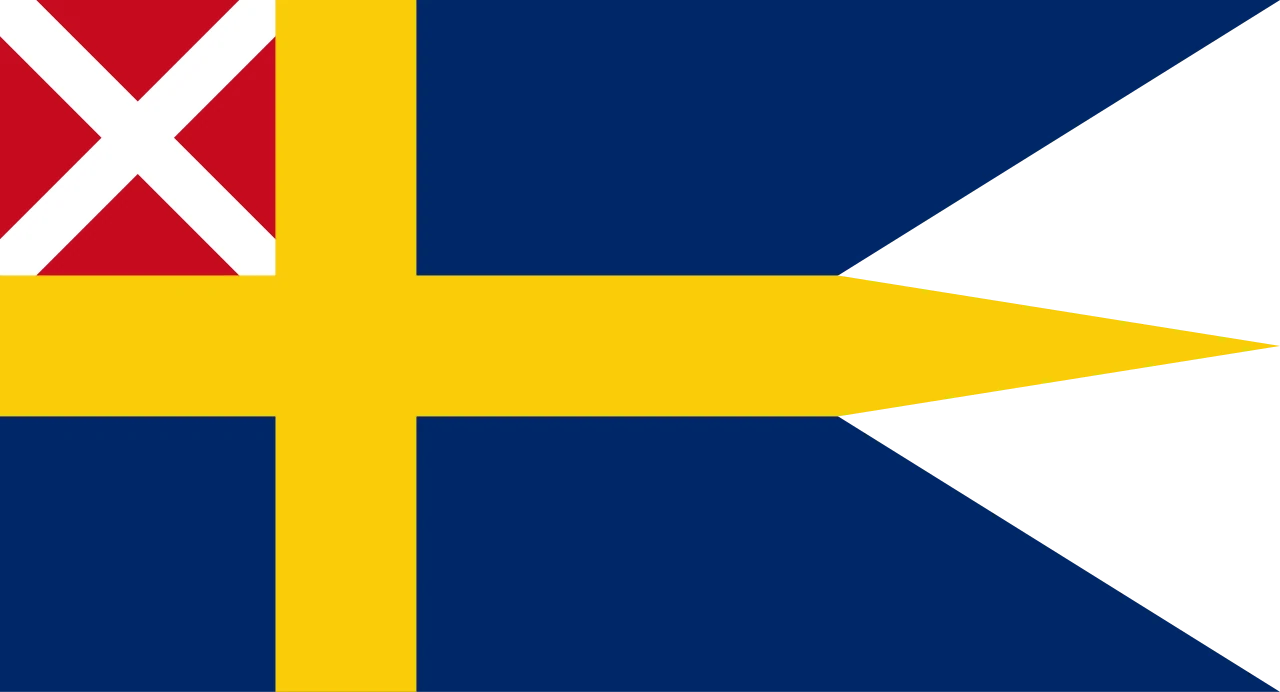
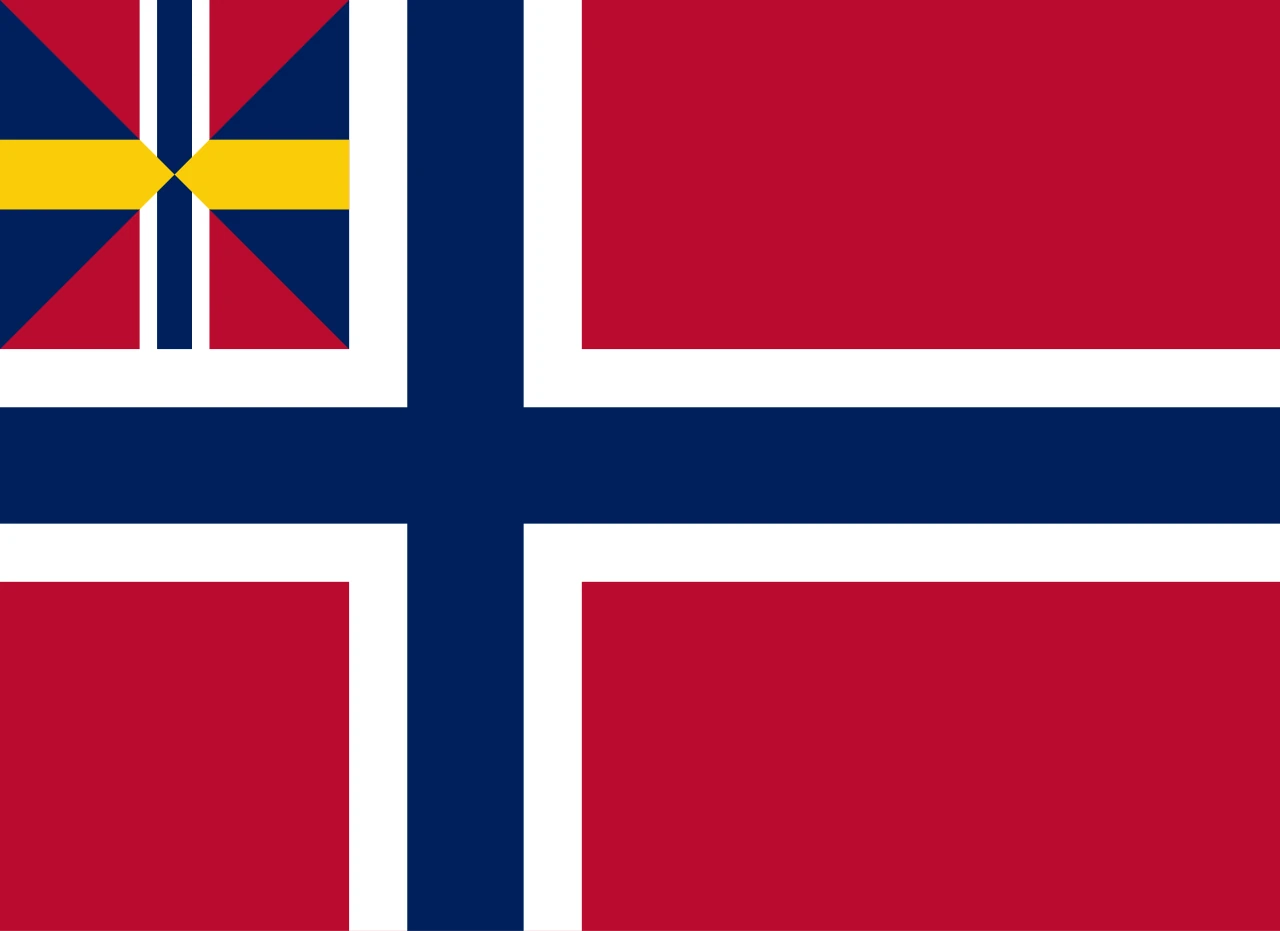
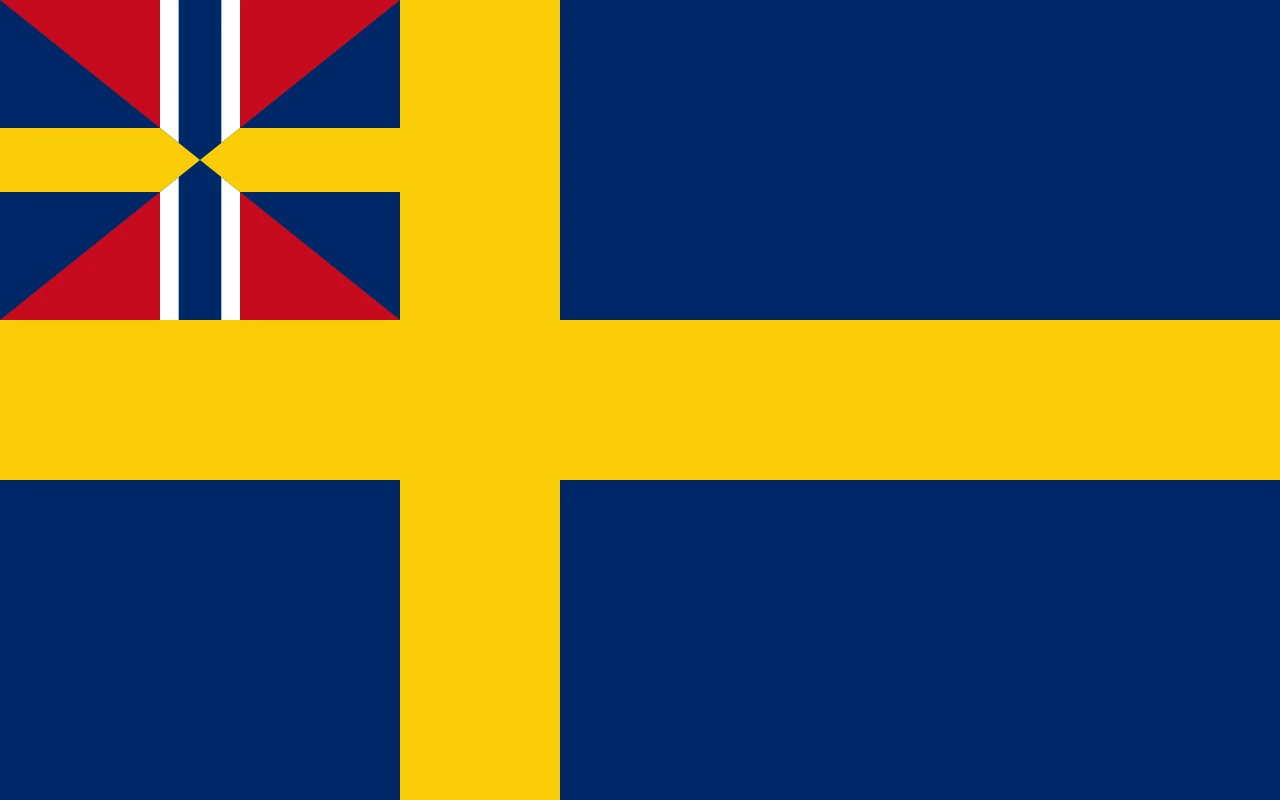
Between 1814 and 1905 Sweden and Norway had the same king. They did not share a flag, but from 1844 both carried this symbol in the corner of their own: the ‘union mark’, which mixes the colours of Sweden and Norway in equal parts.
How it came about
In 1814, after the Napoleonic wars, the king of Denmark had to cede Norway to the king of Sweden. The Norwegians resisted: they approved their own constitution, lost a short war and signed the peace in the town of Moss. Norway stayed joined to Sweden under one king, but with its own laws.
The first war ensign of the union was the Swedish one with a small Norwegian canton in the corner, and the Norwegians felt it put them in second place. In 1844 King Oscar I approved the proposal of a commission from the two countries: a symbol with the colours of both, shared equally, to put in the corner of all the flags.
How it has changed
The mark did not change in design, but the flags carrying it did.
A design by Jonas Anton Hielm for a common mark. It was not used: eight years later the one with four equal parts was chosen.
What it means
Red with white and blue cross
Norway.
Blue with yellow cross
Sweden.
Equal parts
the two kingdoms had the same rank within the union.
Fun facts
The herring salad
Because of its mixture of colours it was jokingly called ‘herring salad’: sildesalaten in Norwegian and sillsalladen in Swedish, like a typical Scandinavian buffet dish.
Three votes to remove it
The Norwegian parliament voted three times to remove the mark from its merchant flag. The king vetoed the first two, and the third, of 1898, went through: from 1899 Norway went back to the ‘pure’ flag.
Wider in Sweden than in Norway
The mark was square on the Norwegian flags and slightly wider, a 4:5 ratio, on the Swedish ones. That of the embassies followed the Swedish model.
Location
Buy the flag
Buy the flag on AmazonAffiliate link: if you buy, Wiki Banderas receives a small commission.
How much have you learnt?
Test what you have read about the flag of Union of Sweden and Norway.