Skip to content

Wiki Banderas
Open menu

Flag of Avià

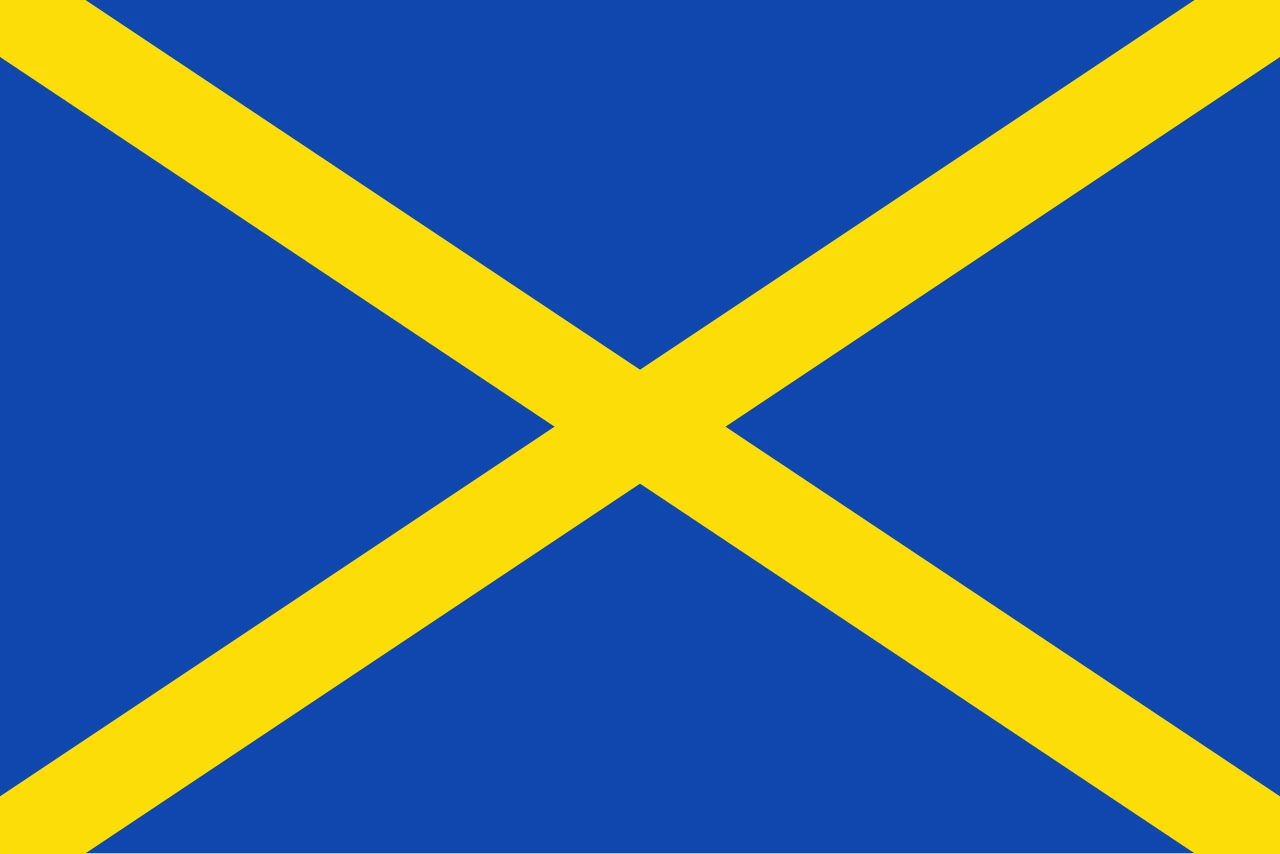
Blue with a yellow saltire cross in the centre: the flag of Avià (Berguedà, Barcelona) comes from the coat of arms and was published in 1994.

Flag of Avià
Coat of arms

The flag, in figures

Every fact about the flag, each with what it means.

Proportions
2:33 wide for every 2 high. 989 flags in the catalogue share it.
Properties
Normal flagFIAV symbol: the form of the flag.
Use
CivilFIAV symbol: who may fly the flag.
Adopted
199418 March 1994 · 32 years ago
Colours
  • yellow
  • blue
Reference shades: the official one may vary slightly.
Coat of arms
YesIt carries the coat of arms on the cloth.
Origin
Q11919890
12

Take a closer look

  1. The blue field

  2. 1

    The saltire

  3. 2

    One arm of the saltire

How it is described

The flag in the words of vexillology and heraldry.

Vexillological description

It is a blue field with a 2:3 ratio and a yellow X-shaped cross, centred. That cross is called a saltire, or St Andrew's cross, and its arms measure a ninth of the height of the field.

Field
blue and plain, with no divisions.
Saltire
yellow and centred; its four arms do not reach the edges.
No coat of arms
there is no coat of arms or border; only the cross on the ground.
Colours
blue and yellow.

What it carries

Each element and how many of the 1,390 flags in the catalogue carry it. In yellow, the rarest.

The full story

How it was born, how it has changed and what it means.

The flag of Avià is a blue field with a yellow X-shaped cross, centred. The cross is called a saltire, or St Andrew’s cross.

How it came about

Avià is a municipality in the comarca of the Berguedà, in the province of Barcelona. Its flag was published in 1994, on 18 March.

The design comes from the coat of arms of the town and keeps only its main figure: the saltire. There is no coat of arms on the flag.

How it has changed

It has never changed. It was published in 1994 and there are no documented later modifications.

What it means

  • Blue

    the background of the field, plain and with no divisions.

  • Saltire

    yellow and centred. Its four arms measure a ninth of the height of the field and do not reach the edges.

  • No coat of arms

    no coat of arms or border; only the cross on the ground.

Fun facts

  1. A cross that does not touch the edges

    The four arms of the saltire measure a ninth of the height of the field and do not reach the edges. It is a compositional decision: the cross floats in the centre of the blue ground instead of running out from the four ends.

  2. Saltire, the technical name

    The X-shaped cross has its own name: saltire, or St Andrew’s cross. The description uses it so the drawing cannot be confused with a St George’s cross, which is straight and has equal arms.

  3. No coat of arms, only the figure

    The flag of Avià does not carry a coat of arms: it carries the saltire loose on the blue. It is the direct translation of arms onto a field, without the frame of the shield.

Location

How much have you learnt?

Test what you have read about the flag of Avià.

  1. 1. Which one is the flag of Avià?

  2. 2. Which of these elements appears on the flag?

  3. 3. What are the proportions (height:width) of the flag?

  4. 4. In which year was the current flag adopted?

Sources

Sources consulted:

Credits

Flag image: Mutari 15:53, 3 de octubre de 2007 (UTC), Wikimedia Commons · Public domain.

More flags

Accessibility preferences

Accessibility statement

Quick profiles

Text and reading

Text size
Default
Line height
Default
Letter spacing
Default
Word spacing
Default

Colour

Motion and orientation

Cursor