Red saltires on the border: according to tradition, they were granted to Diego López de Haro after…
1596
In 1596 the Lordship of Biscay recorded that it could not find its own
1894
In 1894 the Arana brothers created the ikurriña
1986
Until 1986 it had no official flag: Norma Foral 12/1986
The full story
How it was born, how it has changed and what it means.
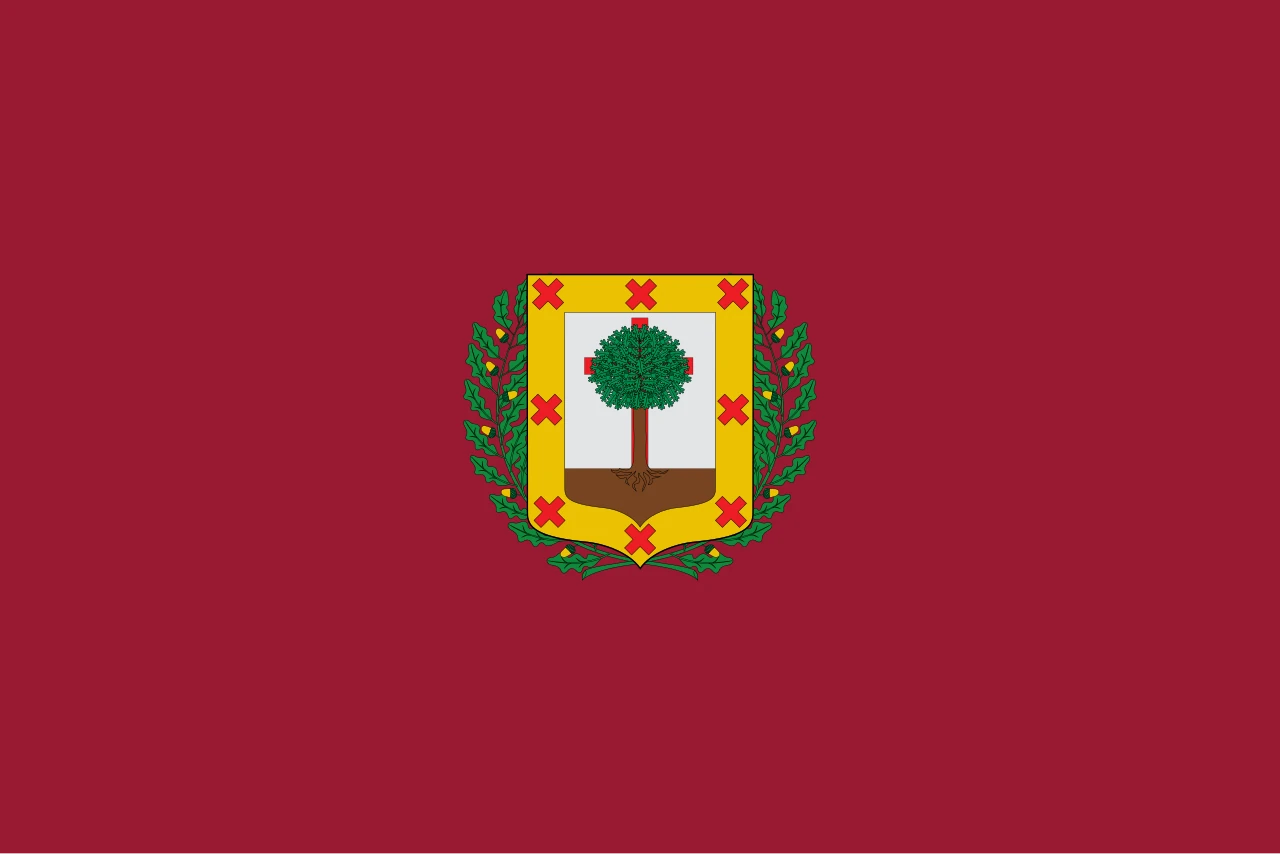
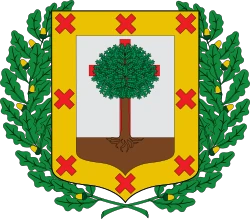
The flag of Biscay is a carmine field, an intense red, with the arms of the territory in the centre: a green oak tree, a cross and a golden border with red saltires. It is the flag of the Provincial Council and of the General Assemblies of Biscay, and it has a curious history: for centuries it barely existed.
How it came about
Biscay, like Álava and Gipuzkoa, is a historical territory of the Basque Country with its own government, the Provincial Council. Until 1986 it had no official flag: Norma Foral 12/1986, of 15 December, finally fixed it.
That does not mean nobody had used one. In 1596 the Lordship of Biscay recorded that it could not find its own, and ordered a new one to be made with the arms of the king and those of the Lordship. And it is believed that from the sixteenth century the Biscayan arms were already shown on a carmine ground, a colour much used by Castilian nobles in the Middle Ages, such as the lords of Haro, who ruled Biscay.
How it has changed
Before 1986 there was no official flag, but there were other flags associated with Biscay. In the early modern period, Biscayan ships flew a red pennant with a white cross of Saint Andrew. In 1894 the Arana brothers created the ikurriña, which began as the flag of Biscay before becoming that of the whole Basque Country.
What it means
The meaning lies in the coat of arms and in the history of the territory:
Carmine
the colour of the ground, much used by medieval Castilian institutions and nobles.
Oak tree with a cross
the oak of Guernica, a tree associated with the fueros, the ancient laws of Biscay.
Red saltires on the border
according to tradition, they were granted to Diego López de Haro after the taking of Baeza in 1227, on the feast of Saint Andrew.
Fun facts
A flag lost in 1596
The records of 1596 of the Lordship of Biscay say that the flag of the Lordship could not be found, and order another to be made with the arms of the king and those of Biscay.
The ikurriña came from here
Sabino and Luis Arana took the red from the ground of the Biscayan arms and the white from its cross to create the ikurriña in 1894, though they reversed the colours.
A banner like Madrid’s
The Crónica General de España tells that at the battle of Las Navas de Tolosa, in 1212, the lord of Biscay carried a banner similar to Madrid’s.