Every fact about the flag, each with what it means.
Proportions
2:33 wide for every 2 high. 989 flags in the catalogue share it.
Properties
Normal flagFIAV symbol: the form of the flag.
Use
CivilFIAV symbol: who may fly the flag.
Adopted
201618 January 2016 · 10 years ago
Colours
blue
yellow
black
Reference shades: the official one may vary slightly.
Coat of arms
YesIt carries the coat of arms on the cloth.
Take a closer look
The blue field
1
The tower
2
The episcopal hat
How it is described
The flag in the words of vexillology and heraldry.
Vexillological description
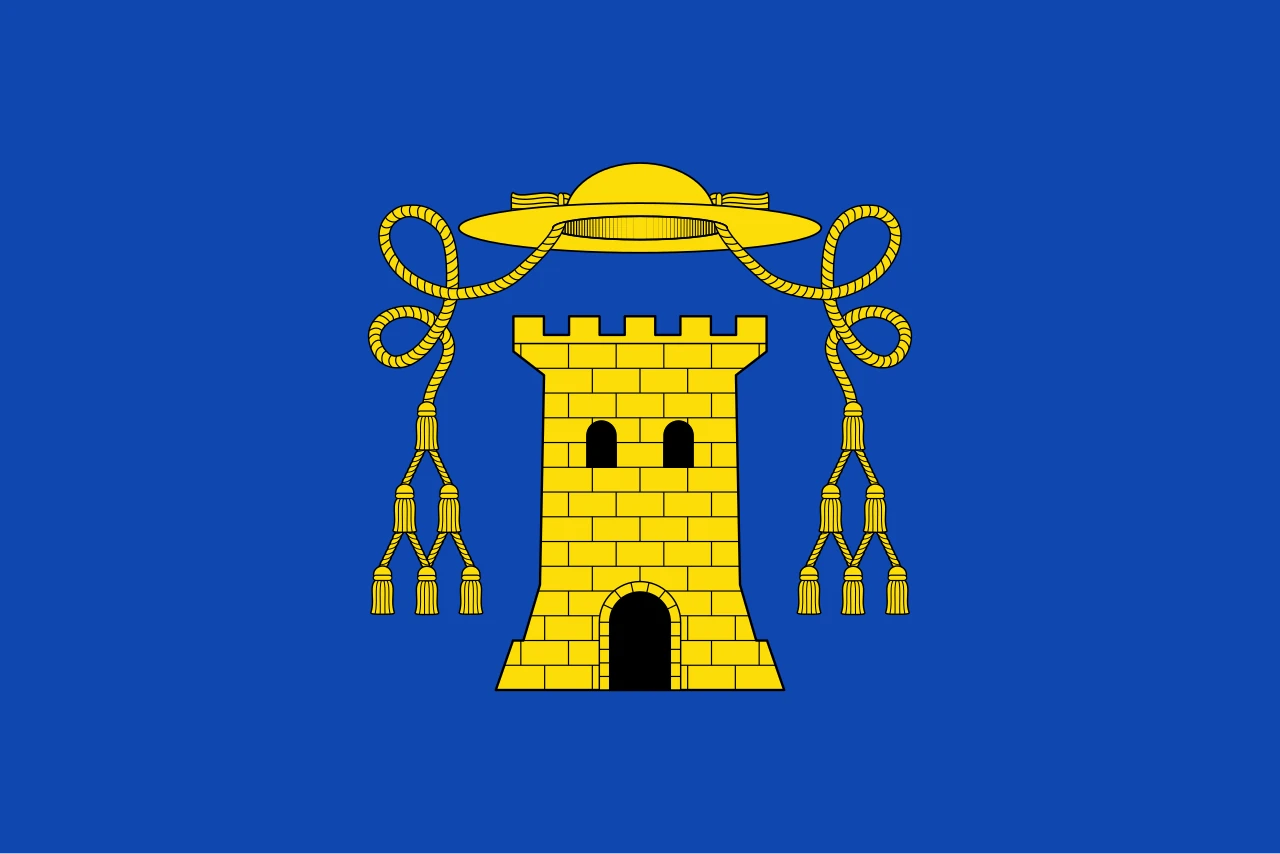
It is a rectangular field with a 2:3 ratio, blue, with a tower in the centre. The tower is yellow, in ashlar, with the windows and the door in black, and on top of it is an episcopal galero —the wide hat of bishops —in the same yellow, with its cords and its tassels.
Field
blue, a single colour, with no stripes or divisions.
Tower
yellow, in ashlar with the openings in black, at the centre of the field.
Episcopal galero
yellow, on top of the tower, with cords and three rows of tassels on each side.
What it carries
Each element and how many of the 1,390 flags in the catalogue carry it. In yellow, the rarest.
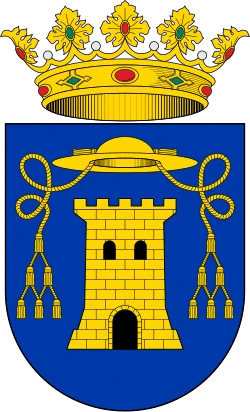
The coat of arms of the municipality was approved first: by resolution of 22 December 1999
2016
The flag came later, almost sixteen years afterwards: it was approved by resolution of 18 January…
The full story
How it was born, how it has changed and what it means.
The flag of Bolulla is a blue field with a single figure in the centre: a yellow ashlar tower, with the windows and the door in black, and on top the wide hat of a bishop, also yellow. Its drawing is minimal, but its two references are very clear: the castle of the village and the bishop who was lord of Bolulla.
How it came about
Bolulla is a municipality in the Marina Baixa, in the province of Alicante, with a ruined Muslim castle at the top of the hill that dominates the village. The coat of arms of the municipality was approved first: by resolution of 22 December 1999, published in the Diari Oficial de la Generalitat Valenciana on 26 January 2000.
The flag came later, almost sixteen years afterwards: it was approved by resolution of 18 January 2016 and published in DOCV number 7,710, of 2 February 2016. The official description reads: “Flag with a ratio of 2:3. Azure, in the centre, a yellow tower in ashlar and lit up in black, surmounted by an episcopal galero with cords and three rows of yellow tassels”.
Notice that the flag does not carry the coat of arms: it places the two figures directly on the blue ground. That is what Valencian regulations require, asking that the flag be founded on the colours of the coat of arms while avoiding placing the whole coat of arms on top.
How it has changed
It has not changed: it is the flag approved in 2016.
What it means
Blue
the background of the field, in a single colour.
Yellow tower
the old castle of Bolulla, the one that still stands in ruins on the hill. The openings in black are the windows and the door.
Episcopal galero
the bishops’ hat, in yellow. It recalls that the bishop of Valencia held the lordship of Bolulla.
Fun facts
Two figures, two owners
The coat of arms of Bolulla has only two elements and each one tells a different story. The tower is the Muslim castle that can still be seen standing, in ruins, above the village. The episcopal galero is not an ornament: it recalls that the bishop of Valencia was lord of the municipality.
The bishops' hat, with its tassels
A bishop’s hat is called a galero, and the tassels that hang from the cords are the tassels. On the flag of Bolulla there are three rows of tassels on each side, and they are the most drawn part of the whole field: neither the castle nor the blue ground has that much detail.
The coat of arms says six tassels, the flag says three rows
There is a small difference between the two official texts. The coat of arms is blazoned with “a galero with cords and six gold tassels”, while the flag resolution speaks of “three rows of tassels”. The drawing settles the doubt: three on each side, six in total.
Why it does not carry the whole coat of arms
Valencian regulations on local symbols ask that the municipal flag be founded on the colours and elements of the coat of arms while seeking not to place the coat of arms entire on top. That is why there are so many flags across the Comunitat with the figures loose on the colour of the ground: it is a rule, not a coincidence.
How much have you learnt?
Test what you have read about the flag of Bolulla.