Every fact about the flag, each with what it means.
Proportions
1:22 wide for every 1 high. 49 flags in the catalogue share it.
Properties
Normal flagFIAV symbol: the form of the flag.
Use
CivilFIAV symbol: who may fly the flag.
Adopted
199325 March 1993 · 33 years ago
Colours
blue
yellow
white
Reference shades: the official one may vary slightly.
Coat of arms
YesIt carries the coat of arms on the cloth.
Origin
Coat of arms of Canberra
Designer
Ivo Ostyn
Take a closer look
The two parts
1
The Southern Cross
2
The coat of arms
3
The crown
4
The black swan
How it is described
The flag in the words of vexillology and heraldry.
Vexillological description
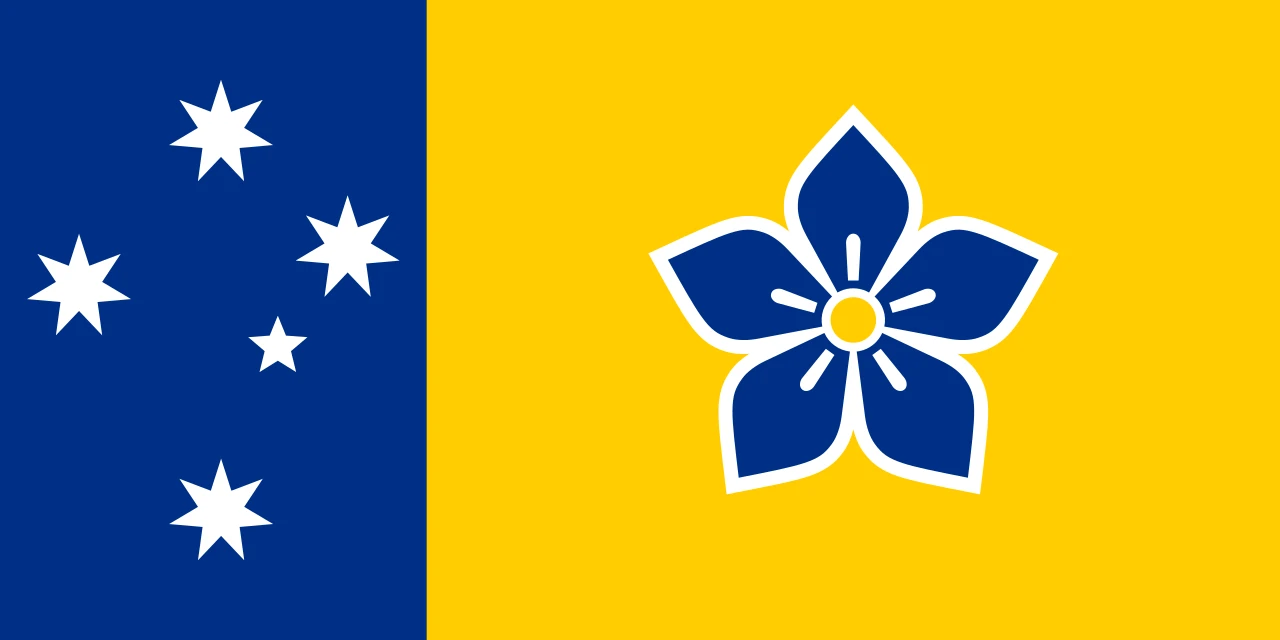
It is a rectangular field with a 1:2 ratio divided into two vertical parts: a blue one next to the flagpole, taking up a third, and another golden yellow one over the rest.
Blue part
it carries the Southern Cross, five white stars placed as in the sky. The four large ones have seven points and the small one five.
Yellow part
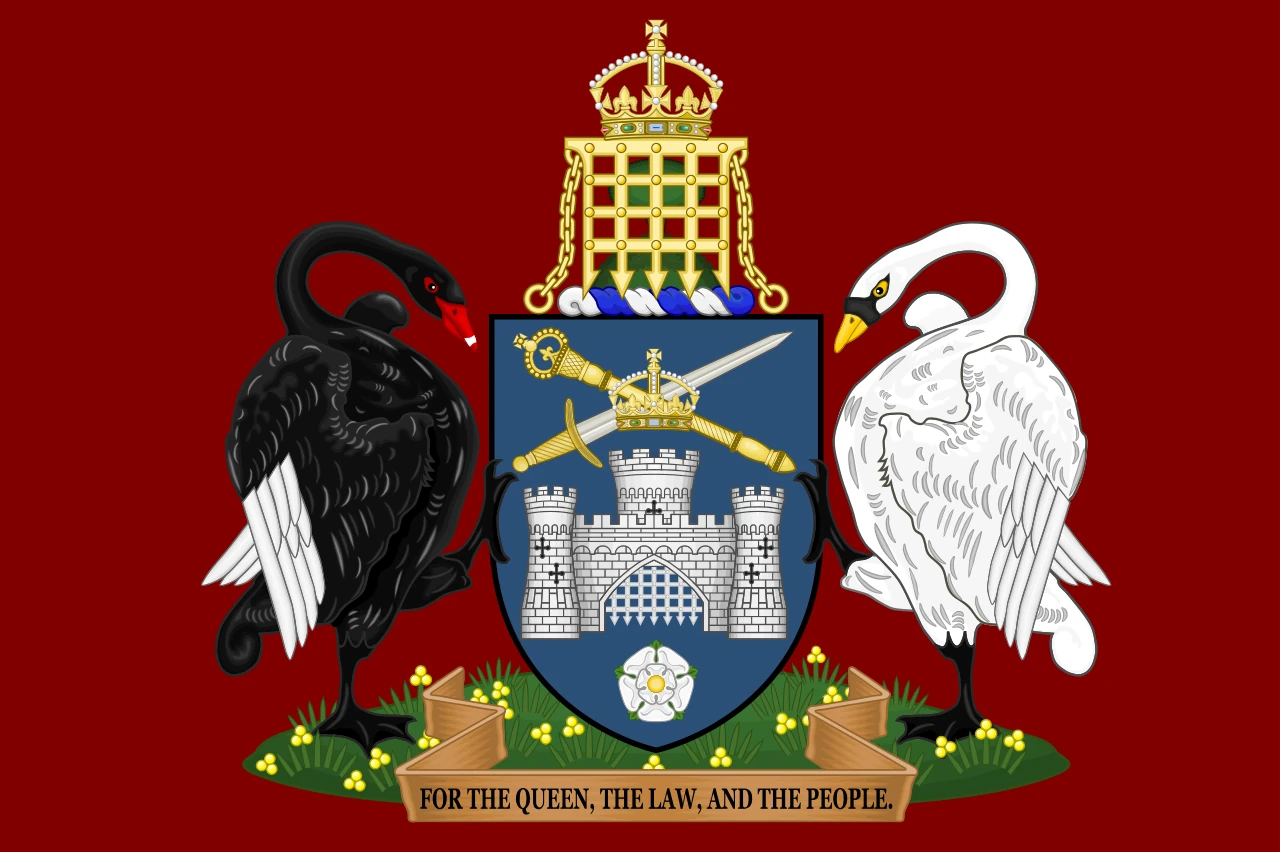
it carries in the centre a simplified version of the coat of arms of the city of Canberra: a blue shield with a white three-towered castle, a sword, a mace and a rose, crowned and supported by a blue-black swan and a white swan.
What it carries
Each element and how many of the 1,390 flags in the catalogue carry it. In yellow, the rarest.
The territory has existed since 1909 and has governed itself since 1989
1927
the York rose recalls the Duke of York, who opened the first Parliament of Canberra in 1927
1988
There were two competitions, one by radio station 2CC in 1988 and another by the newspaper…
1993
Between February and March 1993 residents voted between four options
2003
It got some support, but the idea faded after the January 2003 bushfires
The full story
How it was born, how it has changed and what it means.
The flag of Canberra is actually that of the Australian Capital Territory, the small territory created so that the Australian capital would belong to no state. It brings together two ideas: the southern sky on the left, and the coat of arms of the city on the right.
How it came about
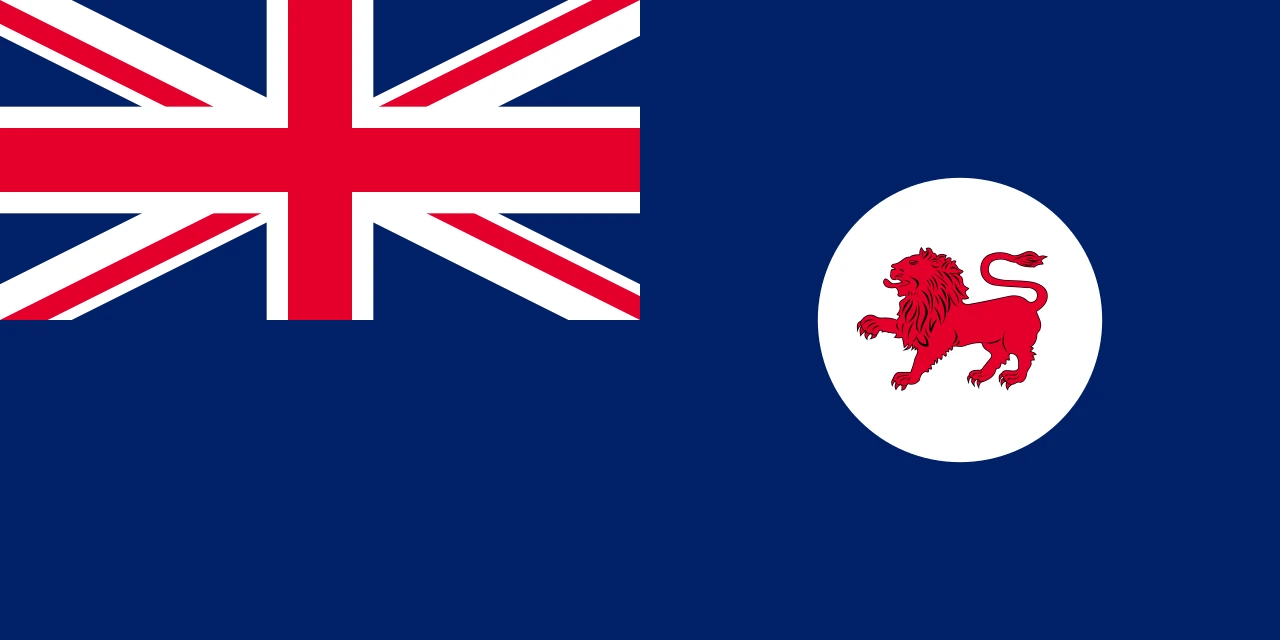
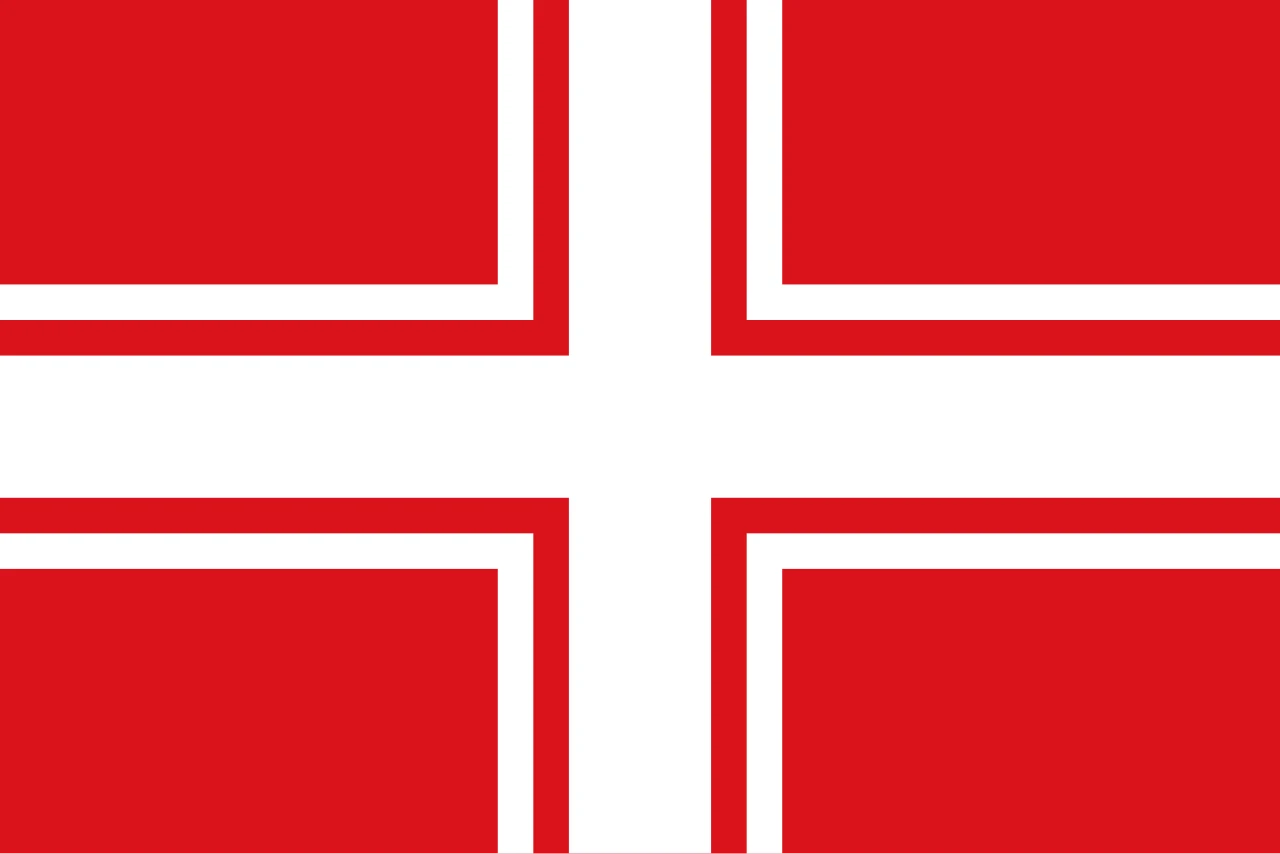
The territory has existed since 1909 and has governed itself since 1989, but until 1993 it had no official flag. Meanwhile the flag of the city of Canberra was used: its coat of arms on a crimson field.
There were two competitions, one by radio station 2CC in 1988 and another by the newspaper The Canberra Times in 1992. The territory government then commissioned five designs from Ivo Ostyn, a resident of the Chisholm district, with some fixed conditions: blue, gold, white, the Southern Cross and the coat of arms. Between February and March 1993 residents voted between four options, and the Legislative Assembly approved the winner on 25 March 1993.
How it has changed
It has not changed since 1993, although tweaks have been proposed.
Other flags and proposals
Before 1993 the flag of the city was used, and later the author himself wanted to simplify his.
The author replaces the coat of arms with the royal bellflower, the flower of the territory. It got some support, but the idea faded after the January 2003 bushfires.
What it means
Each part has its message:
Blue and gold
the colours of the city and of the territory’s sport, which are also Australia’s heraldic colours.
Southern Cross
the constellation that appears on the flag of Australia; it recalls that the territory is part of the federation.
Swans
the black one, native to Australia, represents the Aboriginal peoples; the white one, Australians of European origin.
Castle
the capital of the country.
Sword and mace
justice and Parliament, which makes the laws.
Crown and white rose
the crown is the sovereign; the York rose recalls the Duke of York, who opened the first Parliament of Canberra in 1927.
Fun facts
Its author ended up criticising it
Ivo Ostyn said a child should be able to draw a flag easily and that his did not manage it. He blamed the coat of arms, which he had to include by commission.
He won with another flag five years earlier
In the 1988 2CC radio competition Ostyn had already won, with a green and yellow design drawing the huge mast of the new Parliament.
First cousin of the Northern Territory
The split into two parts, with the Southern Cross on the hoist one, is clearly inspired by the flag of the Northern Territory, according to the FOTW vexillologists.
The best of a bad lot
That is how many residents described it in 1993: they chose it, but criticised how the selection had been made.
Location
How much have you learnt?
Test what you have read about the flag of Canberra.