
Skip to content

Wiki Banderas
Open menu

Flag of Hiroshima

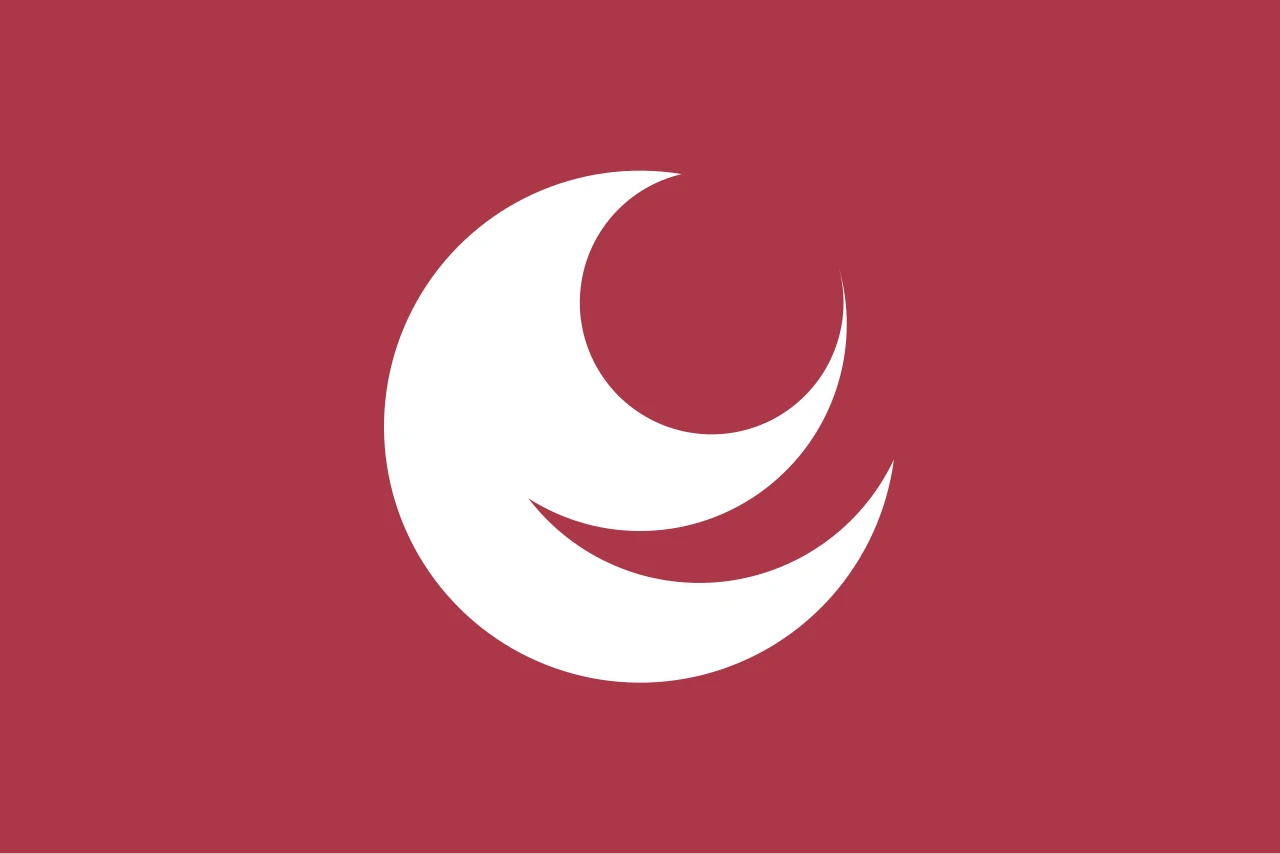
The syllable hi in the katakana syllabary, drawn in white on maroon: a flag of citizen unity born in the 1960s.

Flag of Hiroshima
Coat of arms

The flag, in figures

Every fact about the flag, each with what it means.

Proportions
2:33 wide for every 2 high. 989 flags in the catalogue share it.
Properties
Normal flagFIAV symbol: the form of the flag.
Use
StateFIAV symbol: who may fly the flag.
Adopted
196816 July 1968 · 58 years ago
Colours
  • wine red
  • white
Reference shades: the official one may vary slightly.
Coat of arms
YesIt carries the coat of arms on the cloth.

Take a closer look

  • Field

  • Emblem

  • Colours

How it is described

The flag in the words of vexillology and heraldry.

Vexillological description

It is a rectangular field —the cloth of the flag —with a 2:3 ratio, maroon, with a white figure in the centre. The figure is the syllable “ヒ” of the Japanese syllabary, drawn with two round curves that cross each other.

Field
maroon and plain, with no divisions.
Emblem
centred, in white; it takes up three fifths of the height of the flag.
Colours
only maroon and white.

What it carries

Each element and how many of the 1,390 flags in the catalogue carry it. In yellow, the rarest.

Its history in dates

Every date in its story, at a glance.

  1. 1945

    Hiroshima is known worldwide for being the first city to be struck by an atomic bomb, in 1945

  2. 1966

    The prefecture approved the emblem in July 1966 and two years later

  3. 1968

    In the full fever of symbols of 1968

The full story

How it was born, how it has changed and what it means.

Hiroshima is known worldwide for being the first city to be struck by an atomic bomb, in 1945. But its flag is not about that: it was born more than twenty years later and shows, in white on a deep maroon, the syllable hi (ヒ) of the katakana syllabary, the first one of the name of the prefecture.

How it came about

The prefecture approved the emblem in July 1966 and two years later, on 16 July 1968, notification number 572 regulated the flag that carries it. In the full fever of symbols of 1968, Hiroshima chose a design of modern lines, with no coats of arms from the past.

How it has changed

The flag has not changed since it was established.

What it means

  • White hi

    the initial syllable of Hiroshima, turned into two round curves.

  • Roundness

    according to the prefecture’s official interpretation, the curves symbolise the harmony and unity of the inhabitants, and their overlap, the progress and vigorous development of Hiroshima.

  • Maroon ground

    the rule fixes the shade with the Munsell colour chart 4R 4/11, a very dark red usually called wine colour.

Fun facts

  1. Calculated like the national flag

    On the flag of Hiroshima the emblem measures 3/5 of the height of the field, the same calculation as the red disc of the national flag of Japan. The prefectural order of 1968 specifies it that way.

  2. No relation to the bombing

    The emblem was created in 1966 and the flag in 1968, twenty-one years after the atomic attack, and its official meaning is citizen unity: it does not represent peace or mourning. There is no prefectural flag of peace.

Localisation

How much have you learnt?

Test what you have read about the flag of Hiroshima.

  1. 1. Which one is the flag of Hiroshima?

  2. 2. Which of these elements appears on the flag?

  3. 3. What are the proportions (height:width) of the flag?

  4. 4. In which year was the current flag adopted?

More flags

Accessibility preferences

Accessibility statement

Quick profiles

Text and reading

Text size
Default
Line height
Default
Letter spacing
Default
Word spacing
Default

Colour

Motion and orientation

Cursor