Skip to content

Wiki Banderas
Open menu

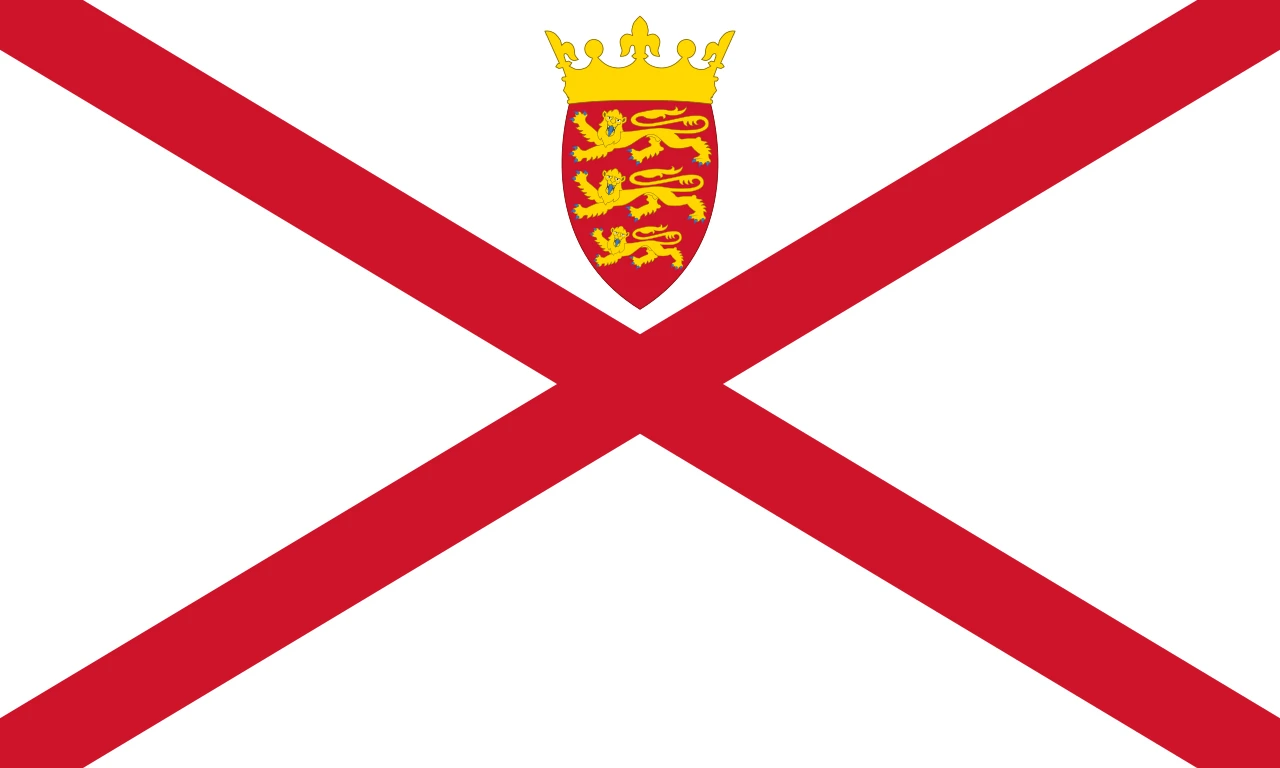
Flag of Jersey

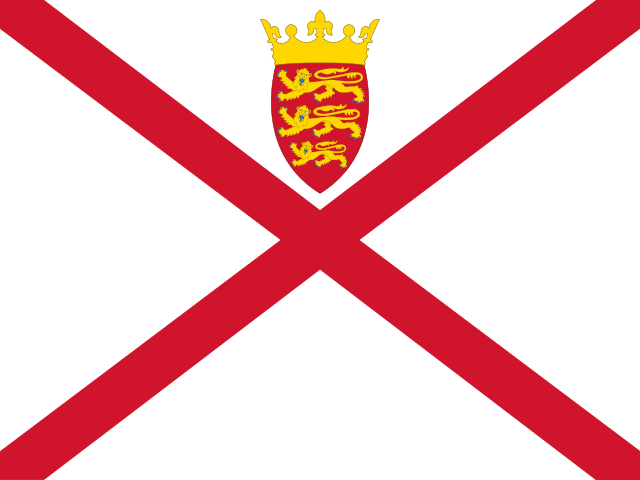
A red saltire on a white ground, used by tradition since the nineteenth century, to which in 1981 the arms of the three lions of the island were added.

Flag of Jersey
Coat of arms

The flag, in figures

Every fact about the flag, each with what it means.

Proportions
3:55 wide for every 3 high. 24 flags in the catalogue share it.
Properties
Normal flagFIAV symbol: the form of the flag.
Use
Civil and stateFIAV symbol: who may fly the flag.
Adopted
19817 April 1981 · 45 years ago
Colours
  • white
  • red
  • yellow
Reference shades: the official one may vary slightly.
Coat of arms
YesIt carries the coat of arms on the cloth.
12

Take a closer look

  1. The white field

  2. 1

    The red saltire

  3. 2

    The crowned shield

How it is described

The flag in the words of vexillology and heraldry.

Vexillological description

It is a rectangular field with a 3:5 ratio, white, with a red saltire and the arms of the island at the top.

Field (the cloth of the flag)
white, with no divisions.
Saltire
a cross in the shape of an X, in red, running from corner to corner and touching the four edges.
Coat of arms
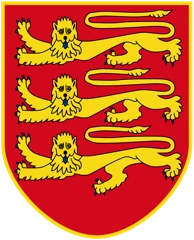
in the upper triangle, centred: three golden lions on a red ground, with a yellow crown above.
What it carries

Each element and how many of the 1,390 flags in the catalogue carry it. In yellow, the rarest.

Its history in dates

Every date in its story, at a glance.

  1. 1830

    The red saltire was used in Jersey by tradition from at least the 1830s

  2. 1906

    In 1906, the highest authority on the island wrote that Jersey ships hoisted it to show their…

  3. 1977

    In 1977, with the jubilee of Queen Elizabeth II

  4. 1979

    The Parliament of the island approved it on 12 June 1979 and it was officially hoisted on 7 April…

The full story

How it was born, how it has changed and what it means.

The flag of Jersey is white, with a red saltire, a cross in the shape of an X running from corner to corner. At the top it bears a red coat of arms with three golden lions and a crown. Jersey is an island in the English Channel, very close to France, which depends on the British Crown but is not part of the United Kingdom.

How it came about

The red saltire was used in Jersey by tradition from at least the 1830s, although nobody had ever approved it. Its origin is a mystery. In 1906, the highest authority on the island wrote that Jersey ships hoisted it to show their neutrality in the wars between England and France.

In 1977, with the jubilee of Queen Elizabeth II, the debate over an official flag began. Many thought the saltire on its own was confused with St Patrick’s cross, the symbol of Ireland, and with a maritime signal flag. Others wanted to keep it as it was, and others preferred the three lions of the coat of arms. In the end an agreement was reached: the old saltire with the coat of arms on top. The Parliament of the island approved it on 12 June 1979 and it was officially hoisted on 7 April 1981.

How it has changed

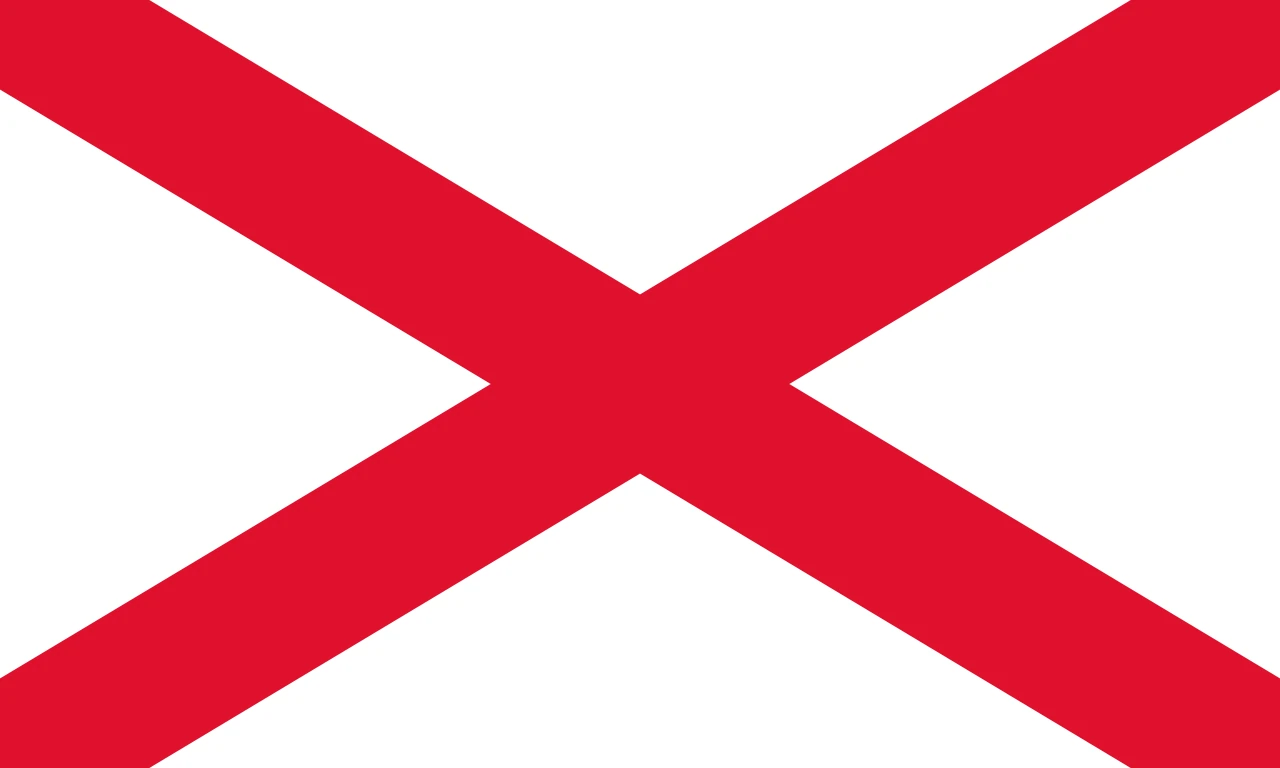
Jersey has only had two flags: the traditional saltire and the current one, which adds the coat of arms to it.

  1. White flag with a red saltire
    Hoshie · Public domain

    1830-1981

    The red saltire on white is used by custom, with no law recognising it.

  2. Current flag of Jersey

    1981

    The arms of the three lions and a yellow crown are added to make it unmistakable.

What it means

Each element recalls the history of the island:

  • Red saltire on white

    the traditional flag of Jersey. Its origin is not known with certainty.

  • Three golden lions on red

    the arms of Jersey, the same as those of the kings of England. They recall that the island belonged to the duchy of Normandy and stayed loyal to the English kings.

  • Crown

    the crown of the Plantagenet, the dynasty that reigned in England when Jersey received its arms, in the thirteenth century.

Fun facts

  1. A mistranslation?

    In 1951 a historian proposed that the flag was born of a confusion: an English book of 1783 would have misread the Dutch word Ierse, “Irish”, as if it said “Jersey”. It is a much-debated theory, because there are earlier French nautical charts that already show the saltire for Jersey.

  2. The flag of the occupation

    During the Second World War the Germans occupied the island and banned the British flag. Ships travelling between the Channel Islands then used the red saltire.

  3. A premiere with an anniversary

    The current flag was first hoisted in 1981, on the 200th anniversary of the Battle of Jersey, in which the island repelled a French invasion.

Country facts

Where it is and what borders it.

Capital
Saint Helier
Area
116 km²
Country
Jersey
Continent
Europe
Subregion
Northern Europe
Independent state
No
UN member
No
ISO code
JEY · JE

How much have you learnt?

Test what you have read about the flag of Jersey.

  1. 1. Which one is the flag of Jersey?

  2. 2. Which of these elements appears on the flag?

  3. 3. What are the proportions (height:width) of the flag?

  4. 4. In which year was the current flag adopted?

Sources

Text based on the article “Bandera de Jersey” from the Spanish Wikipedia, published under the licence CC BY-SA 4.0.

Sources consulted:

Credits

Flag image: Desconocido, Wikimedia Commons · Public domain.

More flags

Accessibility preferences

Accessibility statement

Quick profiles

Text and reading

Text size
Default
Line height
Default
Letter spacing
Default
Word spacing
Default

Colour

Motion and orientation

Cursor