
Skip to content

Wiki Banderas
Open menu

Flag of Kōchi

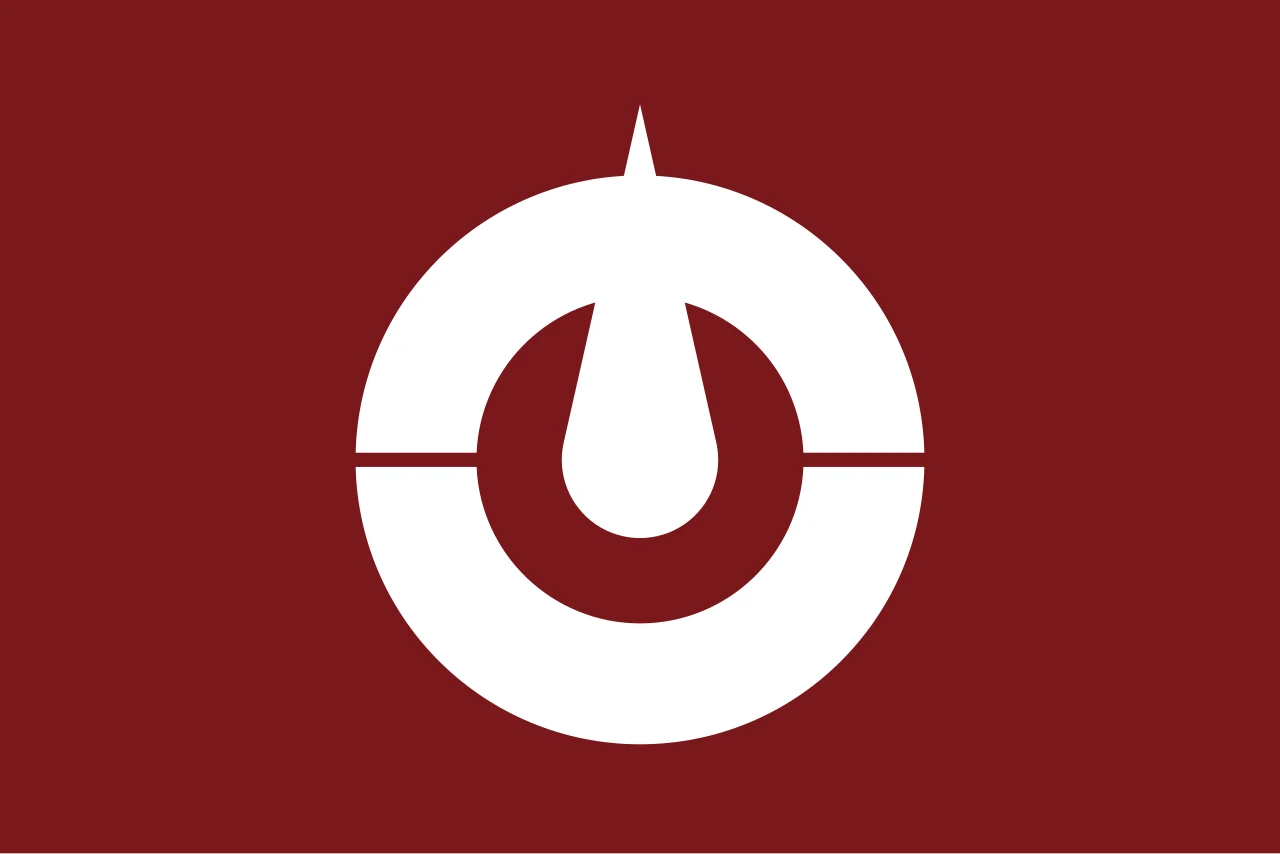
A white circle hiding the characters of the old land of Tosa on maroon cloth: Kōchi chose its emblem in 1953 through a national tournament.

Flag of Kōchi
Coat of arms

The flag, in figures

Every fact about the flag, each with what it means.

Proportions
2:33 wide for every 2 high. 989 flags in the catalogue share it.
Properties
Normal flagFIAV symbol: the form of the flag.
Use
CivilFIAV symbol: who may fly the flag.
Adopted
195315 April 1953 · 73 years ago
Colours
  • wine red
  • white
Reference shades: the official one may vary slightly.
Coat of arms
YesIt carries the coat of arms on the cloth.

Take a closer look

  • Field

  • Charge

  • Inside

  • Coat of arms

How it is described

The flag in the words of vexillology and heraldry.

Vexillological description

It is a rectangular field with a 2:3 ratio in wine colour, with a white circle in the centre.

Field (the cloth of the flag)
dark maroon, the colour of wine, and plain.
Charge (a figure on the field)
a white circle, centred.
Inside
inside the circle, three characters cut out in the colour of the ground and a vertical sword tip.
Coat of arms
it carries none; the circle is the emblem.
What it carries

Each element and how many of the 1,390 flags in the catalogue carry it. In yellow, the rarest.

The full story

How it was born, how it has changed and what it means.

The flag of Kōchi is a dark maroon, the colour of red wine, with a white circle crossed by a sword tip. Inside that drawing three Japanese characters hide: the kanji to (土), the hiragana tosa and the katakana ko (コ), which is how this land is and was called.

How it came about

The emblem was chosen through a public competition of ideas on the occasion of the eighth National Sports Festival, held in 1953 on the island of Shikoku. The prefecture approved it on 15 April 1953. There was never a notification regulating the flag: the wine-coloured field with the emblem in white is simple custom, as in the neighbouring Tokushima.

How it has changed

The emblem has not changed since 1953. Only in the first years was a provisional version seen, with the emblem at the top left and the name of Kōchi large at the bottom right, which later disappeared.

What it means

  • Three names in one

    the kanji of the old land of Tosa, its reading in hiragana syllables and the ko of the current name, Kōchi, fitted into a circle.

  • Circle

    peace and cooperation between the inhabitants.

  • Vertical sword tip

    continuous improvement, the will to progress; it is the interpretation collected in the official repertoires of prefectural symbols.

Fun facts

  1. The flag that opens the parade

    At the National Sports Festival, each prefectural delegation enters the stadium carrying its flag. Kōchi launched its own precisely in order to host that festival in 1953.

  2. A variant with the name

    Besides the clean flag, there also exists and is used a version that adds the name of the prefecture in kanji under the emblem. Both are on Wikimedia Commons.

Localisation

How much have you learnt?

Test what you have read about the flag of Kōchi.

  1. 1. Which one is the flag of Kōchi?

  2. 2. Which of these elements appears on the flag?

  3. 3. What are the proportions (height:width) of the flag?

  4. 4. In which year was the current flag adopted?

Sources

Sources consulted:

Credits

Flag image: Kochi prefecture administration Vectorized by Mike Rohsopht, Wikimedia Commons · Public domain.

More flags

Accessibility preferences

Accessibility statement

Quick profiles

Text and reading

Text size
Default
Line height
Default
Letter spacing
Default
Word spacing
Default

Colour

Motion and orientation

Cursor