Skip to content

Wiki Banderas
Open menu

Flag of Toga

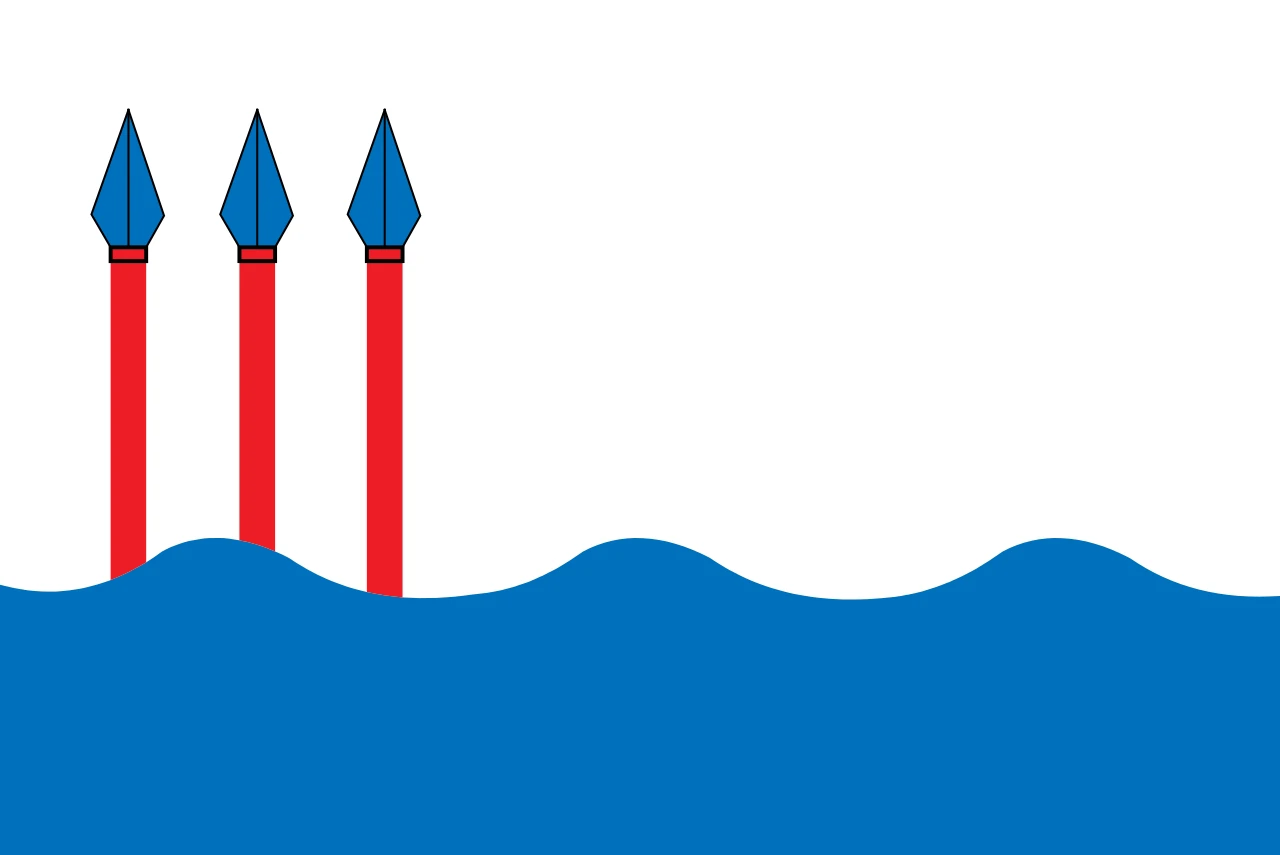
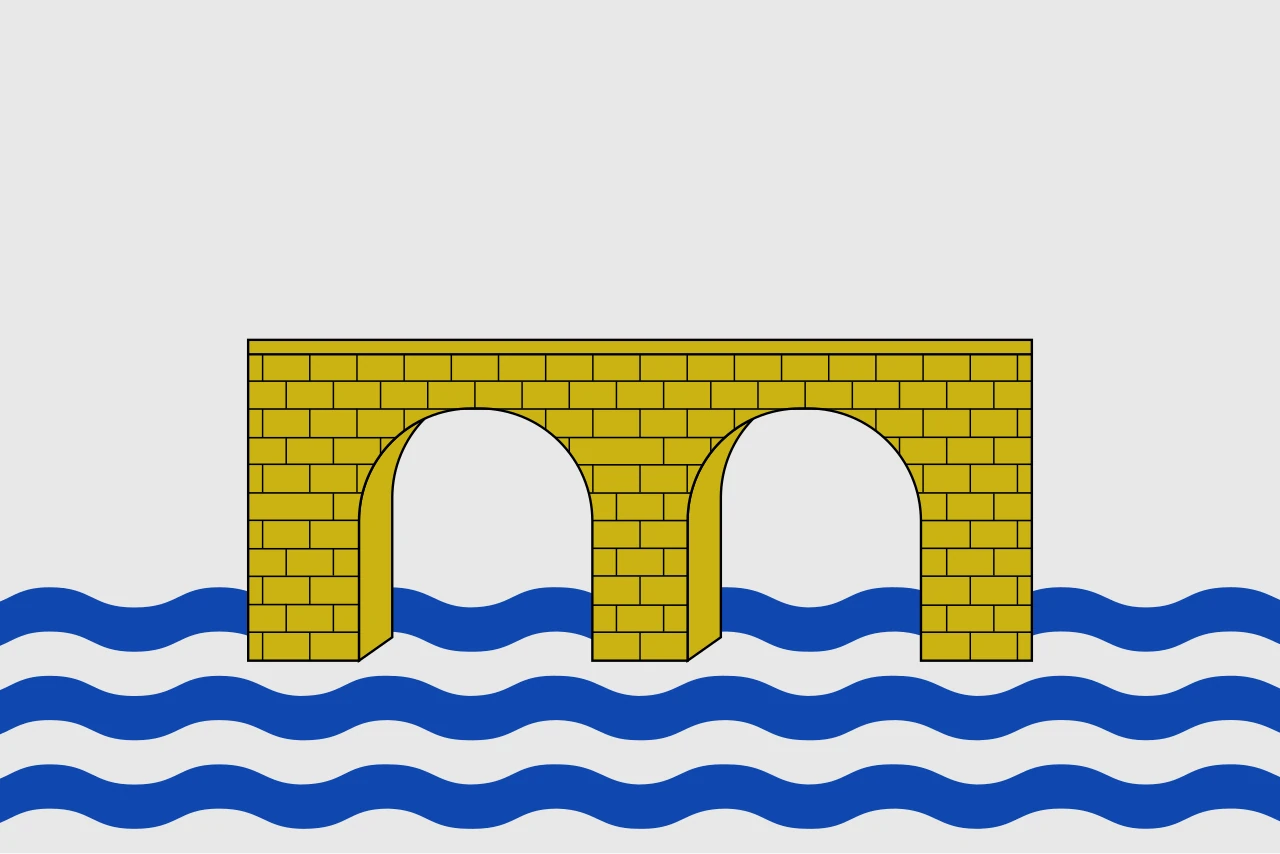
White with three blue waves at the foot and a bridge of black masonry: the river Millares and the position of the village, at Toga.

Flag of Toga
Coat of arms

The flag, in figures

Every fact about the flag, each with what it means.

Proportions
2:33 wide for every 2 high. 989 flags in the catalogue share it.
Properties
Normal flagFIAV symbol: the form of the flag.
Use
CivilFIAV symbol: who may fly the flag.
Adopted
200626 January 2006 · 20 years ago
Colours
  • white
  • blue
  • yellow
  • black
Reference shades: the official one may vary slightly.
Coat of arms
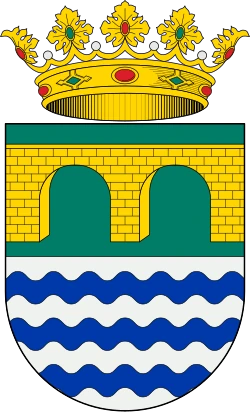
YesIt carries the coat of arms on the cloth.

Take a closer look

  • Field

  • Waves

  • Bridge

  • Position

How it is described

The flag in the words of vexillology and heraldry.

Vexillological description

It is a white rectangular field with a 2:3 ratio. In the lower third it carries three blue waves and, in the centre, a yellow bridge with the masonry marked in black.

Field (the cloth)
white in the upper two thirds.
Waves
three, blue, in the lower third, representing the water.
Bridge
yellow, with the stone marked in black, centred.
Position
the bridge occupies the centre of the field, over the waves.
What it carries

Each element and how many of the 1,390 flags in the catalogue carry it. In yellow, the rarest.

Its history in dates

Every date in its story, at a glance.

  1. 2001

    Its arms were approved by Resolution of 19 December 2001

  2. 2006

    The flag came four years later, by Resolution of 26 January 2006, published in DOGV number 5,203

The full story

How it was born, how it has changed and what it means.

The flag of Toga is a map of the village seen from the air: the water below, the bridge in the middle. Everything else has been left out.

How it came about

Toga is a municipality of Alt Palància, in the province of Valencia. Its arms were approved by Resolution of 19 December 2001, of the conseller of Justícia i Administracions Públiques, published in DOGV number 4,182. The flag came four years later, by Resolution of 26 January 2006, published in DOGV number 5,203.

The arms reflect the topographic situation of the village, on either bank of the river Millars. Hence its two elements: the water and the bridge. The flag carries them on the field and nothing else.

How it has changed

It has never changed. It was approved in 2006 and there are no documented later modifications.

What it means

  • White

    the silver of the ground.

  • Three blue waves

    the river Millars, which crosses the municipal territory.

  • Yellow bridge, with stone in black

    the bridge over the river, and the position of the village on its two banks.

Fun facts

  1. Arms that are a map

    The arms approved in 2001 have no historical or noble symbol at all: they only describe the geography. The waves are the Millars and the bridge is the crossing that joins the two parts of the village. It is a topographic coat of arms.

  2. The river goes at the bottom, to a third

    The three blue waves occupy only the lower third of the field. The white keeps the two empty thirds above. The flag leaves the sky bigger than the water, the reverse of how it is usually composed.

  3. Four years between arms and flag

    The arms were approved on 19 December 2001 and the flag on 26 January 2006. For four years Toga had official arms and no legalised field.

Localisation

How much have you learnt?

Test what you have read about the flag of Toga.

  1. 1. Which one is the flag of Toga?

  2. 2. Which of these elements appears on the flag?

  3. 3. What are the proportions (height:width) of the flag?

  4. 4. In which year was the current flag adopted?

Sources

Sources consulted:

Credits

Flag image: VaroPPO, Wikimedia Commons · CC BY-SA 3.0.

More flags

Accessibility preferences

Accessibility statement

Quick profiles

Text and reading

Text size
Default
Line height
Default
Letter spacing
Default
Word spacing
Default

Colour

Motion and orientation

Cursor