Skip to content

Wiki Banderas
Open menu

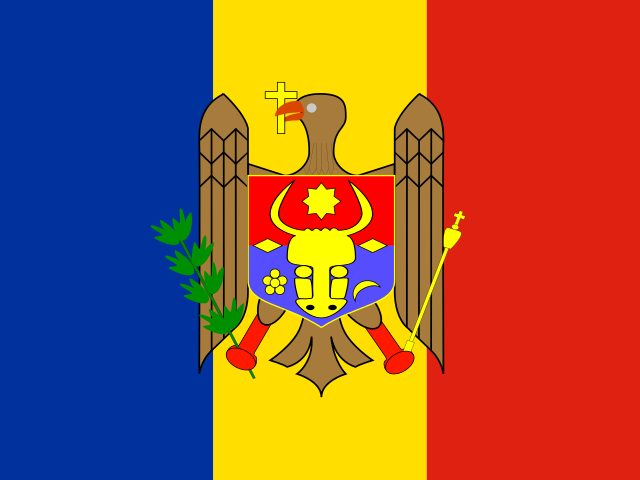
Flag of Moldova

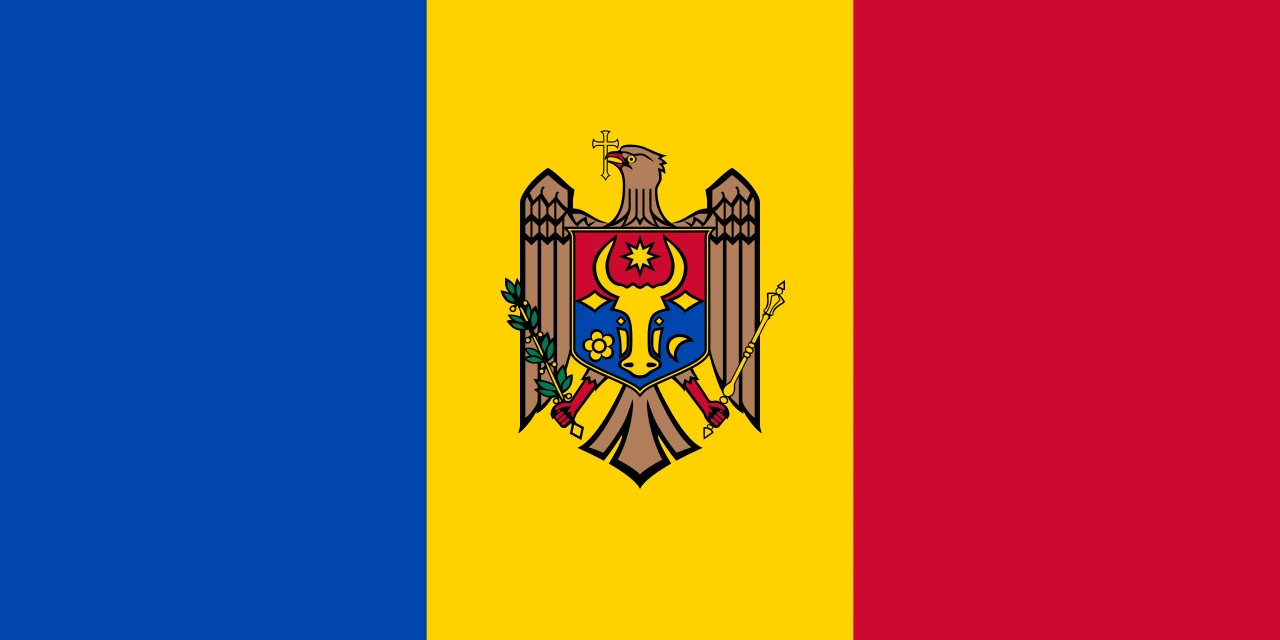
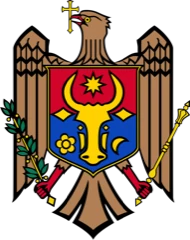
Three stripes in blue, yellow and red, like the Romanian one, with a coat of arms in which an eagle holds the head of an aurochs.

Flag of Moldova
Coat of arms

The flag, in figures

Every fact about the flag, each with what it means.

Proportions
1:22 wide for every 1 high. 49 flags in the catalogue share it.
Properties
Normal flagFIAV symbol: the form of the flag.
Use
Civil, state and military, on land and at seaFIAV symbol: who may fly the flag.
Adopted
19906 November 1990 · 36 years ago
Colours
  • blue
  • yellow
  • red
Reference shades: the official one may vary slightly.
Coat of arms
YesIt carries the coat of arms on the cloth.
12

Take a closer look

  1. The three stripes

  2. 1

    The coat of arms

  3. 2

    The blue stripe

How it is described

The flag in the words of vexillology and heraldry.

Vexillological description

It is a rectangular field with a 1:2 ratio with three vertical stripes and the coat of arms in the middle.

Stripes
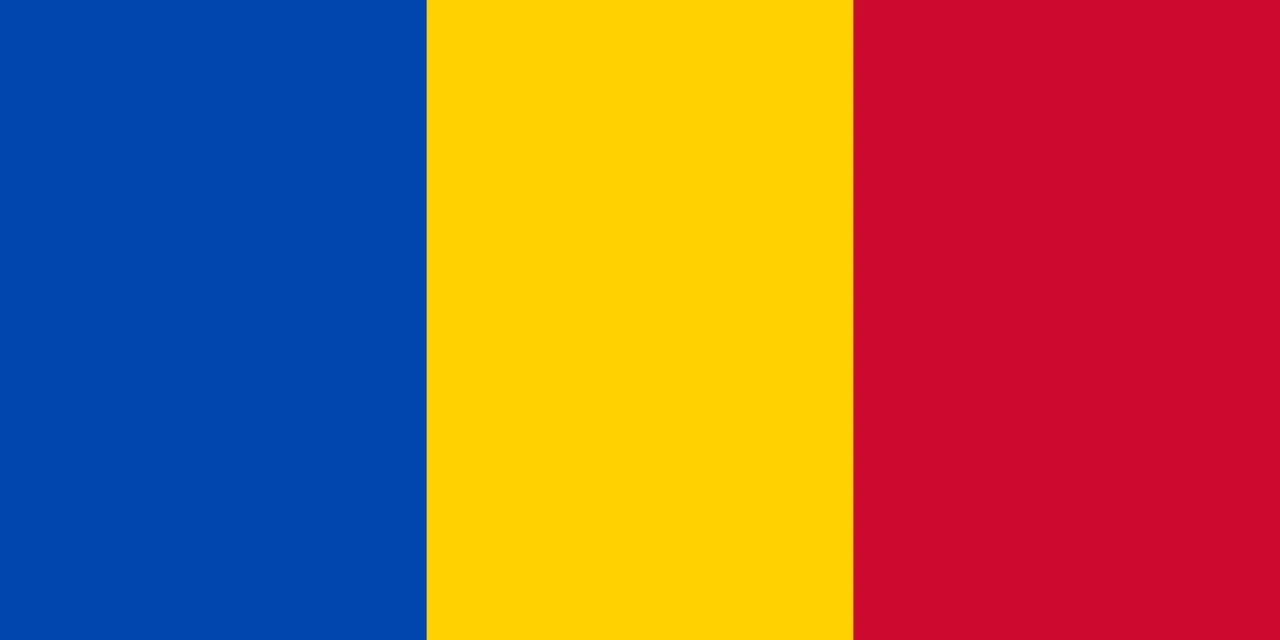
blue next to the flagpole, yellow in the centre and red at the end, of the same width: the colours of Romania, of which Moldova formed part.
Coat of arms
in the centre of the yellow stripe: a golden eagle with an Orthodox cross in its beak; on its chest, a shield divided in red and blue with the head of an aurochs (a wild bison) between a star and a flower.
Its history in dates

Every date in its story, at a glance.

  1. 1918

    Much of present-day Moldova belonged to Romania between 1918 and 1940

  2. 1980

    In the late 1980s, many Moldovans called for recovering their language and their symbols

  3. 1990

    On 27 April 1990, still inside the Soviet Union

  4. 1991

    In 1991 Moldova declared itself independent and kept this flag

  5. 2010

    In 2010 a law fixes the exact colours and puts the coat of arms on the reverse as well

The full story

How it was born, how it has changed and what it means.

The flag of Moldova has three vertical stripes: blue, yellow and red. They are the same colours as those of Romania, and not by chance: the two countries share a language and a history. What distinguishes it is the coat of arms in the centre, where an eagle holds the head of an aurochs, a wild ox that no longer exists.

How it came about

Much of present-day Moldova belonged to Romania between 1918 and 1940. After that it became part of the Soviet Union as one of its republics, with red flags like the rest of the country.

In the late 1980s, many Moldovans called for recovering their language and their symbols. On 27 April 1990, still inside the Soviet Union, the parliament of the republic approved the blue, yellow and red tricolour. A few months later the coat of arms was added to it, the work of the artist Gheorghe Vrabie, so that it would not be identical to the Romanian one. In 1991 Moldova declared itself independent and kept this flag.

How it has changed

Moldova went from the Soviet flags to the tricolour in very little time.

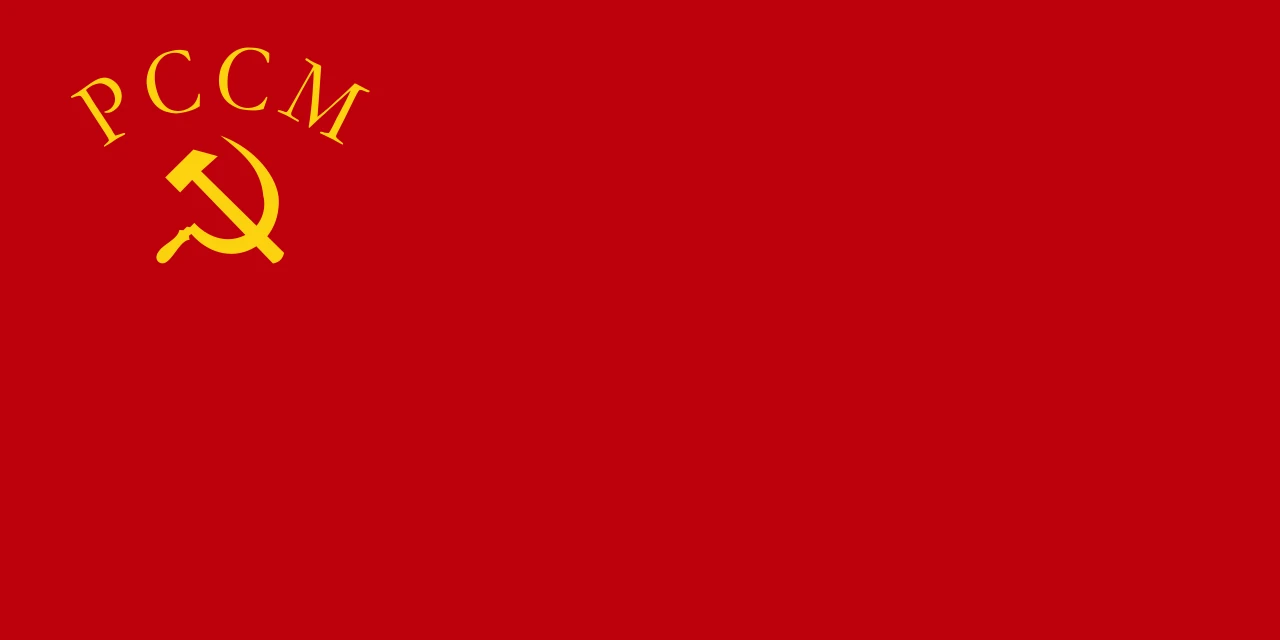
  1. Red flag with the hammer and sickle and the letters RSSM in gold
    Unknown author · Public domain

    1941-1952

    As a Soviet republic, it uses a red flag with the hammer and sickle and the initials of the republic.

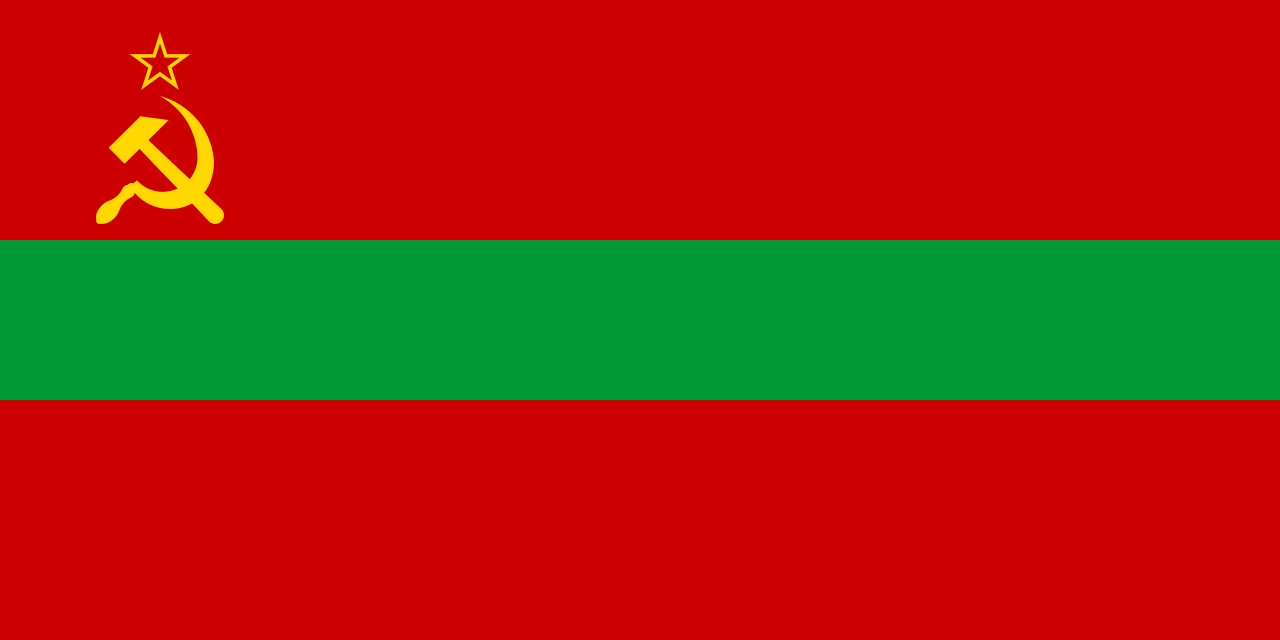
  2. Red flag with a horizontal green stripe, a hammer, a sickle and a star
    SVG by Pianist · Public domain

    1952-1990

    A horizontal green stripe appears and, over the hammer and sickle, a star.

  3. Flag with three vertical stripes blue, yellow and red, without a coat of arms
    Gheorghe Vrabie · Public domain

    April-November 1990

    The plain tricolour is approved, the same as the Romanian one except for the shade of the blue.

  4. Current flag of Moldova

    1990

    The coat of arms is added on the yellow stripe. In 2010 a law fixes the exact colours and puts the coat of arms on the reverse as well.

What it means

The law does not explain the colours, which Moldova shares with Romania. The meaning lies in the coat of arms:

  • Aurochs head

    the symbol of the old principality of Moldavia, which already appeared on its medieval arms.

  • Star, rose and moon

    they accompany the aurochs, as on those old arms.

  • Eagle with a cross in its beak

    it comes from the interwar coat of arms of Romania and recalls the Christian roots of the country.

  • Olive branch and sceptre

    the peace and the authority of the state.

Fun facts

  1. A bull of legend

    According to the medieval chronicles, Prince Dragoș arrived in these lands pursuing an aurochs and, after hunting it down, decided to stay. It is a legend, but it explains why the animal ended up on the coat of arms.

  2. Livestock on the flag

    It is one of only two national flags with livestock on them; the other is that of Andorra, which bears two cows.

  3. Two different faces

    Until 2010 the reverse bore no coat of arms, so the flag looked different depending on which side you viewed it from.

  4. A monastic blue

    Its designers chose a bluer, greener shade than the Romanian one, inspired by the murals of the Voroneț monastery.

Country facts

Where it is and what borders it.

Capital
Chișinău
Area
33,846 km²
Country
Republic of Moldova
Continent
Europe
Subregion
Eastern Europe
Independent state
Yes
UN member
Yes
ISO code
MDA · MD

2 neighbouring countries

How much have you learnt?

Test what you have read about the flag of Moldova.

  1. 1. Which one is the flag of Moldova?

  2. 2. Which of these elements appears on the flag?

  3. 3. What are the proportions (height:width) of the flag?

  4. 4. In which year was the current flag adopted?

More flags

Accessibility preferences

Accessibility statement

Quick profiles

Text and reading

Text size
Default
Line height
Default
Letter spacing
Default
Word spacing
Default

Colour

Motion and orientation

Cursor