Skip to content

Wiki Banderas
Open menu

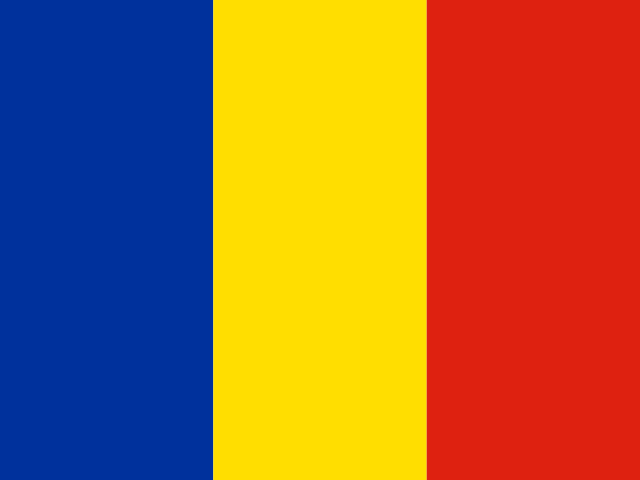
Flag of Romania

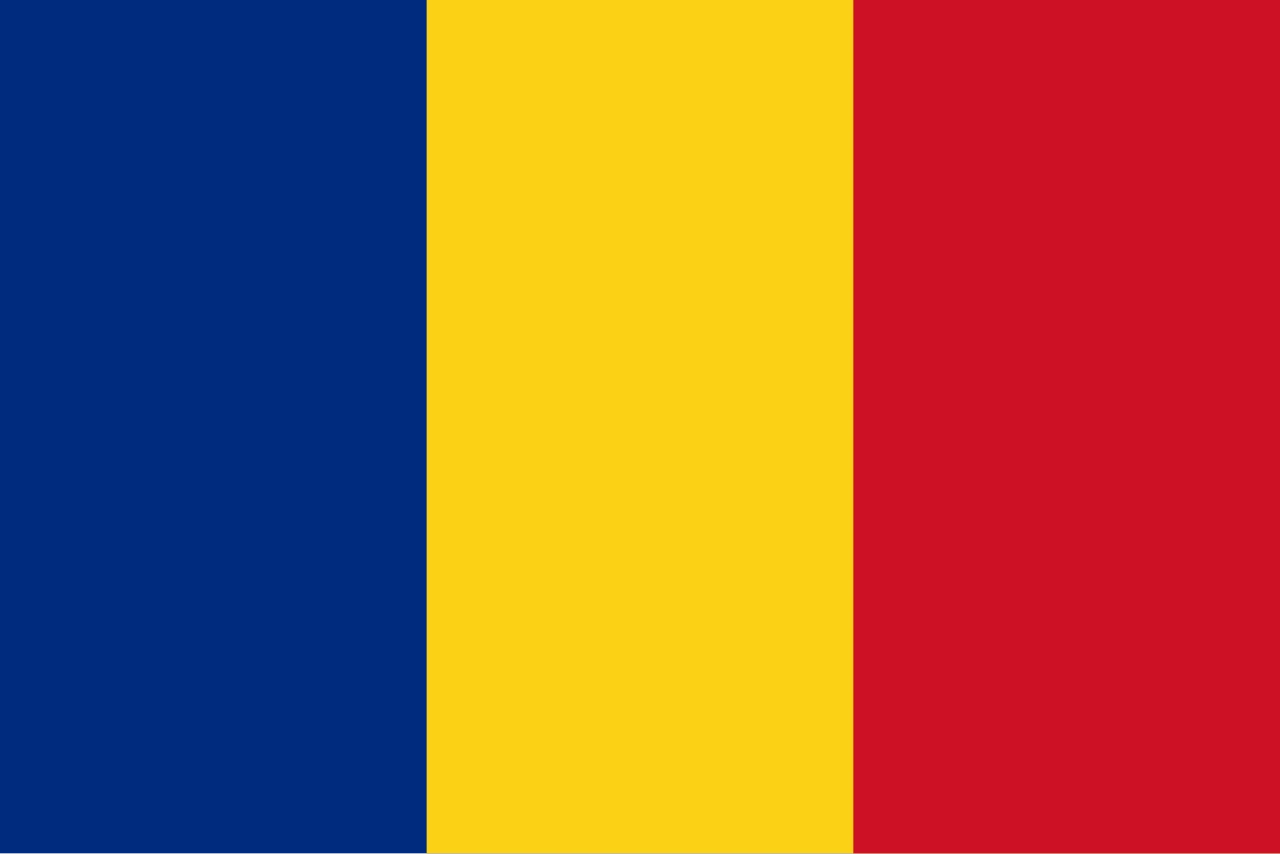
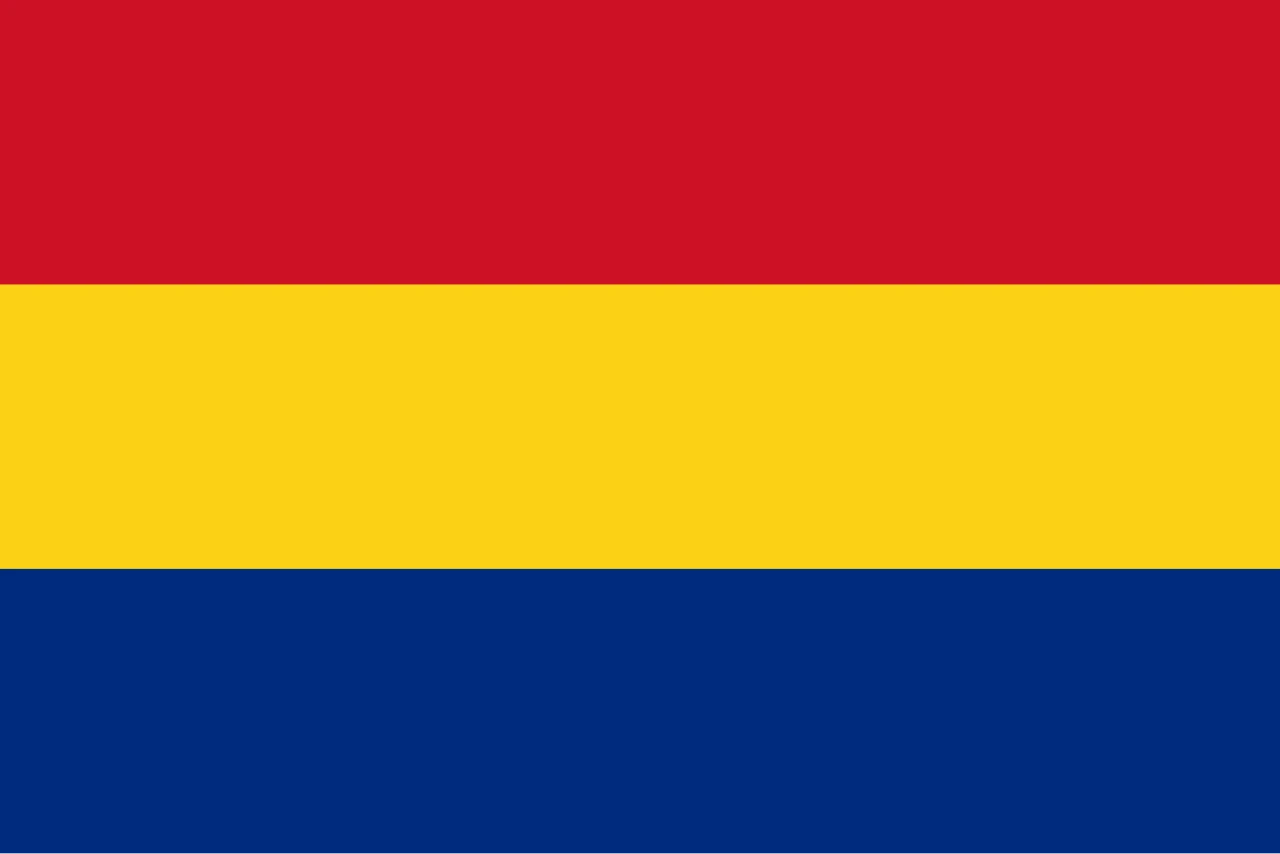
Three vertical stripes in blue, yellow and red, born in the revolution of 1848. Without a coat of arms, it is almost identical to the flag of Chad.

Flag of Romania
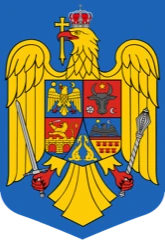
Coat of arms

The flag, in figures

Every fact about the flag, each with what it means.

Proportions
2:33 wide for every 2 high. 989 flags in the catalogue share it.
Properties
Normal flagFIAV symbol: the form of the flag.
Use
Civil, state and military, on land and at seaFIAV symbol: who may fly the flag.
Adopted
198927 December 1989 · 37 years ago
Colours
  • cobalt blue
  • yellow
  • vermilion
Reference shades: the official one may vary slightly.
Coat of arms
YesIt carries the coat of arms on the cloth.
123

Take a closer look

  1. The three stripes

  2. 1

    The blue stripe

  3. 2

    The yellow stripe

  4. 3

    The red stripe

How it is described

The flag in the words of vexillology and heraldry.

Vexillological description

It is a rectangular field with a 2:3 ratio and three equal vertical stripes.

Stripes
from the flagpole outwards, blue, yellow (gold) and red, of the same width.
Field
no coat of arms or figures.
The twin
it is almost identical to that of Chad —the only detail that distinguishes them is that the Chadian blue is a little darker—. The origin is common: the tricolour comes from the French model, and Romania adopted it in 1867.
What it carries

Each element and how many of the 1,390 flags in the catalogue carry it. In yellow, the rarest.

Its history in dates

Every date in its story, at a glance.

  1. 1821

    The best-known reading comes from the revolutions of 1821 and 1848:

  2. 1848

    In 1848, the revolutionaries of Wallachia made the tricolour their flag

  3. 1859

    When the two principalities were united, in 1859, they adopted those colours

  4. 1866

    In 1866 the Constitution of the new country fixed them

The full story

How it was born, how it has changed and what it means.

The flag of Romania has three vertical stripes of the same size: blue, yellow and red. It is one of the easiest to draw and also one of the hardest to recognise, because that of Chad is practically identical and that of Andorra differs only by the coat of arms.

How it came about

Two hundred years ago, Romania did not yet exist. There were two principalities, Wallachia and Moldavia, which depended on the Ottoman Empire. The blue, yellow and red already appeared on their flags and uniforms at the beginning of the nineteenth century.

In 1848, the revolutionaries of Wallachia made the tricolour their flag, with the motto “Justice, Fraternity”. When the two principalities were united, in 1859, they adopted those colours. In 1866 the Constitution of the new country fixed them, and the following year the order used today was settled: the blue by the flagpole.

How it has changed

The colours have not changed since 1848. What has changed is their order and the coat of arms in the centre.

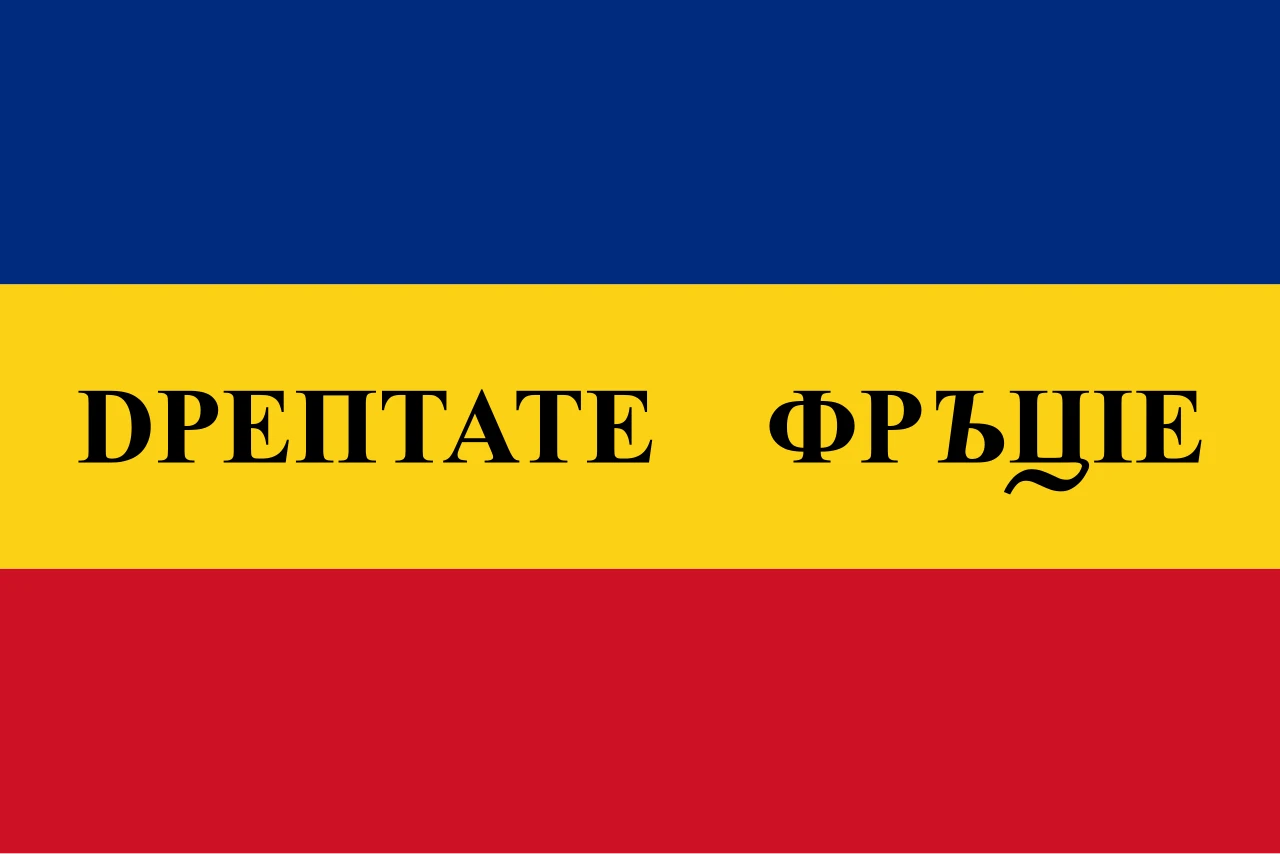
  1. Flag with horizontal blue, yellow and red stripes and a motto in Cyrillic letters
    Alex:D · Public domain

    1848

    The revolutionaries of Wallachia use horizontal stripes with their motto written in the Cyrillic alphabet, which was then used for Romanian.

  2. Flag with horizontal red, yellow and blue stripes
    Alex:D · Public domain

    1862-1866

    The united principalities set the stripes horizontally with the red on top.

  3. Flag with vertical blue, yellow and red stripes

    1867-1947

    The stripes become vertical, with the blue by the flagpole, as today. The king’s coat of arms appears only on the flags of the army and of the crown.

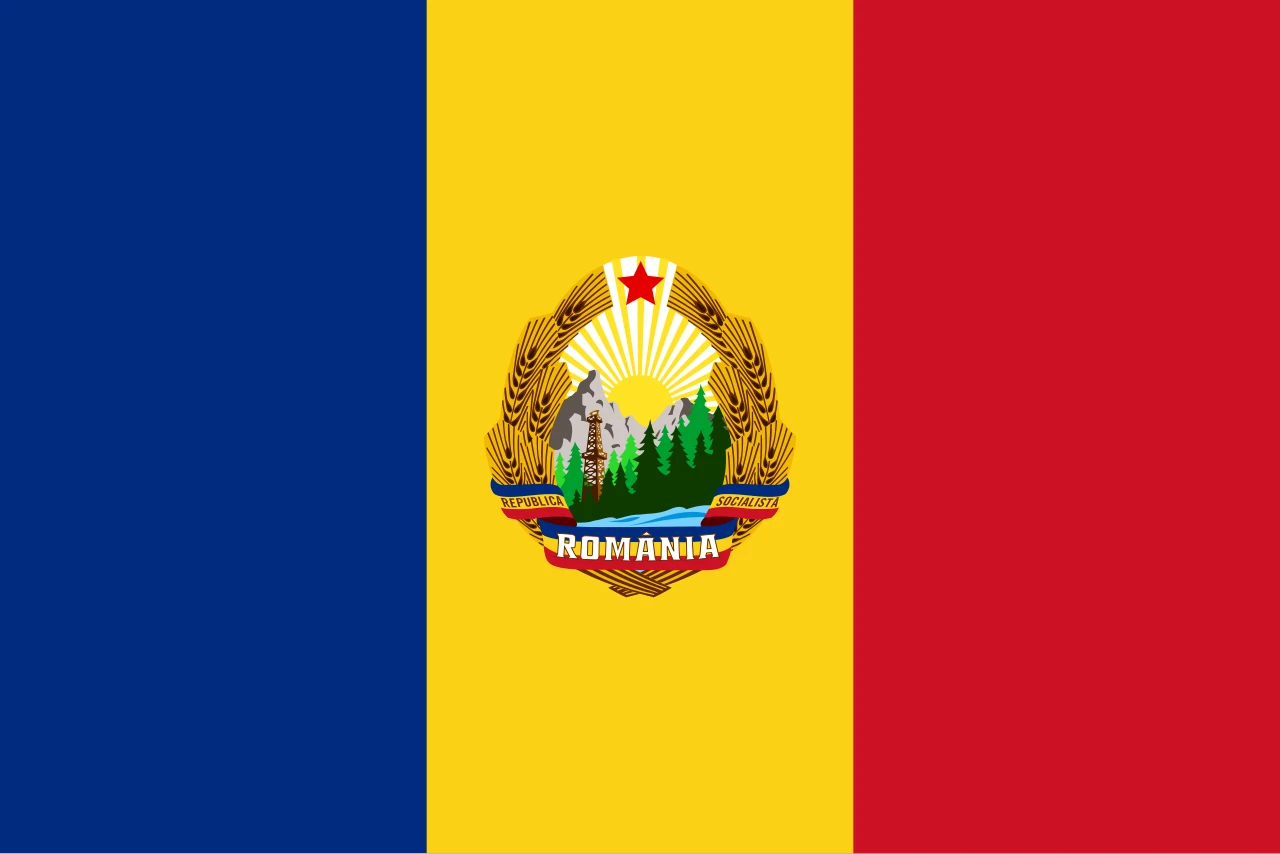
  4. Blue, yellow and red flag with the communist coat of arms in the centre
    Various · Public domain

    1948-1989

    The communist regime adds its coat of arms on the yellow stripe: a landscape with mountains, forest and an oil derrick.

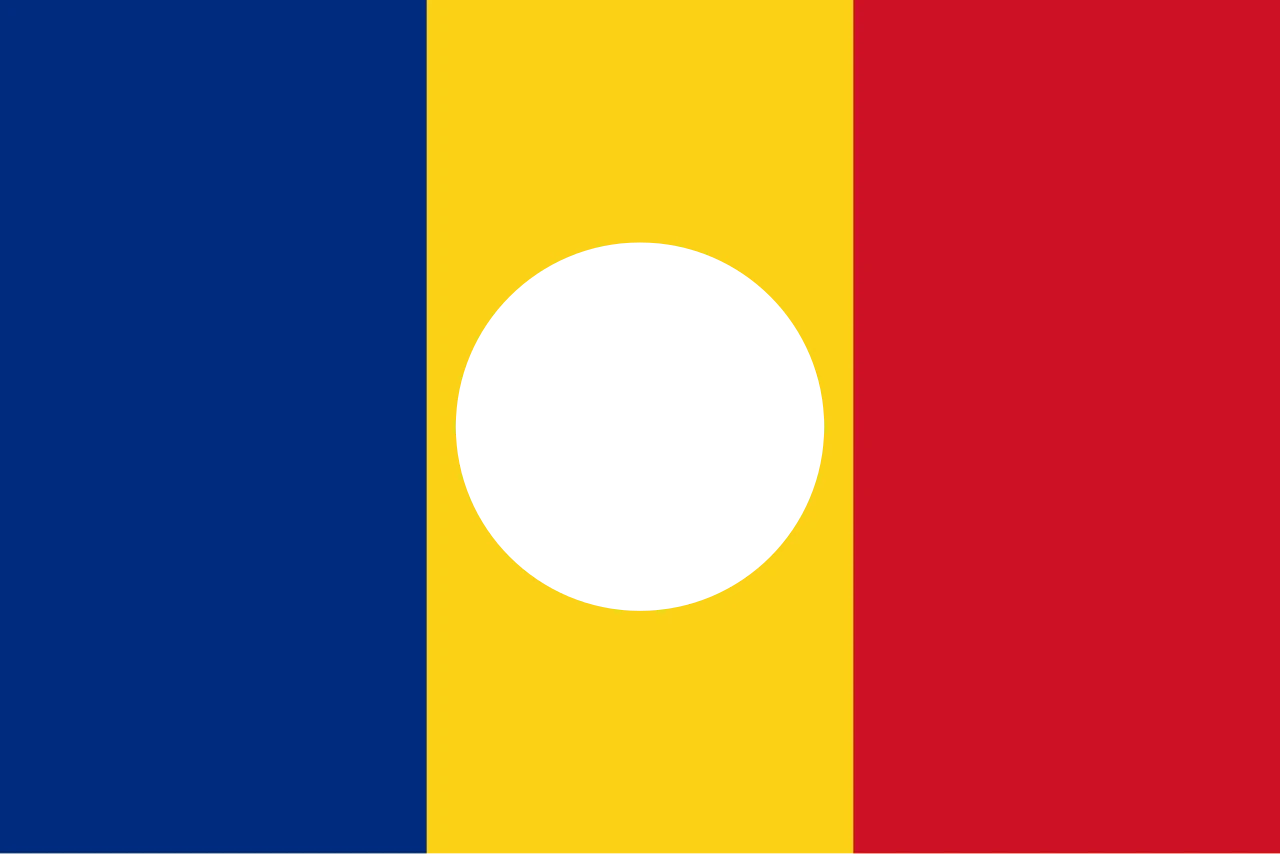
  5. Blue, yellow and red flag with a hole in the centre
    Traced by Stannered · Public domain

    1989

    In the December revolution, people cut the communist coat of arms out of the flags and took them into the street with a hole.

  6. Current flag of Romania

    1989

    On 27 December, the new government restores the tricolour without a coat of arms.

What it means

The law gives no official meaning. The best-known reading comes from the revolutions of 1821 and 1848:

  • Blue

    liberty.

  • Yellow

    justice.

  • Red

    fraternity.

Fun facts

  1. The twin of Chad

    Chad adopted an almost identical flag in 1960. At the time the Romanian one carried the communist coat of arms and the difference went unnoticed. When it was removed in 1989, the two became identical except for a slightly darker blue in Chad’s.

  2. “The tricolour is ours”

    In 2004 Chad asked the UN to examine the resemblance. The Romanian president, Ion Iliescu, replied that Romania did not intend to give up its flag.

  3. The flag with a hole

    The cut-out flags of 1989 became the symbol of the fall of the Ceaușescu regime.

  4. It has its own day

    Since 1998, 26 June is celebrated as Flag Day, in memory of the revolutionary decree of 1848.

Country facts

Where it is and what borders it.

Capital
Bucharest
Area
238,391 km²
Country
Romania
Continent
Europe
Subregion
Southeast Europe
Independent state
Yes
UN member
Yes
ISO code
ROU · RO

5 neighbouring countries

How much have you learnt?

Test what you have read about the flag of Romania.

  1. 1. Which one is the flag of Romania?

  2. 2. What are the proportions (height:width) of the flag?

  3. 3. In which year was the current flag adopted?

Sources

Text based on the article “Bandera de Rumania” from the Spanish Wikipedia, published under the licence CC BY-SA 4.0.

Sources consulted:

Credits

Flag image: AdiJapan, Wikimedia Commons · Public domain.

More flags

Accessibility preferences

Accessibility statement

Quick profiles

Text and reading

Text size
Default
Line height
Default
Letter spacing
Default
Word spacing
Default

Colour

Motion and orientation

Cursor