Skip to content

Wiki Banderas
Open menu

Flag of Montenegro

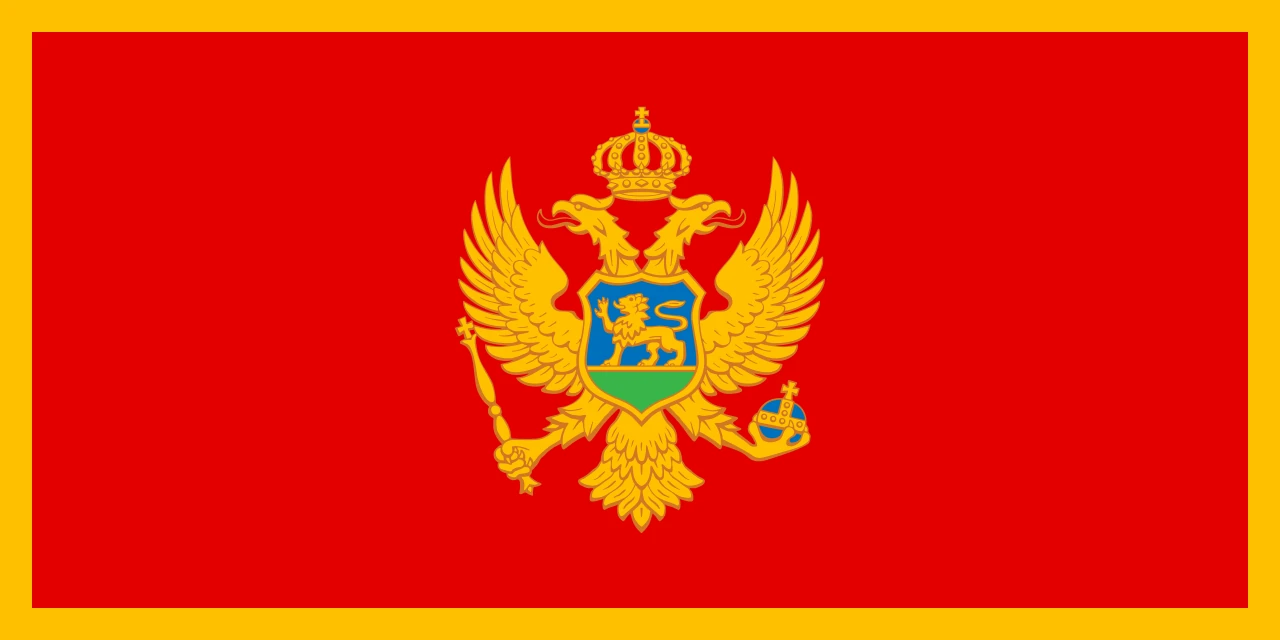
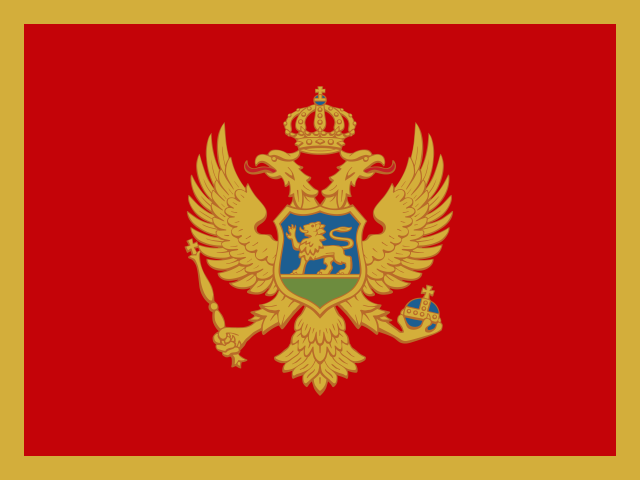
Red, with a golden border and a two-headed eagle: Montenegro recovered in 2004 the colours of its old princes, two years before becoming independent.

Flag of Montenegro
Coat of arms

The flag, in figures

Every fact about the flag, each with what it means.

Proportions
1:22 wide for every 1 high. 49 flags in the catalogue share it.
Properties
Normal flagFIAV symbol: the form of the flag.
Use
Civil, state and military, on land and at seaFIAV symbol: who may fly the flag.
Adopted
200413 July 2004 · 22 years ago
Colours
  • red
  • gold
Reference shades: the official one may vary slightly.
Coat of arms
YesIt carries the coat of arms on the cloth.
12

Take a closer look

  1. The red cloth

  2. 1

    The crown

  3. 2

    The two-headed eagle

How it is described

The flag in the words of vexillology and heraldry.

Vexillological description

It is a rectangular field with a 1:2 ratio in red, with a golden border and the coat of arms in the centre.

Field
red, surrounded on all four sides by a narrow golden band.
Coat of arms
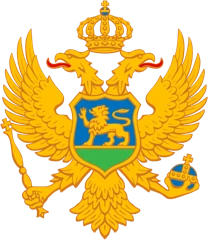
in the centre, not touching the border: a crowned golden two-headed eagle with its wings spread; on its chest, a red shield with a golden lion rampant.
Origin
the red and the gold come from the flag of the Petrović-Njegoš princes, who ruled Montenegro for two centuries.
Its history in dates

Every date in its story, at a glance.

  1. 1918

    In 1918 Montenegro joined Yugoslavia and its own flag disappeared for decades

  2. 2004

    In July 2004, when it still formed a union with Serbia

  3. 2006

    Two years later, in 2006, the country voted in a referendum on its independence

The full story

How it was born, how it has changed and what it means.

The flag of Montenegro is red, with a golden border all around and a golden coat of arms in the centre: a two-headed eagle bearing a lion on its chest. Few national flags have a frame like that, and it makes this one very easy to recognise.

How it came about

Montenegro is a small country of mountains by the Adriatic Sea. For centuries it was ruled by the Petrović-Njegoš family, first as bishops and later as princes and kings. Their war standards were red, and the two-headed eagle was their emblem.

In 1918 Montenegro joined Yugoslavia and its own flag disappeared for decades. In July 2004, when it still formed a union with Serbia, the Montenegrin parliament chose a flag based on those historical standards. Two years later, in 2006, the country voted in a referendum on its independence.

How it has changed

Montenegro has gone from red to the tricolour and back to red.

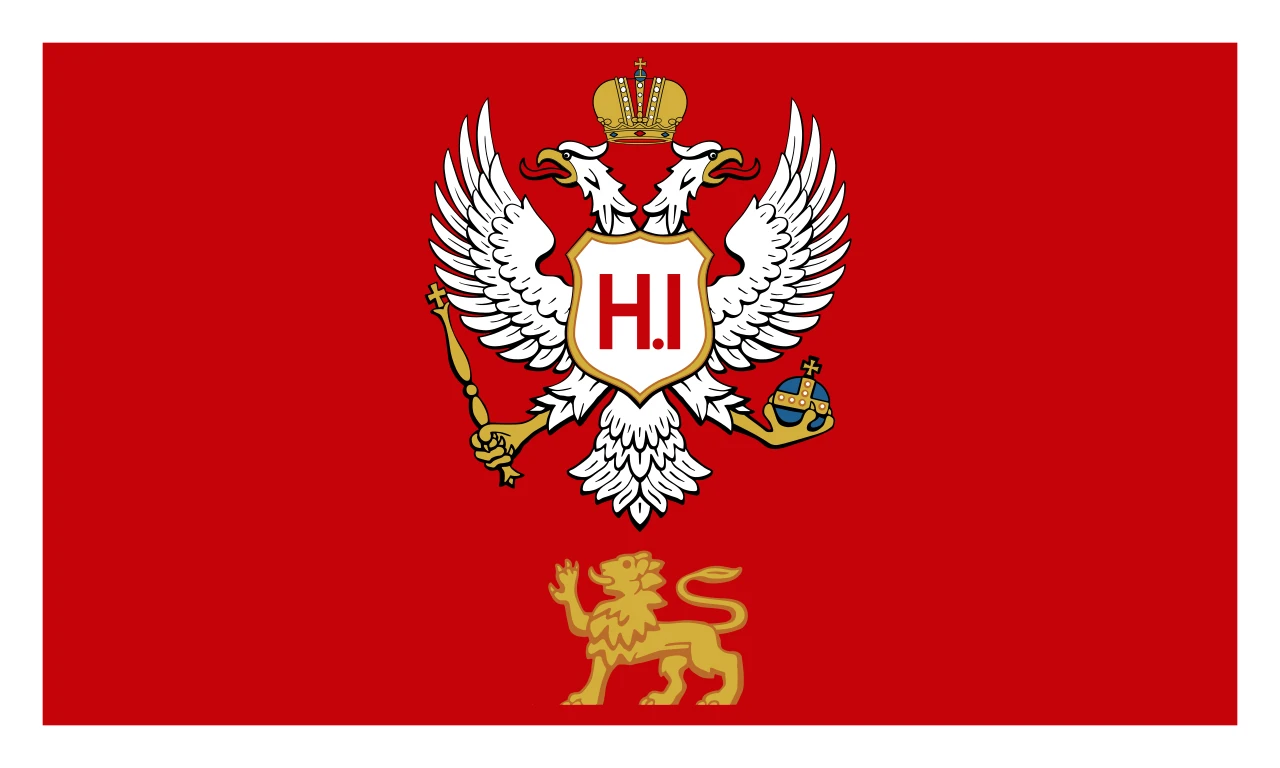
  1. Red flag with a white two-headed eagle and a golden lion below
    B1mbo · CC BY-SA 4.0

    1860-1905

    With Prince Nikola I, the flag is red, with the white eagle, his initials and a lion.

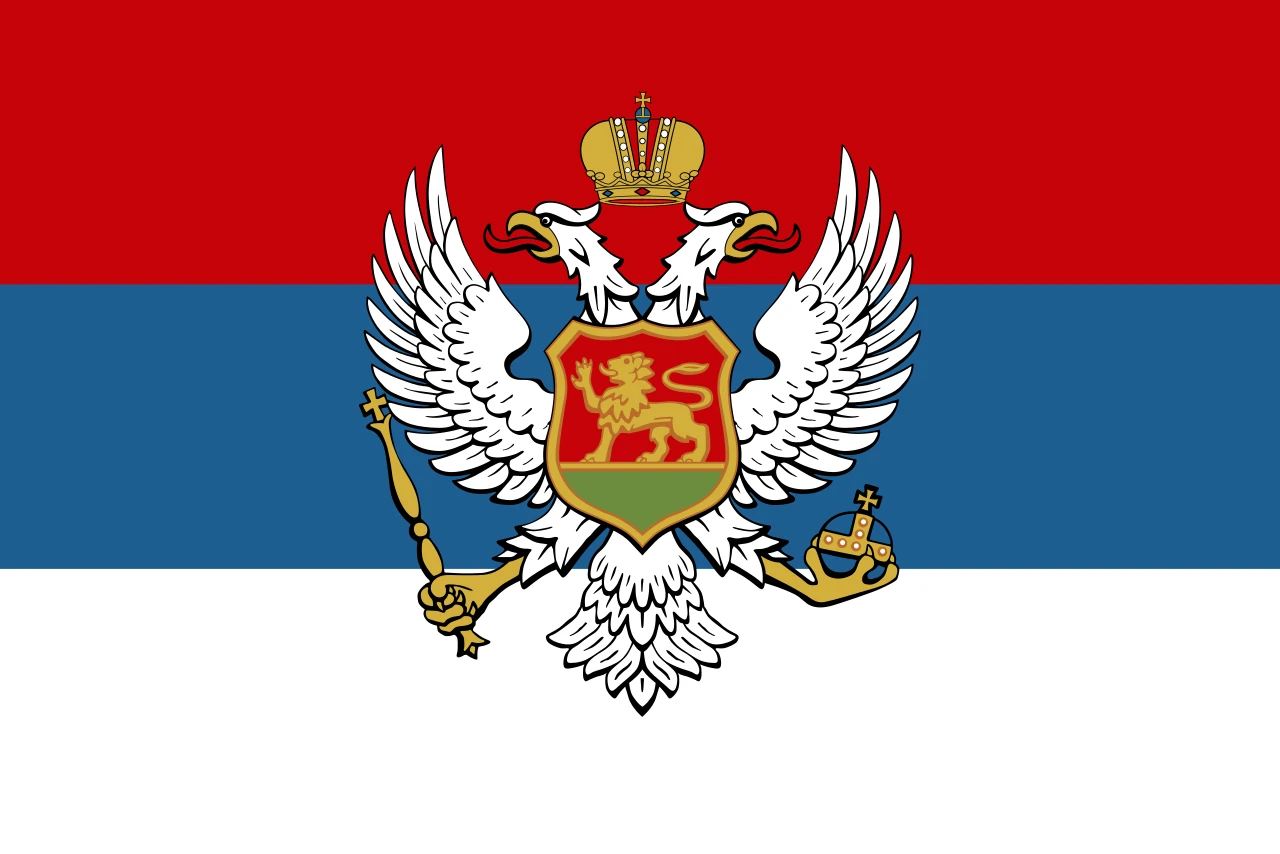
  2. Red, blue and white flag with a white two-headed eagle
    B1mbo · Public domain

    1905-1918

    A red, blue and white tricolour is adopted, similar to the Serbian one, with the eagle in the centre.

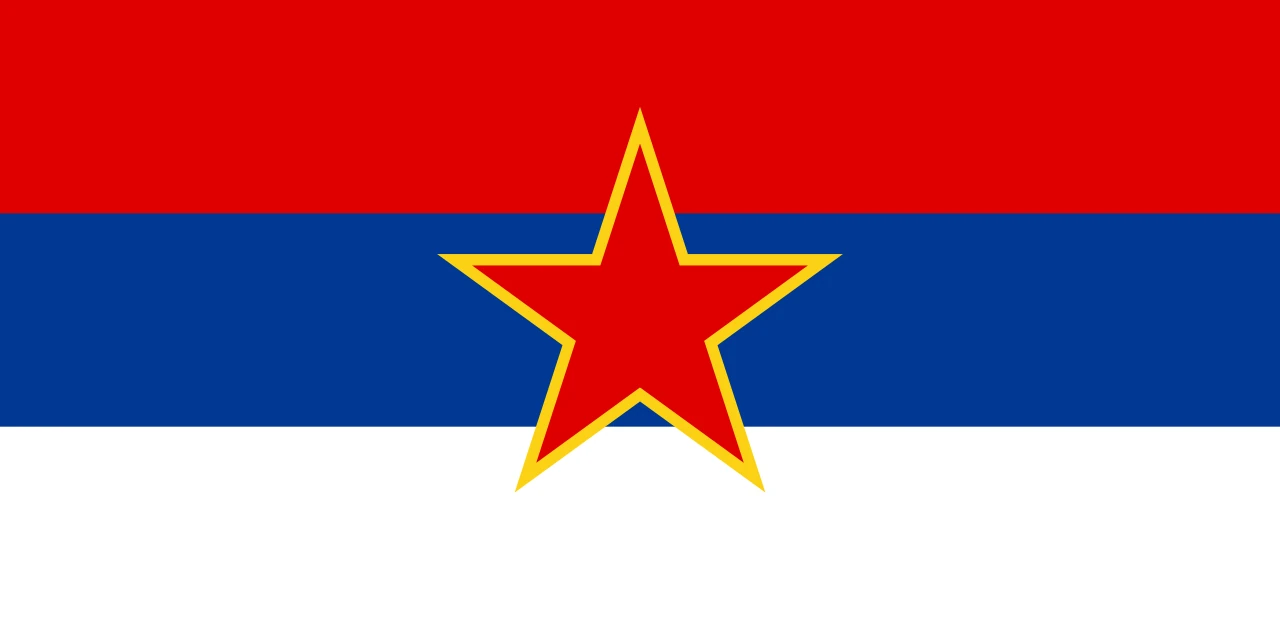
  3. Red, blue and white flag with a red star in the centre
    User:CrnaGora · Public domain

    1946-1993

    As a republic of communist Yugoslavia, the tricolour bears a red star.

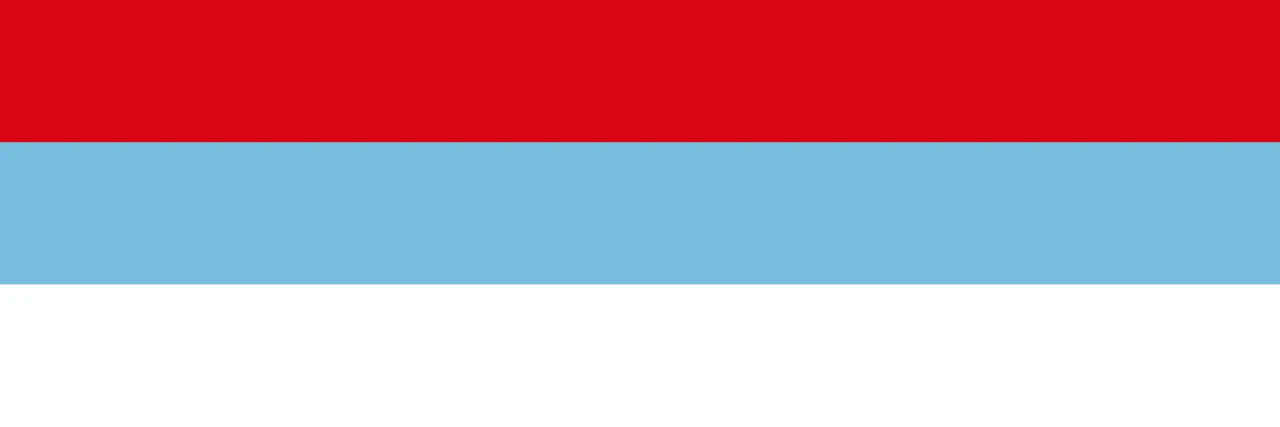
  4. Very elongated light red, blue and white flag
    Zirland · CC BY-SA 2.5

    1993-2004

    The star disappears, the blue becomes lighter and the flag is made three times as long as it is high.

  5. Current flag of Montenegro

    2004

    The red of the old princes returns, now with a golden border.

What it means

The flag is, above all, a reminder of the history of the country:

  • Red

    the colour of the standards of the Petrović-Njegoš family.

  • Two-headed eagle

    a symbol inherited from the medieval states of the area.

  • Lion

    an emblem that already appeared on the flags of the old princes.

  • Golden border and coat of arms

    the gold that accompanied those standards.

Fun facts

  1. The most elongated

    The flag of 1993 to 2004 measured three times as long as it was high, a very rare proportion among national flags.

  2. Fringe before border

    In the first months, some flags were hoisted with a golden fringe instead of the border, because the official model was not approved until September 2004.

  3. A double date

    The law entered into force on 13 July, State Day, which recalls two things: the recognition of independence in 1878 and the start of the resistance against the occupation in 1941.

Country facts

Where it is and what borders it.

Capital
Podgorica
Area
13,812 km²
Country
Montenegro
Continent
Europe
Subregion
Southeast Europe
Independent state
Yes
UN member
Yes
ISO code
MNE · ME

How much have you learnt?

Test what you have read about the flag of Montenegro.

  1. 1. Which one is the flag of Montenegro?

  2. 2. Which of these elements appears on the flag?

  3. 3. What are the proportions (height:width) of the flag?

  4. 4. In which year was the current flag adopted?

Sources

Text based on the article “Bandera de Montenegro” from the Spanish Wikipedia, published under the licence CC BY-SA 4.0.

Sources consulted:

Credits

Flag image: B1mbo, Froztbyte, Great Brightstar, Wikimedia Commons · Public domain.

More flags

Accessibility preferences

Accessibility statement

Quick profiles

Text and reading

Text size
Default
Line height
Default
Letter spacing
Default
Word spacing
Default

Colour

Motion and orientation

Cursor