Skip to content

Wiki Banderas
Open menu

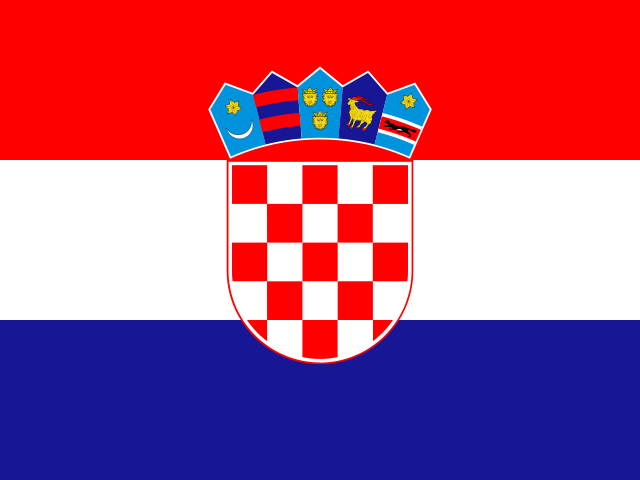
Flag of Croatia

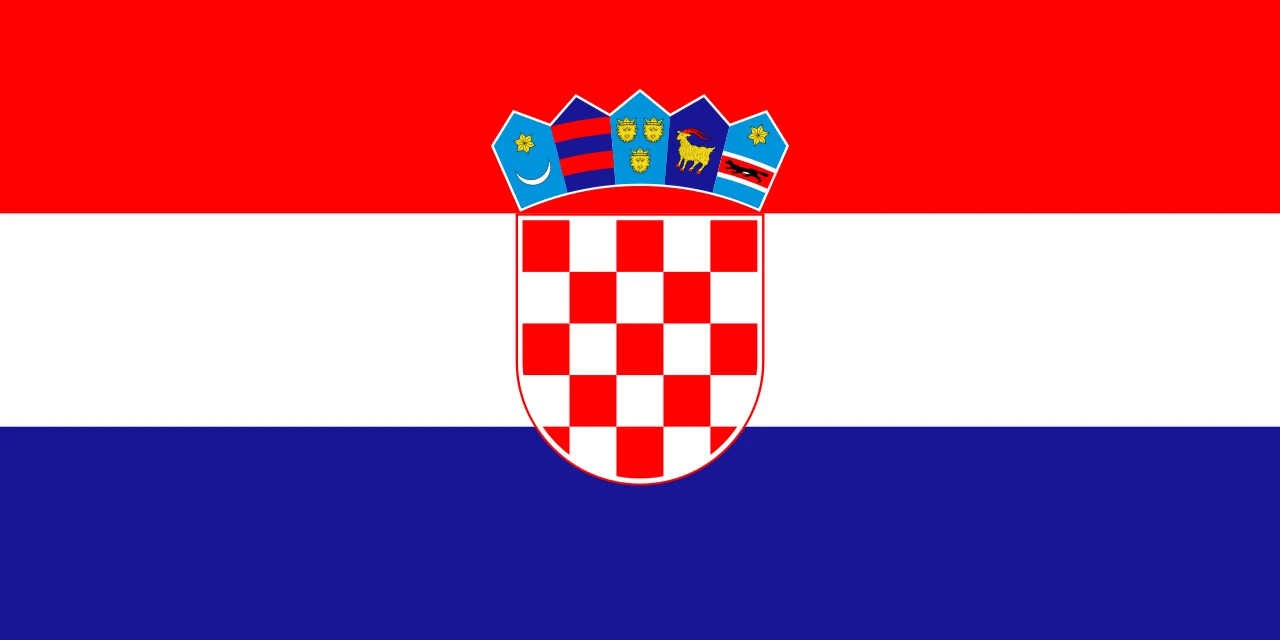
Three stripes, red, white and blue, with the famous chequered shield, a Croatian symbol with over five hundred years of history.

Flag of Croatia
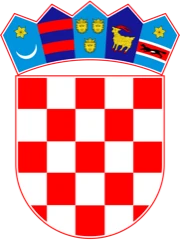
Coat of arms

The flag, in figures

Every fact about the flag, each with what it means.

Proportions
1:22 wide for every 1 high. 49 flags in the catalogue share it.
Properties
Normal flagFIAV symbol: the form of the flag.
Use
Civil, state and militaryFIAV symbol: who may fly the flag.
Adopted
199021 December 1990 · 36 years ago
Colours
  • red
  • white
  • blue
  • cyan
  • yellow
  • black
Reference shades: the official one may vary slightly.
Coat of arms
YesIt carries the coat of arms on the cloth.
Designer
Miroslav Šutej
12

Take a closer look

  1. The three stripes

  2. 1

    The checkerboard

  3. 2

    The crown of shields

How it is described

The flag in the words of vexillology and heraldry.

Vexillological description

It is a rectangular field with a 1:2 ratio with a coat of arms in the centre.

Stripes
three equal horizontal ones, red, white and blue, from top to bottom.
Coat of arms
resting on the geometric centre of the field. At the top it carries a chessboard of twenty-five red and white squares (the *šahovnica*), with the upper left corner red, and below it five small coats of arms that recall as many historic regions.
What it carries

Each element and how many of the 1,390 flags in the catalogue carry it. In yellow, the rarest.

Its history in dates

Every date in its story, at a glance.

  1. 1848

    In 1848, in the middle of the wave of revolutions across Europe

  2. 1990

    The painter and designer Miroslav Šutej created it in the summer of 1990

The full story

How it was born, how it has changed and what it means.

The flag of Croatia has three horizontal stripes: red, white and blue. In the centre it carries its most famous symbol, a shield of red and white checks like a chessboard. That drawing is so popular that Croats also wear it on football shirts.

How it came about

In the mid-nineteenth century Croatia was part of the Austrian Empire. Many Croats wanted to defend their language and their identity, as did other Slavic peoples of the region. In 1848, in the middle of the wave of revolutions across Europe, the red, white and blue tricolour was first used officially.

Today’s design is much more recent. The painter and designer Miroslav Šutej created it in the summer of 1990, while Croatia was preparing to separate from Yugoslavia.

How it has changed

The three stripes have stayed since 1848. What has changed, with each regime, is the symbol in the centre.

  1. Flag with three horizontal stripes, red, white and blue
    DIREKTOR · Public domain

    1848-1918

    The tricolour, without a coat of arms, represents Croatia within the Austrian Empire.

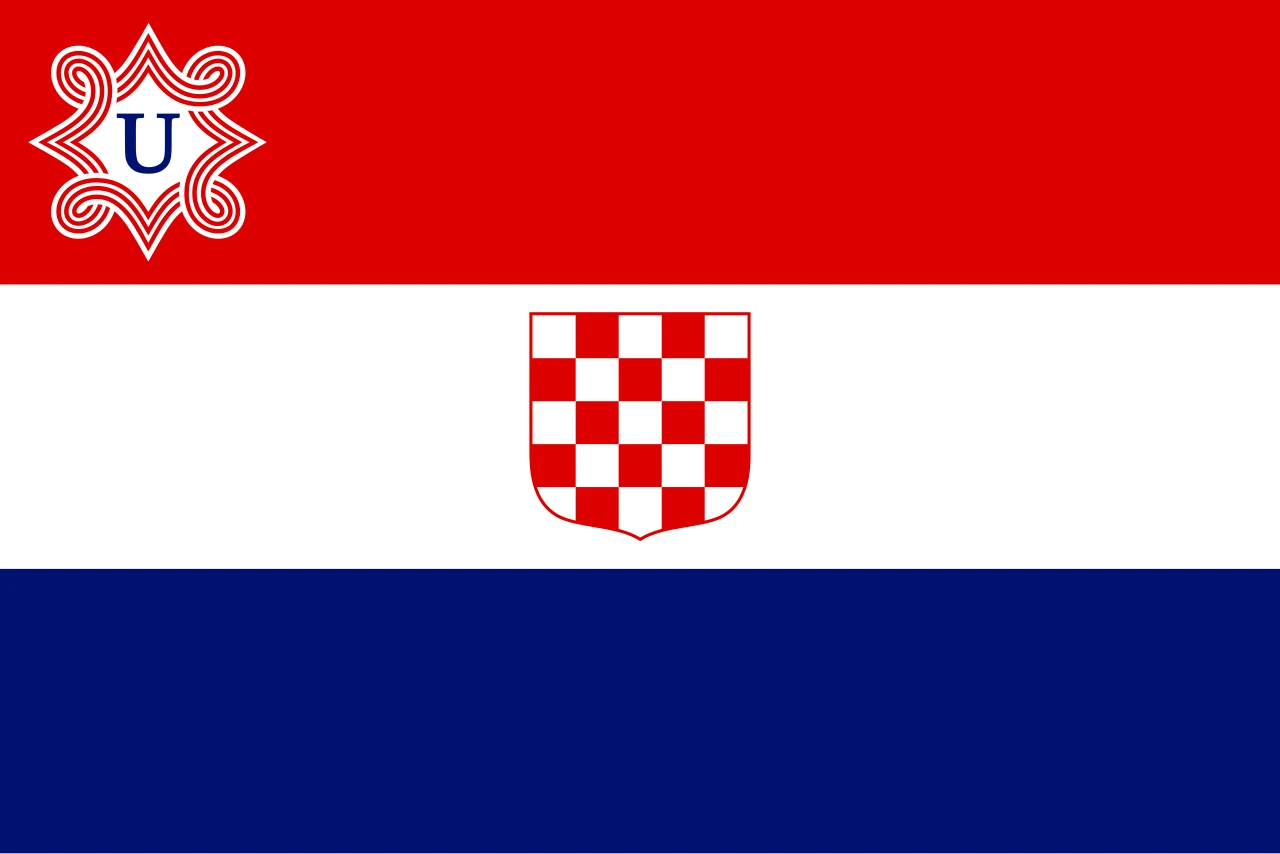
  2. Red, white and blue flag with a chequered shield and a letter U in the corner
    Zscout370 · Public domain

    1941-1945

    During the Second World War a fascist regime allied with Germany rules. It adds the chequered shield and, in the corner, the letter U of its party.

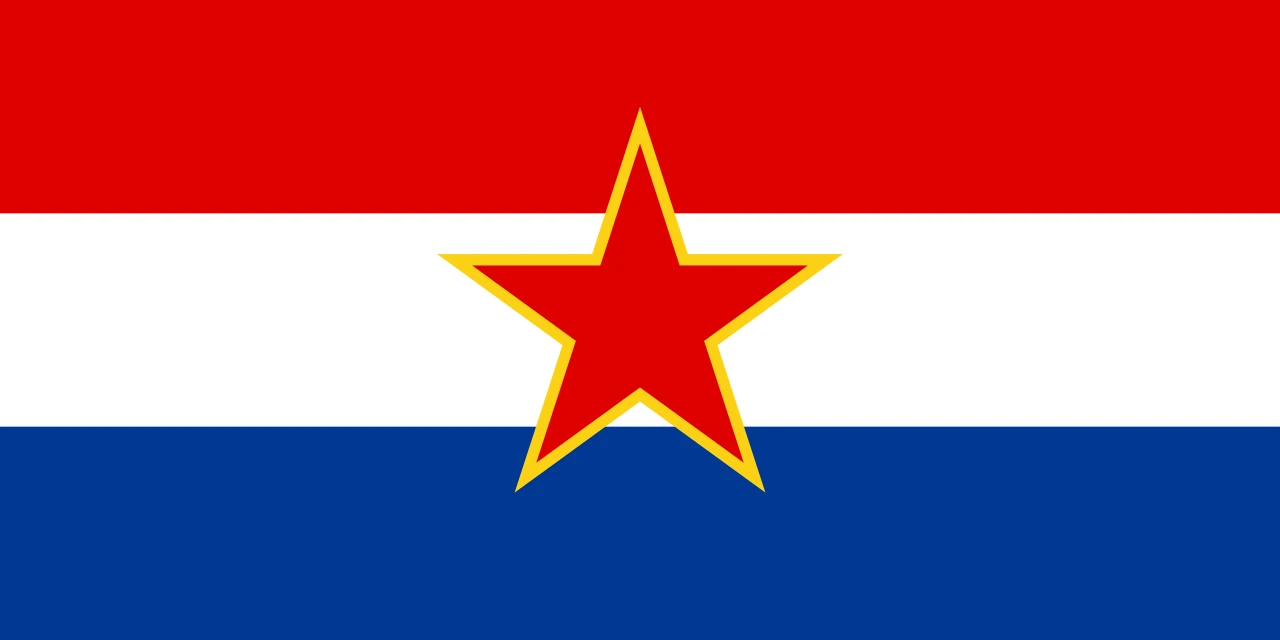
  3. Red, white and blue flag with a red star in the centre
    Zscout370 · Public domain

    1947-1990

    Croatia is a republic of communist Yugoslavia. In the centre it shows a red star with a yellow border.

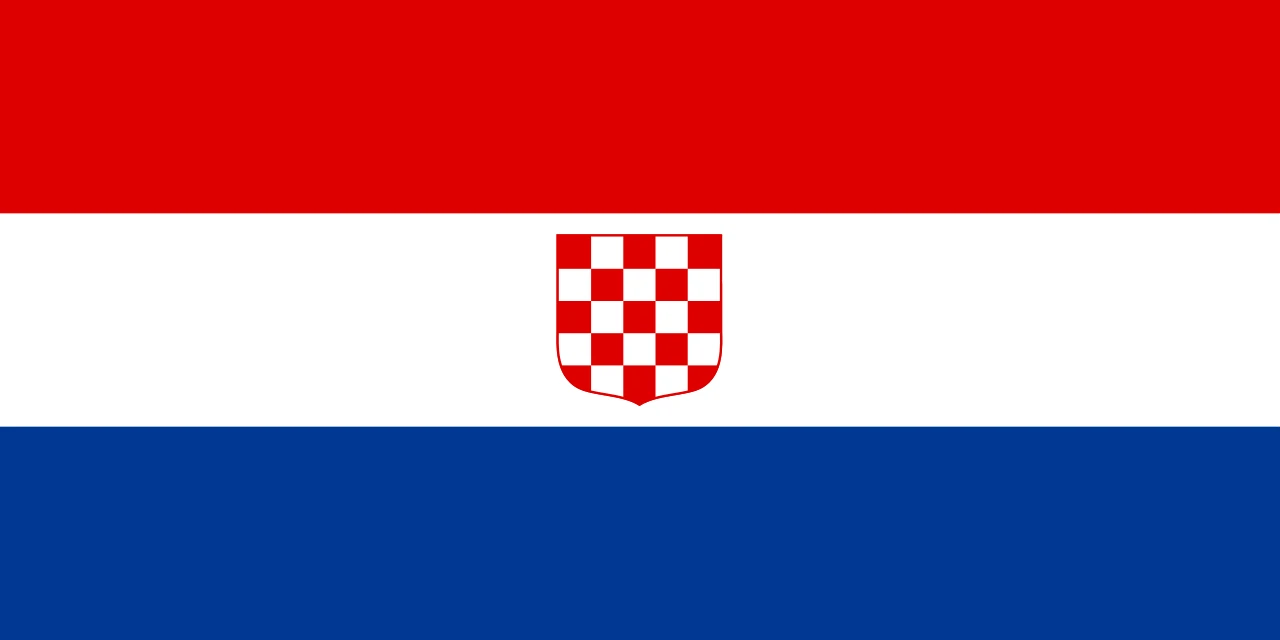
  4. Red, white and blue flag with a chequered shield and no crown
    Himasaram · Public domain

    1990

    In July, after the first free elections, the star is replaced by the chequered shield, still without a crown.

  5. Current flag of Croatia

    1990

    On 21 December Šutej’s design is approved, with a crown of five coats of arms over the chessboard.

What it means

The law does not explain the colours, but there is a usual reading:

  • Red and white

    the colours of the coat of arms of Croatia.

  • Blue

    the colour of the coats of arms of Dalmatia and Slavonia, two regions of the country.

  • Chessboard of 25 squares

    the symbol of Croatia for over five hundred years. It has 13 red squares and 12 white ones.

  • Crown of five coats of arms

    the historic regions of the country: central Croatia, Dubrovnik, Dalmatia, Istria and Slavonia.

Fun facts

  1. A game of chess

    According to a legend, a tenth-century Croatian king, Stephen Držislav, won his freedom from the doge of Venice by playing chess and put the board on his shield. It is only a tale: it was written centuries later.

  2. The oldest drawing is in Austria

    The chequered shield first appears in a painting of 1495 in Innsbruck.

  3. Red or white first

    Throughout history the first square at the top left has sometimes been red and sometimes white. Today it is red.

  4. A designer for everything

    Miroslav Šutej also designed the kuna banknotes, the old Croatian currency, and the chequered drawing on the national football team’s shirt.

Country facts

Where it is and what borders it.

Capital
Zagreb
Area
56,594 km²
Country
Republic of Croatia
Continent
Europe
Subregion
Southeast Europe
Independent state
Yes
UN member
Yes
ISO code
HRV · HR

How much have you learnt?

Test what you have read about the flag of Croatia.

  1. 1. Which one is the flag of Croatia?

  2. 2. Which of these elements appears on the flag?

  3. 3. What are the proportions (height:width) of the flag?

  4. 4. In which year was the current flag adopted?

Sources

Text based on the article “Bandera de Croacia” from the Spanish Wikipedia, published under the licence CC BY-SA 4.0.

Sources consulted:

Credits

Flag image: Nightstallion, Elephantus, Neoneo13, Denelson83, Rainman, R-41, Minestrone, Lupo, Zscout370,MaGa (based on Decision of the Parliament), Wikimedia Commons · Public domain.

More flags

Accessibility preferences

Accessibility statement

Quick profiles

Text and reading

Text size
Default
Line height
Default
Letter spacing
Default
Word spacing
Default

Colour

Motion and orientation

Cursor