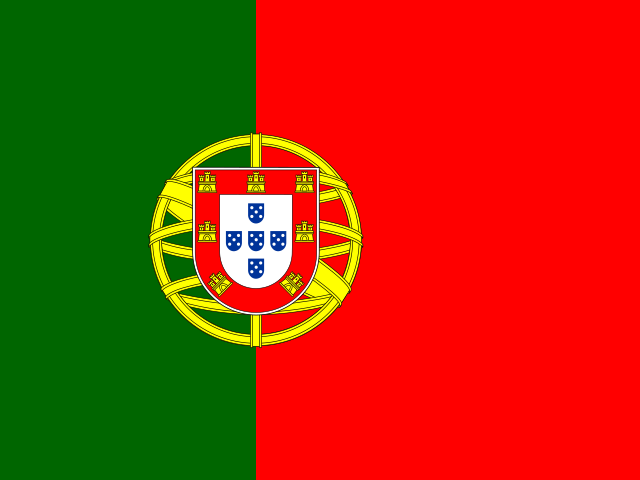
Every fact about the flag, each with what it means.
Proportions
2:33 wide for every 2 high. 989 flags in the catalogue share it.
Properties
Normal flagFIAV symbol: the form of the flag.
Use
Civil, state and military, on land and at seaFIAV symbol: who may fly the flag.
Adopted
191119 June 1911 · 115 years ago
Colours
green
red
yellow
Reference shades: the official one may vary slightly.
Coat of arms
YesIt carries the coat of arms on the cloth.
Take a closer look
The two halves
1
The armillary sphere
2
The coat of arms
How it is described
The flag in the words of vexillology and heraldry.
Vexillological description
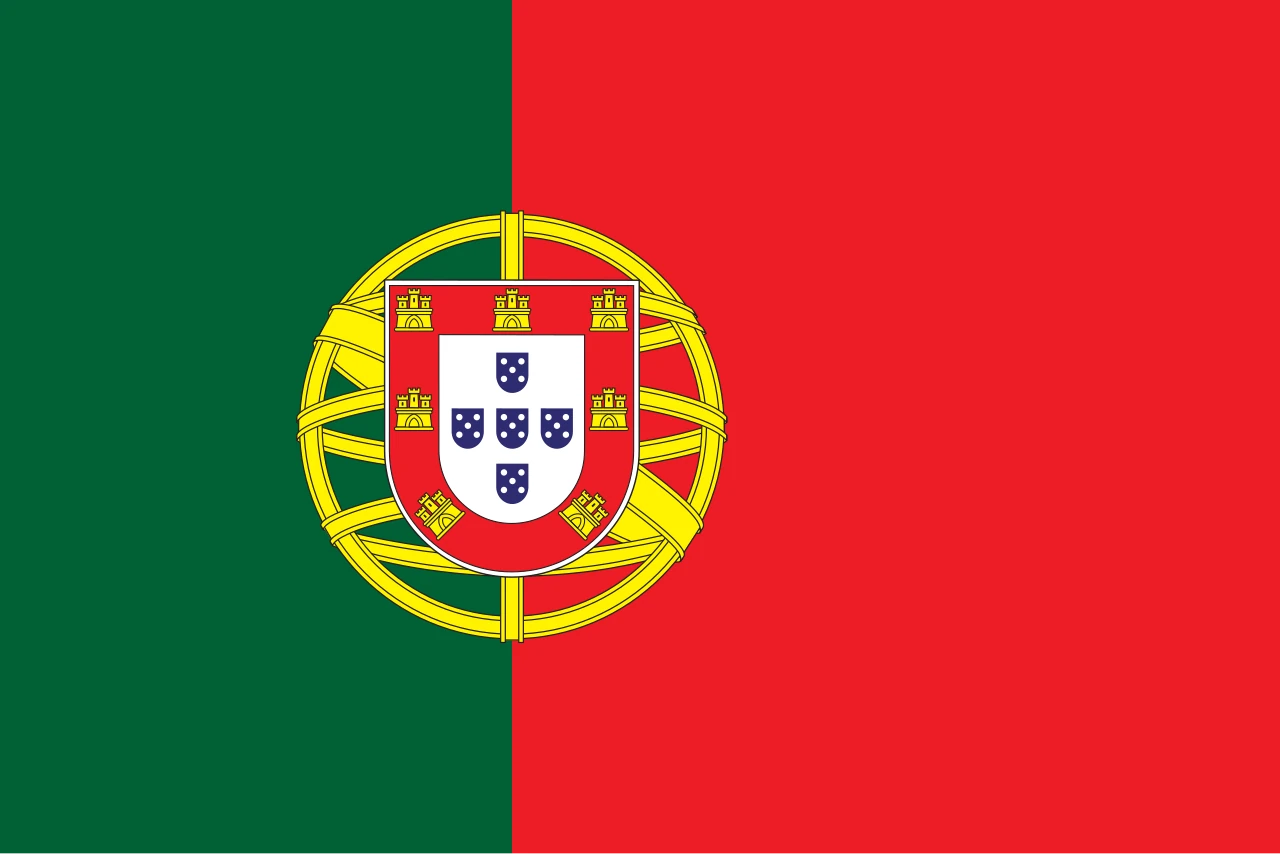
It is a rectangular field with a 2:3 ratio divided into two colours, with an emblem on top of the border between them.
Stripes
two vertical ones: green by the flagpole (two fifths of the length) and red for the rest (three fifths).
Armillary sphere
golden, centred on the line separating the two colours: a navigation instrument from the age of the discoveries.
Coat of arms
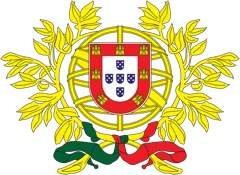
over the sphere, a white shield with five small blue escutcheons in a cross —each with seven white dots—, surrounded by a red border with seven golden castles.
What it carries
Each element and how many of the 1,390 flags in the catalogue carry it. In yellow, the rarest.
Five blue escutcheons: according to legend, the first king, Afonso I, saw Christ before the battle…
1891
Others preferred the green and red, which had been the colours of the Republican Party since…
1910
It is a young flag for a country so old: it was born with the republic, in 1910
1911
It has not changed since 1911
The full story
How it was born, how it has changed and what it means.
The flag of Portugal is divided in two: green by the flagpole and red for the rest. Right over the line where the colours meet there is a golden sphere with the coat of arms of the country on top. It is a young flag for a country so old: it was born with the republic, in 1910.
How it came about
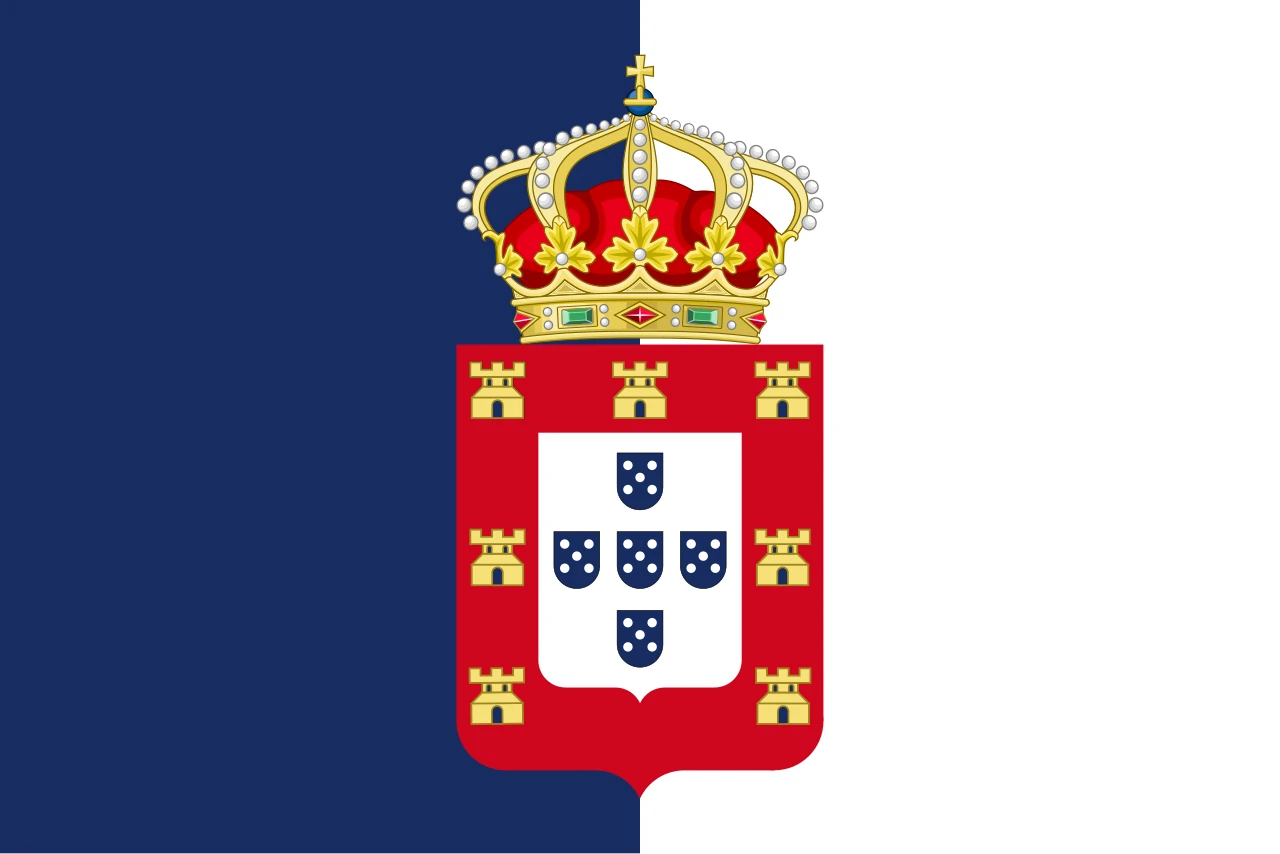
On 5 October 1910 a revolution ended the Portuguese monarchy. The new republic wanted new symbols, and the king’s blue and white flag had to disappear. Some wanted to keep the blue and white. Others preferred the green and red, which had been the colours of the Republican Party since a failed revolt in Oporto in 1891.
The government entrusted the choice to a commission that included the painter Columbano Bordalo Pinheiro, the journalist João Chagas and the writer Abel Botelho. The green and red won. The flag was presented to the public on 1 December 1910, and the Assembly approved it on 19 June 1911.
How it has changed
It has not changed since 1911. Before that it changed many times.
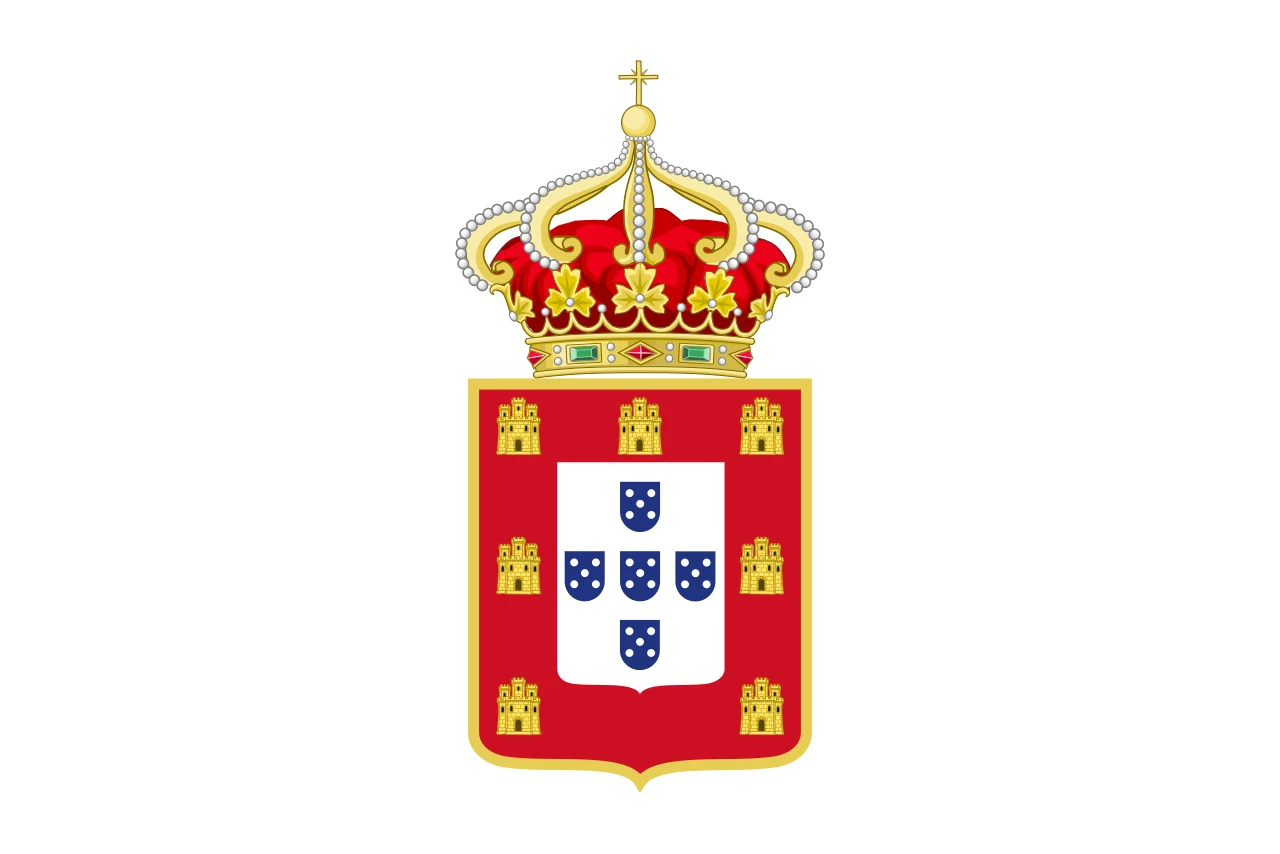
The flag becomes blue and white, with the royal coat of arms in the centre.
1911
The republic changes the colours but keeps the coat of arms, which is over eight hundred years old.
Other flags and proposals
The current flag was decided in 1910 by a commission of five people, without consulting anyone. Among the many drawings presented, the one that won used the colours of the Republican Party.
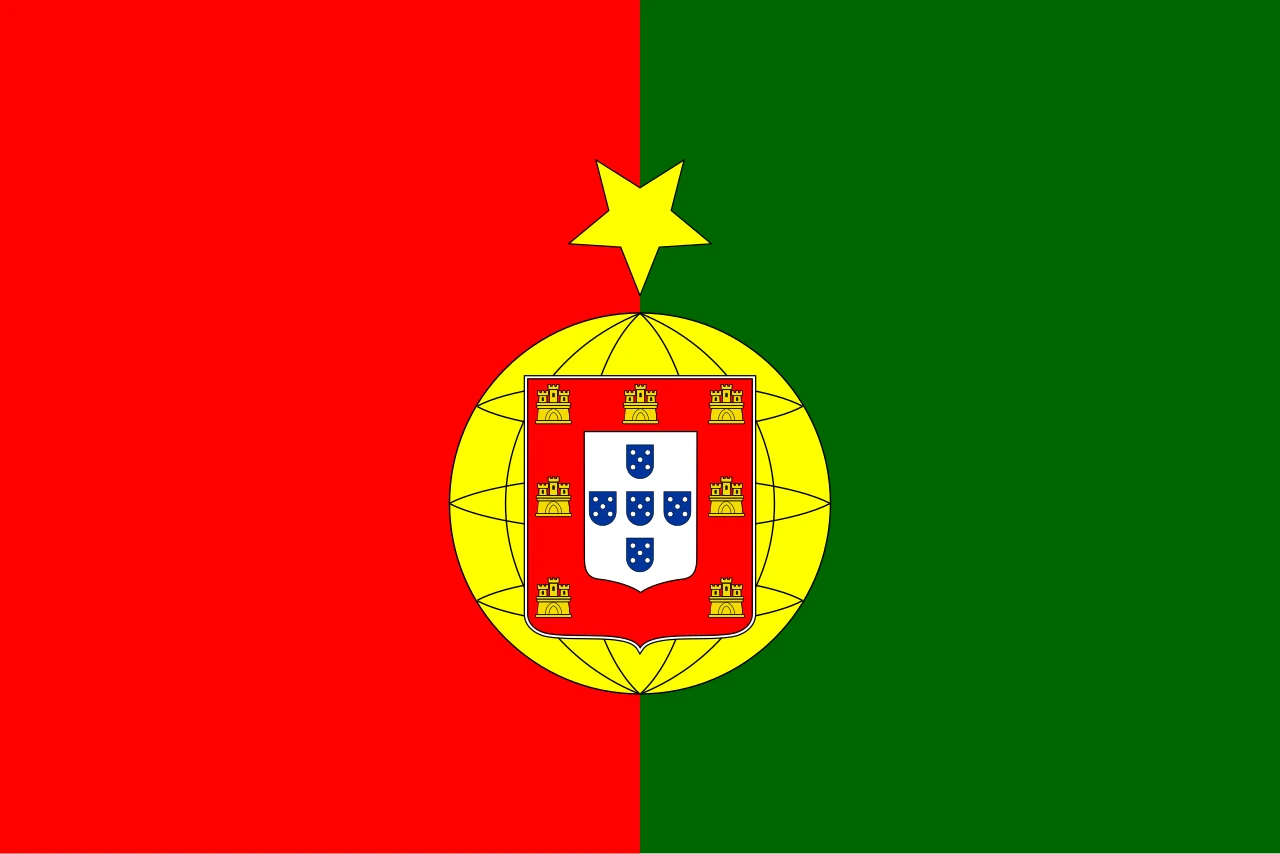
On 15 October 1910 the government appointed a five-person commission to design the flag of the Republic. Its first draft, dated the 29th of that month, had the red and green ground with the armillary sphere and the coat of arms in the centre, but with a yellow star on top and the two colours reversed with respect to what was eventually approved.
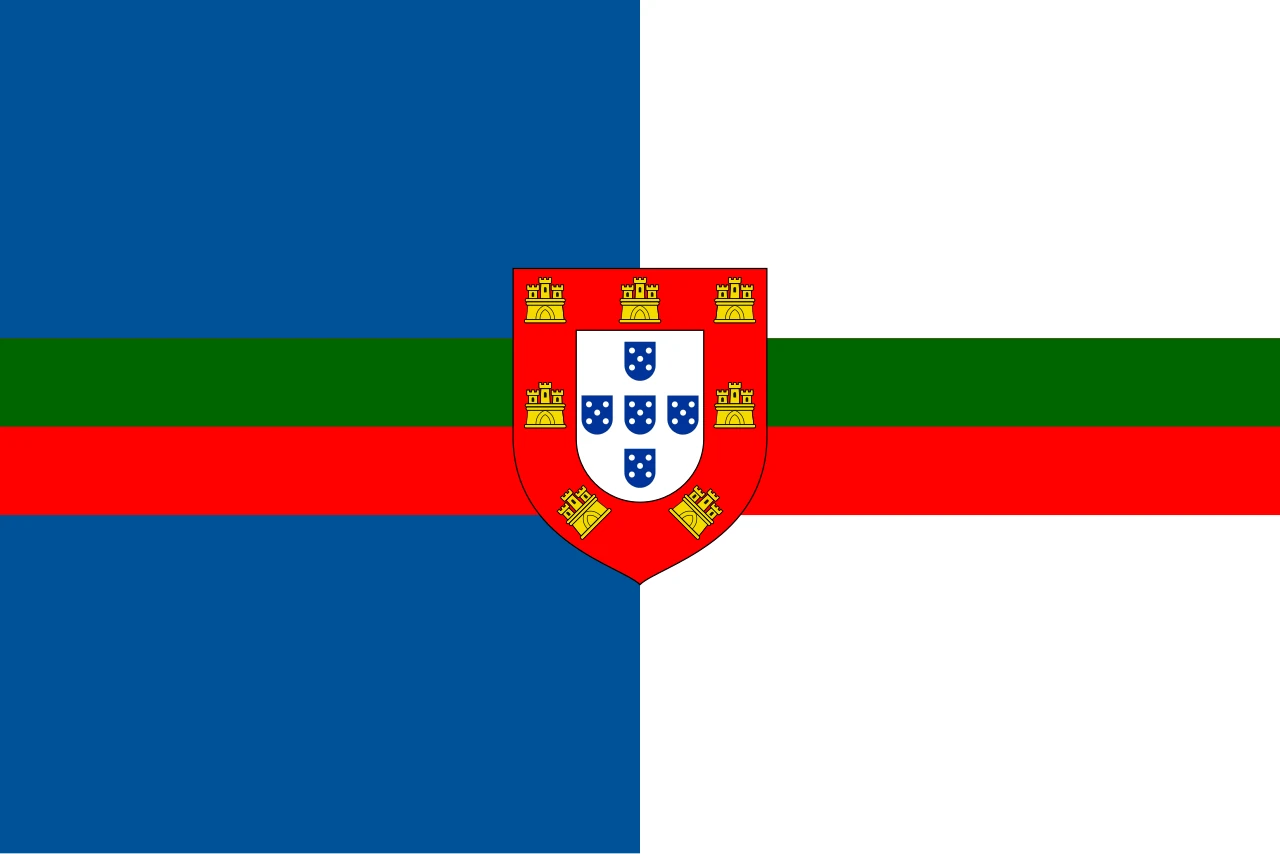
Carvalho Neves proposed keeping the blue and white ground of the royal flag, with a horizontal green and red stripe in the centre and the coat of arms on top. The republicans rejected it: to keep the blue was to keep the monarchy, of which that ground was an emblem.
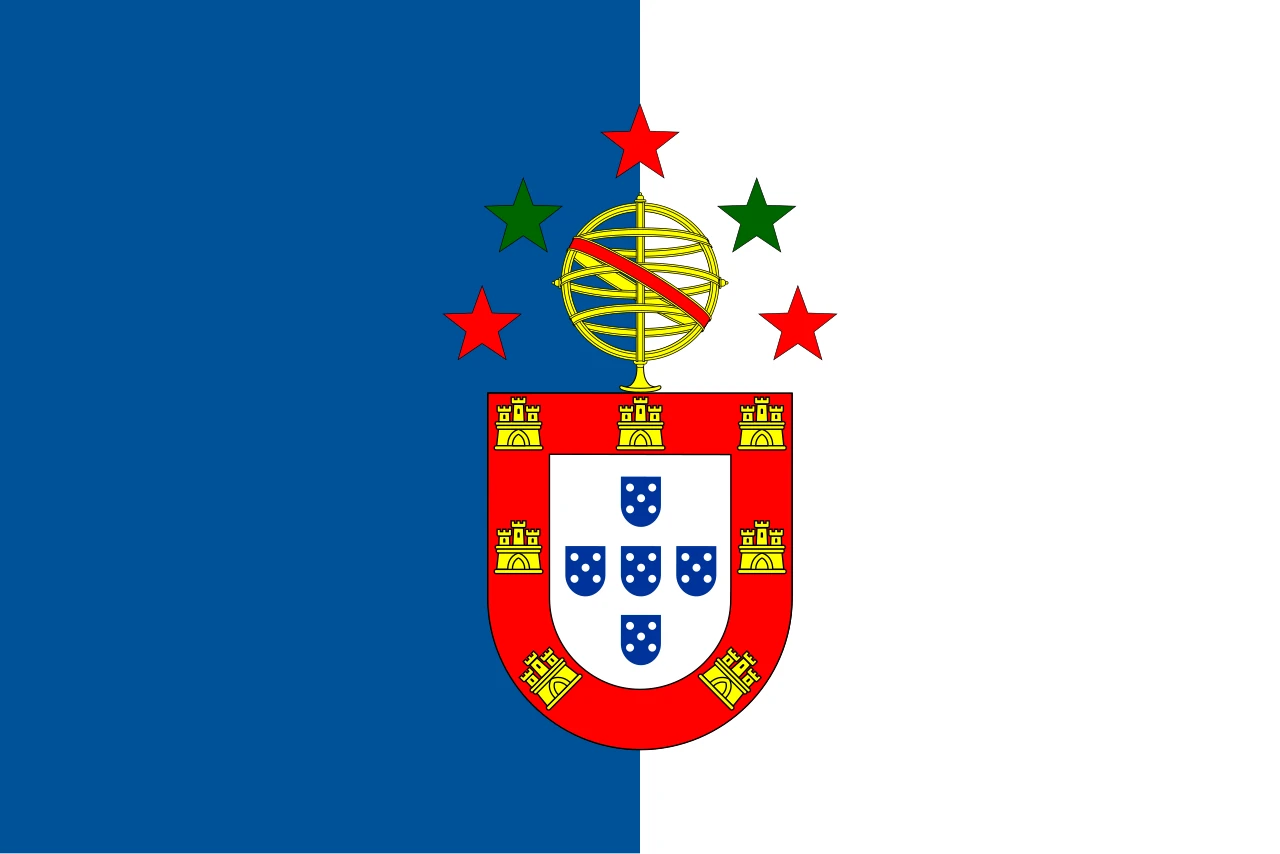
Guerra Junqueiro, the poet who had written Os Lusíadas in exile, brought the commission another blue and white flag with the coat of arms and the armillary sphere, and five red and green stars. It too came to nothing.
What it means
The meanings of the colours were explained after they were chosen, and there are several versions. The most widespread one says:
Green
hope.
Red
the blood of those who died for the country.
Armillary sphere
an ancient instrument of rings for studying the sky. It recalls the navigators of the fifteenth and sixteenth centuries.
Five blue escutcheons
according to legend, the first king, Afonso I, saw Christ before the battle of Ourique, in 1139, and put them in for his five wounds. Another version says they are the five Moorish kings he defeated.
Seven castles
according to tradition, fortresses conquered from the Muslims in the Algarve.
Many historians believe the green and red were chosen for political reasons, not for their symbolism.
Fun facts
The poet who lost
Guerra Junqueiro, a very popular poet, proposed keeping the blue and white, removing the crown and adding five green and red stars. His idea did not go ahead.
Nobody said which green
The 1911 rule only speaks of “dark green” and “scarlet”. The first flags were sewn at the Cordoaria Nacional, a rope factory in Lisbon.
A premiere with an anniversary
It was presented on 1 December 1910, the day on which 270 years of the independence recovered from Spain in 1640 were completed.



 Spain