Every fact about the flag, each with what it means.
Proportions
3:44 wide for every 3 high. 2 flags in the catalogue share it.
Properties
Normal flagFIAV symbol: the form of the flag.
Use
Civil, state and military, on land and at seaFIAV symbol: who may fly the flag.
Adopted
201122 July 2011 · 15 years ago
Colours
white
light blue
Reference shades: the official one may vary slightly.
Coat of arms
YesIt carries the coat of arms on the cloth.
Take a closer look
The two stripes
1
The crown
2
The coat of arms
3
The branches
4
The motto
How it is described
The flag in the words of vexillology and heraldry.
Vexillological description
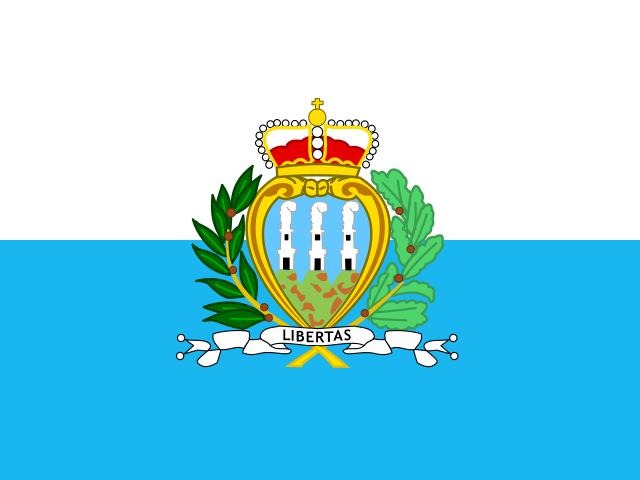
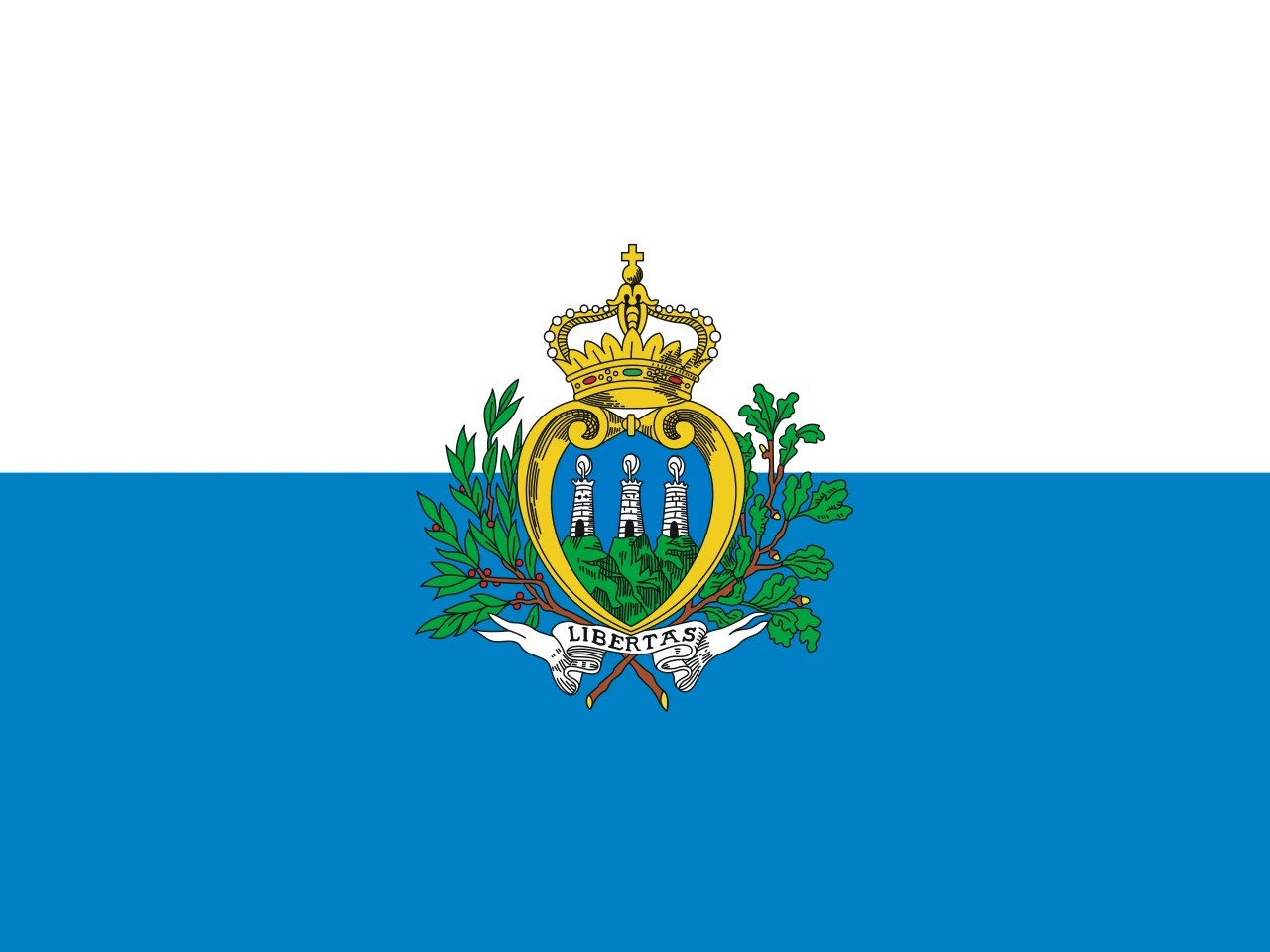
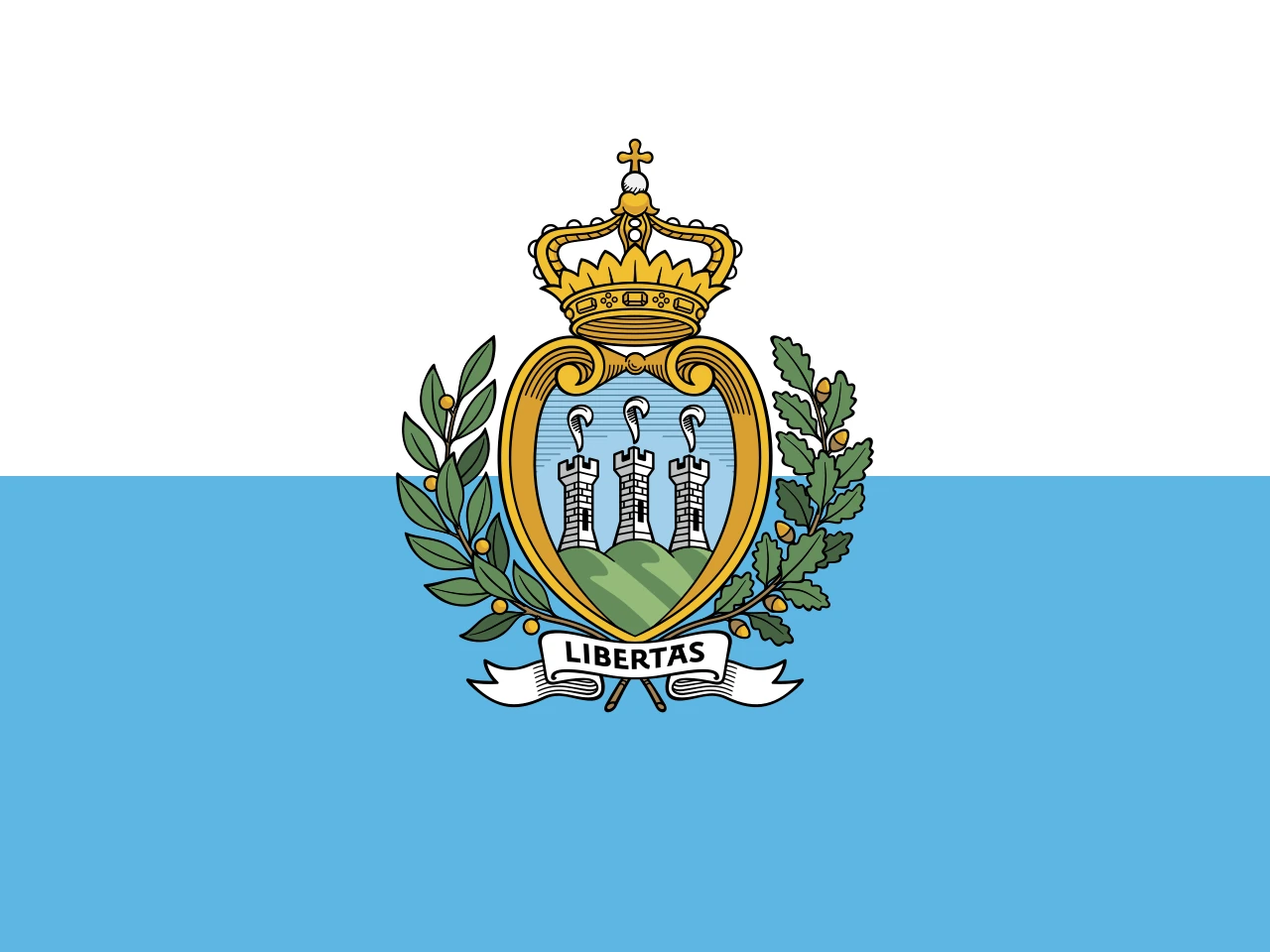
It is a rectangular field with a 3:4 ratio divided into two horizontal stripes.
Stripes
white above and light blue below, equal.
Coat of arms
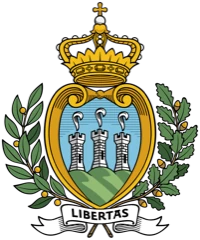
in the centre: three towered towers on three peaks (the fortress of Mount Titano), with a laurel branch and an oak branch on each side and a crown above.
Motto
on a band below the coat of arms, the word *LIBERTAS*; on the flag in use it is sometimes not visible.
What it carries
Each element and how many of the 1,390 flags in the catalogue carry it. In yellow, the rarest.
The first flag on record is from 1465: San Marino commissioned a standard from a workshop…
1797
In 1797, in the midst of the wave of changes brought by the French Revolution
1829
By 1829 a white and blue flag was already flying at the Guaita
2011
A law of 22 July 2011 fixes the ratio
The full story
How it was born, how it has changed and what it means.
The flag of San Marino has two horizontal stripes: white above and light blue below. In the centre it bears the coat of arms of the country, with three towers on three mountains and a single word: LIBERTAS, “freedom” in Latin. According to tradition, San Marino was founded in the year 301 and claims to be one of the oldest republics in the world.
How it came about
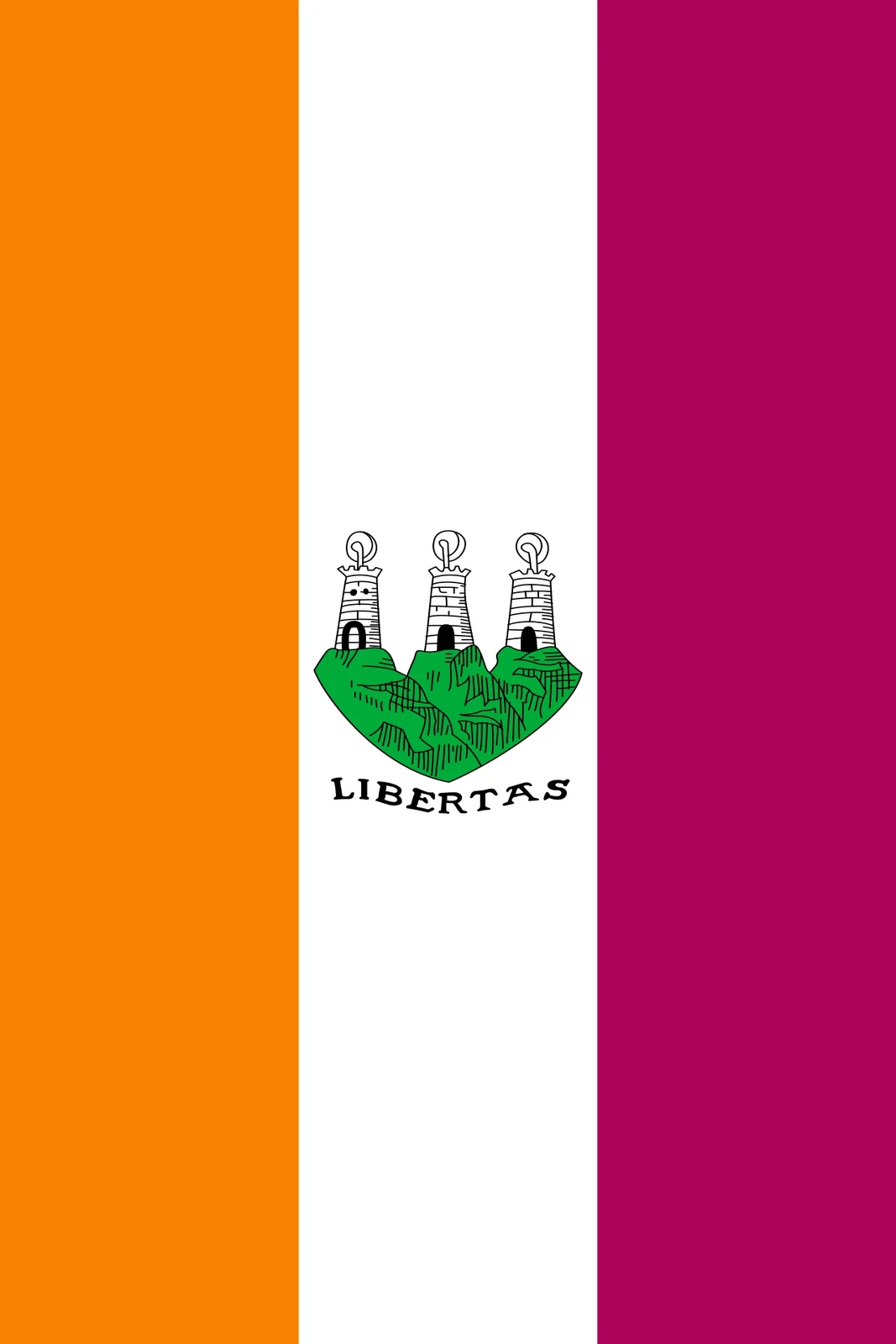
The first flag on record is from 1465: San Marino commissioned a standard from a workshop in Florence, in gold, white and a colour called alessandrino. Nobody knows for certain what shade it was; a purple has been suggested and, more recently, a blue.
The white and blue arrived at the end of the eighteenth century. In 1797, in the midst of the wave of changes brought by the French Revolution, the Council of the republic commissioned a scarf, a round cloth badge, in those two colours. By 1829 a white and blue flag was already flying at the Guaita, the oldest of the three towers of Mount Titano.
How it has changed
For almost two centuries each manufacturer drew the coat of arms in their own way, until a law put things in order.
The coat of arms is added in the centre, but there is no official model and each flag draws it differently.
2011
A law of 22 July 2011 fixes the ratio, the exact colours and the drawing of the coat of arms.
What it means
The colours have a simple reading and the coat of arms sums up the history of the country:
White
peace.
Light blue
freedom.
Three towers on three mountains
the towers Guaita, Cesta and Montale, on the three peaks of Mount Titano, where the capital stands.
Crown
the sovereignty of the country, not a king.
Laurel and oak branches
usually interpreted as glory and strength.
LIBERTAS
the national motto, “freedom”.
Fun facts
A crown in a republic
San Marino has never had a king, but its coat of arms bears a crown. It does not represent a monarch but the independence of the country, as other historic republics such as Ragusa, present-day Dubrovnik, also did.
Plumes that are weather-vanes
Above each tower of the coat of arms there is something like a feather. It is said to represent the metal weather-vanes that crown royal towers.
A navy that never existed
In 1917, National Geographic magazine published the “merchant flag” of San Marino, a country with no outlet to the sea. No evidence that it ever existed has ever been found.




 Italy